Side-by-Side IQ Profile: Elkhound vs. PON
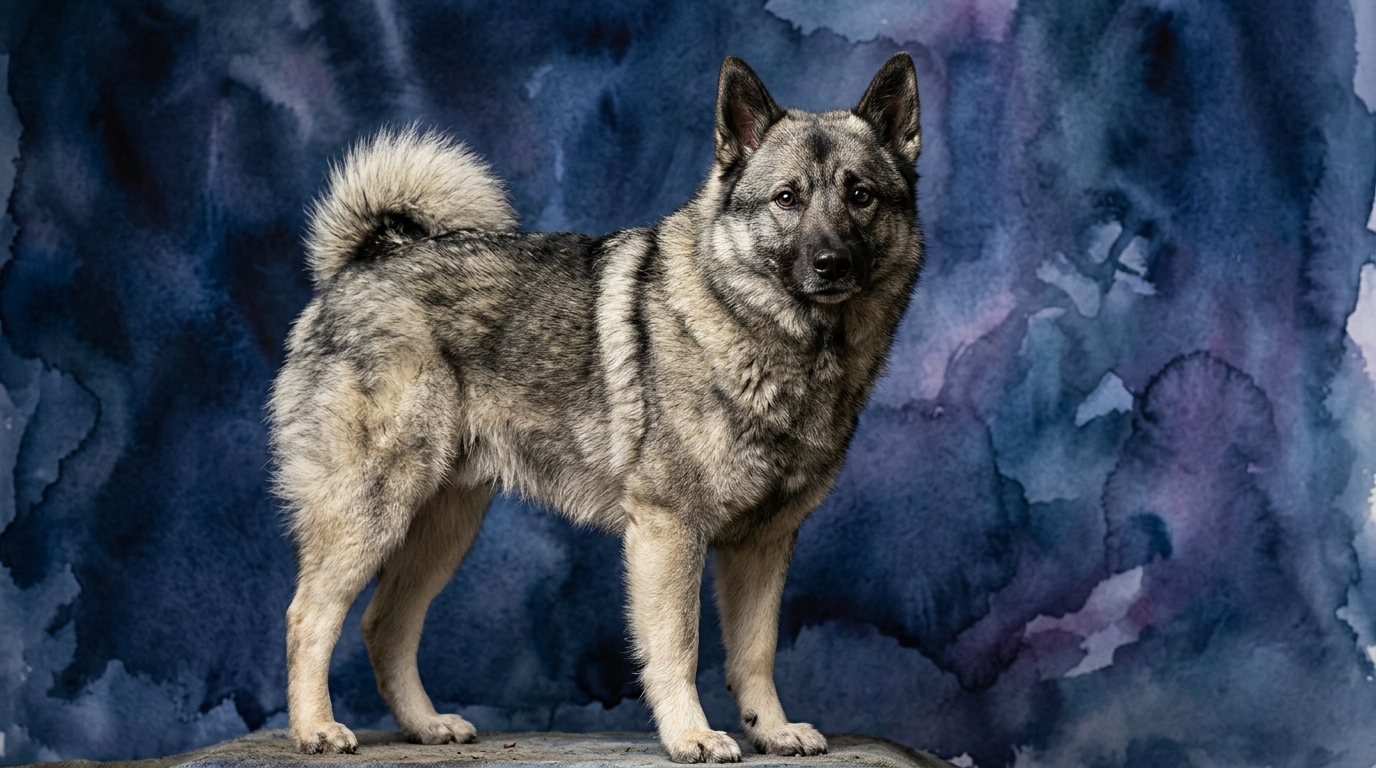
The Norwegian Elkhound, a robust canine from the Hound group, registers a notable Coren rank of #36, reflecting its strong capacity for working and obedience intelligence. Our Pet IQ Lab assessment scores its Problem Solving at 4/5, indicating a keen ability to navigate complex situations and devise independent solutions. Its Training Speed also stands at 4/5, suggesting a quick grasp of new commands and routines. In Social Intelligence, the Elkhound scores 3/5, demonstrating competent interaction but perhaps with a degree of self-reliance, while its Instinctive Drive, rated 3/5, points to a strong, inherent motivation often linked to its hunting heritage. Finally, its Memory is assessed at 4/5, signifying an excellent recall of learned experiences and associations.
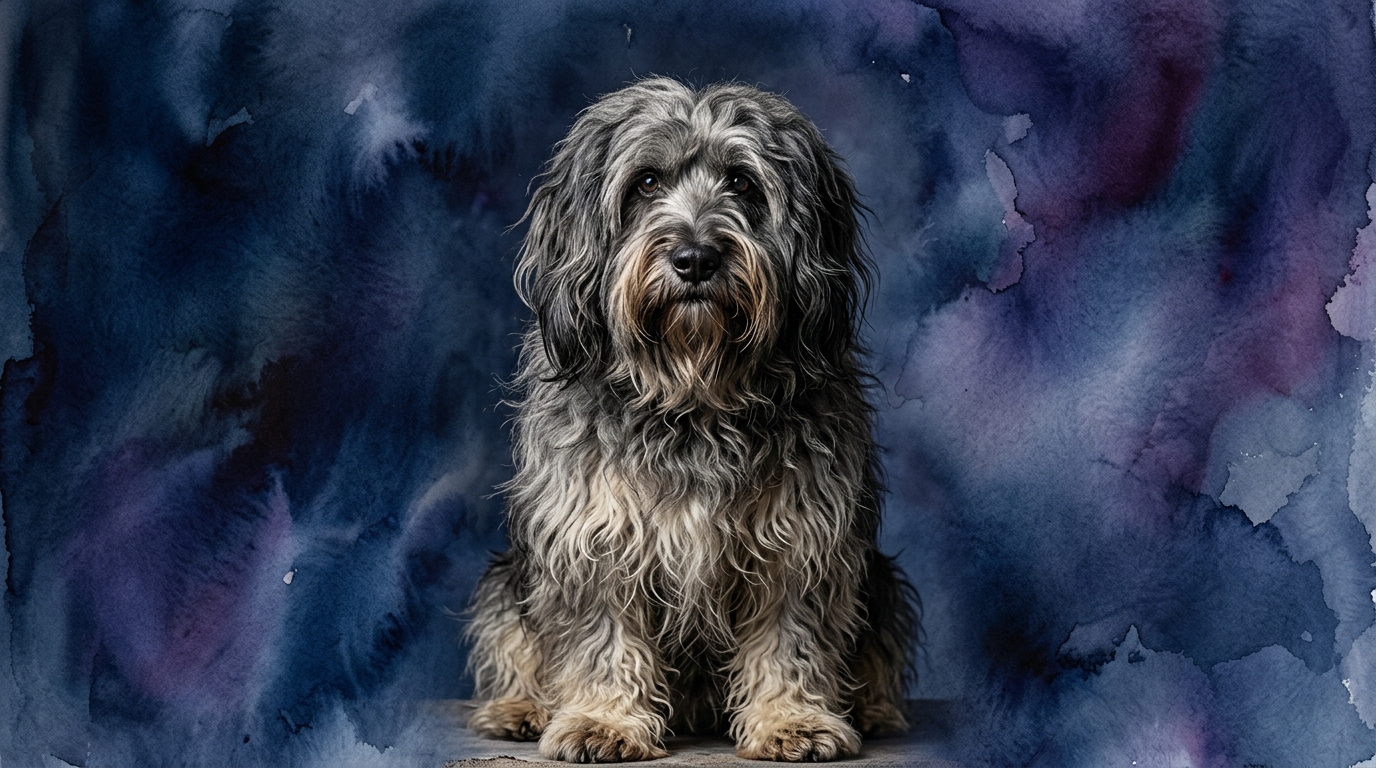
In contrast, the Polish Lowland Sheepdog, a shaggy guardian from the Herding group, does not feature on the Coren ranking, though this does not diminish its distinct cognitive profile. Its Problem Solving ability is rated 3/5, indicating a capable but perhaps less independently innovative approach compared to the Elkhound. The PON's Training Speed also sits at 3/5, suggesting a steady and consistent learning pace rather than rapid acquisition. Social Intelligence for the PON is 3/5, reflecting its attentive nature towards its family and watchful demeanor with strangers, a trait valuable in its herding role. Its Instinctive Drive, also 3/5, is strongly tied to its natural inclination to gather and protect. The breed's Memory is rated 3/5, indicating a solid capacity to retain information and learn from past events, crucial for its duties.
Where the Norwegian Elkhound Excels Cognitively
The Norwegian Elkhound's cognitive profile showcases distinct advantages, particularly in areas demanding independent thought and rapid learning. Its 4/5 Problem Solving rating means this breed is adept at figuring things out on its own, whether it’s navigating a tricky trail during a hike or devising a strategy to access a hidden toy. This translates into a dog that often anticipates challenges and can adapt creatively without constant human intervention, a valuable trait for its original purpose of tracking and holding big game.
Coupled with its 4/5 Training Speed, the Elkhound demonstrates a remarkable efficiency in absorbing new commands and complex sequences. Owners often find that once a concept is understood, the Elkhound commits it to memory quickly, reducing the repetition needed during training sessions. This quick uptake, supported by its 4/5 Memory, allows for the teaching of intricate tasks and a wide range of behaviors, making it a strong candidate for advanced obedience or canine sports where precision and recall are paramount. Its ability to retain information over time means that once a lesson is learned, it tends to stick.
Where the Polish Lowland Sheepdog's Cognition Shines
While the Polish Lowland Sheepdog may not outscore the Elkhound in raw problem-solving or training speed, its cognitive strengths lie in a balanced and purpose-driven application of its mental faculties. Its 3/5 in both Social Intelligence and Instinctive Drive, particularly in the context of a herding breed, highlights its aptitude for vigilant oversight and cohesive group management. The PON processes social cues and environmental changes with a steady, reliable intelligence, crucial for monitoring a flock or family without overreacting or becoming independently distracted.
The PON's cognitive profile, marked by consistent 3/5 scores, suggests a dog that is reliably competent rather than prone to bursts of independent brilliance that might stray from its duties. Its Problem Solving, though 3/5, is often applied in practical, real-world scenarios relating to its herding instinct – anticipating the movement of livestock, subtly influencing direction, or alerting to perceived threats. This steadiness, combined with a solid 3/5 Memory, means it learns and retains consistent routines and boundaries, making it a dependable and predictable companion once established. Its cognitive strength is in its holistic application to its role as a watchful, guiding presence.
Training Dynamics: Which Breed is More Amenable?
When considering ease of training, the Norwegian Elkhound holds an advantage, primarily due to its 4/5 Training Speed and 4/5 Problem Solving. This breed tends to pick up new commands and concepts more rapidly, often requiring fewer repetitions to solidify a behavior. Their strong problem-solving skills mean they often try to understand what is being asked of them, sometimes even anticipating the next step in a sequence. However, their independent spirit, a byproduct of their problem-solving ability, means consistency and positive reinforcement are key to channeling their quick wit effectively and preventing them from using their intelligence for mischief.
The Polish Lowland Sheepdog, with its 3/5 Training Speed, learns at a more measured pace. While perfectly capable of mastering a wide range of commands, owners should anticipate needing more consistent repetition and patience. Their 3/5 Problem Solving means they might not always independently 'figure out' what you want as quickly as an Elkhound, but their desire to work with their family, stemming from their herding roots and 3/5 Social Intelligence, makes them very willing pupils once they understand the expectation. Successful training with a PON often involves clear, consistent communication and leveraging their natural desire to be involved and useful.
Lifestyle Match: Active Owners vs. Relaxed Companionship
For active owners seeking a dog to join them on adventures and mental challenges, the Norwegian Elkhound is often a fitting choice. Its higher Problem Solving and Instinctive Drive (3/5, but directed towards tracking and endurance) mean it thrives on engaging activities, such as hiking, scent work, or agility. This breed possesses the stamina and mental fortitude to keep pace with dynamic lifestyles, enjoying tasks that require both physical exertion and a degree of independent decision-making. Owners who can provide regular, varied mental and physical stimulation will find the Elkhound a rewarding and engaged companion.
The Polish Lowland Sheepdog, while certainly not a sedentary breed, may align better with owners who appreciate a more structured and perhaps less intensely demanding routine, though still requiring engagement. Its 3/5 Instinctive Drive is geared towards overseeing and managing, making it an attentive presence rather than a relentless trailblazer. While they enjoy walks and playtime, their fulfillment often comes from having a 'job' within the family unit, whether it's 'herding' children or simply watching over the home. Owners who enjoy consistent routines, provide ample opportunities for social interaction, and can channel their herding instincts into constructive activities like puzzle toys or supervised family play will find the PON a loyal and watchful companion.
The Verdict: When to Choose Each Breed
The Verdict
Choose the Norwegian Elkhound if you seek a quick-witted, independent thinker eager for varied challenges and capable of rapid learning, thriving with an active, engaging owner.
Opt for the Polish Lowland Sheepdog if you prefer a steady, dependable companion that excels in watchful oversight and desires a consistent role within a family unit, rewarding patient, structured guidance.
🧠 Find Your Pet's IQ Score
Our Pet IQ Lab assessment covers 25+ tests across 5 cognitive dimensions — personalized to your breed.
Take the Full IQ Test →Frequently Asked Questions
Is the Norwegian Elkhound prone to independent behavior?
Yes, with a Problem Solving score of 4/5, the Norwegian Elkhound is quite capable of independent thought and decision-making. This trait, while valuable for its original hunting duties, means owners need to establish consistent boundaries and provide engaging activities to channel their cognitive strengths constructively.
How does the Polish Lowland Sheepdog's herding instinct influence its intelligence?
The PON's 3/5 Instinctive Drive, specifically for herding, shapes its intelligence towards vigilance and management. It makes them attentive to their surroundings and family members, often seeking to 'gather' or oversee, which requires a specific blend of social intelligence and observational skills rather than just raw problem-solving.
Which breed is better for a first-time dog owner?
Neither breed is inherently 'easy' for a first-time owner, as both require consistent training and engagement. However, the Polish Lowland Sheepdog's more measured learning pace and desire for a clear role might be slightly more manageable for an owner committed to patient, structured guidance, compared to the Elkhound's quicker, more independent cognitive style that can sometimes outsmart an inexperienced handler.