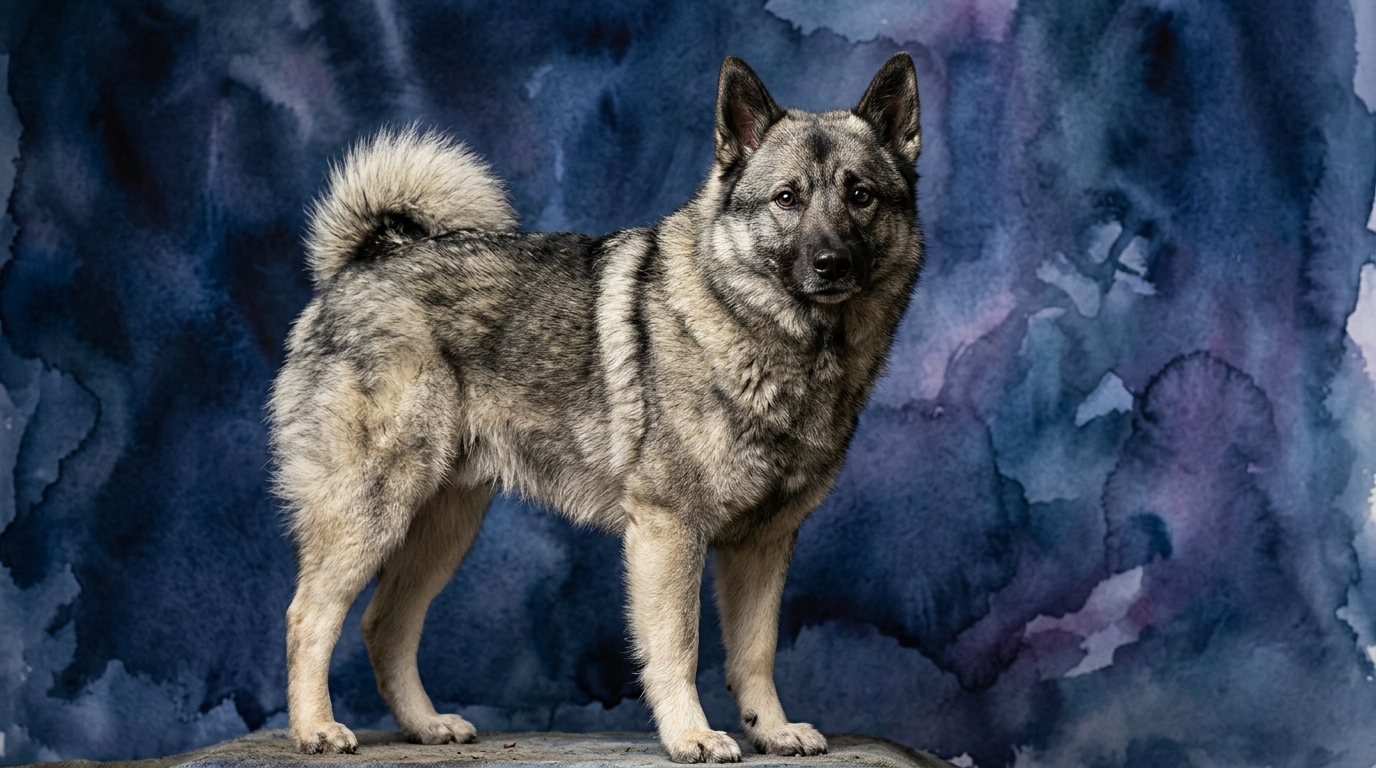
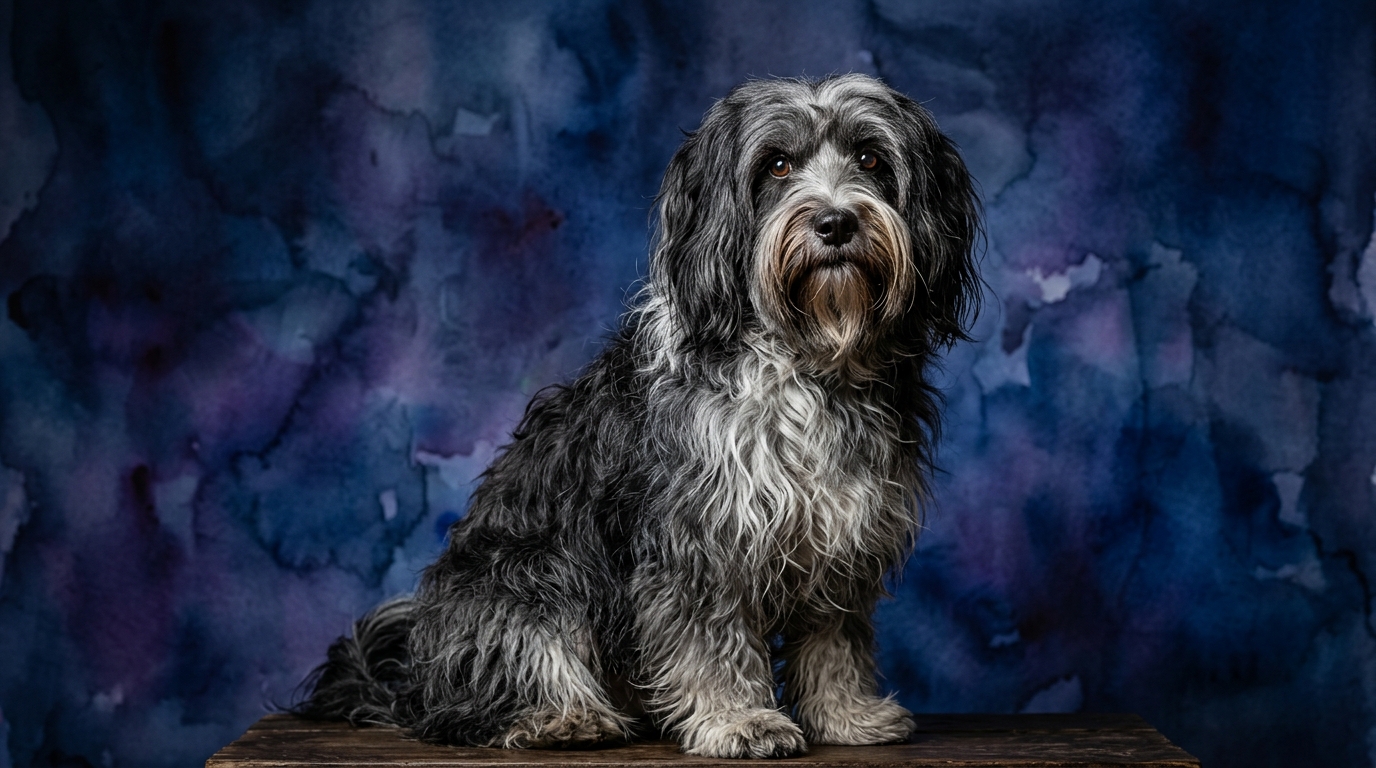
Side-by-Side Cognitive Profiles: Elkhound vs. Tibetan Terrier
The Cosmic Pet Pet IQ Lab employs five key dimensions to evaluate canine intelligence: Problem Solving, Training Speed, Social Intelligence, Instinctive Drive, and Memory. These metrics offer a nuanced perspective beyond simple rankings, illustrating how each breed processes information and interacts with its world.
The Norwegian Elkhound, rooted in generations of moose hunting, exhibits a robust cognitive profile: Problem Solving 4/5, Training Speed 4/5, Social Intelligence 3/5, Instinctive Drive 3/5, and Memory 4/5. This indicates a breed capable of complex thought and rapid learning, combined with a solid recall and a moderate drive to act on its instincts, all while possessing a good understanding of social cues.
In contrast, the Tibetan Terrier, historically a revered companion from the 'Lost Valley' of Tibet, presents a balanced, consistent profile: Problem Solving 3/5, Training Speed 3/5, Social Intelligence 3/5, Instinctive Drive 3/5, and Memory 3/5. This suggests a dog that is consistently capable across all cognitive dimensions, rather than excelling in one specific area, making it an adaptable and thoughtfully responsive presence.
While the Elkhound holds a higher Coren rank at #36 compared to the Tibetan Terrier's #63, these multi-dimensional IQ scores provide a richer, more actionable understanding of their specific cognitive strengths and inclinations. The Elkhound's scores point to an aptitude for independent, strategic thinking, while the Tibetan Terrier's even scores highlight a versatile and steady mental capacity.
Where the Norwegian Elkhound Shines Cognitively
The Norwegian Elkhound demonstrates a clear cognitive advantage in Problem Solving (4/5) and Memory (4/5). Its history as an independent hunter required it to strategize, navigate complex terrain, and remember the location of prey and safe paths. This translates into a dog that can figure things out on its own, whether it's opening a gate or devising a method to reach a favored toy, and it will remember these solutions.
Furthermore, its superior Training Speed (4/5) means the Elkhound can absorb new commands and routines with impressive swiftness. Owners will find that once an Elkhound grasps a concept, it commits it to memory efficiently, making it a responsive partner for intricate training sequences, despite its often-assertive independent character. Its sharp recall is a direct benefit of this strong memory dimension.
Unpacking the Tibetan Terrier's Unique Cognitive Strengths
While the Tibetan Terrier doesn't boast higher individual scores than the Elkhound, its consistent 3/5 across all five dimensions signifies a distinct and valuable cognitive strength: well-rounded adaptability. This breed isn't designed for specialized, high-intensity tasks but rather for versatile interaction and harmonious coexistence. Its intelligence is about being capable and responsive in a broad array of situations, rather than excelling in a singular domain.
Its balanced scores in Social Intelligence (3/5) and Instinctive Drive (3/5), on par with the Elkhound, indicate a similar capacity for forming deep bonds and expressing natural behaviors, but perhaps with less intensity in specific drives. The Tibetan Terrier's Problem Solving at 3/5 is perfectly sufficient for navigating a domestic environment with cleverness, often finding resourceful ways to get what it wants, demonstrating a practical and thoughtful approach to challenges.
Training Dynamics: Which Breed Learns More Readily?
When comparing training dynamics, the Norwegian Elkhound, with its Training Speed score of 4/5, generally picks up new commands and routines more quickly than the Tibetan Terrier, which scores 3/5. This means an Elkhound will often grasp the desired behavior with fewer repetitions, making initial training sessions potentially more efficient.
However, understanding behavioral nuances is key. The Elkhound's independent, hound nature means that while it learns fast, it might occasionally choose to 'think for itself,' requiring consistent, engaging, and reward-based training to maintain focus. The Tibetan Terrier, with its contemplative and sometimes stubborn disposition, will certainly learn, but it may require more patience and a greater number of repetitions. They are capable learners, but their independent, sometimes mischievous spirit means an owner needs to make training enjoyable and rewarding to overcome any reluctance or distraction.
Lifestyle Match: Active Adventurer vs. Thoughtful Companion
The Norwegian Elkhound's cognitive profile makes it an excellent match for active owners who thrive on adventure and structured engagement. Its high Problem Solving and Memory, combined with its inherent drive, mean it flourishes when given mental and physical challenges like hiking, tracking, or participating in dog sports. This breed requires an outlet for its sharp mind and robust body, otherwise, it may invent its own 'problems' to solve, which might not always align with owner expectations.
Conversely, the Tibetan Terrier, with its balanced intelligence, is well-suited for relaxed yet engaged owners. It doesn't demand constant high-intensity mental work but certainly enjoys puzzles, learning new tricks, and thoughtful interaction. This breed is a clever and adaptable companion that appreciates being included in family activities, offering companionship without the same level of intense mental or physical exertion required by the Elkhound. They are often resourceful and can be quite entertaining in their own right, finding subtle ways to engage their people.
The Verdict: Choosing Your Canine Companion
When making a choice, consider not just general intelligence but how specific cognitive strengths align with your daily life and expectations for a canine partner. Both breeds offer unique rewards, depending on what you value in a companion.
The Norwegian Elkhound offers a partnership for the owner seeking a highly responsive, mentally sharp companion for outdoor activities and structured training, who is prepared to manage an independent streak with consistent guidance. Its capacity for rapid learning and strong recall makes it an exciting prospect for those who enjoy teaching complex tasks and exploring the world actively.
The Tibetan Terrier is an ideal choice for individuals or families desiring a well-rounded, clever, and adaptable companion who appreciates thoughtful engagement without the demand for high-octane mental exertion. This breed will integrate seamlessly into a more relaxed household, providing companionship and gentle amusement through its observant and sometimes whimsical nature.
The Verdict
Choose the Norwegian Elkhound if you seek a mentally sharp, responsive partner for active pursuits and complex training, understanding its independent nature requires consistent guidance.
Opt for the Tibetan Terrier if you desire a well-rounded, clever, and adaptable companion that thrives on thoughtful engagement and integration into a relaxed, yet interactive, home environment.
🧠 Find Your Pet's IQ Score
Our Pet IQ Lab assessment covers 25+ tests across 5 cognitive dimensions — personalized to your breed.
Take the Full IQ Test →Frequently Asked Questions
Is the Norwegian Elkhound difficult to train due to its independence?
While the Elkhound possesses an independent streak, its high Training Speed (4/5) means it learns commands quickly with consistent, positive reinforcement. Owners need to be engaging and firm, but the breed's mental agility makes it a rewarding student.
Does the Tibetan Terrier's lower problem-solving score mean it's not clever?
Not at all; a 3/5 in Problem Solving indicates a good capacity for navigating its environment and learning, just perhaps less inclination for complex, abstract problem-solving compared to a 4/5. Tibetan Terriers are often quite resourceful and clever in practical, domestic situations.
How do their social intelligence scores compare?
Both the Norwegian Elkhound and the Tibetan Terrier score 3/5 in Social Intelligence. This suggests similar capabilities in understanding social cues, interacting appropriately with people and other animals, and forming bonds, making both suitable for family life with proper socialization.