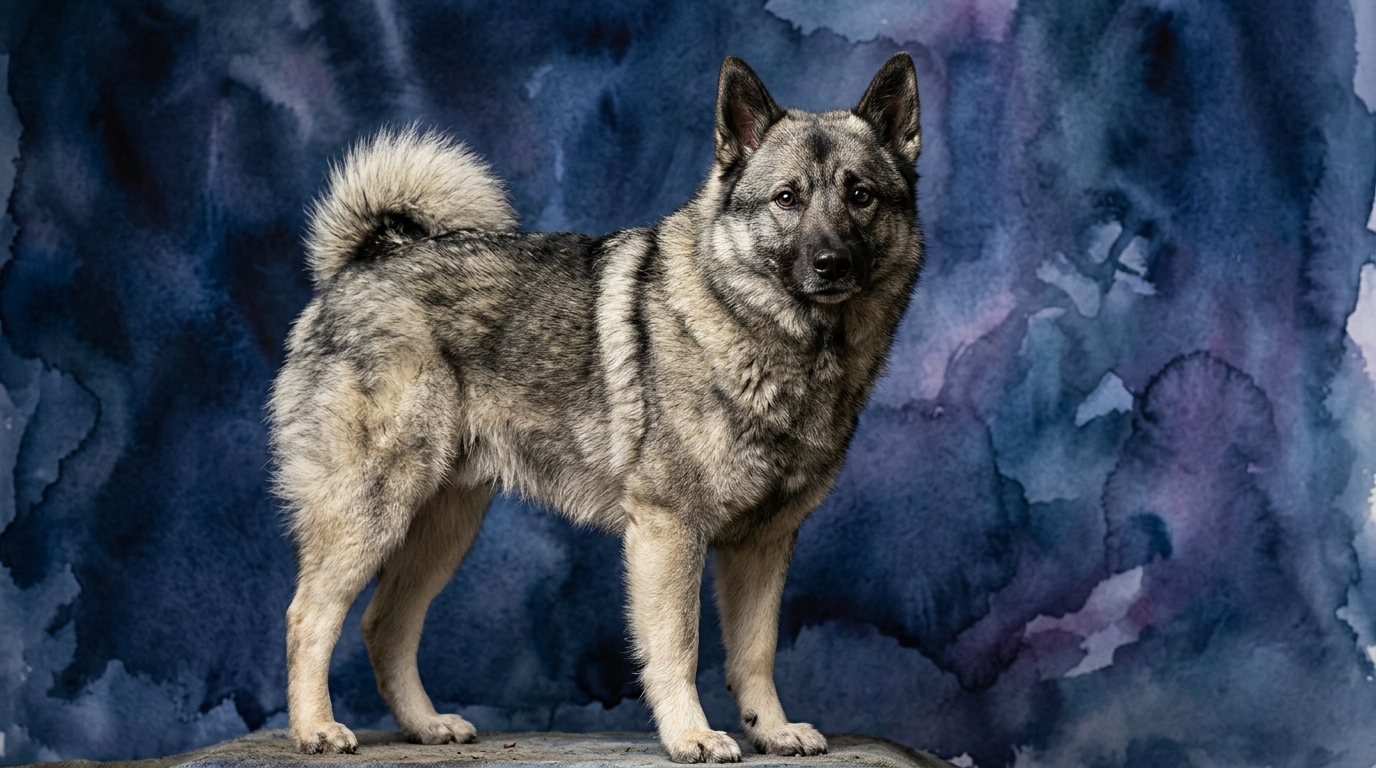
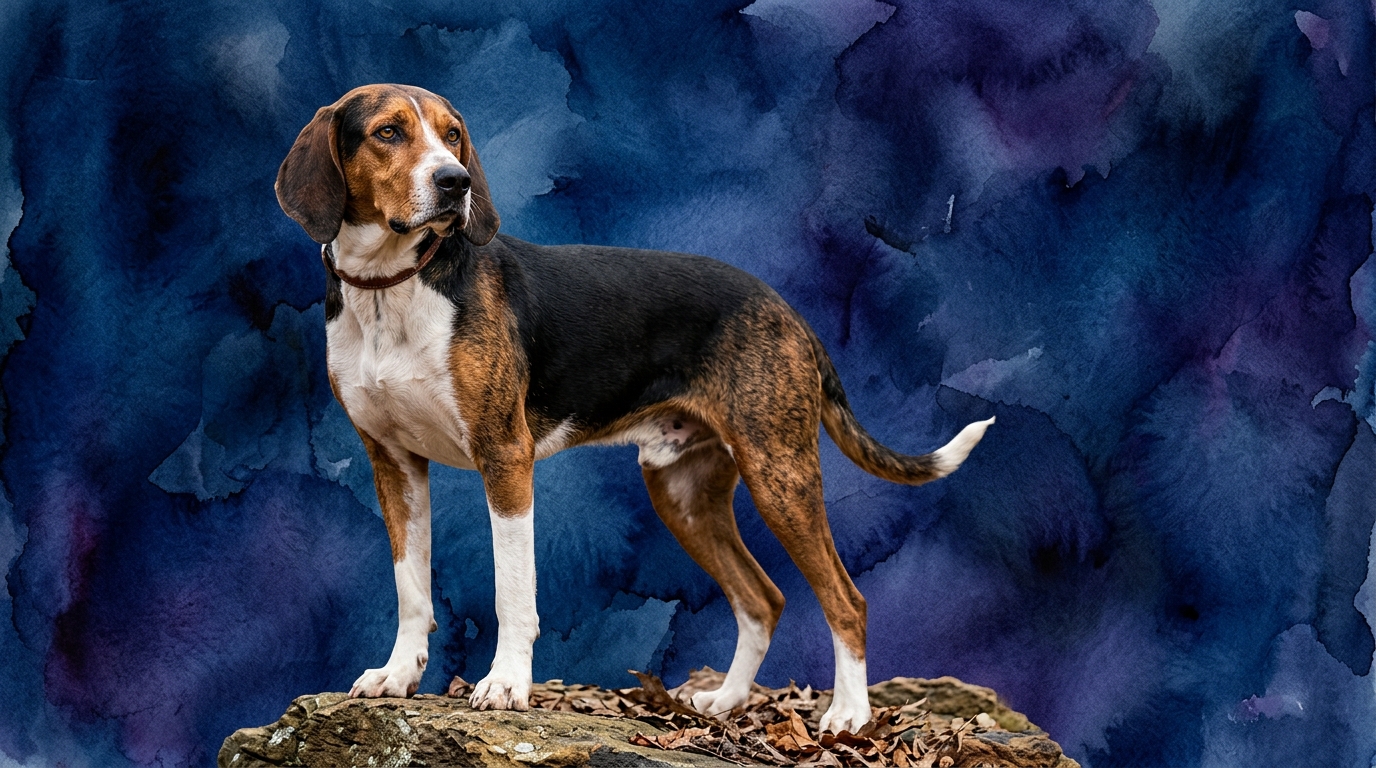
Side-by-Side IQ Profile: Elkhound vs. Coonhound
At The Cosmic Pet Pet IQ Lab, we evaluate canine intelligence across five key dimensions. The Norwegian Elkhound, with a Coren ranking of #36, demonstrates a robust cognitive profile, while the Treeing Walker Coonhound, though unranked by Coren, exhibits specialized intellect.
The Norwegian Elkhound’s cognitive breakdown includes: Problem Solving 4/5, indicating a strong capacity for adaptive thought and figuring out complex situations; Training Speed 4/5, reflecting a quick uptake of new commands and routines; Social Intelligence 3/5, suggesting a balanced engagement with humans and other canines, often with an independent streak; Instinctive Drive 3/5, a well-developed but manageable drive for scent work and tracking; and Memory 4/5, demonstrating excellent retention of learned behaviors and experiences.
In contrast, the Treeing Walker Coonhound’s profile shows: Problem Solving 3/5, where their cognitive efforts are primarily channeled into specific, scent-related challenges; Training Speed 3/5, indicating a moderate pace of learning that benefits from consistent, patient methods; Social Intelligence 3/5, highlighting their affectionate nature within their family unit and potential reserve with strangers; Instinctive Drive 3/5, characterized by an intense and persistent focus on scent trails; and Memory 3/5, which effectively serves their hunting tasks, particularly in remembering scent patterns and routes.
Where the Norwegian Elkhound Demonstrates Cognitive Advantage
The Norwegian Elkhound exhibits a distinct edge in several cognitive areas, primarily due to its more generalized adaptive intelligence. Their Problem Solving score of 4/5, one point higher than the Coonhound’s, suggests a greater versatility in tackling varied challenges. An Elkhound is more likely to independently figure out how to open a complex crate latch or adapt to a novel obstacle course, applying reasoning beyond pure scent-driven logic.
Their superior Training Speed (4/5 versus 3/5) is another significant advantage. Elkhounds tend to grasp new commands and routines with fewer repetitions, making foundational obedience and advanced trick training a smoother process. This responsiveness stems from a combination of attentiveness and a desire to engage with their handler’s instructions.
Furthermore, the Elkhound’s Memory score of 4/5, again one point higher, contributes to more consistent recall and retention of learned behaviors over time. They are less prone to 'forgetting' commands in distracting environments, which is invaluable for reliable off-leash work and complex sequences. This robust memory also aids in remembering routines and boundaries, contributing to a more predictable companion.
Where the Treeing Walker Coonhound Excels Cognitively
While the Treeing Walker Coonhound's overall scores might appear slightly lower in some general categories, their cognitive strengths lie in the intense specialization of their instincts and problem-solving. Their Instinctive Drive, rated 3/5, while numerically matching the Elkhound, manifests as an almost unparalleled dedication to scent work. This isn't just a drive; it's a profound cognitive commitment to deciphering and following complex olfactory puzzles, often over vast distances and varied terrain.
The Coonhound's Problem Solving at 3/5, though lower than the Elkhound's, is acutely honed for its specific purpose. They are masters at navigating intricate environments, identifying the precise location of treed game, and overcoming physical obstacles in the pursuit of a scent. This specialized form of problem-solving demonstrates a deep cognitive map of their hunting world, allowing them to make rapid, accurate decisions based on subtle environmental cues.
Their Memory score of 3/5, while moderate in general terms, is highly effective for retaining specific scent profiles and spatial information related to their hunting grounds. A Coonhound remembers the specific scent of a particular animal, the most efficient routes through a forest, and where they last picked up a trail. This focused memory is a powerful tool within their specialized domain, enabling persistent and successful tracking.
Training Dynamics: Which Breed is Easier to Shape?
When it comes to ease of training, the Norwegian Elkhound generally presents a more straightforward path for the average owner. Their higher Training Speed (4/5) means they absorb new commands quickly, often requiring fewer repetitions to achieve mastery. Coupled with their strong Memory (4/5), Elkhounds retain these lessons effectively, leading to more consistent performance in obedience and other structured activities. Their Coren ranking of #36 further underscores their amenability to formal training and ability to follow human direction.
The Treeing Walker Coonhound, with a Training Speed of 3/5 and Memory of 3/5, demands a more patient and nuanced approach. Their powerful Instinctive Drive (3/5), while a strength in the field, can be a significant challenge in a home environment. A Coonhound’s nose often overrides all other stimuli, making consistent recall and focus difficult, particularly when an enticing scent is present. Training them effectively requires understanding and channeling this deep-seated drive, often through positive reinforcement methods that leverage their love of scent, rather than trying to suppress it entirely. Their independence means they are less inherently inclined to 'please' in the way some other breeds are, requiring owners to be highly motivating and consistent.
Activity Levels: Suiting Active vs. Relaxed Owners
Neither the Norwegian Elkhound nor the Treeing Walker Coonhound are suited for truly 'relaxed' owners in the sense of minimal daily activity. Both breeds possess significant energy and mental needs that require consistent engagement.
The Norwegian Elkhound, with its balanced cognitive profile, thrives with active owners who can provide a variety of physical and mental challenges. They excel in activities like hiking, jogging, agility, and obedience trials, all of which leverage their problem-solving and training speed. An owner who enjoys structured training sessions and varied outdoor adventures will find the Elkhound a willing and capable partner, appreciating the mental stimulation as much as the physical exertion.
The Treeing Walker Coonhound, on the other hand, is best suited for owners whose definition of 'active' specifically includes long, scent-driven excursions. Their profound instinctive drive necessitates outlets for tracking, trailing, and exploring with their nose. While they can participate in other activities, their deepest contentment comes from engaging their primary cognitive strength: following a scent. Owners dedicated to long walks in varied terrain, scent work games, or even actual hunting will provide the most fulfilling life for a Coonhound. Attempting to keep a Coonhound mentally stimulated without engaging its scenting abilities often leads to frustration and potentially destructive behaviors.
The Verdict
Choose the Norwegian Elkhound if you seek a responsive, adaptable companion keen on structured learning and diverse activities, valuing its quicker grasp of commands and reliable memory.
Opt for the Treeing Walker Coonhound if you are an owner prepared to embrace and channel a powerful, scent-driven instinct, appreciating an independent spirit and a dedicated tracker for extensive outdoor adventures.
🧠 Find Your Pet's IQ Score
Our Pet IQ Lab assessment covers 25+ tests across 5 cognitive dimensions — personalized to your breed.
Take the Full IQ Test →Frequently Asked Questions
Are Norwegian Elkhounds good with children?
Yes, Norwegian Elkhounds are generally loyal and protective of their families, often forming strong bonds with children. Early socialization and consistent training are important to ensure they integrate well and understand appropriate interactions within the family dynamic.
Do Treeing Walker Coonhounds bark a lot?
Treeing Walker Coonhounds are known for their distinctive vocalizations, particularly their 'baying' when on a scent trail or alerting to something interesting. They can be quite vocal, so prospective owners should be prepared for this characteristic sound and consider it in relation to their living situation.
Which breed is better for first-time dog owners?
The Norwegian Elkhound might be a slightly more manageable choice for a first-time dog owner due to its higher training speed and more generalized adaptability. However, both breeds require dedicated owners committed to consistent training, socialization, and providing appropriate outlets for their specific energy and cognitive needs.