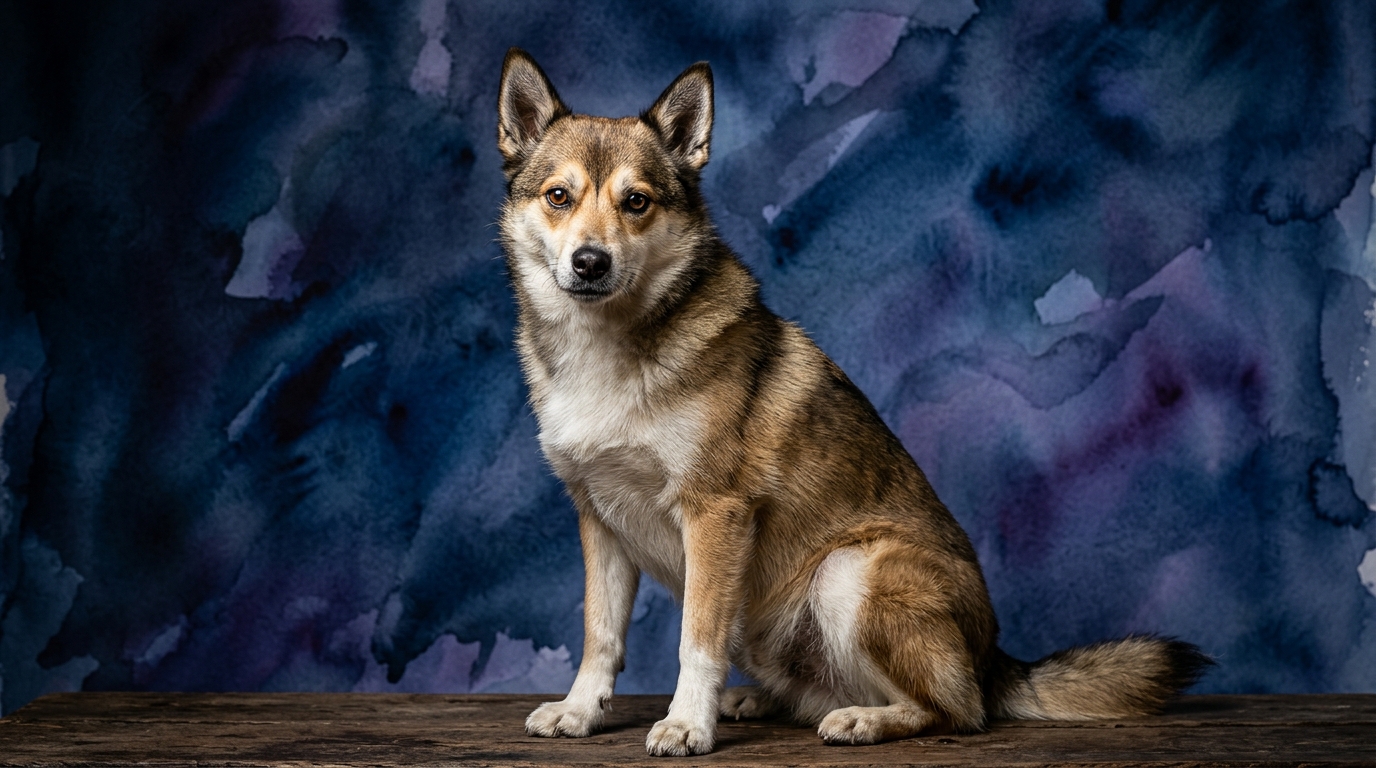
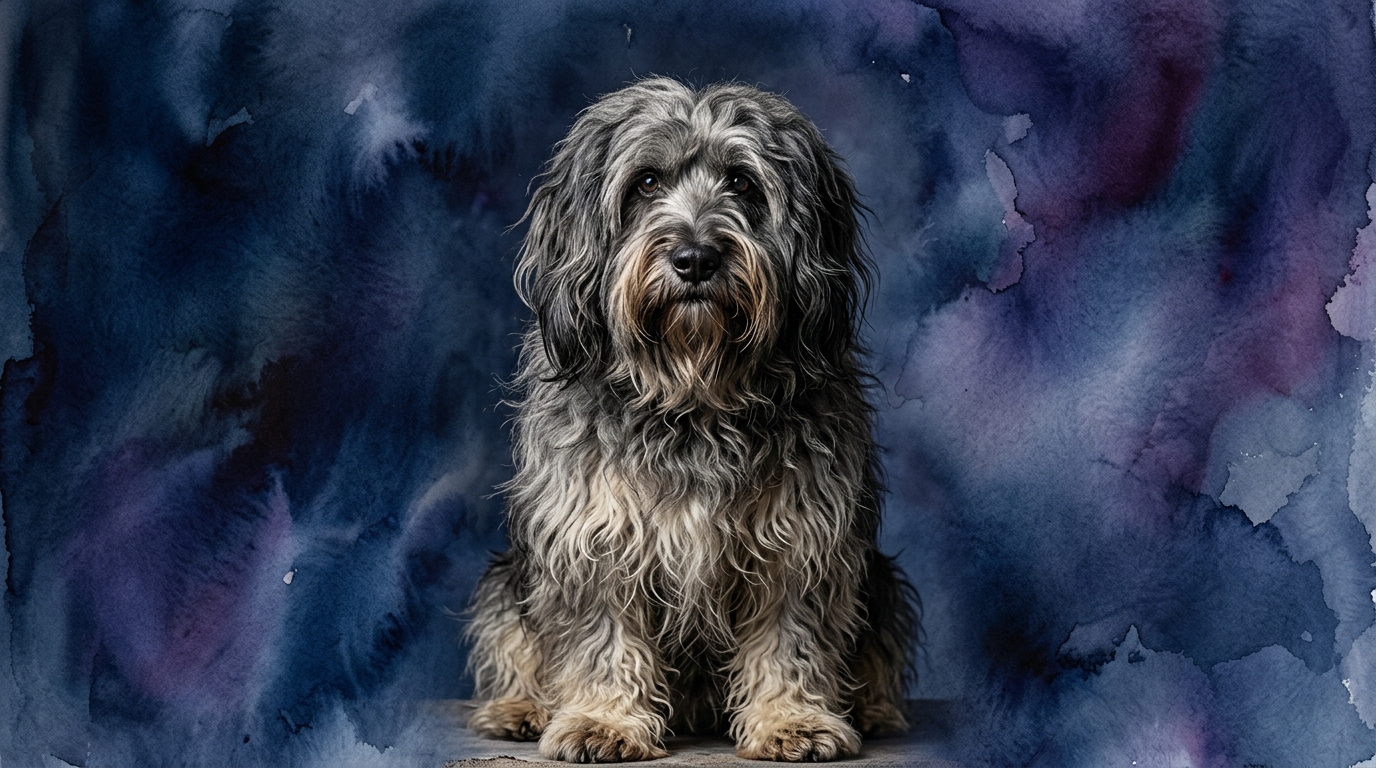
Side-by-Side Cognitive Profile
The Cosmic Pet Pet IQ Lab evaluates canine cognition across five crucial dimensions, and both the Norwegian Lundehund and the Polish Lowland Sheepdog (PON) score an identical 3/5 in each. However, understanding what a '3/5' signifies for a puffin hunter versus a flock manager reveals distinct cognitive applications.
For the **Norwegian Lundehund**, their 3/5 in **Problem Solving** reflects a capacity for independent, spatial reasoning crucial for navigating complex, unpredictable cliff environments and tight crevices during their traditional hunting role. They are adept at finding solutions to physical obstacles without constant human direction. Their **Training Speed** at 3/5 indicates they are capable learners, but their independent nature means motivation must be compelling and varied; they learn what directly benefits their exploratory or physical drives. **Social Intelligence** at 3/5 means they are observant of their immediate human family's cues but can be reserved with strangers, a trait stemming from their more solitary hunting origins rather than group work. A **Instinctive Drive** of 3/5 highlights their strong prey drive, burrowing instincts, and an inherent need for physical dexterity and exploration. Finally, their **Memory** at 3/5 supports recalling intricate hunting routes, the locations of various burrows, and past experiences, often with a selective recall for commands they deem optional.
The **Polish Lowland Sheepdog's** 3/5 in **Problem Solving** speaks to a strategic aptitude for managing dynamic situations, specifically livestock. This involves assessing flock movements, anticipating behaviors, and making decisions to guide or protect without continuous human intervention, adapting to changing pasture conditions. Their **Training Speed** at 3/5 shows they are capable of learning complex tasks, especially those with a clear purpose, but can exhibit stubbornness if a command seems illogical or contradicts their own judgment. In **Social Intelligence**, a 3/5 denotes a keen awareness of group dynamics, whether a flock of sheep or a human family. They are sensitive to moods and capable of nuanced communication, often acting as a watchful, protective presence. Their **Instinctive Drive** of 3/5 is rooted in their herding and guarding heritage, manifesting as a strong desire to gather, control, and protect their charges. Their **Memory** at 3/5 allows them to remember complex herding patterns, pasture boundaries, and a wide array of handler commands, along with social interactions and established routines.
Where Norwegian Lundehund Wins Cognitively
The Lundehund’s cognitive strengths shine brightest in scenarios demanding autonomous physical problem-solving and environmental adaptation. Their unique anatomical features, like extra toes and flexible joints, are paired with a mind that thrives on independent navigation and intricate spatial puzzles. A Lundehund excels in tasks requiring them to figure out how to access difficult places, traverse unstable terrain, or manipulate objects with precision, much like finding puffin nests on a rocky cliff face. This breed demonstrates a remarkable resilience in self-directed exploration, making them adept at activities like advanced agility courses that test not just speed, but also innovative route-finding and body control. Their cognitive edge lies in their ability to initiate solutions to physical challenges without waiting for human instruction, showcasing a practical, hands-on form of intelligence that is deeply ingrained in their survival history.
Where Polish Lowland Sheepdog Wins Cognitively
The Polish Lowland Sheepdog’s cognitive advantages are most apparent in their capacity for social and strategic problem-solving within a group context. Their history as a herding dog imbues them with an exceptional ability to read and influence the behavior of others, be it a flock of sheep or their human family. A PON demonstrates superior observational learning when it comes to group dynamics, quickly understanding hierarchies and subtle cues. They excel at tasks that require strategic planning, such as anticipating movements, blocking pathways, or guiding individuals, all without explicit, step-by-step commands. This breed possesses a nuanced understanding of cause-and-effect in social interactions, often using their presence or subtle body language to achieve a desired outcome. Their cognitive strength lies in their ability to manage and protect, showcasing a form of intelligence centered on social cohesion and proactive decision-making.
Which Is Easier to Train and Why
When considering ease of training, the distinction between these two breeds becomes clearer, despite their identical 3/5 training speed scores. The Norwegian Lundehund, with its independent problem-solving and strong prey drive, can present more challenges in conventional obedience. They are not inherently eager to please and often question the utility of commands that don't align with their instincts for exploration or hunting. Training a Lundehund requires immense patience, creativity, and high-value rewards; it's less about strict compliance and more about making training a compelling puzzle they choose to solve. Their selective hearing can be notorious, especially if a more interesting scent or sight captures their attention. They excel at tasks that engage their unique physical abilities and curiosity, but rote obedience often feels like a constraint to their free spirit.
The Polish Lowland Sheepdog, conversely, tends to be more responsive to training, especially when tasks have a clear purpose or mimic their herding instincts. Their desire to manage and protect often translates into a willingness to learn and work alongside their handler. However, their independent decision-making, a necessity for a herding dog, can sometimes manifest as stubbornness if they believe their solution is superior to yours. A PON requires a confident, consistent handler who can establish clear expectations and provide structured training that channels their natural drives. They learn quickly when motivated by purpose and thrive on having a 'job,' whether it's obedience, agility, or actual herding. While they might not always execute a command instantly if they're assessing the situation, their underlying desire to cooperate and their observational skills generally make them more amenable to formal training than the Lundehund.
Which Suits Active Owners vs. Relaxed Owners
Neither the Norwegian Lundehund nor the Polish Lowland Sheepdog are suited for truly 'relaxed' owners in the sense of a low-energy companion. Both breeds require significant mental and physical engagement, though the *type* of activity differs substantially. The Lundehund thrives with active owners who appreciate a dog with an independent spirit and a need for exploratory, puzzle-solving activities. They aren't satisfied with just a long walk; they need opportunities to climb, dig, and investigate, engaging their unique physical and cognitive traits. Owners who enjoy dog sports like agility, scent work, or earthdog trials, and are willing to embrace a dog's self-directed curiosity, will find a fulfilling partnership.
The Polish Lowland Sheepdog, while also active, suits owners who can provide more structured, purpose-driven engagement. Their herding and guarding instincts mean they need regular mental work that taps into their strategic thinking and desire to manage. Owners who enjoy organized dog sports such as herding trials, obedience, rally, or even advanced trick training will find the PON a willing and capable participant. They thrive on having a job and a clear role within the family 'flock.' While they can adapt to family life, their underlying drive for purposeful activity means a 'relaxed' owner who offers little structure or mental challenge might find them bored and potentially destructive or overly vocal.
The Verdict
Choose the Norwegian Lundehund if you value a unique, independent thinker, enjoy engaging in intricate puzzle-solving activities, and appreciate a dog with exceptional physical dexterity and a curious, exploratory nature.
Opt for the Polish Lowland Sheepdog if you seek a responsive, observant companion capable of complex social problem-solving, who can provide structured activities that channel their herding instincts and appreciate their protective yet sensitive temperament.
🧠 Find Your Pet's IQ Score
Our Pet IQ Lab assessment covers 25+ tests across 5 cognitive dimensions — personalized to your breed.
Take the Full IQ Test →Frequently Asked Questions
Are Norwegian Lundehunds good family dogs?
Yes, Lundehunds bond closely with their immediate family, often forming strong attachments. However, their independent nature and unique physical traits mean they can be reserved with strangers and require careful socialization, especially around very small children.
Do Polish Lowland Sheepdogs bark a lot?
As herding and guarding breeds, Polish Lowland Sheepdogs can be quite vocal, using barks to communicate and alert their families to perceived threats or changes in their environment. Early training and consistent management are essential to help moderate excessive barking.
What kind of exercise does a Lundehund need?
Beyond physical activity, Lundehunds thrive on mental challenges like agility, scent work, and puzzle toys that engage their problem-solving skills and unique physical capabilities. Activities that allow them to climb, explore, and use their dexterity are particularly enriching for this breed.