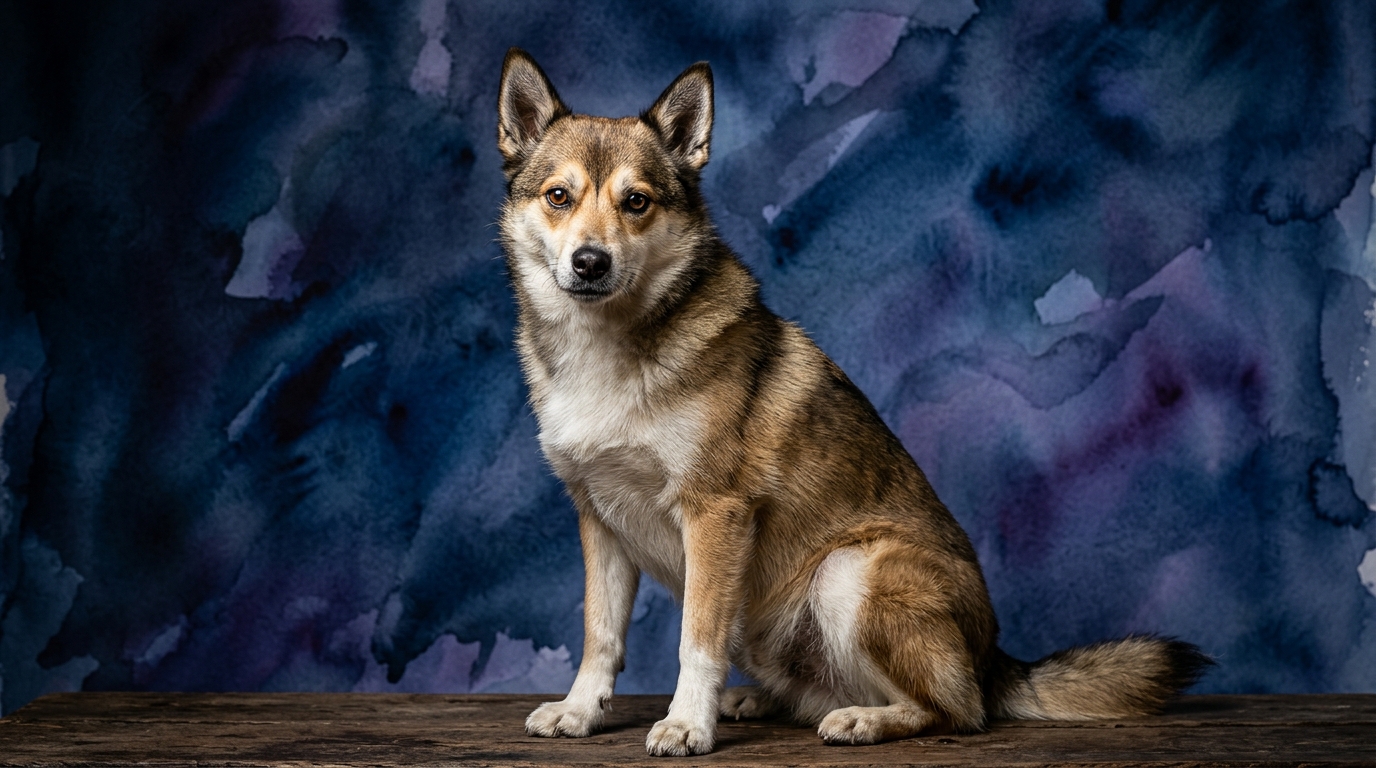
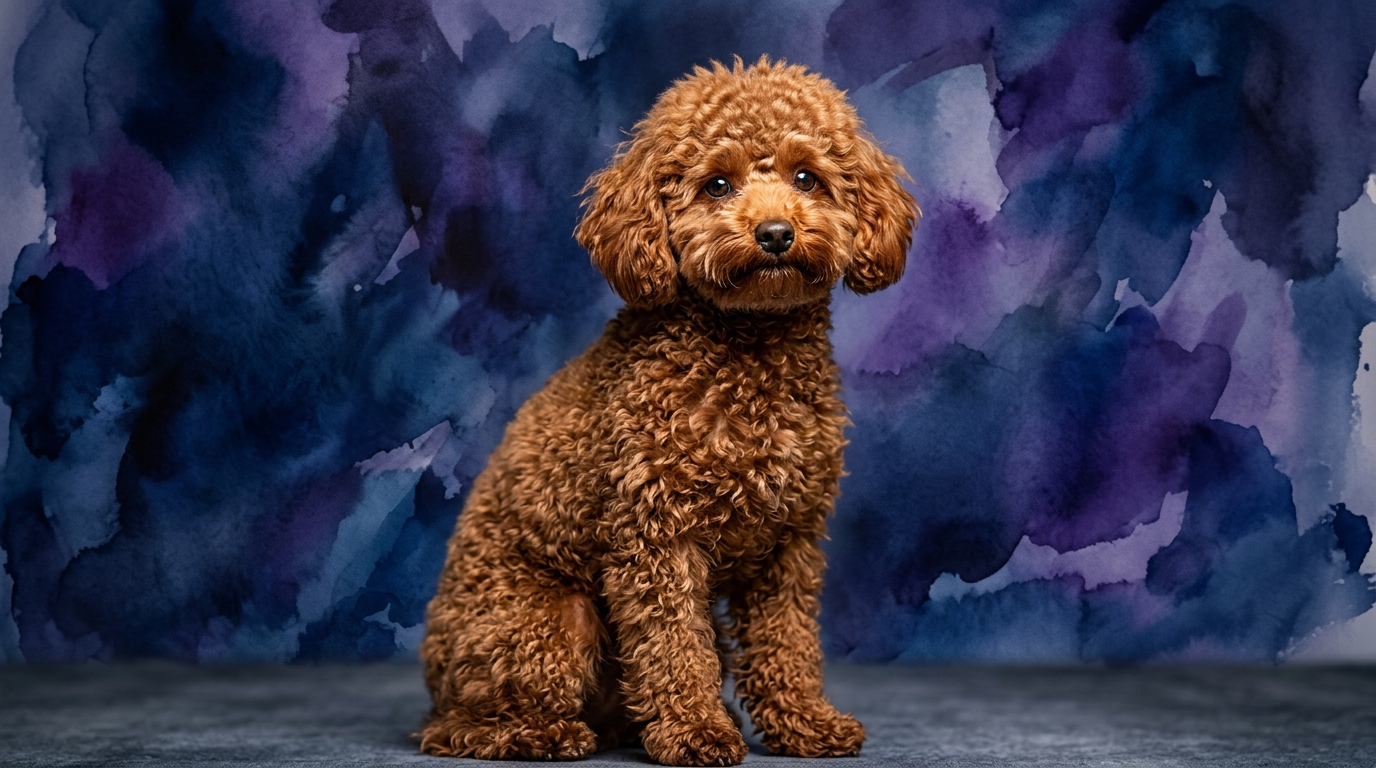
Side-by-Side IQ Profile: Lundehund vs. Toy Poodle
The Cosmic Pet Pet IQ Lab employs five dimensions to assess canine intelligence, offering a granular view beyond simple rankings. For the Norwegian Lundehund, we observe a remarkably consistent profile: Problem Solving 3/5, Training Speed 3/5, Social Intelligence 3/5, Instinctive Drive 3/5, and Memory 3/5. This balanced distribution suggests a dog that is moderately capable across all cognitive functions, without any single area exceptionally outshining the others. Such a profile often indicates a steady learner, a capable problem-solver when given time, and a dog with a general awareness of its social environment.
In contrast, the Toy Poodle presents a sharply defined cognitive landscape. It achieves impressive scores of 5/5 in Problem Solving, Training Speed, and Memory, while sharing identical scores of 3/5 in Social Intelligence and Instinctive Drive with the Lundehund. This distinct pattern highlights the Toy Poodle's exceptional aptitude for learning, retention, and analytical thinking, aligning with its Coren rank of #2, which signifies a breed that comprehends new commands in very few repetitions and obeys them with high consistency. The shared scores in Social Intelligence and Instinctive Drive are noteworthy, indicating that despite their differences in other areas, both breeds possess a similar baseline for understanding human cues and inherent drives, whether for hunting, herding, or other tasks.
Where the Norwegian Lundehund Wins Cognitively
While the Toy Poodle boasts higher scores in several categories, the Norwegian Lundehund's balanced 3/5 profile across all five IQ dimensions can be a unique cognitive advantage, particularly for specific types of owners and environments. Its moderate Problem Solving (3/5) means it's not prone to overthinking or becoming overly frustrated by complex, abstract challenges that might bore or stress a dog with a higher problem-solving drive. Instead, the Lundehund approaches tasks with a steady, pragmatic demeanor, often finding practical solutions without excessive experimentation.
Furthermore, the Lundehund's moderate Instinctive Drive (3/5) means it is driven by its heritage – navigating challenging terrain and hunting puffins – but this drive is not overwhelming or easily redirected into obsessive behaviors. This balance allows the Lundehund to engage with tasks and exploration without becoming fixated, offering a more adaptable and less demanding cognitive presence compared to breeds with very high, often intense, instinctive drives. Its consistent cognitive output means it’s less likely to experience the peaks and valleys of engagement, providing a more predictable and often calmer intellectual companion for daily life.
Where the Toy Poodle Wins Cognitively
The Toy Poodle's cognitive strengths are pronounced and undeniable, particularly in Problem Solving (5/5), Training Speed (5/5), and Memory (5/5). These top-tier scores translate directly into a dog that not only rapidly grasps new concepts but also independently figures out solutions to novel environmental challenges. A Toy Poodle is adept at tasks requiring sequential logic, such as opening latches or navigating complex obstacle courses, often demonstrating an innate understanding of cause and effect.
Its exceptional Training Speed means a Toy Poodle can learn new commands and behaviors in very few repetitions, making it a dream for owners interested in advanced obedience, dog sports like agility, or even complex trick training. This rapid acquisition of knowledge is paired with a superior Memory (5/5), ensuring that once a lesson is learned, it is retained for extended periods, requiring less frequent refreshers. This combination allows Toy Poodles to build an extensive repertoire of skills and commands, adapting quickly to new routines and expectations within a household.
Which is Easier to Train and Why
Based on their respective IQ profiles, the Toy Poodle is demonstrably easier to train than the Norwegian Lundehund. The Toy Poodle's 5/5 Training Speed means it understands and executes new commands with remarkable swiftness, often requiring only a handful of repetitions to achieve mastery. Coupled with its 5/5 Memory, once a command is learned, it is deeply ingrained, leading to reliable recall and performance even after long periods without practice. This makes the training process highly rewarding and efficient, allowing owners to progress quickly to more advanced behaviors and complex routines.
The Norwegian Lundehund, with its 3/5 Training Speed and 3/5 Memory, requires a more patient and consistent approach to training. While capable of learning, it will necessitate more repetitions and a longer duration to solidify new commands and behaviors. Owners should anticipate a steady but slower progression, and be prepared for ongoing reinforcement to ensure retention. Its moderate Social Intelligence (3/5) means it responds to human cues but may not always offer the same eager-to-please compliance seen in breeds with higher training scores, sometimes preferring to consider the request rather than immediately comply.
Which Suits Active Owners vs. Relaxed Owners
The Toy Poodle, with its high cognitive scores in Problem Solving, Training Speed, and Memory, is ideally suited for owners who define 'active' not just by physical exercise but significantly by mental engagement. These dogs thrive on intellectual challenges, requiring consistent mental stimulation through advanced training, puzzle toys, dog sports, or interactive games to prevent boredom and potential behavioral issues. An owner who enjoys teaching complex commands, participates in competitive obedience or agility, or simply loves to engage their dog in thoughtful play will find the Toy Poodle an incredibly responsive and fulfilling companion, adaptable to apartment living provided its mental needs are met.
The Norwegian Lundehund, with its balanced 3/5 scores across the board and moderate Instinctive Drive, aligns well with owners seeking a companion that enjoys a different kind of activity. They require regular physical exercise, enjoying walks, hikes, and exploration, benefiting from their agility and unique physical adaptations. However, their mental stimulation needs are more moderate; they appreciate independent exploration and solving practical, real-world problems on their own terms rather than constant structured mental work. This makes them suitable for owners who enjoy outdoor adventures but prefer a dog that is content with a more relaxed intellectual pace, less demanding of constant, intricate mental tasks.
The Verdict: When to Choose Each Breed
Choosing between these two breeds hinges on the specific intellectual engagement and training experience an owner desires.
Opt for the Norwegian Lundehund if you seek a unique, independent companion with a balanced cognitive profile, appreciating a steady learning pace and a dog that enjoys exploring its environment without constant demands for complex mental work. This breed suits owners who value resilience and a more self-reliant problem-solver.
Select the Toy Poodle if you relish the process of advanced training, desire a dog that quickly masters new skills, and are prepared to provide ample mental stimulation through intricate tasks, dog sports, or consistent intellectual challenges. This breed excels as an active, highly engaged partner in learning.
The Verdict
Choose the Norwegian Lundehund if you seek a unique, independent companion with a balanced cognitive profile, appreciating a steady learning pace and a dog that enjoys exploring its environment without constant demands for complex mental work.
Select the Toy Poodle if you relish the process of advanced training, desire a dog that quickly masters new skills, and are prepared to provide ample mental stimulation through intricate tasks, dog sports, or consistent intellectual challenges.
🧠 Find Your Pet's IQ Score
Our Pet IQ Lab assessment covers 25+ tests across 5 cognitive dimensions — personalized to your breed.
Take the Full IQ Test →Frequently Asked Questions
Does the Norwegian Lundehund's unique physical traits affect its intelligence?
While its flexible joints and extra toes are physical adaptations crucial for its original role, they do not directly impact its cognitive scores. The IQ assessment focuses on problem-solving, learning, and memory capabilities, which are distinct from physical dexterity.
Is the Toy Poodle's high Coren rank solely due to its intelligence?
Coren's ranking primarily assesses 'obedience and working intelligence,' reflecting a dog's ability to learn and execute human commands quickly and reliably. This aligns perfectly with the Toy Poodle's top scores in training speed and memory, indicating a strong capacity for understanding and complying with directives.
Do both breeds have similar social needs?
Both breeds score 3/5 in social intelligence, indicating they are generally responsive to human cues and capable of forming bonds with their families. Neither is exceptionally demanding of constant attention nor notably aloof, suggesting a balanced approach to social interactions.