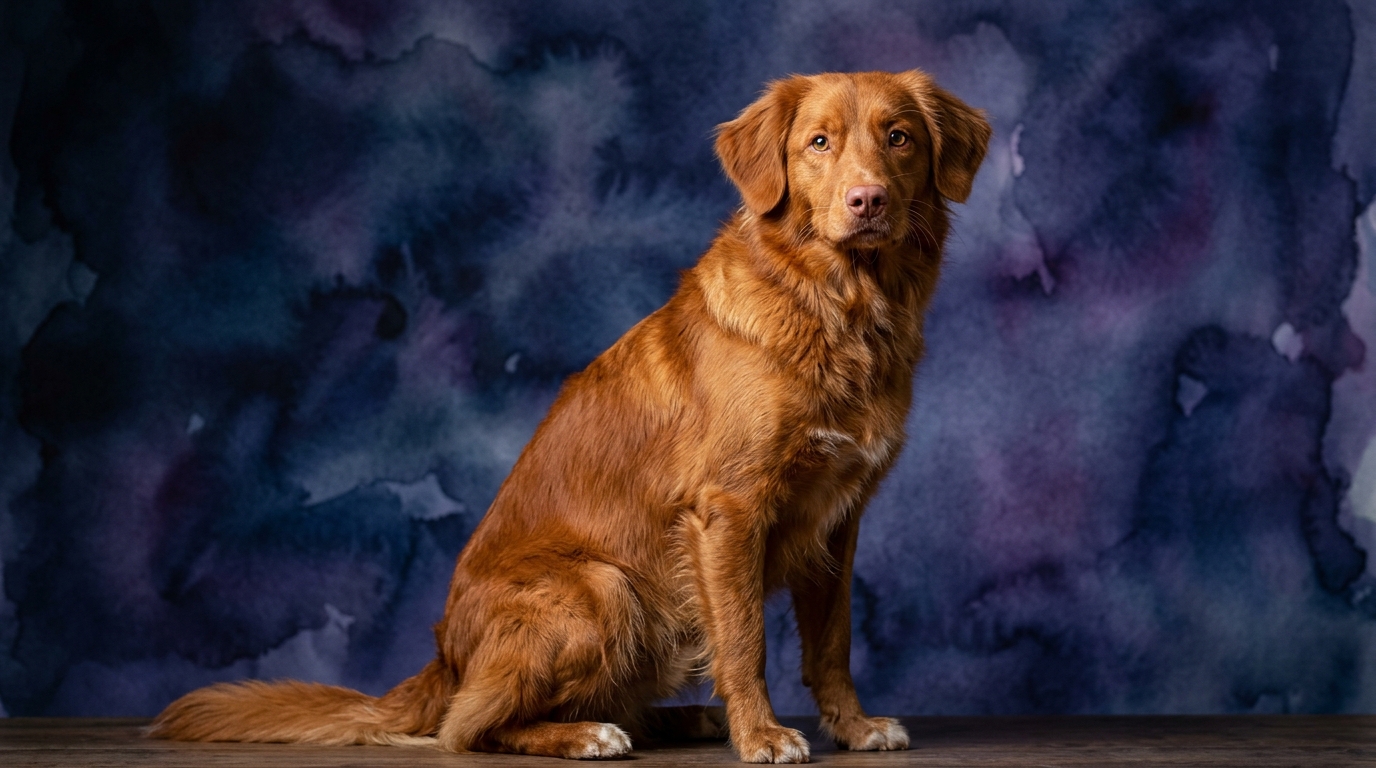
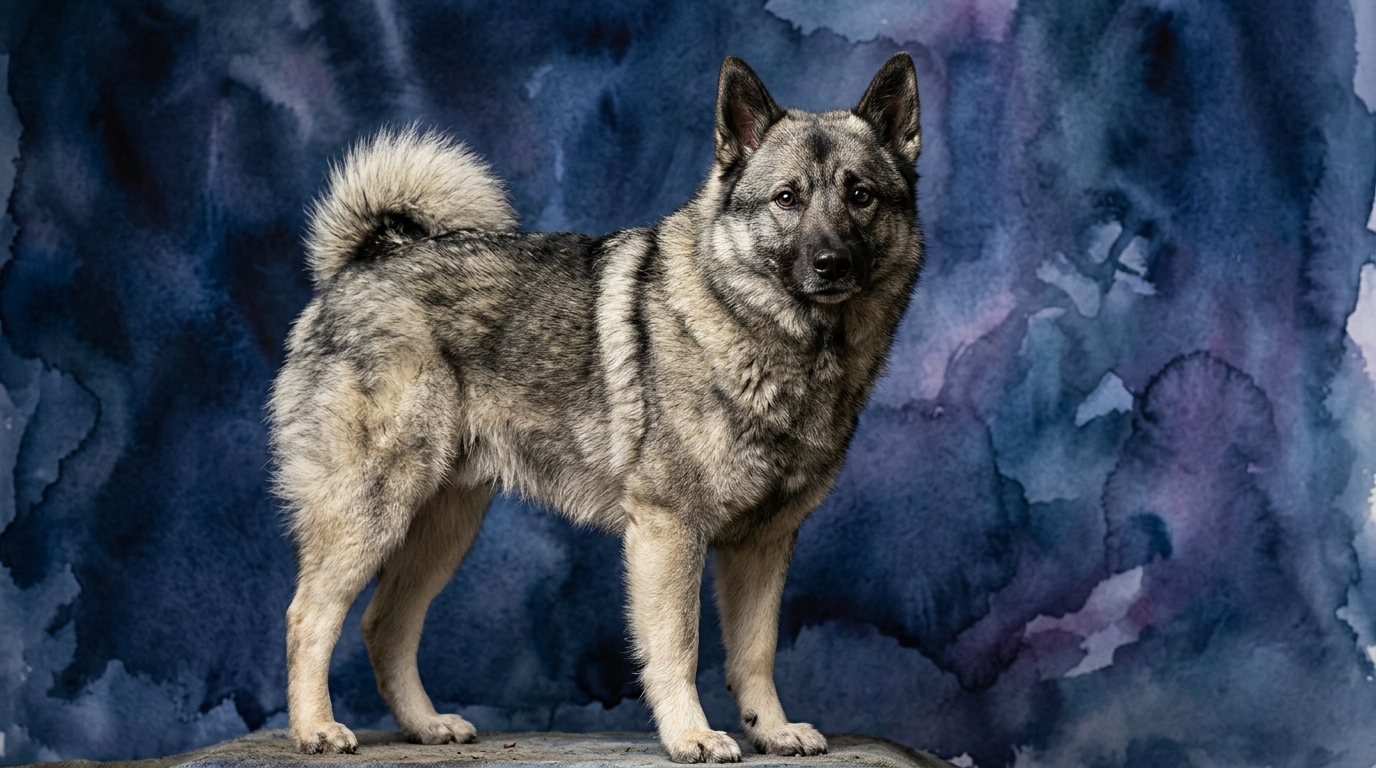
Side-by-Side IQ Profile
The Cosmic Pet Pet IQ Lab offers a nuanced look into the cognitive architecture of these two breeds. The Nova Scotia Duck Tolling Retriever, bred for decoying and retrieving waterfowl, displays a balanced and adaptable mind. Its Problem Solving is rated 3/5, indicating competence with routine challenges but less inclination for complex, multi-step independent strategizing. Training Speed is 3/5, suggesting a steady learning curve with consistent positive reinforcement. Social Intelligence sits at 3/5, reflecting a moderate ability to interpret human cues and adapt socially. Their Instinctive Drive, also 3/5, is strongly channeled towards cooperative retrieving and engaging purposefully. Memory is rated 3/5, meaning they reliably retain learned behaviors and routines.
In contrast, the Norwegian Elkhound, a resilient hound historically used for big-game hunting, presents a distinct cognitive landscape. Its Problem Solving scores higher at 4/5, reflecting a greater innate capacity for independent thought and strategizing to overcome obstacles, crucial for a solitary hunter. Training Speed is also 4/5, suggesting a quicker grasp of new commands and concepts, requiring fewer repetitions. Social Intelligence matches the Toller at 3/5, indicating a similar moderate ability to interact. Their Instinctive Drive is 3/5, but oriented towards tracking, scent work, and independent pursuit. Memory is notably higher at 4/5, indicating a superior ability to recall past experiences, learned commands, and environmental details, invaluable for remembering intricate trails.
Where Nova Scotia Duck Tolling Retriever Wins Cognitively
The Toller’s cognitive strengths lie in its harmonious balance and application within a cooperative framework. Its 3/5 Social Intelligence, combined with an Instinctive Drive (3/5) centered on working *with* a human for retrieving, makes it particularly adept at team-oriented activities. This balance ensures a Toller is often more consistently engaged with its handler’s intentions during shared tasks, translating its problem-solving (3/5) into effective execution of complex retrieving sequences rather than independent initiatives. Their steady 3/5 Training Speed fosters a positive, sustained training relationship, as they are less prone to frustration. The Toller’s consistent cognitive approach, supported by its 3/5 memory, is a significant advantage for owners valuing a steady, engaged partner in structured pursuits like obedience or agility.
Where Norwegian Elkhound Wins Cognitively
The Norwegian Elkhound’s cognitive profile excels in areas demanding independent thought, rapid learning, and robust recall, reflecting its heritage as a self-reliant hunter. Its 4/5 Problem Solving score signifies a strong capacity for independent strategizing, whether navigating complex environments or devising ways to access objects, translating into everyday cleverness. Coupled with a 4/5 Training Speed, Elkhounds tend to grasp new commands and concepts remarkably quickly, requiring fewer repetitions. Their superior Memory (4/5) ensures long-term retention of lessons and experiences, making them reliable in recalling complex sequences or routes. While their Instinctive Drive (3/5) is geared towards independent tracking, this drive, when channeled, can be a powerful asset in activities like scent work, where their cognitive strengths allow them to excel at intricate tasks without constant human direction.
Which Is Easier to Train and Why
Regarding ease of training, the Norwegian Elkhound’s higher scores in Training Speed (4/5) and Memory (4/5) suggest it will generally learn new commands faster than the Nova Scotia Duck Tolling Retriever (Training Speed 3/5, Memory 3/5). An Elkhound grasps cues with fewer repetitions and retains knowledge effectively. However, "easier to train" isn't solely about acquisition speed. The Elkhound’s 3/5 Social Intelligence and 3/5 Instinctive Drive, leaning towards independent pursuit, mean that while it learns quickly, it might be selective about *when* to apply that knowledge, especially if its own interests or a compelling scent override learned responses. Its independence can require consistent, high-value motivation.
The Toller, with its 3/5 Training Speed, learns steadily. Its 3/5 Social Intelligence and 3/5 Instinctive Drive are inherently geared towards cooperative work, translating into a strong desire to please and engage with its handler. While a Toller may take more repetitions, its willingness to work alongside its human partner can make the *process* of training feel more collaborative and less like a negotiation.
Which Suits Active Owners vs. Relaxed Owners
Neither the Nova Scotia Duck Tolling Retriever nor the Norwegian Elkhound suits truly relaxed owners; both demand significant energy and cognitive engagement. Their specific cognitive profiles and drives lend themselves to different active engagements.
The Toller is ideal for active owners who thrive on structured, cooperative activities. Its balanced 3/5 scores, particularly its Social Intelligence and retrieving-focused Instinctive Drive, mean it flourishes with purposeful tasks involving close human collaboration. Owners enjoying dog sports, obedience, or actual bird hunting will find a Toller an enthusiastic partner, requiring consistent physical exercise and mental stimulation within a handler-directed framework.
The Norwegian Elkhound, with its higher Problem Solving (4/5) and Memory (4/5) alongside an Instinctive Drive (3/5) for independent tracking, suits active owners appreciating a strong, self-reliant mind. These dogs excel in activities leveraging independent thought and keen senses, like scent work or exploratory hikes. While capable learners, their independent nature demands mental challenges satisfying their problem-solving drive, often without constant human direction. They need ample physical activity and mental engagement allowing them to use their intellect to navigate and explore.
The Verdict
Choose the Nova Scotia Duck Tolling Retriever if you seek a consistently cooperative, engaged partner for structured activities like dog sports or retrieving, valuing a steady learning pace and a strong desire to work alongside you.
Opt for the Norwegian Elkhound if you appreciate a clever, independent thinker that learns quickly and retains information well, thriving on self-directed problem-solving and activities that engage its keen senses and endurance.
🧠 Find Your Pet's IQ Score
Our Pet IQ Lab assessment covers 25+ tests across 5 cognitive dimensions — personalized to your breed.
Take the Full IQ Test →Frequently Asked Questions
Do Nova Scotia Duck Tolling Retrievers require a lot of mental stimulation?
Yes, despite their balanced scores, Tollers are working dogs. Their cognitive profile benefits immensely from regular mental challenges, especially those involving retrieving, puzzle toys, and learning new commands within a cooperative training context to keep their minds engaged and prevent boredom.
Is the Norwegian Elkhound a good choice for first-time dog owners?
The Norwegian Elkhound's independent problem-solving and strong instinctive drive can be a handful for first-time owners. While they learn quickly, their self-reliant nature requires consistent, firm, and positive training from someone experienced in channeling a hound's intellect and tenacity.
How do their social intelligence scores impact their interactions with other pets?
Both breeds score 3/5 in Social Intelligence, suggesting they can generally coexist with other pets with proper socialization. However, the Toller's cooperative drive might make it more inclined to play and interact, while the Elkhound's independent nature might mean it tolerates rather than actively seeks out interaction, especially with smaller prey-like animals, requiring careful introductions.