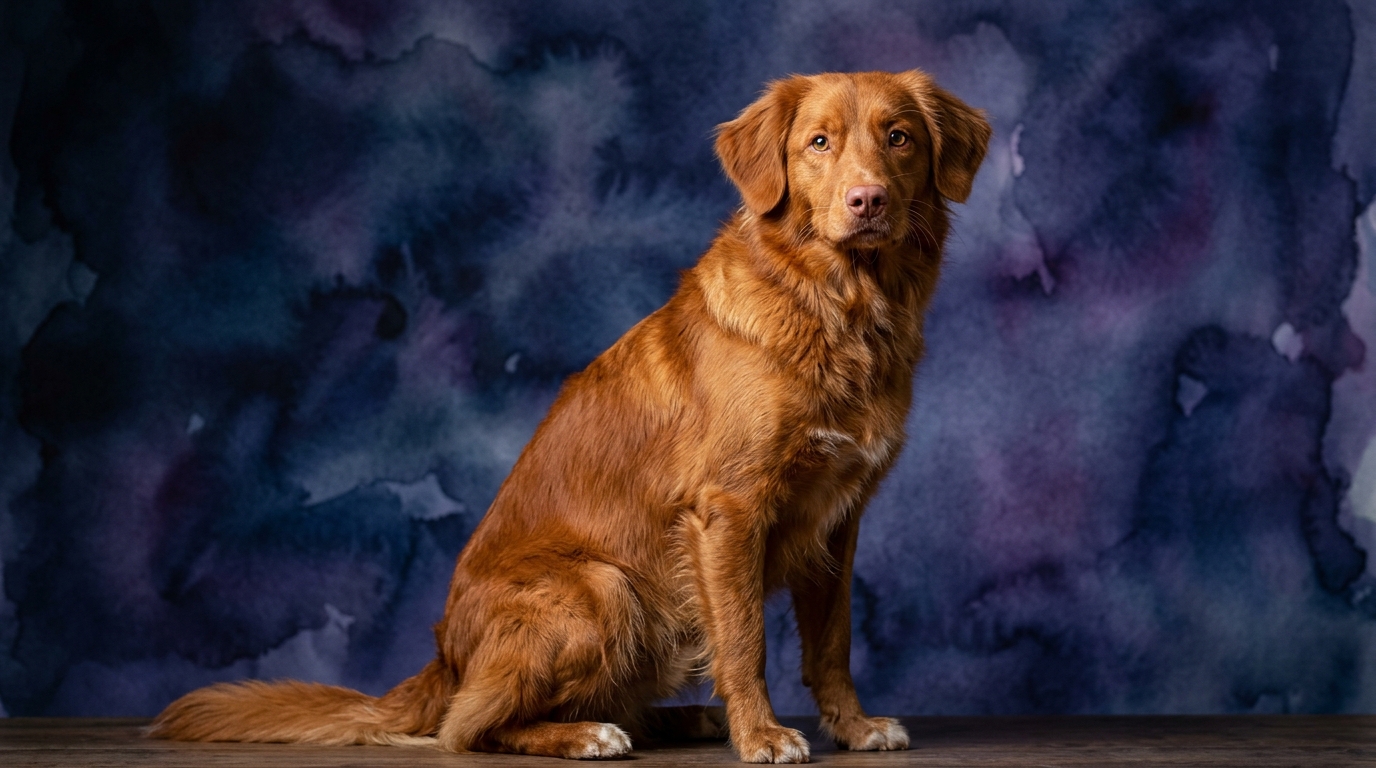
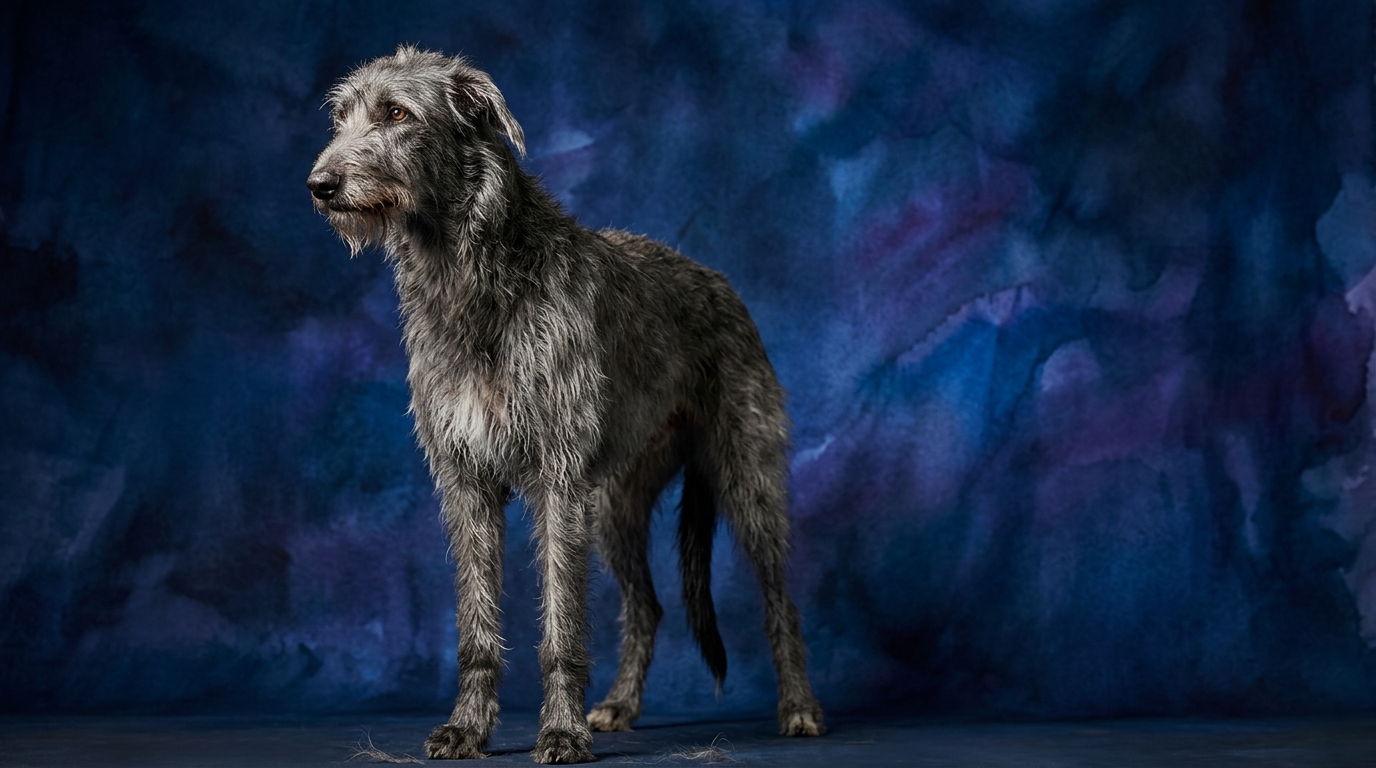
Side-by-Side Cognitive Profile: Toller vs. Deerhound
Despite sharing identical scores across our five cognitive dimensions, the Nova Scotia Duck Tolling Retriever and the Scottish Deerhound apply these abilities in ways deeply ingrained in their breed purpose and temperament. Understanding these subtle differences is key to appreciating their unique forms of intelligence.
For the Nova Scotia Duck Tolling Retriever, their Problem Solving (3/5) is particularly evident in navigating complex retrieving scenarios, such as figuring out the most efficient path to a downed bird or understanding multi-step commands. Their intelligence shines in practical, goal-oriented tasks that often involve adapting to their environment. Training Speed (3/5) for Tollers reflects their moderate pace of learning, often driven by an eagerness to cooperate and work alongside their handler, though they possess a clever independence if not adequately challenged. Their Social Intelligence (3/5) allows them to keenly read human cues, forming strong bonds and often assessing strangers with a discerning eye before accepting them. The Toller’s Instinctive Drive (3/5) is powerful and focused on retrieving and the unique 'tolling' behavior, which is a sophisticated blend of instinct and learned performance to lure waterfowl. Finally, their Memory (3/5) is reliable for recalling commands, intricate routines, and the specific locations of objects, making them consistent and dependable once a skill is mastered.
The Scottish Deerhound's Problem Solving (3/5), while numerically identical, manifests differently, focusing on spatial reasoning and strategic decision-making during pursuit. This involves efficiently navigating varied terrain to intercept prey, relying on their acute eyesight and calculated movements rather than solving intricate puzzles. Their Training Speed (3/5) indicates they grasp new concepts at a moderate rate, but their sighthound independence means consistent execution often depends on their motivation and the perceived value of the task. Scottish Deerhounds display Social Intelligence (3/5) through a gentle sensitivity to their human companions' moods, offering quiet, dignified companionship and preferring a calm environment. Their Instinctive Drive (3/5) is an intense, powerful chase instinct, triggered by movement, demanding vast open spaces for safe expression. This drive is about the efficiency and thrill of the hunt itself. The Deerhound’s Memory (3/5) is solid for established routines, familiar individuals, and environmental layouts, particularly recalling optimal routes during a pursuit, though their independent nature can sometimes lead to 'selective hearing' when their chase instinct is engaged.
Where the Nova Scotia Duck Tolling Retriever Wins Cognitively
The Toller's cognitive strengths are particularly pronounced in situations demanding active partnership and adaptive strategies within a structured working context. Their Problem Solving (3/5) excels in intricate tasks like navigating dense cover to locate a hidden retrieve or deciphering nuanced, multi-part command sequences, showcasing a flexible intellect driven by a clear purpose. The Toller's unique 'tolling' behavior, a sophisticated blend of instinct and learned performance to lure waterfowl, highlights an instinctive drive (3/5) that requires a specific, focused mental engagement unmatched by the Deerhound's pure chase drive. Furthermore, their Social Intelligence (3/5) often translates into a remarkable attunement to their handler's desires, making them exceptionally responsive to guidance in evolving situations—an invaluable trait for a cooperative working partner.
Where the Scottish Deerhound Wins Cognitively
The Scottish Deerhound's cognitive advantages become apparent in domains requiring independent decision-making, exceptional spatial awareness, and a refined understanding of movement dynamics. Their Problem Solving (3/5) truly shines in the open field, where they independently assess terrain, anticipate prey movements, and strategize the most efficient pursuit path without constant human intervention. This form of intelligence isn't about solving human-contrived puzzles, but about mastering their natural environment for an ancestral purpose. Their Instinctive Drive (3/5) for the chase is unparalleled in its single-minded intensity and precision, demanding near-instantaneous assessment of distance and speed. The Deerhound's Memory (3/5), while reliable, is perhaps most impactful in recalling optimal routes across familiar landscapes during a chase, demonstrating a practical, environmentally-focused retention that perfectly serves their sighthound heritage.
Training Dynamics: Toller's Cooperation vs. Deerhound's Independence
Assessing 'easier to train' with identical Training Speed (3/5) scores necessitates understanding the *context* of that speed. The Nova Scotia Duck Tolling Retriever generally appears more straightforward to train for obedience and cooperative tasks. This isn't solely due to faster learning, but because their Problem Solving (3/5) and Social Intelligence (3/5) are oriented towards working *with* a handler, finding satisfaction in shared goals and positive reinforcement. Their inherent desire for partnership and focus on handler cues often makes them more receptive to consistent instruction, even when their clever independence emerges. The Scottish Deerhound, conversely, while capable of grasping concepts at a similar pace, often requires a more nuanced training approach. Their independent nature, a hallmark of sighthounds, means they might fully comprehend a command but choose not to execute it if a more compelling stimulus (like a distant movement) captures their attention. Training a Deerhound demands immense patience, consistent positive reinforcement, and an understanding that their primary motivation isn't always human approval, but often their own intrinsic drives. Consequently, while both learn effectively, the Toller’s inherent desire for collaboration often makes the training journey feel more cooperative, whereas the Deerhound’s independence requires a trainer to be more creative and persistent in finding motivation.
Lifestyle Match: Active Engagement vs. Relaxed Presence
For owners seeking a consistently active and engaged companion, the Nova Scotia Duck Tolling Retriever is the more suitable choice. Their high Instinctive Drive (3/5) and energy levels demand daily structured exercise, mental challenges, and often a 'job' to do, whether it's retrieving, agility, or water sports. They thrive with owners who enjoy outdoor adventures, participate in dog sports, and are prepared to engage their dog's mind and body for substantial periods each day. A Toller that isn't adequately stimulated can become restless or destructive, using their problem-solving skills in undesirable ways. The Scottish Deerhound, while needing bursts of intense physical activity—specifically long gallops in safe, enclosed spaces—generally suits a more 'relaxed' owner in terms of continuous interaction. They are renowned for their 'couch potato' tendencies indoors, content to lounge after their exercise needs are met. Owners must provide opportunities for them to stretch their legs and satisfy their chase instinct, but they don't typically require the constant, varied mental and physical stimulation that a Toller does. An ideal Deerhound owner appreciates their calm indoor demeanor but can provide access to large, secure areas for their essential, high-speed runs.
The Verdict
Choose the Nova Scotia Duck Tolling Retriever if you desire a highly collaborative, active partner eager for shared adventures and structured mental challenges. They thrive with owners who can dedicate time to consistent engagement and activity.
Opt for the Scottish Deerhound if you appreciate a gentle, independent companion who thrives on intense bursts of exercise followed by serene relaxation, valuing subtle companionship over constant interaction.
🧠 Find Your Pet's IQ Score
Our Pet IQ Lab assessment covers 25+ tests across 5 cognitive dimensions — personalized to your breed.
Take the Full IQ Test →Frequently Asked Questions
Do Nova Scotia Duck Tolling Retrievers require a lot of mental stimulation?
Yes, Tollers thrive on mental engagement. Their problem-solving (3/5) and instinctive drive (3/5) mean they need puzzles, training, and varied activities to keep their minds occupied, preventing boredom and potential behavioral issues. Consistent mental work is as important as physical exercise for their well-being.
How do Scottish Deerhounds typically behave with strangers or other pets?
Scottish Deerhounds are generally reserved and polite with strangers, not overly effusive but rarely aggressive, preferring quiet observation. With other pets, especially small, fast-moving ones, their strong instinctive drive (3/5) for chase can be a challenge, requiring careful introductions and consistent supervision to ensure safety.
Are either of these breeds suitable for first-time dog owners?
Both breeds, despite their identical IQ scores, present unique challenges that might be demanding for first-time owners. Tollers require consistent, engaging training and significant time commitment for exercise and mental engagement, while Deerhounds need owners who understand sighthound independence and can provide secure spaces for their specific exercise needs and manage their prey drive effectively.