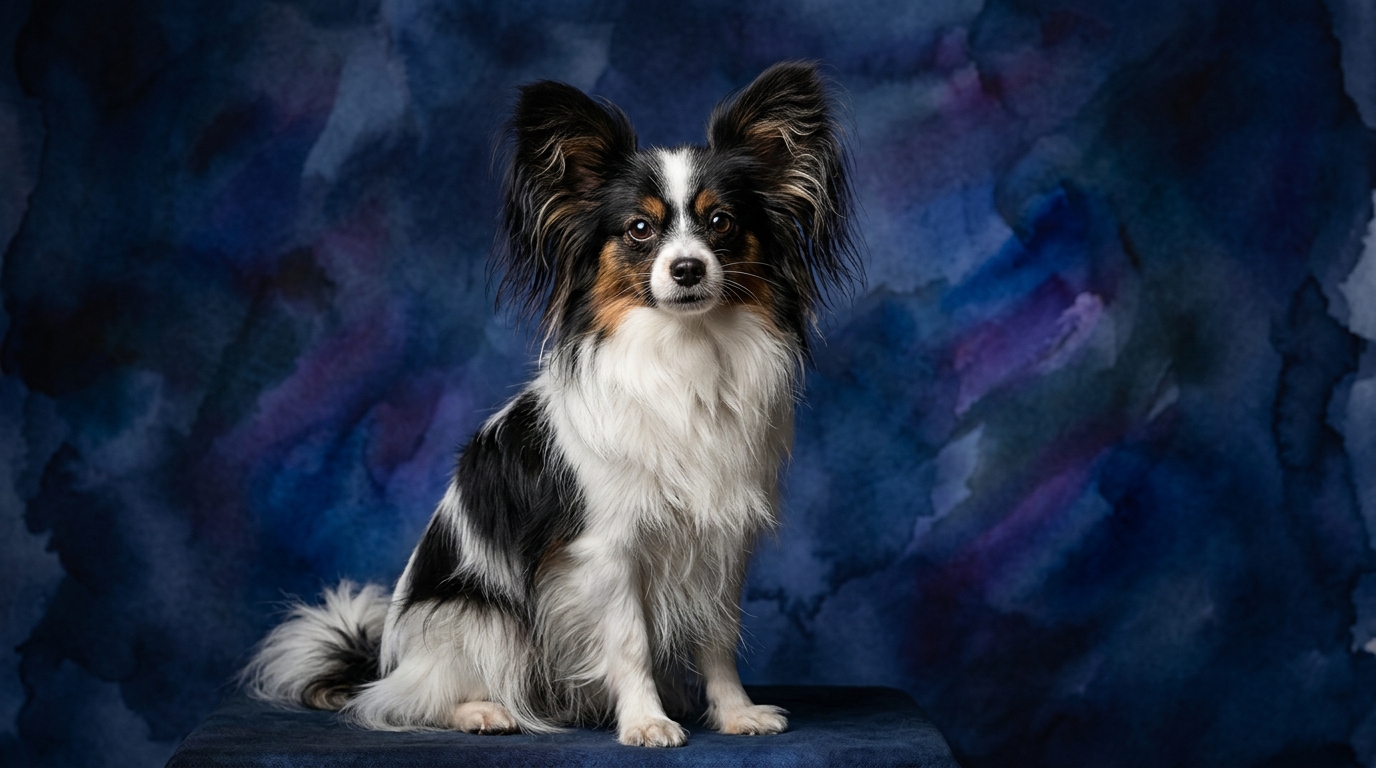
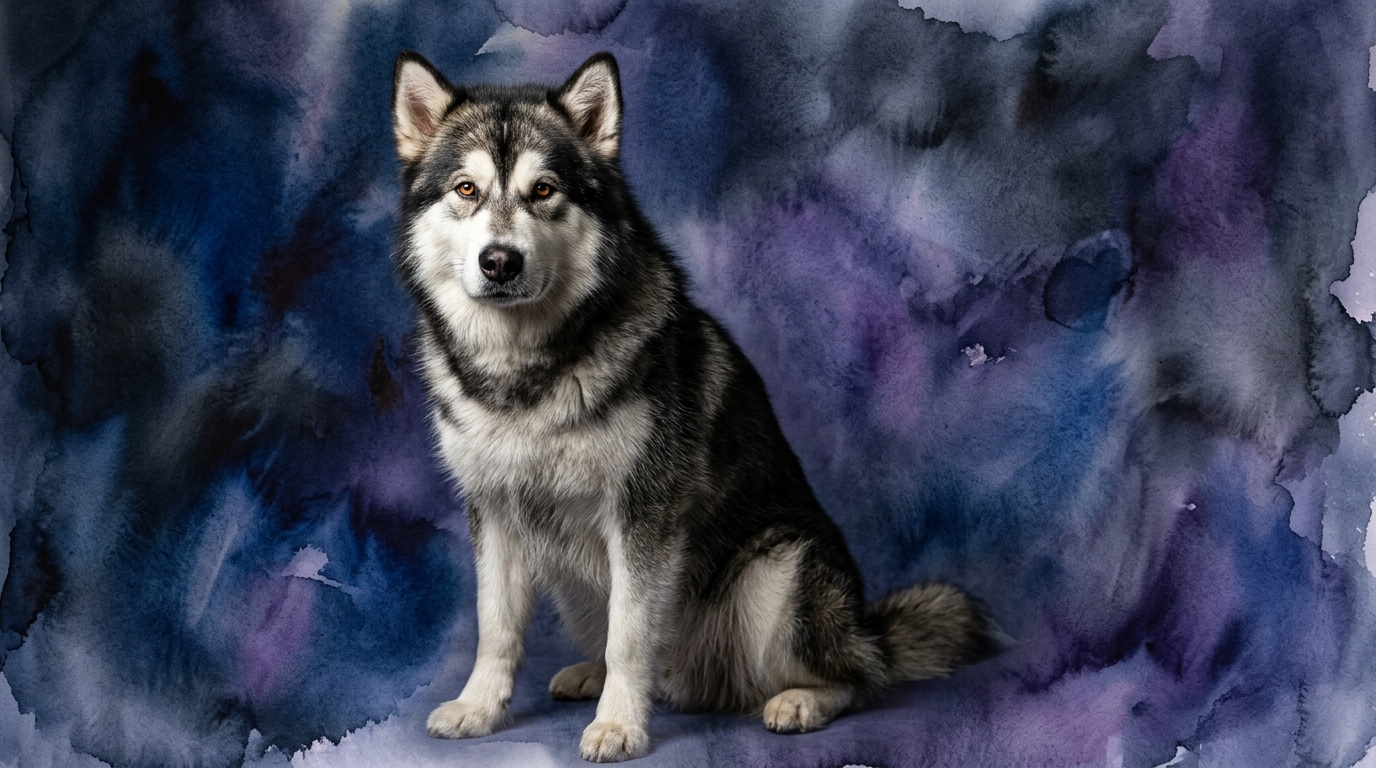
Side-by-Side Cognitive Profile: Papillon vs. Alaskan Malamute
The Cosmic Pet Pet IQ Lab employs a multi-faceted approach to assess canine intelligence, moving beyond simple obedience to encompass problem-solving, training speed, social acumen, instinctive drives, and memory. When comparing the elegant Papillon (Coren rank #8) with the majestic Alaskan Malamute (Coren rank #50), their distinct cognitive blueprints become remarkably clear.
The Papillon, scoring an impressive #8 on Coren's scale, demonstrates exceptional cognitive agility. Its problem-solving ability rates a perfect 5/5, indicating a quick, analytical mind adept at deciphering novel challenges, from intricate puzzle toys to navigating complex environments. Training speed also achieves a 5/5, meaning these dogs grasp new commands and routines with remarkable rapidity, often requiring minimal repetitions. Their social intelligence, at 4/5, highlights a strong attunement to human cues and social dynamics, making them perceptive companions. Instinctive drive is a moderate 3/5, suggesting a balanced inner motivation not overwhelmingly dominated by independent working urges, while their memory stands at an outstanding 5/5, ensuring long-term retention of learned behaviors and experiences.
In contrast, the Alaskan Malamute, ranking #50, exhibits a different spectrum of cognitive strengths, reflective of its working heritage. Its problem-solving capability is a robust 4/5, signifying a practical, resourceful intelligence, particularly in tasks related to navigating terrain or securing resources, though perhaps less inclined towards abstract puzzles. Training speed is rated 2/5, indicating that Mals require more patience, consistency, and repetition during the learning process, often driven by their independent nature rather than an inherent desire to please. Social intelligence, at 3/5, reflects an understanding of pack hierarchy and communication, but with a more self-reliant disposition. Where the Malamute truly shines is in instinctive drive, scoring a perfect 5/5, demonstrating an innate, powerful urge for pulling, digging, and independent work. Their memory is a solid 4/5, enabling them to recall routes, routines, and important experiences effectively over time.
Where the Papillon's Mind Shines Brightest
The Papillon's cognitive profile reveals a breed exceptionally well-suited for intricate learning and close partnership. Their perfect 5/5 scores in problem-solving and training speed mean they excel in environments demanding mental dexterity and rapid acquisition of new skills. Owners will find Papillons eager to engage in complex obedience routines, learn an extensive repertoire of tricks, or master the nuances of agility courses with remarkable ease. Their capacity to quickly connect actions with consequences makes training a rewarding, swift process.
Furthermore, their 5/5 memory ensures that once a concept is learned, it is retained for the long haul. This isn't just about remembering commands; it extends to recalling people, places, and routines, making them reliable companions who understand their world. The Papillon's 4/5 social intelligence complements these traits, allowing them to keenly observe and respond to human emotions and intentions, fostering a deep, empathetic bond. They thrive on interactive mental challenges that involve their human partners, demonstrating a sophisticated understanding of communication and cooperation that few breeds can match.
The Alaskan Malamute's Distinct Intellectual Strengths
While the Papillon excels in rapid, intricate learning, the Alaskan Malamute's intelligence is defined by resilience, independence, and a powerful connection to its ancestral purpose. Their 5/5 instinctive drive is their paramount cognitive strength, manifesting as an unwavering motivation for demanding physical tasks. This isn't merely physical stamina; it's a cognitive drive to work, to pull, and to navigate challenging environments, often with a self-directed purpose.
Their 4/5 problem-solving ability, though lower than the Papillon's, is highly practical and often applied to real-world scenarios rather than abstract puzzles. Malamutes are adept at finding solutions to environmental challenges, whether it's navigating through deep snow, locating a scent trail, or figuring out how to access a desired object. This resourcefulness, combined with their 4/5 memory for routes and procedures, makes them formidable companions in demanding outdoor activities. Their social intelligence, at 3/5, allows them to understand pack dynamics and human leadership, but often with a respectful independence rather than an overwhelming desire to please. They are thinkers who assess situations and make choices, a trait invaluable for a working dog needing to make decisions autonomously in harsh conditions.
Training Dynamics: A Tale of Two Temperaments
When it comes to ease of training, the Papillon stands out as the more accessible choice for most owners. Their 5/5 training speed is a testament to their eagerness to learn and their rapid cognitive processing. A Papillon typically requires fewer repetitions to master a new command and genuinely enjoys the mental engagement that training provides. Their high social intelligence (4/5) means they are highly attuned to their owner's feedback and motivations, making positive reinforcement exceptionally effective. They thrive on praise and interaction, viewing training as a collaborative game, and their smaller size makes behavioral management less physically demanding.
The Alaskan Malamute, with its 2/5 training speed and dominant 5/5 instinctive drive, presents a more significant training challenge. Their independence and strong will mean they require an owner who understands their motivations and is prepared for a more patient, consistent, and reward-based approach. Malamutes are not inherently driven by a constant desire to please; rather, they learn when they perceive a benefit or when a task aligns with their natural instincts. Training must be engaging, fair, and demonstrate clear leadership without resorting to harsh methods, which can backfire with this independent breed. Their powerful drives can lead to stubbornness or selective hearing if not channeled appropriately, demanding an owner who can consistently reinforce boundaries and provide purposeful activities that satisfy their innate urges.
Matching Minds to Lifestyles: Active vs. Relaxed Owners
The Papillon's cognitive profile makes it a wonderfully adaptable companion for a range of lifestyles, though it particularly thrives with owners who can provide consistent mental engagement. While physically agile and capable of enjoying walks and play, their exercise needs are generally moderate. A relaxed owner who enjoys teaching tricks, playing interactive games, or participating in canine sports like obedience or rally will find the Papillon's sharp mind and eagerness to learn incredibly rewarding. Their high social intelligence means they are content to be involved in family activities, whether it's a quiet evening at home or a bustling outing, as long as they are mentally stimulated and included.
The Alaskan Malamute, conversely, is unequivocally suited for active, experienced owners who understand and can cater to their profound instinctive drives. Their 5/5 instinctive drive means they possess an immense need for purposeful physical exertion and mental challenge that taps into their working heritage. Owners must be prepared for long, vigorous walks, hiking, skijoring, carting, or other demanding outdoor pursuits. A 'relaxed' owner who cannot provide this level of activity will inevitably encounter behavioral issues stemming from boredom and pent-up energy, such as destructive chewing, excessive digging, or escape attempts. Their problem-solving skills, combined with their drive, will be creatively applied to finding ways to entertain themselves if their needs are not met, making them unsuitable for sedentary lifestyles.
The Verdict
Choose the Papillon if you seek a highly trainable, mentally agile companion that excels in obedience, tricks, and thrives on close human interaction and engaging mental games.
Choose the Alaskan Malamute if you are an experienced, active owner who appreciates an independent, resilient working breed, capable of demanding physical tasks and thriving in an environment that channels their strong natural drives.
🧠 Find Your Pet's IQ Score
Our Pet IQ Lab assessment covers 25+ tests across 5 cognitive dimensions — personalized to your breed.
Take the Full IQ Test →Frequently Asked Questions
Are Papillons good for first-time dog owners?
Yes, their exceptional trainability and adaptable nature make them suitable for first-time dog owners, provided these individuals are committed to providing consistent mental stimulation and early socialization. They respond remarkably well to positive reinforcement methods.
Do Alaskan Malamutes require a lot of outdoor space?
While their large size benefits from a secure yard, it is their profound need for extensive exercise and mental engagement that is paramount, rather than just space. Regular, vigorous outdoor activity, such as long hikes or sledding, is crucial for their physical and mental well-being, regardless of yard size.
Which breed is generally better with children?
Both can be good with children, but with different considerations. Papillons are delicate and require children to be gentle and respectful in their interactions. Malamutes are robust but need supervision due to their size and independent nature, ensuring that interactions are always respectful and safe for both dog and child.