Side-by-Side Cognitive Profiles
The Cosmic Pet IQ Lab's framework allows us to dissect the distinct mental strengths of the Papillon and the Whippet, moving beyond general perceptions to specific cognitive dimensions. While both breeds bring unique qualities, their intellectual leanings diverge significantly, reflecting their historical roles and breed group characteristics.
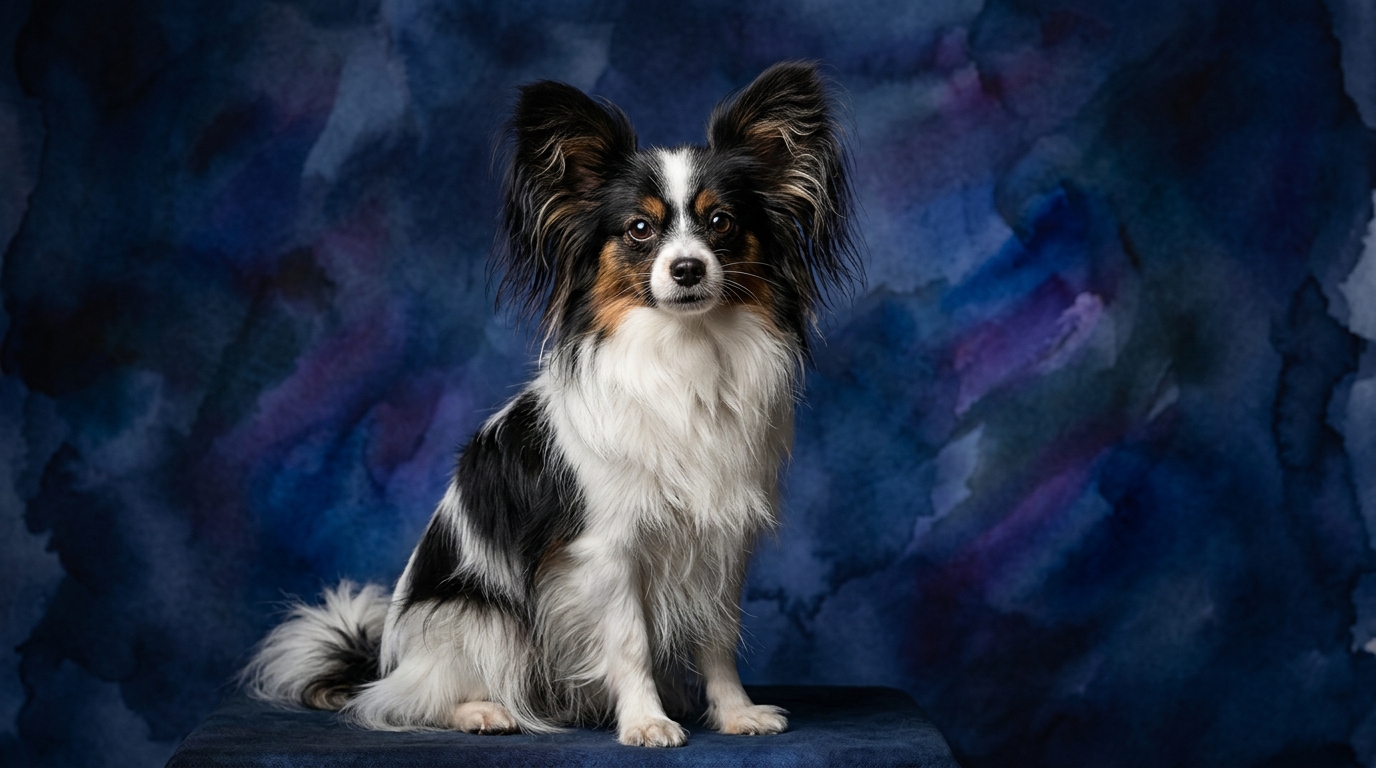
The Papillon, a spirited Toy breed, registers an impressive Coren rank of #8, placing it among breeds that demonstrate rapid association learning and command retention. Its Problem Solving ability scores a perfect 5/5, indicating a dog capable of quickly analyzing novel situations and devising effective solutions. Training Speed is also rated 5/5, highlighting their eagerness and capacity to grasp new commands and routines with minimal repetition. Social Intelligence stands at 4/5, suggesting a keen awareness of human cues and a strong desire for interaction, while Instinctive Drive is a moderate 3/5, manifesting as a manageable prey drive. Their Memory is exceptional at 5/5, allowing them to recall complex sequences and past experiences with clarity.
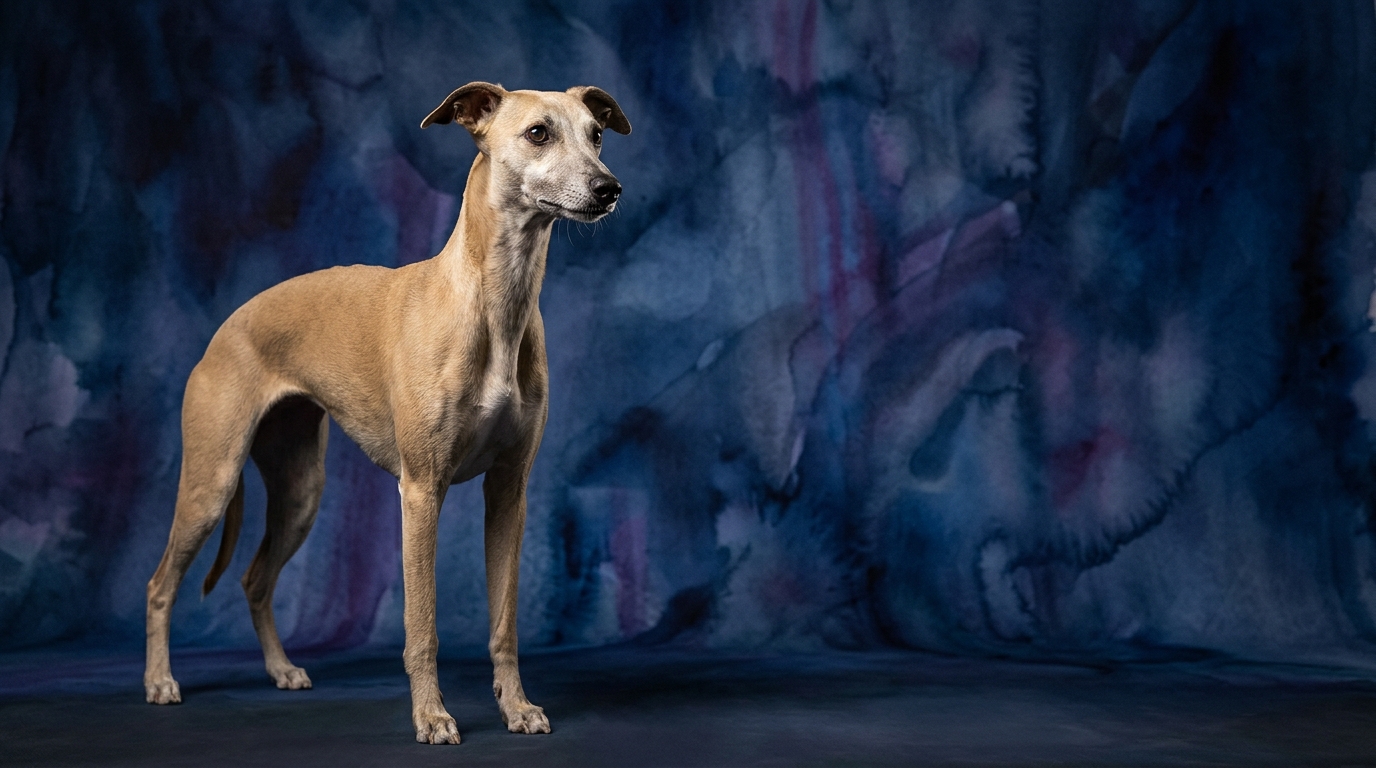
In contrast, the Whippet, a sleek member of the Hound group, holds a Coren rank of #51, reflecting a different set of cognitive priorities. Its Problem Solving capability is rated 3/5, meaning they can navigate challenges but might prefer practical, immediate solutions over abstract reasoning. Training Speed is 2/5, indicating that learning new commands often requires more patience, consistency, and motivation. Social Intelligence matches the Papillon at 4/5, as Whippets are deeply affectionate with their inner circle and adept at reading family dynamics, though they can be reserved with strangers. Where the Whippet truly shines is in its Instinctive Drive, earning a 5/5 for its profound, specialized chase and pursuit behaviors. Their Memory is 3/5, sufficient for daily routines and familiar faces, but perhaps less for intricate, infrequently practiced commands.
Where the Papillon Excels Cognitively
The Papillon's cognitive strengths lie primarily in its remarkable capacity for learning and retention, coupled with an agile mind for problem-solving. Their 5/5 rating in Problem Solving means they are adept at navigating complex environments, figuring out puzzle toys, and adapting quickly to new training scenarios. This isn't merely about following instructions; it's about understanding the 'why' behind a task and applying that knowledge flexibly.
Furthermore, their superior Training Speed (5/5) and Memory (5/5) create a formidable combination for structured learning. Papillons readily form strong neural pathways for new commands and behaviors, making them highly responsive to consistent reinforcement. They recall past lessons and social interactions with clarity, allowing them to build upon learned experiences and generalize skills to new contexts. This cognitive nimbleness makes them excellent candidates for advanced obedience, agility, and trick training, where quick thinking and precise execution are paramount.
Where the Whippet Excels Cognitively
The Whippet's cognitive prowess is deeply rooted in its evolutionary specialization as a sighthound, particularly evident in its 5/5 Instinctive Drive. This isn't a mere impulse; it's a highly refined cognitive system for visual processing, spatial awareness, and strategic pursuit. Whippets possess an innate ability to spot movement at great distances, process that information rapidly, and initiate a focused chase with incredible efficiency. Their mental faculties are acutely tuned to the dynamics of prey detection and capture, demonstrating a different, equally complex form of intelligence.
While their Problem Solving and Training Speed ratings are moderate, these metrics don't capture the full scope of their sighthound cognition. A Whippet's ability to navigate varied terrain at high speeds, maintain visual lock on a moving target, and anticipate its trajectory showcases a sophisticated form of applied intelligence—a blend of rapid decision-making, physical coordination, and deeply ingrained behavioral patterns. They exhibit an exquisite sensory and motor intelligence, tailored for their ancestral purpose, making them masters of the chase.
Trainability: Papillon's Eagerness vs. Whippet's Independence
When it comes to trainability, the differences between these two breeds are pronounced and stem directly from their cognitive profiles. The Papillon, with its 5/5 Training Speed and high Problem Solving, is generally considered far easier to train. They possess a strong desire to engage with their human companions and derive satisfaction from mastering new tasks. Their quick comprehension means fewer repetitions are needed for a command to stick, and their excellent memory ensures long-term retention. They respond enthusiastically to positive reinforcement, often seeing training as a stimulating game, which reinforces their eagerness to participate. This makes them highly adaptable to various training methodologies and environments.
The Whippet, on the other hand, presents a different training dynamic. Its 2/5 Training Speed suggests that while capable of learning, they require more patience and consistency. Their independence, a hallmark of many sighthounds, means they may not always be driven by a desire to please, especially when their powerful 5/5 Instinctive Drive is engaged. A Whippet might understand a 'stay' command, but if a squirrel streaks across the yard, their primal chase instinct can override learned behavior. Training a Whippet often involves finding high-value motivators, making sessions engaging, and understanding that while they are affectionate, their focus can shift to environmental stimuli. Their learning is more about establishing strong, positive routines and respecting their sighthound nature, rather than expecting immediate, eager compliance for complex tasks.
Matching Breeds to Lifestyles: Active Engagement vs. Graceful Companionship
Choosing between a Papillon and a Whippet often comes down to aligning their specific needs and cognitive preferences with an owner's lifestyle. The Papillon thrives with owners who enjoy consistent mental engagement and can provide outlets for their sharp minds. This includes regular training sessions, puzzle toys, and opportunities for dog sports like agility or obedience, where their quick thinking and agility can shine. While they enjoy walks and playtime, their physical exercise needs are moderate; it's the mental stimulation that truly keeps them content. They are well-suited for owners who appreciate an interactive, responsive companion ready for intellectual challenges and close partnership.
The Whippet, in contrast, suits owners who understand and can accommodate their unique physical and psychological makeup. They require bursts of intense physical activity—safe, secure areas where they can gallop freely and express their powerful instinctive drive. After their exercise, Whippets are typically calm, quiet, and affectionate companions, often content to lounge gracefully indoors. They are ideal for owners who appreciate a dog that can transition from high-speed bursts to serene napping, and who value a loyal, gentle presence without demanding constant mental 'work.' Owners who can provide secure off-leash running opportunities and appreciate a dog that is independent outdoors but deeply devoted indoors will find a wonderful match in a Whippet.
The Verdict
Choose a Papillon if you seek a highly trainable, intellectually nimble companion eager for complex tasks, mental games, and consistent interaction, thriving on active partnership.
Choose a Whippet if you appreciate a graceful, quiet companion with an exceptional natural athletic ability and a strong, primal chase drive, offering deep affection after fulfilling their unique sighthound needs.
🧠 Find Your Pet's IQ Score
Our Pet IQ Lab assessment covers 25+ tests across 5 cognitive dimensions — personalized to your breed.
Take the Full IQ Test →Frequently Asked Questions
Is the Papillon better for dog sports?
Papillons often excel in sports like agility, obedience, and rally due to their quick learning, eagerness to please, and compact agility. Their mental sharpness and responsiveness make them natural competitors in disciplines requiring precision and speed.
Can a Whippet live in an apartment?
Yes, Whippets can adapt well to apartment living provided they receive adequate daily exercise, typically bursts of running in a secure area. Their calm indoor demeanor, relatively low barking tendency, and preference for lounging make them suitable for smaller spaces.
Do Papillons shed much?
Papillons have a single coat and shed moderately, generally less than many double-coated breeds. Regular brushing helps manage their long, silky fur, keeps it free of mats, and minimizes loose hair around the home.