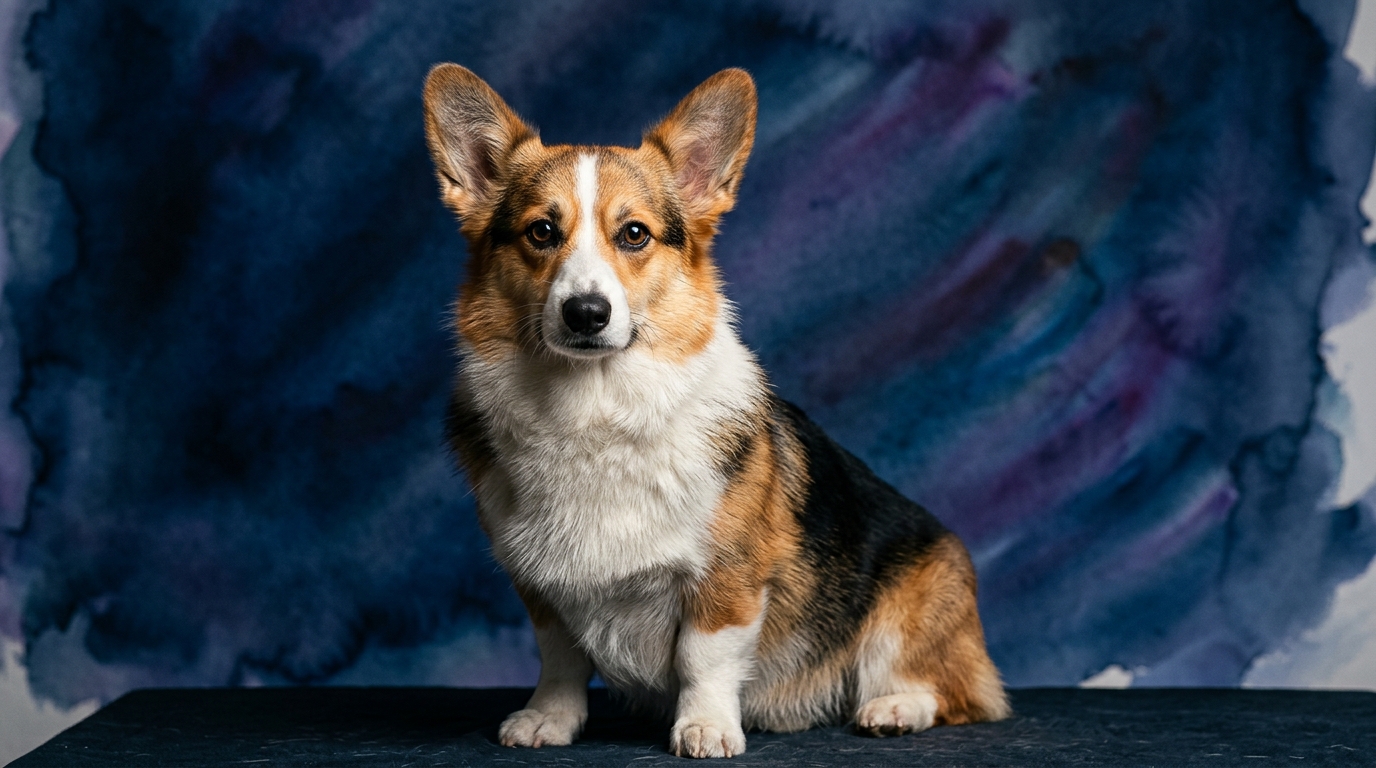
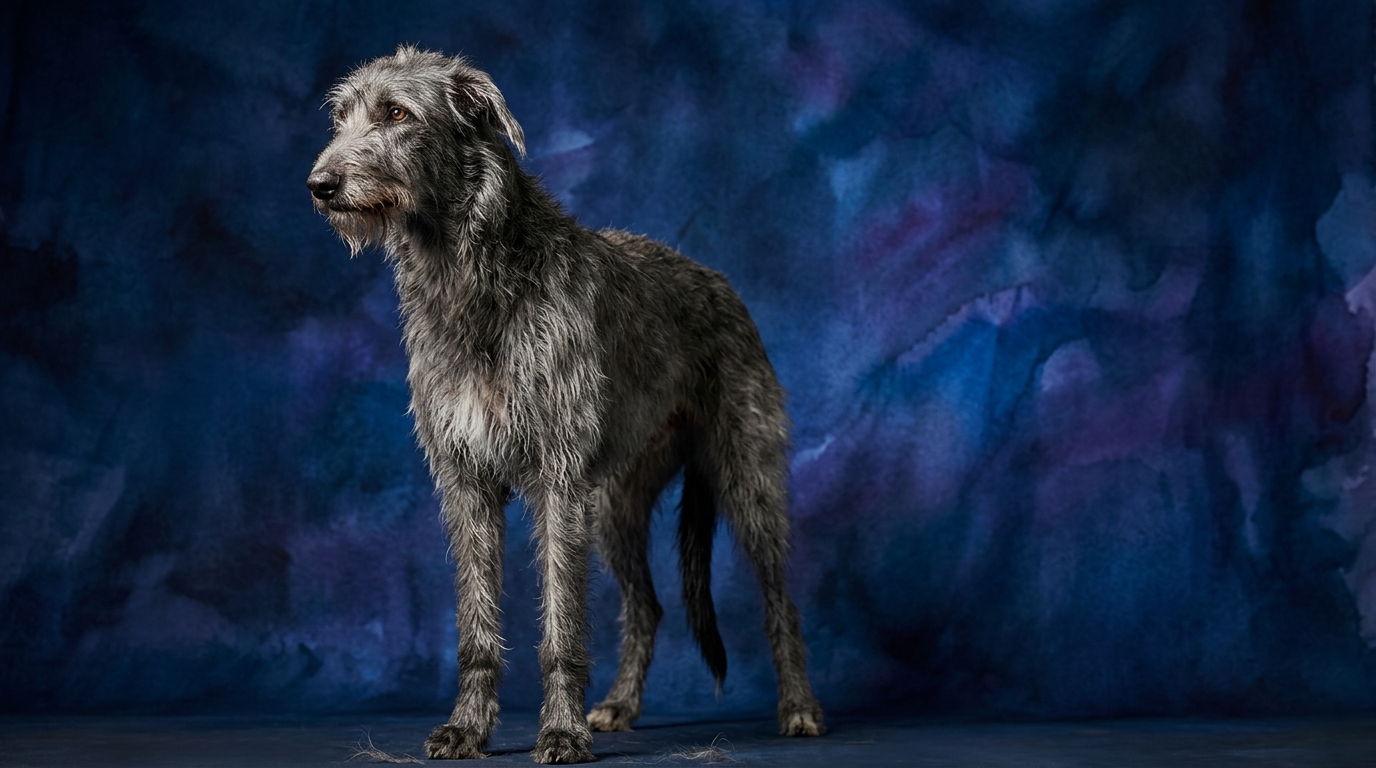
Side-by-Side IQ Profile: Herder vs. Sighthound
The Cosmic Pet Pet IQ Lab offers a detailed look into the unique cognitive architectures of these two breeds, revealing how their historical roles have sculpted their mental capabilities. The Pembroke Welsh Corgi, a compact herding dog, boasts a Coren rank of #11, signaling its readiness to learn and obey. In contrast, the Scottish Deerhound, a majestic sighthound, is not Coren-ranked, often indicating a more specialized or independent cognitive approach rather than general obedience.
For the Pembroke Welsh Corgi, our IQ assessment highlights a remarkable profile: Problem Solving (4/5), Training Speed (5/5), Social Intelligence (4/5), Instinctive Drive (5/5), and Memory (4/5). These scores reflect a dog that is not only quick-witted and eager to learn but also deeply engaged with its human companions. Their herding background demands constant mental agility, quick decisions, and a strong partnership with a handler, manifesting in a cognitive makeup that thrives on interaction and purpose.
The Scottish Deerhound presents a different cognitive blueprint: Problem Solving (3/5), Training Speed (3/5), Social Intelligence (3/5), Instinctive Drive (3/5), and Memory (3/5). These ratings point to a dog whose intelligence is geared towards specific tasks related to its sighthound heritage rather than broad obedience. They are thoughtful and independent, often prioritizing their environment or intrinsic motivations over immediate human directives. Their calm demeanor indoors belies a powerful, specialized drive for pursuit when stimulated by movement.
Where Pembroke Welsh Corgi Wins Cognitively
The Pembroke Welsh Corgi's cognitive profile is a masterclass in adaptability and responsiveness, largely thanks to its herding heritage. Its winning edge is most evident in its exceptional Training Speed (5/5), meaning it absorbs new commands with remarkable rapidity, often grasping concepts in just a few repetitions. This isn't merely rote learning; it's underpinned by a strong Social Intelligence (4/5) making them keen observers of human intentions and eager to comply. A Corgi actively seeks to understand and engage with its handler, translating into a dog that genuinely enjoys the partnership of training.
Furthermore, their Problem Solving (4/5) is highly practical and often directed towards achieving a goal set by their human. Whether figuring out how to retrieve a toy from under furniture or navigating an agility course, they apply their cognitive resources with determination and ingenuity. This is coupled with a robust Memory (4/5), ensuring that once a lesson is learned, it tends to stick, making their training durable. Their Instinctive Drive (5/5) to herd, while needing appropriate outlets, also fuels their focused energy and desire for a “job,” making them highly motivated participants in activities that provide structure and purpose. This combination creates a dog not only quick to learn but also deeply engaged, consistently performing well in structured environments.
Where Scottish Deerhound Wins Cognitively
While the Scottish Deerhound's cognitive scores are generally lower than the Corgi's across the board, its strengths lie in a different, more specialized domain, reflecting its ancient role as a sighthound. The Deerhound's “win” is in its nuanced application of its Instinctive Drive (3/5) for specific, high-intensity tasks. When a distant movement triggers its chase instinct, the Deerhound exhibits unparalleled, single-minded focus and determination. This isn't a general “drive” for constant activity, but a powerful, specialized cognitive activation for pursuit, requiring immense concentration and physical prowess.
Their Problem Solving (3/5), though rated lower for general tasks, is exquisitely tailored for hunting. They can assess terrain, anticipate prey movements, and make split-second decisions during a chase, demonstrating a unique form of situational intelligence that is highly effective in their historical role. This contributes to a calm, observant demeanor when not pursuing, conserving energy for when it truly matters. Their Social Intelligence (3/5), while not overtly demonstrative, allows for deep, quiet bonds with their chosen family, appreciating subtle interactions and a peaceful home environment. This independence means they are less prone to separation anxiety often seen in more codependent breeds, offering a calm, self-possessed presence.
Which is Easier to Train and Why
The Pembroke Welsh Corgi is significantly easier to train than the Scottish Deerhound, a difference clearly reflected in their Training Speed ratings (Corgi 5/5, Deerhound 3/5). The Corgi's exceptional biddability stems from its herding lineage, where working closely with a human partner was paramount for success. They possess an inherent desire to please and a strong work ethic, making them highly receptive to commands and eager to learn new tasks. Their high social intelligence allows them to quickly interpret human cues, and their robust memory ensures that lessons stick. A Corgi thrives on positive reinforcement and engaging mental challenges, viewing training as a collaborative game.
In contrast, the Scottish Deerhound's training journey requires more patience and a different approach due to its sighthound nature. Deerhounds are independent thinkers, bred to make decisions autonomously during a hunt, often miles away from their human companion. This translates into a dog that, while capable, may not always see immediate value in obeying a command if it conflicts with a more compelling instinct, like chasing. Their attention can be easily diverted by visual stimuli, and their moderate training speed means commands need more repetition and consistency to become ingrained. While affectionate, their social intelligence is less about eager compliance and more about quiet companionship, meaning they are less inherently driven by a desire to please and more by their own internal motivations. Training a Deerhound is more about building a respectful relationship and finding ways to make compliance rewarding and relevant to their natural drives.
Cognitive Fit: Active Owners vs. Relaxed Owners
The choice between a Pembroke Welsh Corgi and a Scottish Deerhound largely depends on an owner's definition of “active” and “relaxed,” as both breeds have distinct energy profiles. The Pembroke Welsh Corgi, with its high Instinctive Drive (5/5) and need for mental stimulation, suits owners consistently active and engaged in structured activities with their dog. These dogs thrive on having a “job” — whether it's herding, agility, obedience, or complex puzzle toys. They require daily, purposeful exercise that goes beyond a simple walk, often involving mental challenges to satisfy their problem-solving nature. Owners who enjoy frequent training, dog sports, or long, interactive walks will find the Corgi a perfect match, as an under-stimulated Corgi can become bored and develop undesirable behaviors.
The Scottish Deerhound presents a different kind of activity requirement, one that might appeal to owners who appreciate bursts of intense exercise followed by long periods of calm. While bred for speed and endurance in a chase, their daily energy needs are often misunderstood. They require opportunities for exhilarating sprints in a secure, large area — such as lure coursing or off-leash running — to satisfy their sighthound instincts. However, once these needs are met, they are famously serene and low-key indoors, often described as “couch potatoes.” This makes them suitable for owners who provide dedicated, high-intensity exercise sessions, then appreciate a quiet, relaxed companion for the rest of the day. They are not suited for owners who expect constant, moderate activity or who cannot provide a safe, expansive space for them to run. Thus, the Deerhound suits owners who are “active” in specific, intense ways, but “relaxed” in their daily home life expectations.
The Verdict: When to Choose Each Breed
Choosing between a Pembroke Welsh Corgi and a Scottish Deerhound hinges on your lifestyle, training aspirations, and desired cognitive engagement from a canine companion. Both breeds offer unique joys, but their mental makeups cater to very different partnerships.
The Verdict
Choose the Pembroke Welsh Corgi if you thrive on an active, engaged partnership with your dog, relishing consistent training, mental games, and participation in dog sports. You appreciate a highly biddable companion eager to please and capable of quickly mastering new tasks, and you are prepared to channel its substantial herding drive into constructive outlets.
Choose the Scottish Deerhound if you value a serene, independent companion that offers quiet companionship indoors, yet can provide dedicated opportunities for exhilarating, high-speed exercise in a secure environment. You understand that training will require patience and consistency to work with its sighthound independence, and you appreciate a dog whose deep affection is expressed more subtly, preferring peaceful coexistence over constant interaction.
🧠 Find Your Pet's IQ Score
Our Pet IQ Lab assessment covers 25+ tests across 5 cognitive dimensions — personalized to your breed.
Take the Full IQ Test →Frequently Asked Questions
Is a Corgi a good choice for first-time dog owners?
Yes, a Corgi can be an excellent choice for first-time owners due to its high trainability and eagerness to please. However, their strong herding drive and need for mental stimulation mean new owners must be committed to consistent training and providing ample engagement to prevent boredom.
Do Scottish Deerhounds require a lot of exercise?
Scottish Deerhounds require specific types of exercise rather than constant activity. They need regular opportunities for full-speed sprints in a securely fenced area to satisfy their sighthound instincts, but otherwise, they are quite calm and enjoy lounging indoors.
How do Corgis and Deerhounds interact with children?
Corgis are generally good with children, especially if raised with them, though their herding instinct might lead to nipping at heels if not managed. Scottish Deerhounds are typically gentle and patient with children, often forming strong, protective bonds, but their large size means supervision is always advisable with very young children.