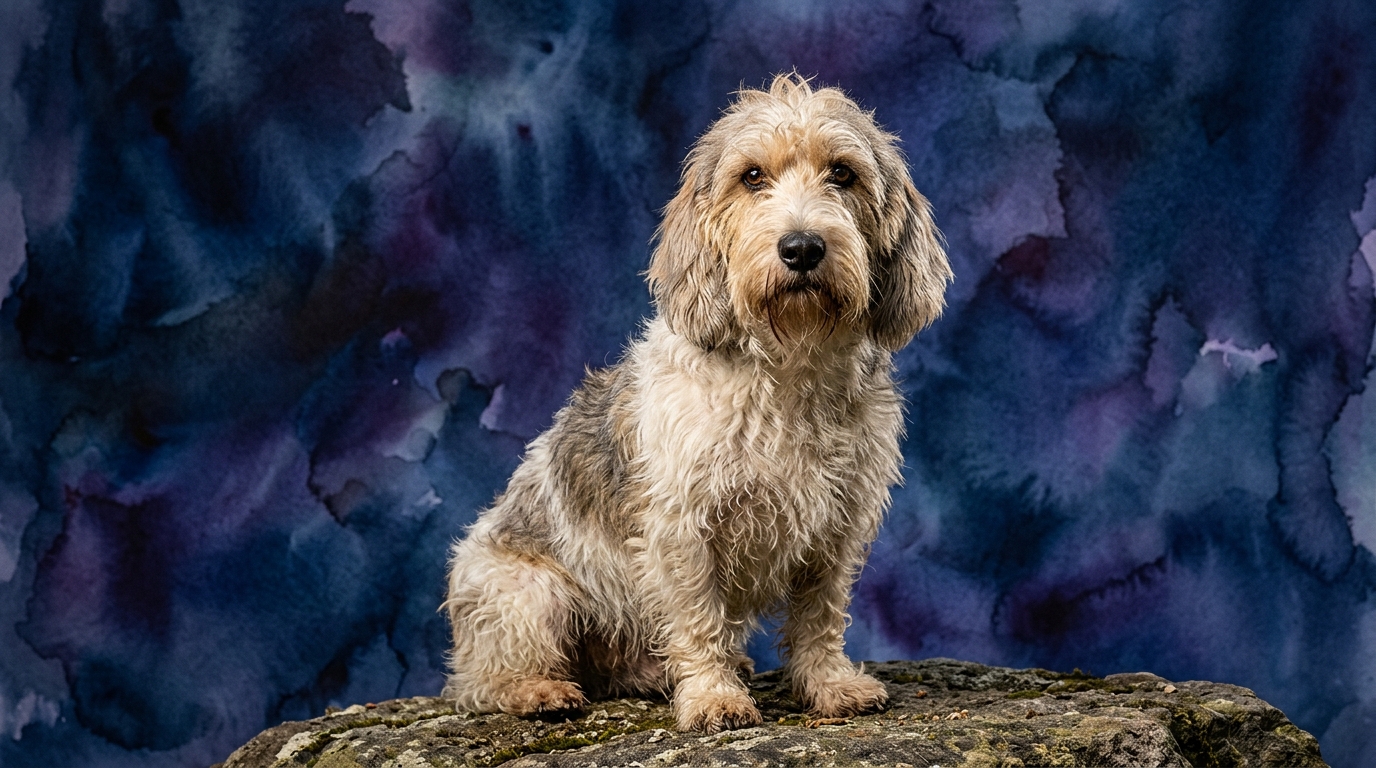
Side-by-Side IQ Profile: Petit Basset Griffon Vendéen
**Problem Solving (3/5):** The Petit Basset Griffon Vendéen (PBGV) excels at practical problem-solving, particularly when it involves their primary instinct: scent. They demonstrate a keen ability to navigate complex outdoor environments, bypass obstacles, and work through puzzles that lead to a reward, especially if that reward involves a compelling odor. Their persistence in following a trail, even if it requires creative maneuvering, highlights this dimension.
**Training Speed (3/5):** While capable of learning, the PBGV's training speed is tempered by their independent hound nature. They can grasp commands and routines, but their enthusiasm to comply often depends on the perceived value of the reward or the strength of a competing scent. Consistent, positive reinforcement focused on engagement rather than strict obedience is key to their learning rhythm.
**Social Intelligence (3/5):** PBGVs are generally gregarious and responsive to their human companions and other dogs, understanding social cues within their 'pack.' They pick up on moods and intentions, often using their boisterous charm to solicit attention or play. Their social intelligence is practical, enabling them to integrate well into family life and group activities.
**Instinctive Drive (3/5):** This breed's instinctive drive is powerfully rooted in their hunting heritage. They possess a strong prey drive and an insatiable desire to follow a scent, which can override other considerations. This drive fuels their persistence and focus in their natural element, making them highly motivated by tracking-related activities.
**Memory (3/5):** PBGVs possess a functional memory that allows them to recall scent trails, learned routes, and the location of favored resources. They remember positive and negative associations with experiences and individuals. However, their memory can sometimes seem selective when a potent scent demands their immediate, undivided attention, momentarily eclipsing other learned behaviors.
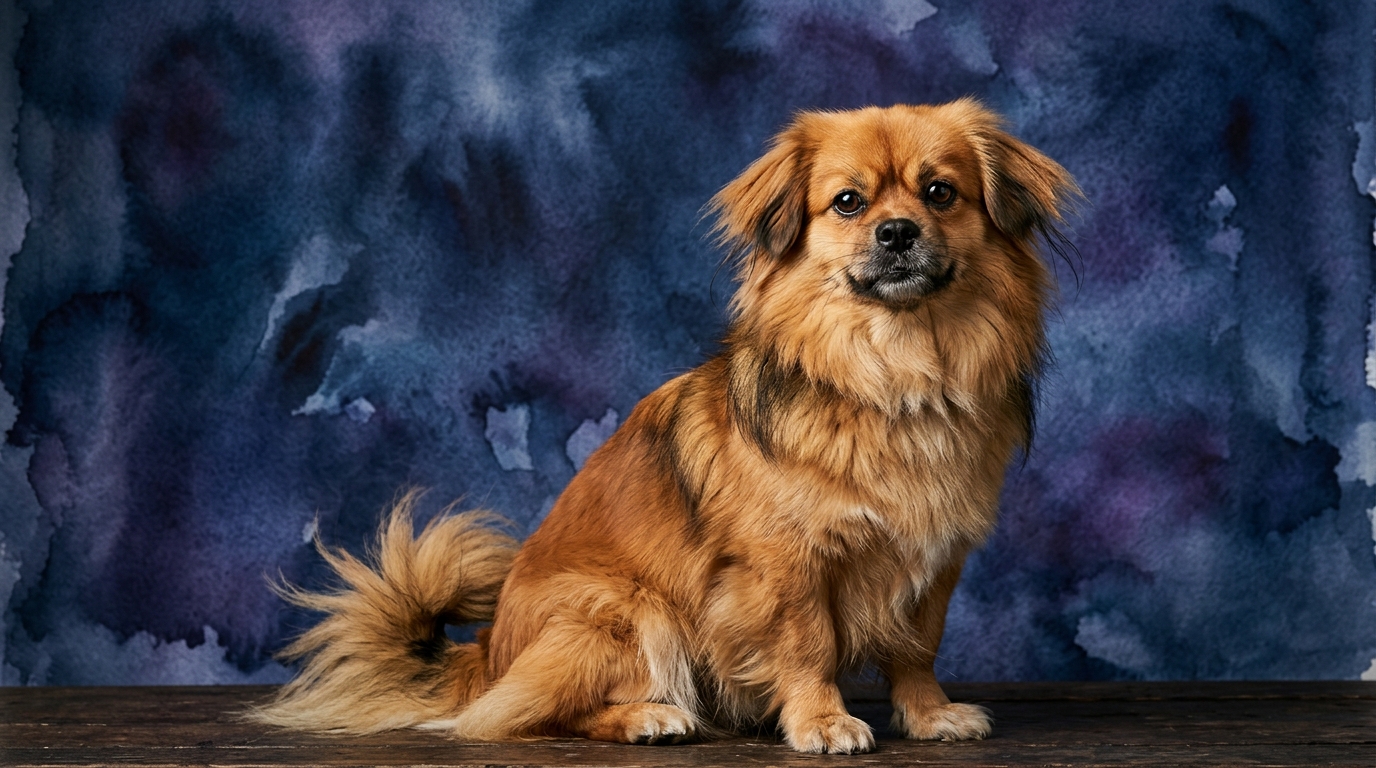
Side-by-Side IQ Profile: Tibetan Spaniel
**Problem Solving (3/5):** Tibetan Spaniels display a subtle, observational form of problem-solving. They are adept at figuring out how to achieve comfort or access desired objects within their home environment, such as manipulating a blanket for a cozy spot, or discerning the best vantage point from which to observe their surroundings. Their resourcefulness often centers on optimizing their domestic experience.
**Training Speed (3/5):** The Tibetan Spaniel (Tibbie) learns at a moderate pace, but their training speed is influenced by their independent, somewhat cat-like disposition. They are not inherently biddable and require patient, consistent, and reward-based methods. They learn routines and boundaries well, yet their compliance is often a choice rather than an eager desire to please, making them less suited for rote obedience.
**Social Intelligence (3/5):** Tibetan Spaniels are deeply attuned to their family's emotional states, often acting as sensitive barometers of household moods. They communicate their needs and desires through subtle cues and expressions, forming strong bonds with their inner circle while often remaining reserved with strangers. Their social intelligence is focused on intimate family dynamics and watchful awareness.
**Instinctive Drive (3/5):** The Tibbie's instinctive drive is primarily rooted in their historical role as companion and watchdog. They exhibit a strong desire for high perches from which to survey their domain and a natural inclination to alert their family to approaching strangers or unusual sounds. Their drive is less about pursuit and more about protection and companionship.
**Memory (3/5):** Tibetan Spaniels possess a good memory for people, routines, and past interactions, both positive and negative. They recall preferred sleeping spots, feeding times, and the habits of their family members with precision. This memory contributes to their consistent behavior and their ability to integrate seamlessly into a household's established rhythm.
Where Petit Basset Griffon Vendéen Wins Cognitively
The Petit Basset Griffon Vendéen truly shines in cognitive tasks that leverage their innate hunting prowess. Their problem-solving skills are particularly acute when navigating complex scent trails, demonstrating an advanced ability to decipher environmental cues and overcome obstacles in pursuit of a perceived 'prey.' This specific application of their problem-solving intelligence, coupled with their tenacious instinctive drive, allows them to excel in outdoor exploration and scent-based challenges where other breeds might falter. Their memory, while sometimes overshadowed by immediate scent, is remarkably efficient at recalling intricate routes and past successful tracking strategies, making them adept at revisiting fruitful hunting grounds or navigating familiar territories.
Where Tibetan Spaniel Wins Cognitively
The Tibetan Spaniel's cognitive strengths lie in their nuanced understanding of their domestic world and the social dynamics within it. Their observational problem-solving allows them to master the intricacies of a home, whether it’s figuring out how to access a sunbeam on a high shelf or subtly communicating a need to their owner without overt demands. This breed's social intelligence is a quiet triumph; they possess an impressive capacity to read and respond to human emotions, acting as sensitive companions who understand unspoken cues. Their memory is particularly strong for routines and personal preferences, contributing to their smooth integration into family life and their ability to anticipate daily events with remarkable consistency.
Which is Easier to Train and Why
Evaluating the 'ease' of training for both the Petit Basset Griffon Vendéen and the Tibetan Spaniel requires understanding their fundamental behavioral drivers. The PBGV, with its powerful instinctive drive and independent hound mentality, can present challenges due to its propensity to follow its nose above all else. Training a PBGV often feels like a constant negotiation against a compelling scent, requiring an owner to be more engaging and the rewards to be exceptionally high-value to maintain focus. While they learn, their training speed is often perceived as slower in traditional obedience because their attention is so easily diverted by the environment. The Tibetan Spaniel, on the other hand, is an independent thinker with a 'cat-like' disposition. They are not inherently eager to please and will weigh whether a command aligns with their own interests. While less prone to scent distractions than the PBGV, their training requires immense patience, consistency, and a deep understanding of positive reinforcement to motivate their cooperation. They learn by observation and routine, but will challenge authority if not convinced of the value. Neither breed is a 'push-button' learner; the PBGV's challenge lies in managing intense instinct, while the Tibbie's challenge is in motivating an independent spirit.
Which Suits Active Owners vs. Relaxed Owners
The choice between a PBGV and a Tibbie largely hinges on an owner's lifestyle and activity level. The Petit Basset Griffon Vendéen is unequivocally suited for active owners. Their robust build, boundless energy, and powerful scent drive demand significant daily exercise and mental stimulation through activities like hiking, scent work, or vigorous play. They thrive in environments where they can explore and engage their senses outdoors, making them ideal companions for those who enjoy an energetic, adventurous lifestyle. Conversely, the Tibetan Spaniel is a better match for more relaxed owners. While they appreciate daily walks and playtime, their exercise requirements are moderate. They are often content to observe the world from a comfortable perch or snuggle on the couch, making them excellent companions for individuals or families who prefer a calmer pace of life but still desire an engaging and affectionate presence. Their watchfulness provides a sense of security without requiring constant physical output.
The Verdict
Choose the Petit Basset Griffon Vendéen if you're an active, outdoors-oriented individual or family seeking a tenacious, scent-driven companion for adventures and engaging mental challenges.
Opt for the Tibetan Spaniel if you desire a watchful, independent, and affectionate companion who thrives in a relaxed home environment and offers subtle, intelligent companionship without demanding intense physical activity.
🧠 Find Your Pet's IQ Score
Our Pet IQ Lab assessment covers 25+ tests across 5 cognitive dimensions — personalized to your breed.
Take the Full IQ Test →Frequently Asked Questions
Do PBGVs and Tibetan Spaniels have similar temperaments given their identical IQ scores?
No, despite identical IQ scores, their temperaments differ significantly. PBGVs are typically boisterous, independent, and driven by scent, while Tibetan Spaniels are more reserved, watchful, and display a subtle, cat-like independence. Their cognitive scores reflect capacity, but their breed heritage shapes how that capacity is expressed behaviorally.
Which breed is better for a first-time dog owner?
Neither breed is typically recommended for a first-time owner seeking an 'easy' dog due to their independent natures. However, a Tibetan Spaniel might be marginally more manageable for a novice willing to learn about independent breeds, as their exercise needs are lower and their distractions less intense than a scent-driven PBGV. Both require patient, consistent training.
Can a PBGV or Tibetan Spaniel excel in dog sports?
Yes, both can excel in specific dog sports that align with their strengths. PBGVs are naturals for scent work, tracking, and even agility where their athleticism can shine. Tibetan Spaniels, with their observational skills and agility, can do well in smaller-scale agility, rally obedience, or even trick training, provided the owner makes it fun and engaging for their independent spirit.