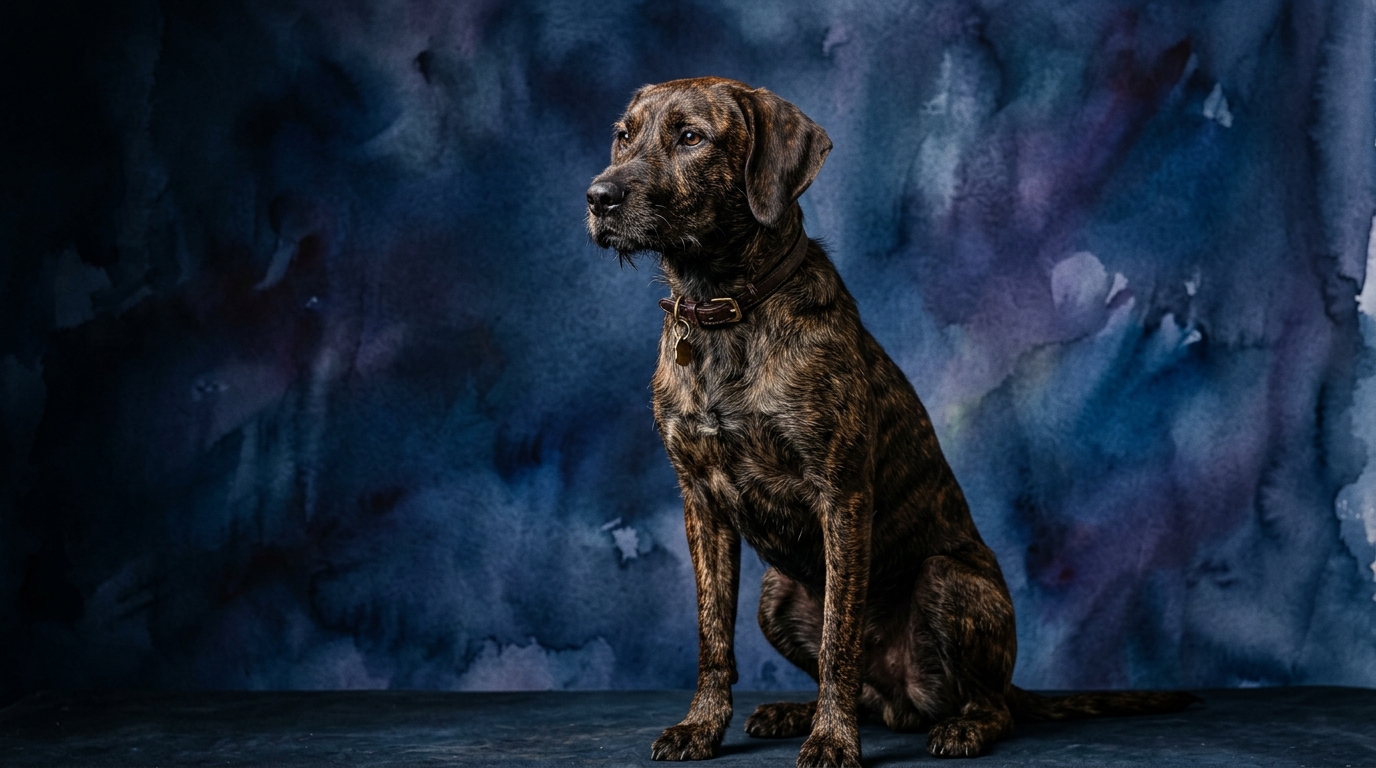
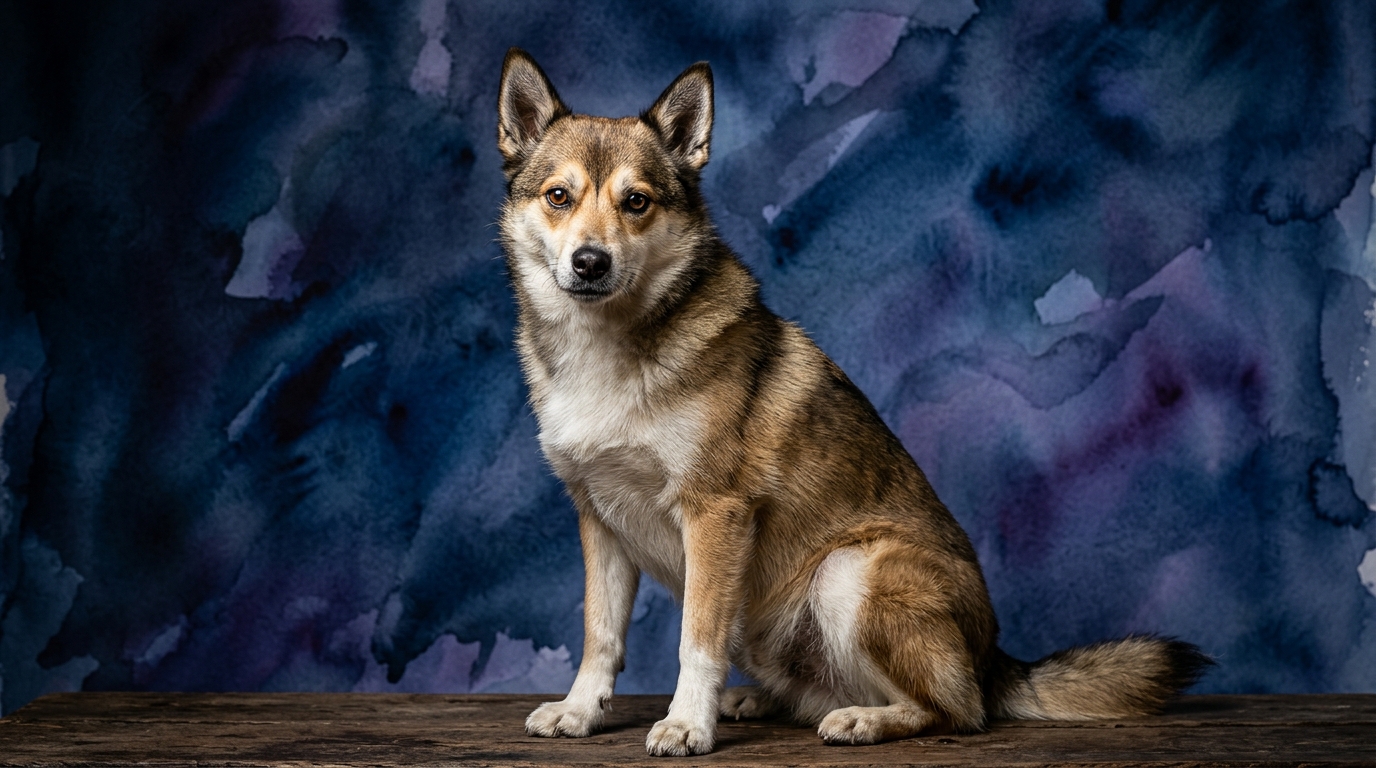
Side-by-Side IQ Profile: Plott Hound vs. Norwegian Lundehund
The Cosmic Pet Pet IQ Lab assigns both the Plott Hound and the Norwegian Lundehund a consistent 3/5 across all five cognitive dimensions. While the numerical score is identical, the *manifestation* of these abilities is deeply rooted in their breed-specific histories and purposes, offering a rich study in canine cognition.
For the **Plott Hound**, a breed honed for big game hunting, their Problem Solving (3/5) is primarily expressed through their relentless pursuit of a scent trail. This involves complex decision-making in varied terrain, strategizing how to overcome obstacles to reach their quarry, and interpreting subtle environmental cues. Their Training Speed (3/5) reflects an ability to grasp commands, but it's often challenged by their powerful, independent hunting drive, requiring consistent motivation and engagement that respects their innate purpose. Social Intelligence (3/5) in a Plott often manifests as effective cooperation within a hunting pack, understanding hierarchies, and forming strong, albeit independent, bonds with their human handlers. Their Instinctive Drive (3/5) is almost singularly focused on scent-tracking and pursuit, a deeply ingrained behavioral pattern that defines their existence. Memory (3/5) serves them well in recalling successful hunting routes, the location of game, and learned strategies for navigating complex environments over extended periods.
The **Norwegian Lundehund**, an ancient breed uniquely adapted to hunt puffins on treacherous coastal cliffs, presents a different cognitive profile for the same numerical scores. Their Problem Solving (3/5) is highly specialized, involving intricate navigation of vertical rock faces, squeezing into tight crevices, and using their extraordinary flexibility and extra toes to access nests. This is a physically integrated form of cognitive problem-solving. Training Speed (3/5) for a Lundehund means they can learn quickly, but their independent and sometimes mischievous nature, coupled with a strong desire to explore, often requires creative and patient training methods. Social Intelligence (3/5) typically involves forming deep, loyal bonds with their immediate family, though they can be reserved or wary with strangers, a trait likely developed from their solitary work in isolated environments. Their Instinctive Drive (3/5) encompasses a strong urge to climb, explore, and hunt small prey, utilizing their unique physical attributes for these tasks. Memory (3/5) is crucial for a Lundehund in recalling complex routes, safe pathways on cliffs, and the locations of resources or den sites, alongside remembering family routines and boundaries.
Where the Plott Hound Excels Cognitively
The Plott Hound's cognitive strengths are most apparent in sustained, focused tasks requiring olfactory processing and endurance. Their Problem Solving skills are unparalleled when it comes to unraveling a cold scent trail, demonstrating remarkable persistence and sequential reasoning over vast distances and varied terrain. This involves mentally mapping a path based purely on scent, making real-time decisions about direction and speed, and adapting to environmental changes that might affect the trail. Their Instinctive Drive, while rated 3/5, is a highly specialized and powerful asset, allowing them to maintain intense concentration on a single objective for hours, a cognitive feat that few other breeds can match with such tenacity. This deep-seated drive, combined with their memory for successful hunting patterns, makes them exceptionally effective at their intended purpose, showcasing a profound cognitive specialization in tracking and pursuit.
Where the Norwegian Lundehund Excels Cognitively
The Norwegian Lundehund's cognitive advantages shine in areas demanding physical agility, environmental awareness, and unique spatial reasoning. Their Problem Solving, also rated 3/5, is distinctly expressed through their ability to navigate complex, three-dimensional environments, such as vertical cliffs and narrow rock formations. This requires an intricate understanding of their body in space, assessing risk, and utilizing their anatomical adaptations (like their extremely flexible joints and extra toes) to achieve seemingly impossible feats of climbing and maneuvering. Their Instinctive Drive, while equally rated 3/5, is geared towards exploration and agile pursuit in challenging landscapes, demonstrating a remarkable capacity for creative physical solutions to environmental puzzles. Their memory for intricate routes and safe pathways in such difficult terrain underscores a distinct cognitive strength in spatial recall and environmental adaptation, a testament to their evolutionary niche.
Which is Easier to Train and Why
Despite both breeds having a Training Speed rating of 3/5, the practicalities of training differ significantly due to their behavioral predispositions. The Plott Hound, with its dominant instinctive drive for scent work, can be challenging to train in obedience without understanding this core motivation. They might learn commands quickly in a focused environment, but their attention can be easily hijacked by an intriguing scent, making recall or off-leash work demanding. Training a Plott requires immense patience, consistency, and methods that either integrate their scent drive positively or firmly redirect it. Their independence and single-mindedness in pursuit mean that 'easier' is relative to an owner's willingness to engage with their specific hound nature.
The Norwegian Lundehund, while also independent and rated 3/5 for Training Speed, presents different training hurdles. Their innate curiosity, desire to climb, and sometimes mischievous nature mean they might find their own entertainment or solutions rather than adhering strictly to human commands. They are capable of learning, but their strong will and reserved social intelligence can lead to selective hearing or a preference for self-directed activities. Training a Lundehund benefits from positive reinforcement, short engaging sessions, and a focus on building a strong bond to motivate cooperation. Neither breed is inherently 'easy' in the conventional sense, as both require an owner who appreciates their unique cognitive and behavioral frameworks.
Suitability for Active vs. Relaxed Owners
The Plott Hound, with its boundless stamina and powerful instinctive drive, is unequivocally suited for active owners. These dogs require significant daily exercise, often in the form of long, brisk walks, runs, or structured activities like scent work or tracking trials. Their mental stimulation comes from engaging their olfactory senses and fulfilling their drive to explore. A relaxed owner would likely find a Plott Hound's energy and vocal nature overwhelming, potentially leading to behavioral issues stemming from boredom and unfulfilled instincts. They thrive when given a 'job' and ample opportunity to move.
The Norwegian Lundehund, while also requiring regular exercise, has a different kind of activity profile. They need opportunities for exploration, climbing, and mental engagement that stimulates their unique problem-solving abilities. While they can enjoy walks and hikes, their activity isn't just about covering distance; it's about navigating interesting terrain and exercising their agility. They can adapt to a slightly less intense daily exercise regimen than a Plott, but they absolutely need mental challenges and outlets for their curiosity and climbing instincts. A relaxed owner might struggle with a Lundehund's need for novelty and their propensity to find creative, sometimes inconvenient, ways to explore their environment.
The Verdict
Choose the Plott Hound if you are an active individual or family passionate about outdoor activities, especially those involving scent work or long excursions, and are prepared to engage with a dog driven by powerful instincts.
Opt for the Norwegian Lundehund if you appreciate a unique, independent companion who thrives on exploration, climbing, and mental puzzles, and you can provide a stimulating environment that caters to their distinctive physical and cognitive needs.
🧠 Find Your Pet's IQ Score
Our Pet IQ Lab assessment covers 25+ tests across 5 cognitive dimensions — personalized to your breed.
Take the Full IQ Test →Frequently Asked Questions
Do Plott Hounds make good family pets?
Plott Hounds can be loyal and affectionate family members, especially with active families who understand their exercise and mental stimulation needs. They tend to be good with children when properly socialized, but their strong prey drive requires careful management around smaller pets.
Are Norwegian Lundehunds prone to any specific health issues?
Yes, Norwegian Lundehunds are known to be predisposed to a unique gastrointestinal disorder called Lundehund Syndrome, or Protein-Losing Enteropathy (PLE). Prospective owners should research this condition thoroughly and discuss it with their veterinarian.
How do these breeds adapt to apartment living?
Neither breed is ideally suited for small apartment living without significant owner commitment. Plott Hounds need ample space and outdoor access to burn off energy, while Lundehunds, though smaller, require creative outlets for their climbing and exploratory instincts, which can be challenging to provide indoors.