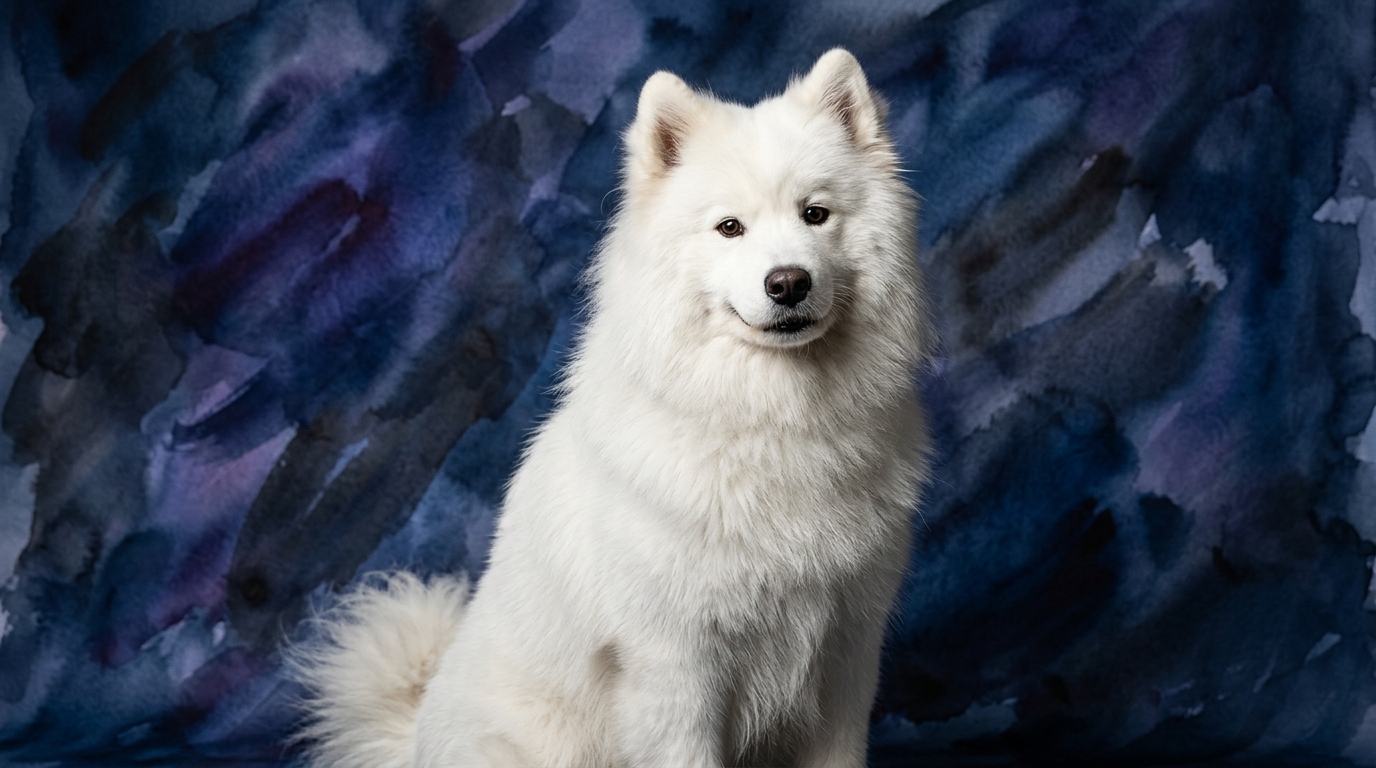
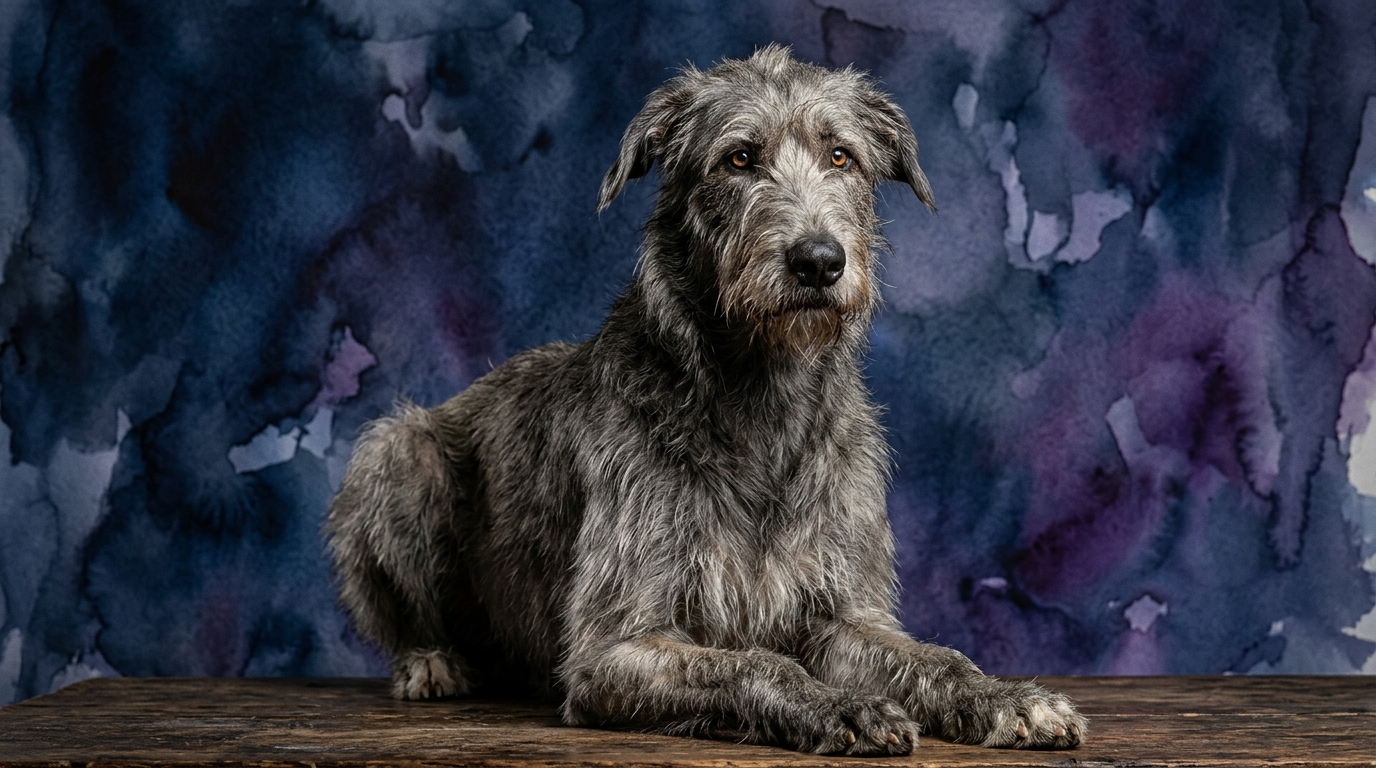
Side-by-Side IQ Profile: Samoyed vs. Irish Wolfhound
The Samoyed, a breed Coren-ranked at #33, exhibits a cognitive profile deeply rooted in their history as herders and sled pullers. Their Problem Solving is rated 3/5, indicating an adeptness at navigating complex physical environments, such as finding paths through snow or maneuvering sleds, rather than abstract puzzles. Training Speed also sits at 3/5; they learn new commands at a moderate pace, responding well to consistent, positive reinforcement, though their independent streak means training requires engaging methods. Social Intelligence is a standout at 5/5, showing they are highly attuned to human emotions and intentions, thriving on interaction and cooperative tasks. Their Instinctive Drive is 4/5, reflecting a strong motivation for purposeful work, whether pulling a sled or participating in dog sports. Finally, their Memory is 3/5, reliably retaining learned behaviors and routines, especially those associated with positive experiences or their established pack structure.
The Irish Wolfhound, not Coren-ranked but with a distinct cognitive makeup, demonstrates a profile geared towards their sighthound heritage. Their Problem Solving is 3/5, centered around their historical role of tracking, cornering, and subduing large prey, involving strategic thinking in pursuit rather than intricate manipulation of objects. Training Speed is 3/5; they learn at a moderate pace, often requiring clear, concise instructions, but their independent nature as a sighthound means they may prioritize their own judgment. Social Intelligence is 3/5; while affectionate with their families, their social intelligence leans more towards quiet companionship than the Samoyed's highly cooperative engagement, observing and bonding without constantly seeking active interaction. Their Instinctive Drive is 3/5, primarily rooted in the chase and observation of moving objects, a drive that is often solitary and task-specific to hunting. Memory is 3/5, providing functional retention for routines and learned commands, supporting their independent decision-making and calm demeanor.
Where the Samoyed Wins Cognitively
The Samoyed's cognitive strengths shine particularly in their exceptional social intelligence, scoring a 5 out of 5 compared to the Irish Wolfhound's 3. This manifests as a profound ability to interpret human cues, understand complex social dynamics within a family unit, and actively seek cooperative engagement. A Samoyed is often more attuned to the nuances of human emotion, making them incredibly empathetic and responsive partners in activities. This strong bond facilitates teamwork, making them excellent companions for shared ventures. Their higher instinctive drive (4/5 versus 3/5) also provides a significant cognitive edge for owners seeking a dog with an intrinsic motivation for purposeful work. This drive means they are not just capable of learning tasks, but often desire to participate in activities that give them a sense of utility, whether it’s pulling a cart, participating in agility, or simply being a diligent companion in daily routines. This translates to a dog that often initiates interaction and seeks to be involved, rather than passively observing.
Where the Irish Wolfhound Wins Cognitively
While not scoring higher in raw points across the board, the Irish Wolfhound’s cognitive profile offers distinct advantages for specific roles. Their particular brand of problem-solving (3/5) is highly specialized for independent pursuit and decision-making in a hunting context, a skill that requires self-reliance rather than collaborative input. Unlike the Samoyed, whose social intelligence often drives them to seek human partnership, the Wolfhound's cognitive strength lies in their ability to assess a situation, make a judgment call, and act on instinct without constant human guidance during a chase. Their lower social intelligence (3/5) can be a cognitive "win" for owners who appreciate a dog that is affectionate but not overly demanding of constant interaction or validation. This independence means they are less prone to separation anxiety if properly acclimated and can be content observing rather than needing to be at the center of every family activity. Their cognitive makeup leans towards a quiet dignity and self-possession, making them masters of calm presence.
Which is Easier to Train and Why
The Samoyed generally presents as the easier breed to train due to their superior social intelligence and higher instinctive drive for cooperative tasks. Their 5/5 social intelligence means they are inherently motivated to understand and please their human companions, making them highly receptive to positive reinforcement and eager to engage in training sessions. They thrive on teamwork and the bond formed during learning, often showing a keen interest in what their owner wants them to do. For instance, a Samoyed is more likely to maintain focus during a prolonged training session, responding to subtle body language and verbal cues, and working alongside their owner to achieve a shared goal. Their cooperative nature means they often perceive training as a shared activity, strengthening the human-animal bond.
In contrast, the Irish Wolfhound, with a 3/5 in both training speed and social intelligence, requires a different approach. Their independent nature, stemming from their sighthound heritage where solitary decision-making was paramount, means they might prioritize their own assessment of a situation or the lure of a distant scent over an immediate command. Training an Irish Wolfhound often requires greater patience, consistency, and a deep understanding of their motivations. While they learn, their learning might be slower and more deliberate, and they might require more compelling reasons to comply if their instincts are pulling them in another direction. For example, recalling a Samoyed from a distraction might leverage their desire to stay connected to their "pack," whereas recalling an Irish Wolfhound might need a stronger, more immediate incentive to override their inherent chase drive. Their training success often hinges on making the desired action more rewarding than the independent pursuit.
Which Suits Active Owners vs. Relaxed Owners
For owners who define "active" by a desire for a highly engaged, cooperative canine partner in a variety of activities, the Samoyed is often the better fit. Their high social intelligence and strong instinctive drive for purposeful work mean they flourish with regular mental and physical engagement that involves their human family. They are excellent companions for activities like hiking, recreational sledding, agility, or advanced obedience, where their problem-solving skills and desire for teamwork are utilized. They thrive on being part of the "pack" and will actively seek out opportunities for interaction and shared experiences. This breed needs an owner who enjoys consistent interaction and can provide outlets for their cooperative spirit and energy.
Conversely, the Irish Wolfhound, despite their historical role as a powerful hunter, often suits a more "relaxed" owner in terms of daily interactive demands, though they still require substantial physical exercise. Their lower social intelligence and more independent nature mean they are not constantly seeking to be the center of attention or engaging in complex cooperative tasks throughout the day. They appreciate quiet companionship, long, unhurried walks, and comfortable lounging spaces. While they need regular opportunities to stretch their long legs and run, their cognitive profile doesn't demand the same level of constant mental "work" alongside their owner as the Samoyed. They are content to observe and be present, making them a good match for owners who enjoy a calmer, less overtly "needy" canine presence, provided their exercise needs are met. Owners must still be prepared for their impressive size and the need for secure, spacious areas for running.
The Verdict
If you seek a highly cooperative, socially attuned, and actively engaged partner for shared activities and a close, interactive bond, the Samoyed’s cognitive strengths make them an ideal choice.
If you appreciate a more independent, self-possessed companion who offers quiet affection and requires bursts of physical exercise rather than constant mental collaboration, the Irish Wolfhound’s unique cognitive profile aligns well.
🧠 Find Your Pet's IQ Score
Our Pet IQ Lab assessment covers 25+ tests across 5 cognitive dimensions — personalized to your breed.
Take the Full IQ Test →Frequently Asked Questions
Do Samoyeds and Irish Wolfhounds have similar problem-solving abilities?
Both breeds score 3/5 in problem-solving, but their application differs significantly. Samoyeds apply their skills to practical, cooperative tasks within their environment, while Irish Wolfhounds focus theirs on independent decision-making during a chase, solving the "problem" of catching prey effectively.
How does social intelligence impact training for these breeds?
The Samoyed's superior social intelligence (5/5) means they are highly motivated by human interaction and approval, making them generally more eager to please and easier to train with positive methods. The Irish Wolfhound's 3/5 social intelligence means they are more independent thinkers, requiring consistent, patient training that respects their self-reliant nature and sighthound instincts.
Which breed is better for a first-time dog owner concerning cognitive demands?
A Samoyed might be more forgiving for a first-time owner due to their high social intelligence and willingness to cooperate, provided the owner can meet their need for engagement and activity. An Irish Wolfhound's independence and sheer size might pose more challenges for a novice owner, requiring a deeper understanding of sighthound temperament and specific training approaches.