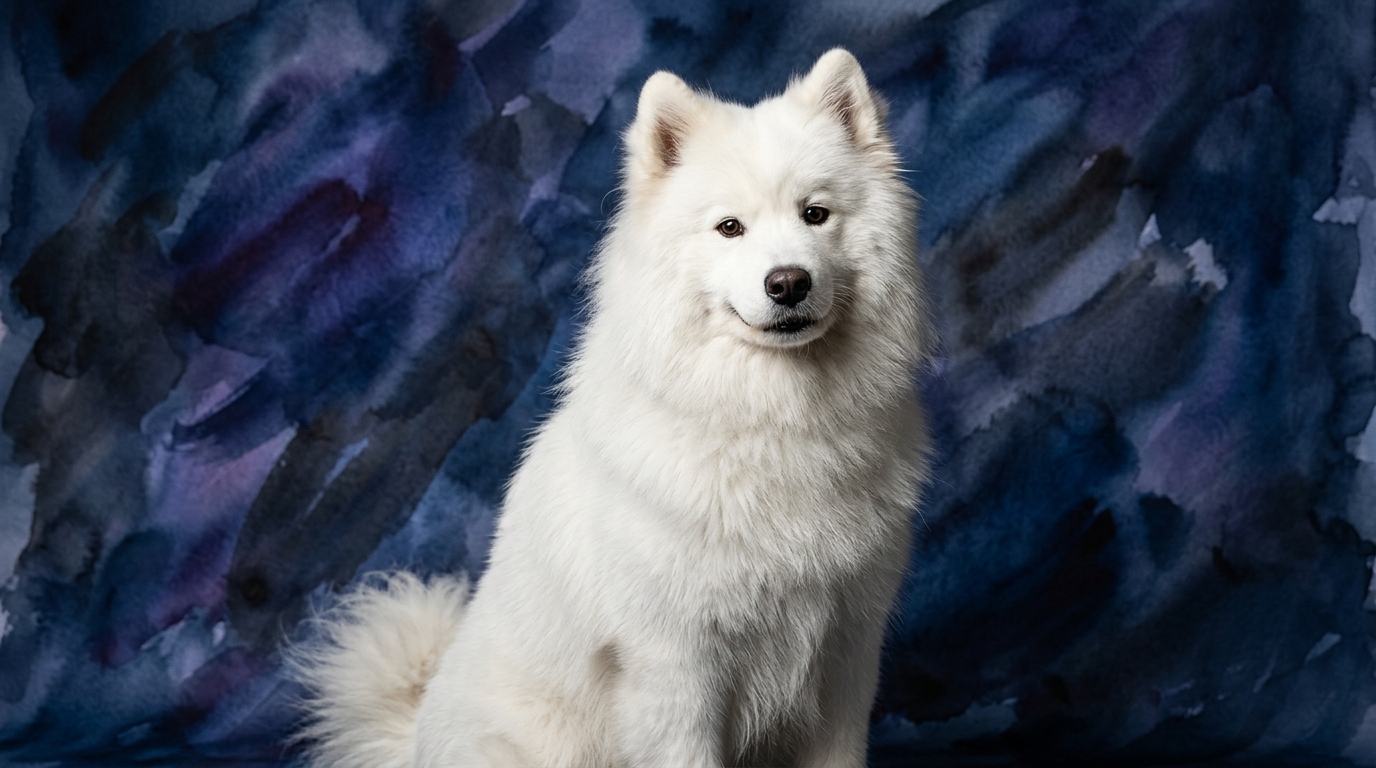
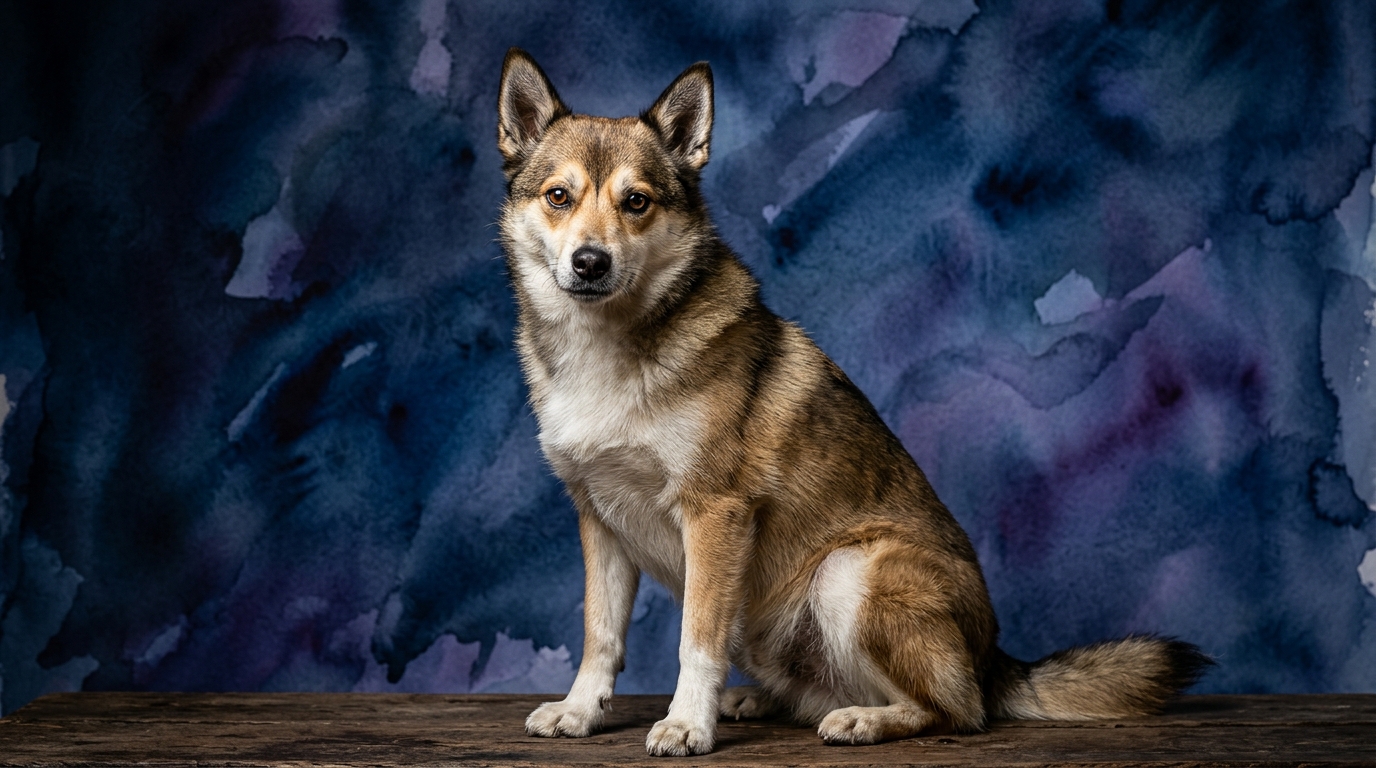
Side-by-Side IQ Profile
The Cosmic Pet Pet IQ Lab's assessment offers a granular look at the cognitive makeups of these two distinct breeds, revealing how their historical roles and inherent traits influence their mental aptitudes. Understanding these dimensions provides insight into their learning styles, social interactions, and innate drives.
Samoyed Profile (Working Group, Coren Rank #33): Problem Solving (3/5): Samoyeds exhibit a moderate capacity for independent problem-solving, often applying learned behaviors to new situations rather than inventing novel solutions. Their historical role as herding and sled-pulling dogs required them to navigate complex terrains and manage livestock, demonstrating a practical, rather than abstract, problem-solving ability. Training Speed (3/5): While not the quickest to grasp new commands, Samoyeds are capable learners. Their training progress is steady, often benefiting from consistent, positive reinforcement methods that appeal to their desire for cooperation. Their moderate training speed means patience and engaging methods yield the best results. Social Intelligence (5/5): This is a cornerstone of the Samoyed's cognitive makeup. They possess an exceptional ability to interpret human cues, understand social hierarchies, and form strong, cooperative bonds. This high social intelligence was crucial for their work alongside Siberian nomadic peoples, enabling seamless communication and teamwork in demanding environments. Instinctive Drive (4/5): Samoyeds retain a robust set of natural instincts related to their working heritage. Their drive to pull, herd, and be part of a pack is pronounced, providing a strong internal motivation for activity and purpose. This drive, when channeled appropriately, makes them eager participants in various canine activities. Memory (3/5): Their memory is solid, allowing them to retain training and routines effectively over time. They remember specific people, places, and experiences, contributing to their adaptability and consistent performance once a behavior is established.
Norwegian Lundehund Profile (Non-Sporting Group, Not Coren-ranked): Problem Solving (3/5): The Lundehund also demonstrates a moderate problem-solving capacity, uniquely adapted to its specialized historical role. Their ability to navigate intricate cliff faces and access narrow puffin nests points to a specific, physically-oriented type of spatial problem-solving, rather than abstract reasoning, critical for their survival. Training Speed (3/5): Similar to the Samoyed, Lundehunds learn at a moderate pace. They can be independent thinkers, which means training requires creativity, consistency, and a deep understanding of their unique motivations. They respond well to rewards but can become bored with repetitive drills. Social Intelligence (3/5): Lundehunds possess a moderate level of social intelligence. They bond closely with their primary family but may be more reserved or discerning with strangers compared to the highly gregarious Samoyed. Their social interactions are often more focused on a select few, reflecting their history as independent hunters rather than team workers. Instinctive Drive (3/5): Their instinctive drive is moderate, primarily centered around their strong prey drive, particularly for small, fast-moving objects, a remnant of their puffin-hunting ancestry. This drive, while present, isn't as broadly expressed in cooperative tasks as the Samoyed's working drive. Memory (3/5): Lundehunds exhibit a moderate memory, capable of retaining training and routines. They remember their environment and the people within it, contributing to their ability to navigate complex territories and establish secure relationships within their chosen social circle.
Where Samoyed Wins Cognitively
The Samoyed's cognitive strengths distinctly shine in areas demanding cooperative interaction and sustained engagement. Their exceptional social intelligence (5/5) means they are profoundly attuned to human emotions and intentions, making them natural partners in tasks requiring synchronized effort. This allows them to pick up on subtle cues, adjust their behavior based on human feedback, and excel in activities like therapy work or advanced obedience where a deep mutual understanding is paramount. Furthermore, their higher instinctive drive (4/5) translates into a more consistent eagerness to work alongside humans, providing a strong internal motivation for tasks ranging from competitive dog sports to complex household routines. This combination of social attunement and motivated cooperation gives the Samoyed a clear cognitive advantage in contexts where human-dog partnership is key, fostering a more intuitive and responsive bond.
Where Norwegian Lundehund Wins Cognitively
While the Lundehund's overall IQ scores are consistently moderate, their true cognitive 'wins' lie in the highly specialized adaptations that enabled their survival and unique historical role. Their problem-solving (3/5) is uniquely geared towards navigating complex physical environments, demonstrating an exceptional spatial reasoning and agility that few breeds can match. This isn't abstract problem-solving, but rather a practical, embodied intelligence that allowed them to scale cliffs, squeeze into tight crevices, and retrieve prey from inaccessible locations. Their moderate instinctive drive (3/5), while lower than the Samoyed's, is intensely focused on their prey drive, fostering an independent persistence that makes them exceptionally adept at focused, self-directed hunting tasks. This independence, a cognitive trait in itself, allows them to operate effectively without constant human direction, making them incredibly self-reliant in challenging, solitary pursuits.
Which is Easier to Train and Why
Despite both breeds scoring 3/5 in training speed, the Samoyed generally presents as an easier breed to train, primarily due to their superior social intelligence (5/5) and higher instinctive drive (4/5). A Samoyed's deep desire to please and cooperate with their human companions means they are intrinsically motivated to engage in training sessions, quickly learning to associate commands with positive social interaction. Their strong pack drive translates into a willingness to follow leadership and integrate into family routines, making foundational obedience a more fluid process. In contrast, the Norwegian Lundehund's moderate social intelligence (3/5) and more independent nature mean they require a trainer who understands their unique motivations. While capable of learning, their training can feel more like negotiation; they are less inclined to perform simply to please and may require more creative reinforcement strategies that tap into their innate prey drive or love for exploration. Their independence, while a strength in their original role, can manifest as stubbornness in conventional obedience, making consistency and patience even more critical.
Which Suits Active Owners vs Relaxed Owners
For owners seeking an active companion, the Samoyed typically aligns better with a structured, high-energy lifestyle. Their elevated instinctive drive (4/5) and working group heritage mean they thrive on purposeful activity, whether it's long hikes, sledding, competitive obedience, or agility. They require consistent mental and physical stimulation to prevent boredom and channel their considerable energy positively. A relaxed owner might find the Samoyed's demands for engagement overwhelming, potentially leading to destructive behaviors or excessive vocalization. The Norwegian Lundehund, with its moderate instinctive drive (3/5) and non-sporting classification, presents a more nuanced case. While not necessarily requiring constant, high-intensity exercise like a Samoyed, they are far from sedentary. Their unique physical capabilities demand opportunities for climbing, exploring, and engaging in activities that simulate their natural puffin-hunting behaviors. They can adapt to a slightly more relaxed pace than a Samoyed, but still need regular, varied activity that stimulates their unique physical and spatial intelligence. Therefore, a Lundehund suits an owner who is active in a specific, exploratory way, rather than purely in terms of endurance, and who appreciates an independent spirit, while a Samoyed fits owners who enjoy collaborative, sustained activities.
The Verdict
Choose the Samoyed if you seek a highly cooperative, socially attuned companion eager to participate in shared activities and thrive on a strong human-dog bond.
Opt for the Norwegian Lundehund if you appreciate a uniquely independent, agile dog with specialized physical and spatial intelligence, well-suited to exploratory activities and a discerning companionship.
🧠 Find Your Pet's IQ Score
Our Pet IQ Lab assessment covers 25+ tests across 5 cognitive dimensions — personalized to your breed.
Take the Full IQ Test →Frequently Asked Questions
Do Samoyeds and Norwegian Lundehunds have similar problem-solving abilities?
Both breeds score 3/5 in problem-solving, but their application differs. Samoyeds apply practical solutions in cooperative settings, while Lundehunds excel in spatial and physical problem-solving related to navigating complex terrains and accessing difficult areas.
How does social intelligence impact training for these breeds?
The Samoyed's high social intelligence (5/5) makes them eager to please and generally easier to train through cooperation and positive social interaction. The Lundehund's moderate social intelligence (3/5) means they are more independent, requiring patient, creative training methods that appeal to their specific drives rather than just a desire to cooperate.
Which breed requires more mental stimulation?
Both require mental stimulation, but differently. Samoyeds (4/5 instinctive drive) need structured tasks and cooperative activities to channel their working energy. Lundehunds (3/5 instinctive drive) thrive on exploration, climbing, and activities that engage their unique physical and spatial intelligence, often independently, to prevent boredom.