Side-by-Side Cognitive Profile
The Cosmic Pet Pet IQ Lab's framework allows us to dissect the nuanced cognitive strengths and tendencies of the Scottish Deerhound and the Keeshond across five key dimensions. While both breeds are capable and adaptable, their scores illuminate their inherent predispositions and how they interact with the world.
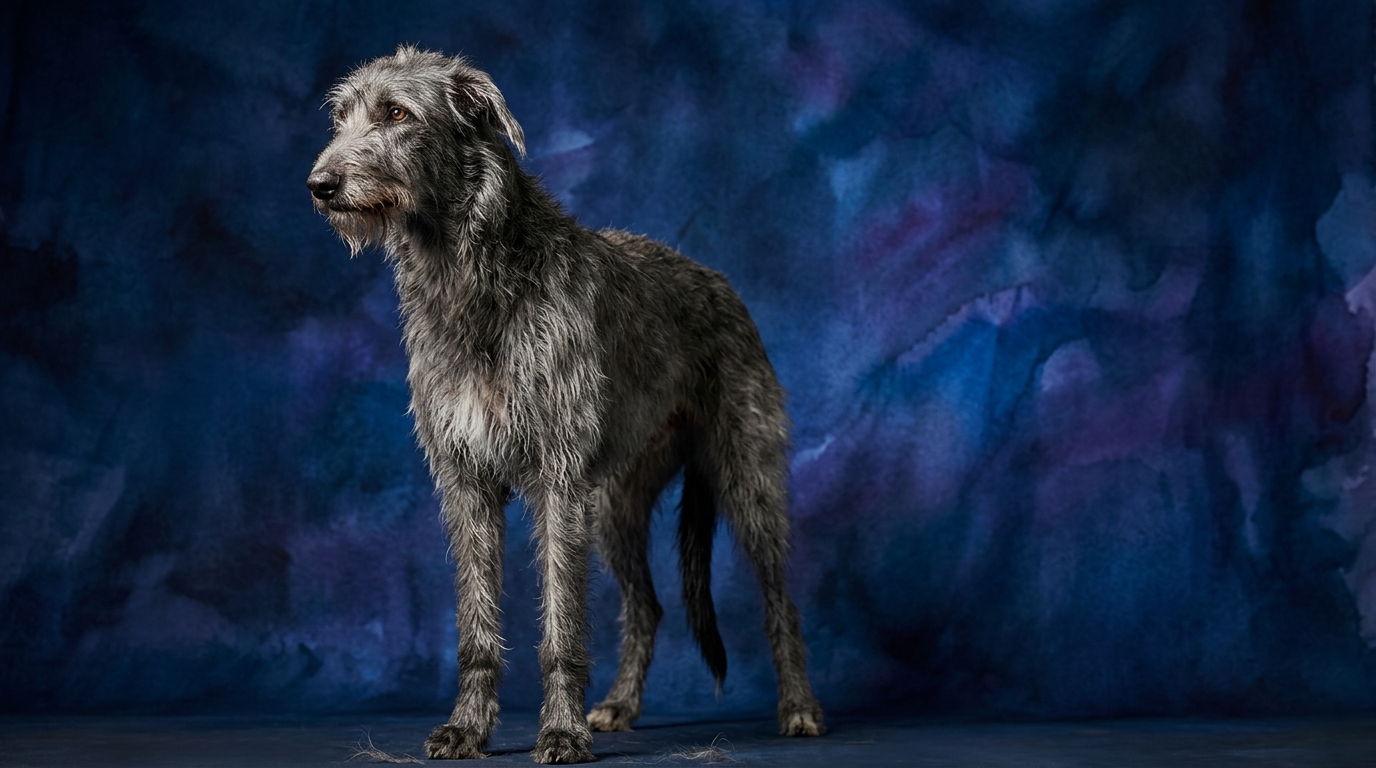
For the Scottish Deerhound, a magnificent hound breed, Problem Solving registers at 3/5, indicating a practical, independent approach to challenges, often rooted in their sighthound heritage. Their Training Speed is also 3/5, suggesting a moderate pace of learning that requires patience and motivation aligned with their nature. Social Intelligence stands at 3/5, reflecting a reserved yet deeply bonded demeanor with their chosen family, while Instinctive Drive, also 3/5, primarily manifests as a strong prey drive. Their Memory is rated at 3/5, solid enough for routines and consistent commands, but not exceptionally retentive.
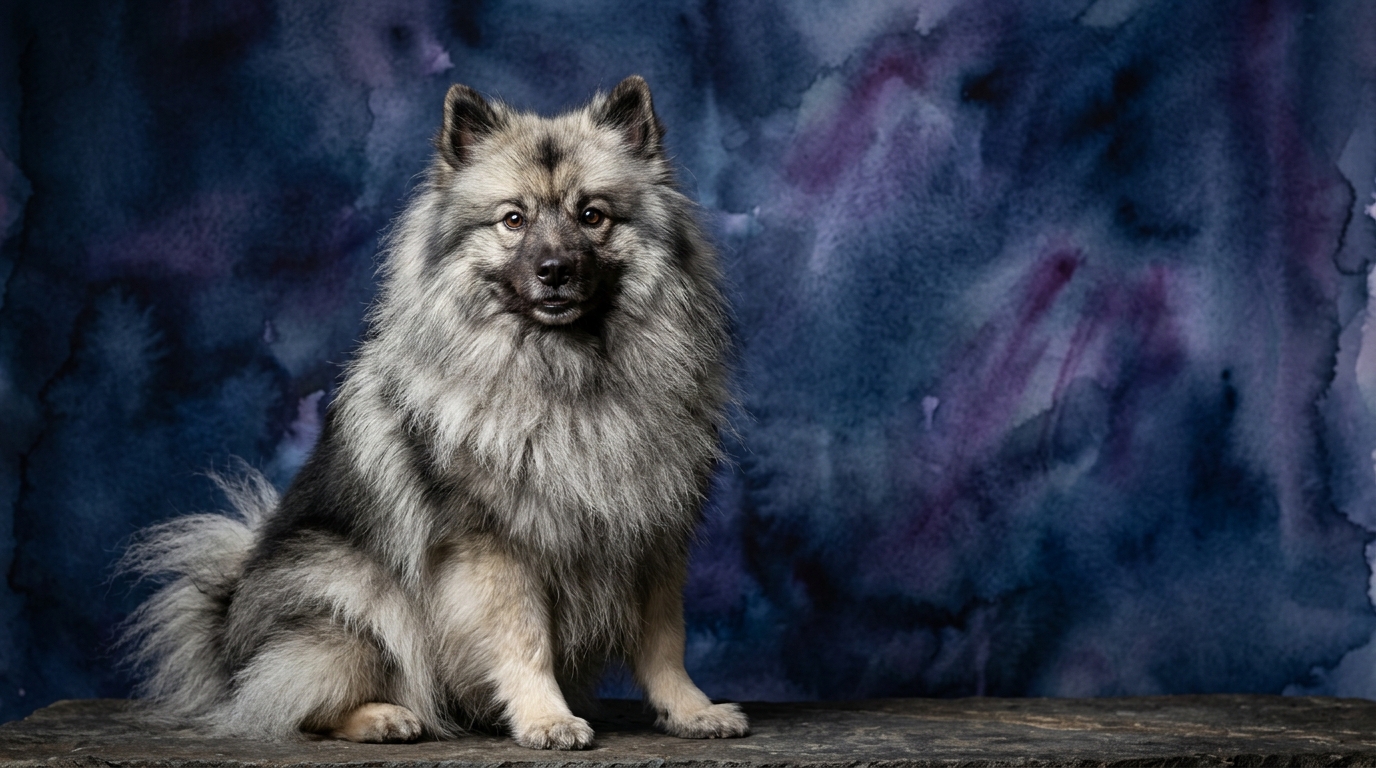
The Keeshond, a lively Non-Sporting breed, presents a different cognitive blueprint, notably ranking #16 in Coren's intelligence scale for obedience and working intelligence. Their Problem Solving is a robust 4/5, indicating a more versatile and clever approach to challenges within a domestic context. Training Speed is 4/5, meaning they typically acquire new commands with greater alacrity and enthusiasm. Social Intelligence is 3/5, similar to the Deerhound in its focus on family, though often more outwardly expressive, and their Instinctive Drive is 3/5, expressed more as an alert and territorial nature. Crucially, the Keeshond’s Memory excels at a remarkable 5/5, suggesting an exceptional capacity for retaining information over long periods.
Where the Scottish Deerhound Wins Cognitively
While the Keeshond often outscores the Deerhound in general cognitive measures, the Scottish Deerhound possesses a distinct cognitive advantage rooted in their specialized history. Their problem-solving (3/5) excels in scenarios demanding independent judgment and swift, precise action in open spaces, a legacy of their sighthound role. This manifests as an uncanny ability to navigate complex outdoor environments, assessing terrain and distances with an intrinsic understanding, rather than relying on human direction.
They demonstrate a keen spatial awareness and an intuitive grasp of physics when in pursuit, calculating trajectories and anticipating movement with an efficiency born of generations of selective breeding for hunting. Their moderate instinctive drive (3/5) is finely tuned for detecting and reacting to subtle environmental shifts, allowing them to discern potential prey at remarkable distances, a specific cognitive strength that transcends typical obedience tasks. This unique blend of independent thought and environmental processing is a subtle but powerful cognitive win for the Deerhound, tailored for their ancestral purpose.
Where the Keeshond Wins Cognitively
The Keeshond clearly shines in several cognitive domains, most notably in their exceptional memory (5/5). This superior recall means they not only learn new commands quickly (Training Speed 4/5) but also retain them with remarkable tenacity, making complex sequences and long-term obedience achievable. Their problem-solving (4/5) is more versatile and adaptable, allowing them to excel in various domestic contexts, from figuring out puzzle toys to understanding household routines and even anticipating human intentions.
Unlike the Deerhound's specialized outdoor intelligence, the Keeshond's cognitive strengths are geared towards intricate social interaction and a desire to participate actively in family life. Their ability to quickly associate actions with consequences, coupled with their strong memory, allows them to navigate social nuances and learn appropriate behaviors within a home environment with greater ease, consistently demonstrating their capacity for sophisticated learning and retention. This makes them highly responsive to training and deeply integrated into human family dynamics.
Training Ease: Deerhound vs. Keeshond
Comparing the ease of training between these two breeds highlights their fundamental differences in motivation and cognitive processing. The Keeshond, with its faster Training Speed (4/5) and unparalleled Memory (5/5), generally proves easier to train for a wide range of commands and activities. Their companion nature means they often possess a strong desire to engage with and please their owners, readily forming associations between cues and actions. A Keeshond will typically pick up new tricks and obedience commands with fewer repetitions and recall them reliably over time, making them excellent candidates for advanced obedience, agility, or even therapy work. Their exceptional memory ensures that once a behavior is learned, it is deeply ingrained, requiring less frequent refreshers.
Conversely, the Scottish Deerhound, with a Training Speed of 3/5 and Memory of 3/5, requires a more patient and nuanced training approach. Their independent sighthound heritage means they may not always perceive a strong inherent value in performing a command solely for human gratification. Training a Deerhound often involves finding highly motivating rewards and making the process feel like a collaborative effort rather than strict instruction. While they can learn commands, their retention might require more consistent reinforcement, and their sighthound instincts can occasionally override learned behaviors if a compelling distraction, such as a scurrying squirrel, presents itself. Therefore, for general obedience and rapid skill acquisition, the Keeshond holds a clear advantage.
Activity Levels: Active vs. Relaxed Owners
The ideal owner profile for each breed significantly differs based on their activity levels and specific needs. The Scottish Deerhound, despite their large size, often suits owners who appreciate a generally relaxed indoor companion but can provide specific outlets for their active needs. They are not dogs that require constant, high-intensity exercise throughout the day; rather, they need short bursts of vigorous running in a securely fenced area where they can truly stretch their long legs. Owners who enjoy long, calm walks but also have access to open, safe spaces for off-leash sprints will find a Deerhound a compatible partner. Their tranquil demeanor indoors makes them excellent couch companions, content to nap for hours, but their physical needs for explosive movement are non-negotiable.
In contrast, the Keeshond is a better fit for owners who prefer a more consistently engaged and moderately active companion. While they don't require the explosive sprints of a Deerhound, Keeshonden thrive on regular walks, playtime, and mental stimulation. They enjoy being involved in family activities and are generally adaptable to various lifestyles, from active families who hike to more relaxed owners who commit to daily walks and interactive play. Their desire for companionship means they are happiest when spending time with their people, making them suitable for owners who want a dog that is always ready for interaction, whether it's a stroll around the neighborhood or a cuddle on the sofa, provided their mental and physical needs are met consistently.
The Verdict
Choose a Scottish Deerhound if you value an independent, calm giant who needs specific, brief outlets for vigorous running and otherwise enjoys a quiet, dignified presence in the home. They are best for owners who appreciate a dog with a noble, self-reliant spirit and are prepared for a patient, reward-based training journey.
Opt for a Keeshond if you seek an engaged, trainable companion with an exceptional memory, eager to participate in family life and learn new tasks. They are ideal for owners desiring a consistently interactive dog that excels in obedience and adapts readily to a variety of moderate activity levels.
🧠 Find Your Pet's IQ Score
Our Pet IQ Lab assessment covers 25+ tests across 5 cognitive dimensions — personalized to your breed.
Take the Full IQ Test →Frequently Asked Questions
Does the Deerhound's moderate IQ score mean it's not a good companion?
Absolutely not. The Deerhound's IQ profile reflects its specialized sighthound heritage and independent nature, not a lack of companionship quality. They form deep, devoted bonds with their families, offering a calm and affectionate presence, though they may express it more subtly than some other breeds.
Are Keeshonds prone to being overly vocal due to their guardian instincts?
Keeshonds do have a natural inclination to be watchful and will often bark to alert their families to new sights or sounds, which is part of their moderate instinctive drive. Consistent training and early socialization can help manage this tendency, teaching them appropriate times to vocalize and when to be quiet.
How does the Keeshond's superior memory benefit daily life?
A Keeshond's exceptional memory makes daily routines smoother, as they quickly learn household rules, schedules, and the preferences of their family members. This strong recall also translates to reliability in obedience, making them dependable in various situations and excellent at retaining complex learned behaviors over time.