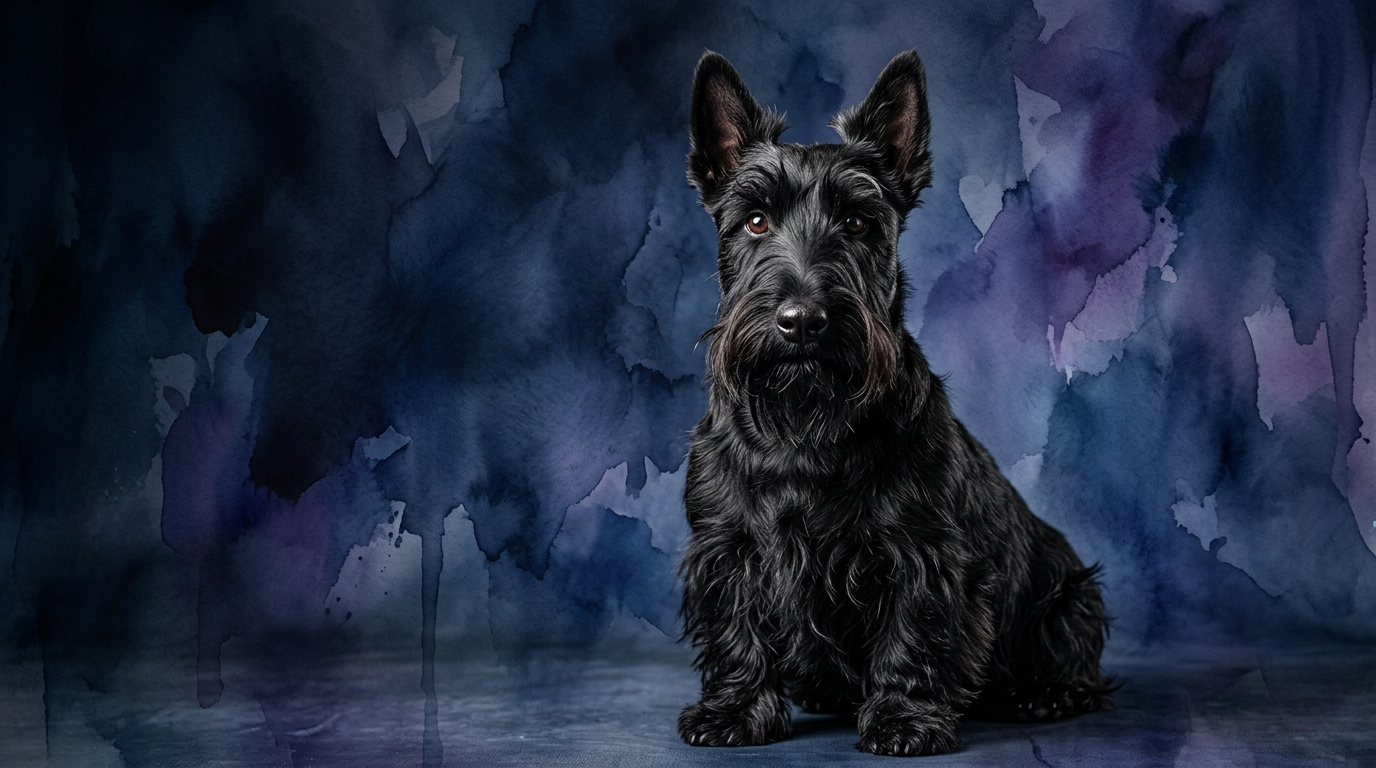
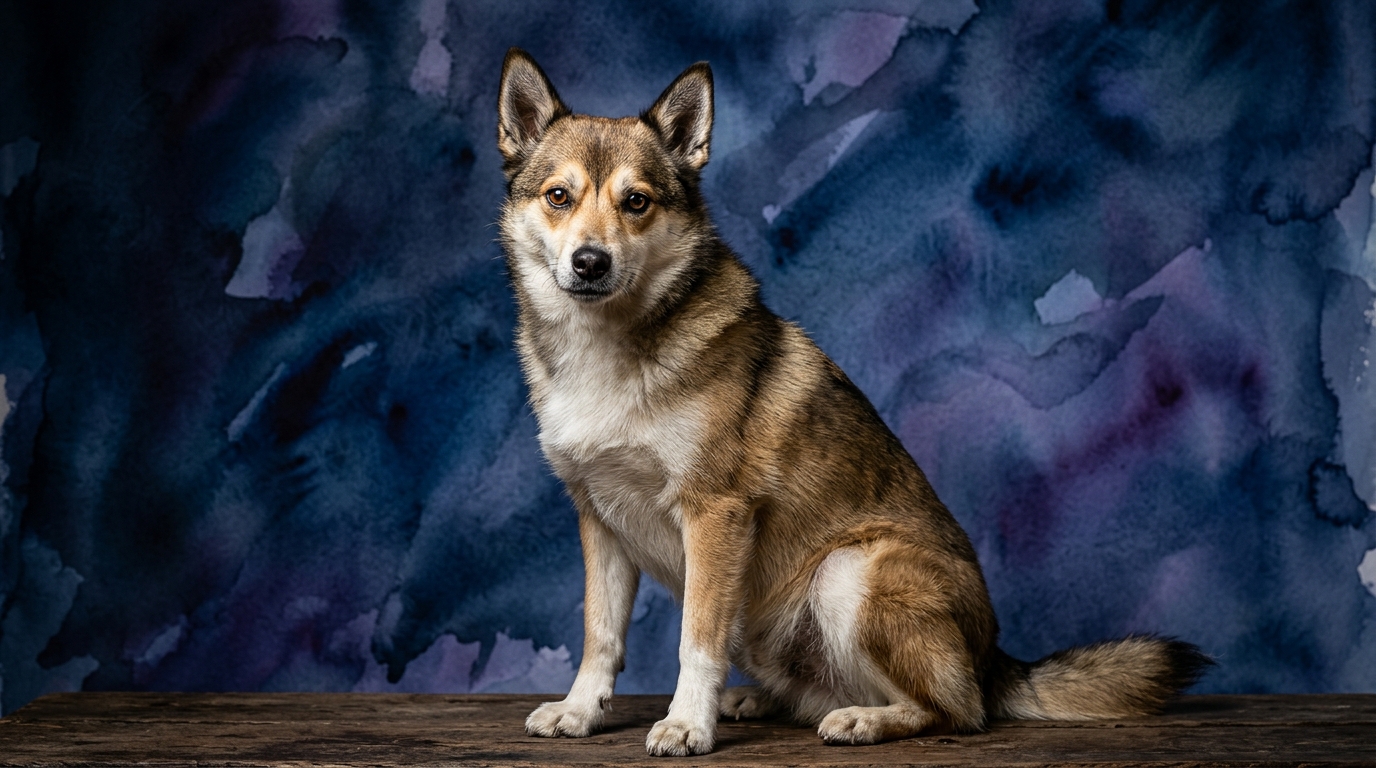
Side-by-Side IQ Profile: Scottish Terrier vs. Norwegian Lundehund
The Pet IQ Lab assesses canine intelligence across five critical dimensions, providing a nuanced view beyond simple obedience. For both the Scottish Terrier and the Norwegian Lundehund, all five dimensions register a solid 3 out of 5, indicating capable and adaptive minds, yet the manifestation of this score varies significantly with their breed heritage and the specific cognitive tasks they excel at.
**Scottish Terrier (Coren Rank #65)**: This tenacious terrier brings a focused intensity to its cognitive functions.
**Problem Solving (3/5)**: The Scottish Terrier exhibits a practical, results-oriented approach to challenges, often relying on persistence and a deep-seated determination. Their problem-solving might involve ingeniously figuring out how to bypass a gate to explore a new scent or tenaciously digging under a fence to reach a perceived “prey.” They excel at understanding cause-and-effect within their immediate environment, particularly when motivated by a desired outcome, but might not engage with abstract puzzles that lack a clear, tangible reward. This reflects a focused, rather than broadly adaptable, problem-solving style.
**Training Speed (3/5)**: Scotties are certainly capable of learning new commands and routines, but their progress is typically steady rather than rapid, requiring consistent reinforcement. Their independent, “what's in it for me?” terrier mindset means clear communication, patience, and highly motivating rewards are essential for success. They absorb information well over time, retaining learned behaviors, but their inherent self-reliance means they might choose to comply only when it aligns with their immediate interests, requiring a trainer adept at making tasks compelling.
**Social Intelligence (3/5)**: Highly attuned to their immediate family, the Scottish Terrier displays strong social bonds within their trusted circle, readily interpreting familiar human cues, tones, and emotions. They understand household dynamics and their place within the family unit. However, they tend to be reserved and discerning with strangers, often preferring to observe from a distance rather than engage immediately, indicating a social intelligence that is deep and loyal within its defined boundaries but not broadly expansive.
**Instinctive Drive (3/5)**: With a history rooted in badger and fox hunting, the Scottie possesses a robust instinctive drive. This manifests as a strong prey drive, an innate desire to dig, and a vigilant nature that makes them excellent watchdogs. Their instincts are primarily geared towards patrolling their territory, investigating unusual sounds or scents, and asserting their presence, making them alert and sometimes vocal protectors.
**Memory (3/5)**: Scottish Terriers possess a reliable memory, recalling learned commands, routines, and experiences with good retention. They remember specific paths taken during walks, the location of their favorite toys, and the routines of their household. This strong memory aids in consistent behavior once a habit is established, whether it's remembering where treats are stored or adhering to house rules.
**Norwegian Lundehund (Not Coren-ranked)**: This agile and unique breed showcases cognitive abilities perfectly suited to its specialized past.
**Problem Solving (3/5)**: The Lundehund's problem-solving skills are uniquely adapted to their historical role of hunting puffins on treacherous, rocky cliffs. They demonstrate exceptional spatial awareness and physical ingenuity, figuring out how to contort their incredibly flexible bodies, squeeze into tight crevices, and navigate complex, unstable terrains. Their solutions are often physical and exploratory, focused on environmental mastery, such as finding the safest route across uneven ground or reaching a high vantage point.
**Training Speed (3/5)**: While intelligent, the Lundehund's training speed is influenced by their independent nature and strong intrinsic motivations for exploration. They can learn commands and tricks, but their attention might be easily diverted by novel sights, sounds, or scents in their environment. Learning is most effective when it taps into their natural curiosity and agility, requiring creative and engaging methods that make training feel like an extension of their natural exploratory play.
**Social Intelligence (3/5)**: Lundehunds form deep, affectionate bonds with their primary family members, exhibiting a sensitive understanding of their loved ones' moods and intentions. They are often described as “velcro dogs” with their inner circle, highly attuned to their family's presence and emotional state. Outside this inner circle, they can be reserved or even shy, particularly in new or overwhelming social situations, preferring to observe from a distance until they feel secure.
**Instinctive Drive (3/5)**: Their instinctive drive is profoundly shaped by their puffin-hunting past. This includes a strong inclination to climb, explore, and “forage” (often meaning investigating every nook and cranny with their unique flexibility). Their extra toes and incredibly flexible joints are not just physical traits but enable a strong drive to interact with their environment in a highly physical and investigative manner, constantly seeking out novel sensory input.
**Memory (3/5)**: Lundehunds possess a commendable memory, particularly for intricate routes, safe passages, and locations of interest in their environment. They remember complex sequences of movements needed to navigate challenging obstacles and retain information about their surroundings, which is crucial for their exploratory nature. This extends to remembering where they found an interesting scent or a good climbing spot weeks later.
Where the Scottish Terrier Wins Cognitively
The Scottish Terrier's cognitive strengths shine in areas requiring focused determination and unwavering loyalty, particularly within a structured environment. Their problem-solving, while not always overtly strategic in a human sense, is backed by a tenacious resolve; once a Scottie decides on a course of action, they pursue it with single-minded intensity. This persistence can make them exceptionally effective at tasks requiring sustained effort, like scent work or guarding, where their independent thought is channeled towards a specific, well-understood objective. Their social intelligence, though reserved with strangers, fosters an incredibly deep and reliable bond with their family, making them highly attuned to their owners' specific needs and routines within that trusted circle, often anticipating desires or reacting to subtle emotional shifts.
Where the Norwegian Lundehund Wins Cognitively
The Norwegian Lundehund truly excels in cognitive tasks demanding adaptability, spatial reasoning, and physical ingenuity, particularly in novel environments. Their problem-solving abilities are unparalleled when it comes to navigating complex, three-dimensional spaces, leveraging their unique physical structure to overcome obstacles that would baffle other breeds. This involves intricate spatial planning, body awareness, and a quick assessment of their surroundings to find the most efficient or safest route. Their instinctive drive for exploration fuels a curious mind that constantly processes environmental information, leading to exceptional observational skills and memory for intricate details of their surroundings, such as subtle changes in terrain or the location of hidden objects, far beyond typical dog park navigation. They are masters of their physical environment.
Which is Easier to Train and Why
While both breeds score 3/5 in training speed, the Scottish Terrier generally presents a more straightforward, albeit stubborn, training experience for the average owner. Scotties, despite their independence, often respond well to consistent, reward-based training because they understand the direct link between compliance and desired outcomes. Their loyalty to their family means they are more inclined to work *with* their owner, even if it requires a bit of negotiation. In contrast, the Norwegian Lundehund's training can be more challenging due to their intense curiosity and strong independent drive to explore. They are easily distracted by environmental stimuli and may prioritize investigating a novel scent or climbing opportunity over performing a known command, requiring a trainer who can make learning incredibly engaging and relevant to their intrinsic motivations.
Which Suits Active Owners vs. Relaxed Owners
The choice between these two breeds depends heavily on an owner's lifestyle and preferred activities. The Scottish Terrier, while not a marathon runner, requires consistent daily walks and mental engagement to prevent boredom and destructive behaviors. They thrive with owners who enjoy routine, appreciate a determined companion for moderate outdoor adventures, and are prepared for regular grooming and training sessions to manage their terrier tenacity. They can adapt to a more relaxed indoor life if their mental and physical needs are met through structured play and short, stimulating outings. The Norwegian Lundehund, however, truly suits active, adventurous owners who embrace novelty and outdoor exploration. Their unique physical capabilities and strong drive to climb and investigate demand regular opportunities for varied physical activity and mental stimulation in diverse environments. They are ideal for those who enjoy hiking, agility, or engaging in puzzle-solving games that leverage their spatial intelligence and problem-solving skills, making them less suitable for purely sedentary lifestyles.
The Verdict
Choose the Scottish Terrier if you seek a loyal, determined, and discerning companion who will bond deeply with your family and offers a consistent, albeit sometimes stubborn, presence.
Opt for the Norwegian Lundehund if you are an adventurous, active individual or family seeking a highly agile, curious, and unique canine partner who thrives on exploring complex environments and engaging in novel physical challenges.
🧠 Find Your Pet's IQ Score
Our Pet IQ Lab assessment covers 25+ tests across 5 cognitive dimensions — personalized to your breed.
Take the Full IQ Test →Frequently Asked Questions
Do Scottish Terriers need a lot of mental stimulation?
Yes, despite their somewhat reserved demeanor, Scottish Terriers require consistent mental engagement to prevent boredom and channel their problem-solving and instinctive drives constructively. Puzzle toys, training sessions, and varied walking routes are excellent for keeping their minds active.
Are Norwegian Lundehunds good for first-time dog owners?
Norwegian Lundehunds are generally not recommended for first-time dog owners due to their unique physical needs, independent nature, and strong exploratory drives. They benefit from experienced owners who understand their specific cognitive and behavioral requirements.
How do their social intelligence scores of 3/5 compare in practical terms?
For the Scottish Terrier, a 3/5 social intelligence means they are deeply connected to their family but reserved with strangers, reading familiar cues well. For the Norwegian Lundehund, it signifies strong family bonds but a tendency towards shyness or aloofness in new social settings, prioritizing their trusted circle.