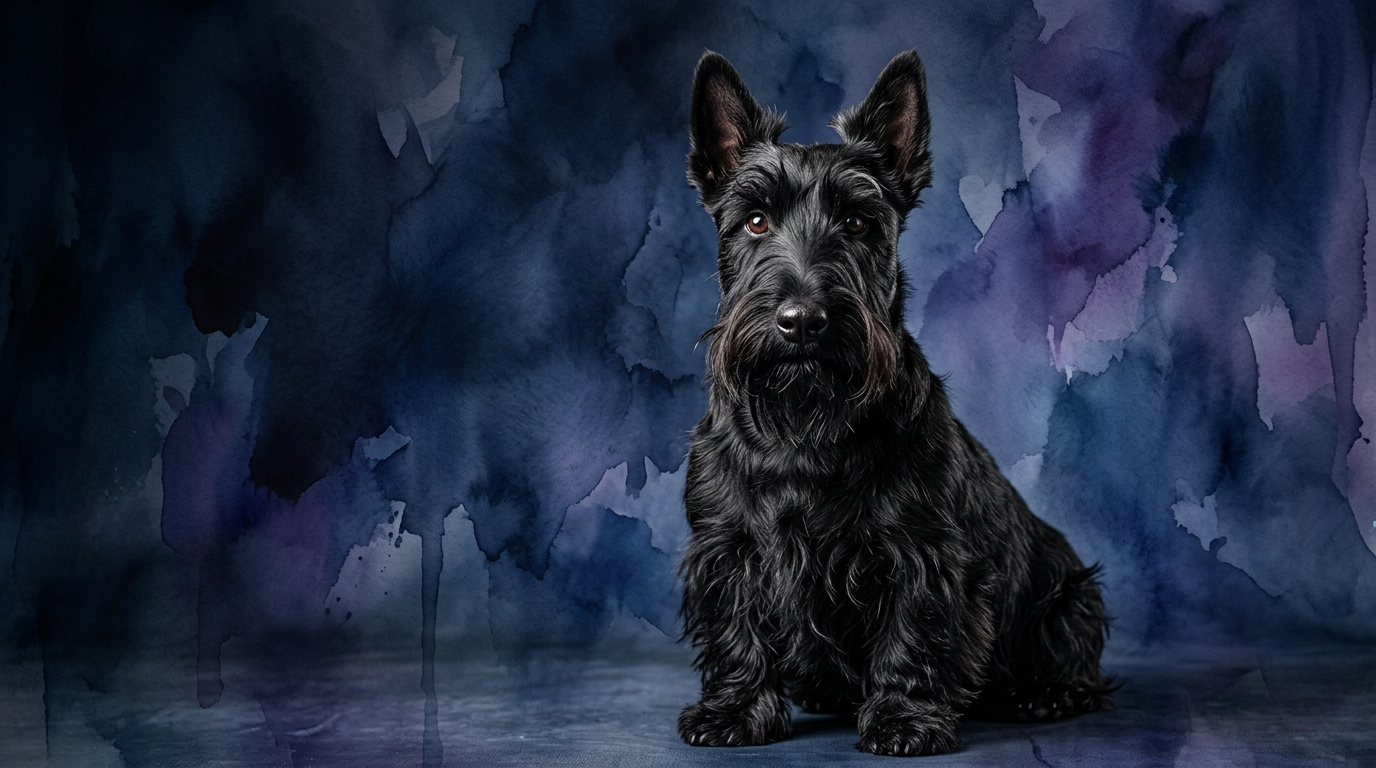
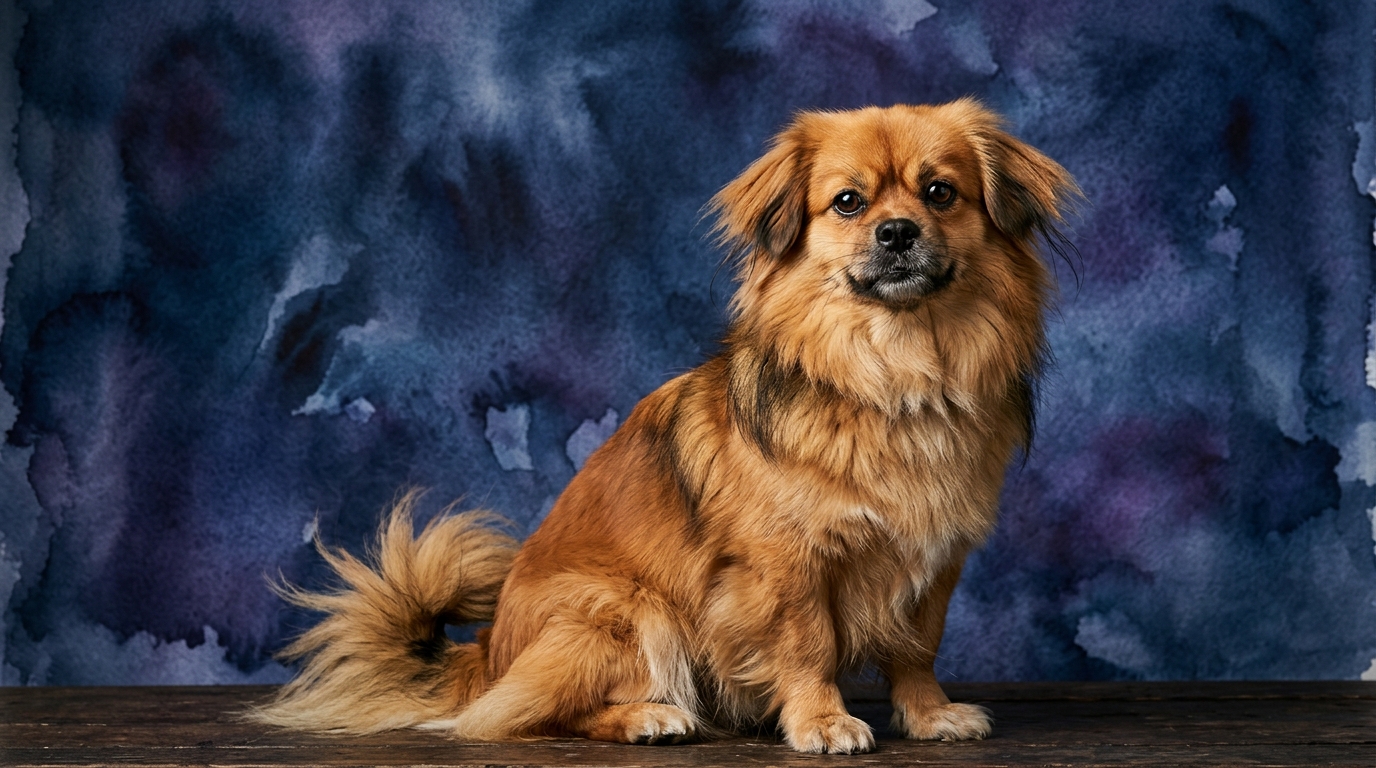
Side-by-Side IQ Profile: Scottish Terrier vs. Tibetan Spaniel
Despite their differing appearances and historical roles, the Scottish Terrier (Coren rank #65) and the Tibetan Spaniel (not Coren-ranked) share identical scores across our five cognitive dimensions, each rated at 3 out of 5. This numerical equality, however, belies the distinct ways each breed expresses these capacities, rooted in their unique temperaments and evolutionary paths.
For the **Scottish Terrier**, their **Problem Solving (3/5)** acumen is often applied with a determined, physically-oriented approach, reflecting their terrier heritage. This typically manifests as figuring out how to access a desired object or location through sheer persistence, such as digging under a fence to investigate a scent or maneuvering a favorite toy out of a tight spot. Their solutions are often direct, driven by an innate, almost single-minded focus to overcome perceived obstacles and achieve their immediate goal, showcasing a practical intelligence. Their **Training Speed (3/5)** indicates they learn new commands steadily, but their independent spirit often means compliance is a choice rather than an automatic response. They grasp concepts with moderate pace, yet their deep-seated self-reliance frequently requires consistent, engaging motivation to ensure learned behaviors are readily performed.
The Scottie's **Social Intelligence (3/5)** involves observing their human companions with a discerning eye, understanding routines and moods, though they are selective in their outward displays of affection. Their social awareness often translates into a keen ability to differentiate between welcomed visitors and those they deem less trustworthy, providing a watchful presence within their family unit. A significant aspect of their cognitive makeup is their strong **Instinctive Drive (3/5)**, particularly their prey drive and territoriality. This translates into a focused determination when pursuing small critters or guarding their domain, requiring mental engagement to manage these deep-seated impulses. Finally, Scottish Terriers possess a solid **Memory (3/5)** for learned commands, routines, and experiences, remembering both positive and negative associations with people, places, and situations over time, contributing to their consistent demeanor.
The **Tibetan Spaniel**, in contrast, typically approaches **Problem Solving (3/5)** with keen observation and strategic thinking, often finding solutions that involve understanding and subtly manipulating their environment or human companions. They might figure out how to open a cupboard by carefully watching human actions, or employ their charm and expressive eyes to persuade an owner to grant access to a desired lap or elevated perch. This demonstrates a more indirect, socially nuanced form of problem-solving, where understanding human behavior is a key component to achieving their aims. Their **Training Speed (3/5)** means they absorb new information at a moderate pace, often excelling when training is framed as a fun, interactive game. While they understand commands readily, their independent streak and preference for comfort or attention can sometimes lead to 'selective hearing,' requiring patient and positive reinforcement to maintain engagement.
Tibetan Spaniels display a finely tuned **Social Intelligence (3/5)**, deeply attuned to the nuances of their family's emotions and household dynamics. They excel at forming strong, empathetic bonds with their chosen humans, often acting as sensitive barometers of the home's mood and adjusting their behavior accordingly. Their **Instinctive Drive (3/5)** is primarily rooted in their historical role as a companion and watchdog, manifesting as an alert awareness of their surroundings and a propensity to vocalize at perceived intruders. While less focused on prey, their natural inclination is to survey their territory from an elevated position, demonstrating a keen sense of observation. Lastly, Tibetan Spaniels exhibit a reliable **Memory (3/5)** for routines, learned behaviors, and the preferences of their human family members, contributing to their adaptability and their ability to anticipate daily events within their established environment.
Where the Scottish Terrier Wins Cognitively
Despite identical numerical scores, the Scottish Terrier often exhibits a distinctive edge in problem-solving scenarios demanding persistent physical engagement and a robust, independent approach. Their terrier tenacity means they are less likely to give up on a puzzle or a task that requires sustained effort, especially if it taps into their innate drive to explore or 'hunt' for something. This steadfast determination can be a significant cognitive asset when faced with challenges that would deter a less resolute breed, showcasing a unique blend of physical and mental fortitude in applying their 3/5 problem-solving capacity.
Where the Tibetan Spaniel Wins Cognitively
Conversely, the Tibetan Spaniel often shines in cognitive areas requiring subtle social manipulation and observational acuity. Their ability to 'read the room' and understand human intent, even unspoken cues, can be remarkably precise, allowing them to anticipate needs or subtly influence outcomes to their benefit. This sophisticated social intelligence, paired with their keen memory for routines and preferences, enables them to navigate complex household dynamics with a finesse that might surpass the more direct approach of a terrier, making them adept at securing comfort and attention through nuanced interaction and their 3/5 social intelligence.
Which Is Easier to Train and Why
Determining which breed is 'easier' to train hinges more on owner approach and desired outcomes than raw cognitive capacity, given their matching 3/5 Training Speed scores. The Scottish Terrier, with its independent and often stubborn streak, requires a trainer who understands canine motivation and can make learning feel like a collaborative challenge rather than a simple directive. While they grasp concepts and sequences with a moderate pace, their deep-seated desire to make their own choices means that consistent, engaging, and highly rewarding positive reinforcement is crucial to overcome their occasional 'selective deafness' and ensure reliable execution. A Scottie thrives with varied, stimulating training sessions that respect their self-reliance and channel their persistence, often responding best when they perceive a clear benefit or a fun game in the activity.
The Tibetan Spaniel, while equally capable of learning and absorbing new information, presents a different training dynamic. They are generally more sensitive and possess a strong desire to please their chosen people, making them highly responsive to gentle, reward-based methods. However, their independent spirit, often expressed as a preference for comfort, warmth, or a personal agenda over immediate compliance, means they can quickly disengage if training becomes repetitive or overly demanding. They are highly observant and will learn quickly from routines and subtle cues within the household, but successful training often involves leveraging their desire for companionship and making sessions feel like a fun, interactive bonding experience. Therefore, neither is inherently 'easy' in the conventional sense of being passively compliant; the Tibbie might appear more compliant initially due to their social motivation, while the Scottie's compliance is earned through respect for its strong will and a well-designed motivational strategy.
Which Suits Active Owners vs. Relaxed Owners
When considering lifestyle compatibility, the Scottish Terrier typically aligns better with owners who appreciate an active and engaging companion. Their moderate instinctive drive and need for mental stimulation mean they thrive on regular walks, opportunities for exploration, and puzzle-solving activities that tap into their terrier instincts. While they are not hyperactive, a Scottie benefits from consistent engagement that provides outlets for their physical energy and sharp minds, making them an excellent fit for individuals or families who enjoy a routine of outdoor adventure and interactive play and can manage their independent nature.
The Tibetan Spaniel, on the other hand, often proves to be an ideal match for more relaxed owners who value a close, observant companion. While they enjoy walks and playtime, their exercise needs are generally moderate, and they are content to spend significant time observing their surroundings from a comfortable perch or nestled beside their humans. Their strong social intelligence and adaptability make them excellent apartment dwellers or companions for those with a quieter home life, as long as they receive ample attention and opportunities for social interaction. They are less driven by strenuous physical exertion and more by the quality of their companionship, making them perfect for those seeking a devoted, low-key presence.
The Verdict
Choose the Scottish Terrier if you seek a tenacious, independent companion for engaging activities, appreciating their determined approach to challenges and their watchful loyalty.
Opt for the Tibetan Spaniel if you desire a sensitive, observant dog that thrives on close companionship, adapting seamlessly to a relaxed home life and offering subtle social insights.
🧠 Find Your Pet's IQ Score
Our Pet IQ Lab assessment covers 25+ tests across 5 cognitive dimensions — personalized to your breed.
Take the Full IQ Test →Frequently Asked Questions
Do Scottish Terriers and Tibetan Spaniels have similar learning capabilities?
Both breeds share a 3/5 rating for Training Speed and Problem Solving, indicating they learn at a moderate pace. However, their motivation differs: Scotties learn through persistence and challenge, while Tibbies respond well to positive, relationship-focused training.
How do their social intelligence scores manifest differently?
Both score 3/5 in Social Intelligence, but Scotties use it for discerning observation and loyalty to their family, often being reserved with strangers. Tibetan Spaniels leverage theirs for deep emotional bonding with their chosen humans and subtle manipulation of household dynamics.
Which breed is better for a first-time dog owner?
Neither breed is exceptionally difficult, but a Tibetan Spaniel might be slightly more forgiving for a first-time owner due to its eagerness to please and adaptability, provided the owner is prepared for its independent streak. A Scottish Terrier requires a confident, consistent owner who understands terrier temperament.