Side-by-Side IQ Profile
The Cosmic Pet Pet IQ Lab's framework allows us to dissect the cognitive strengths of these two breeds, revealing how their intelligence dimensions align with their ancestral occupations. Understanding these profiles is key to appreciating their unique mental makeups.
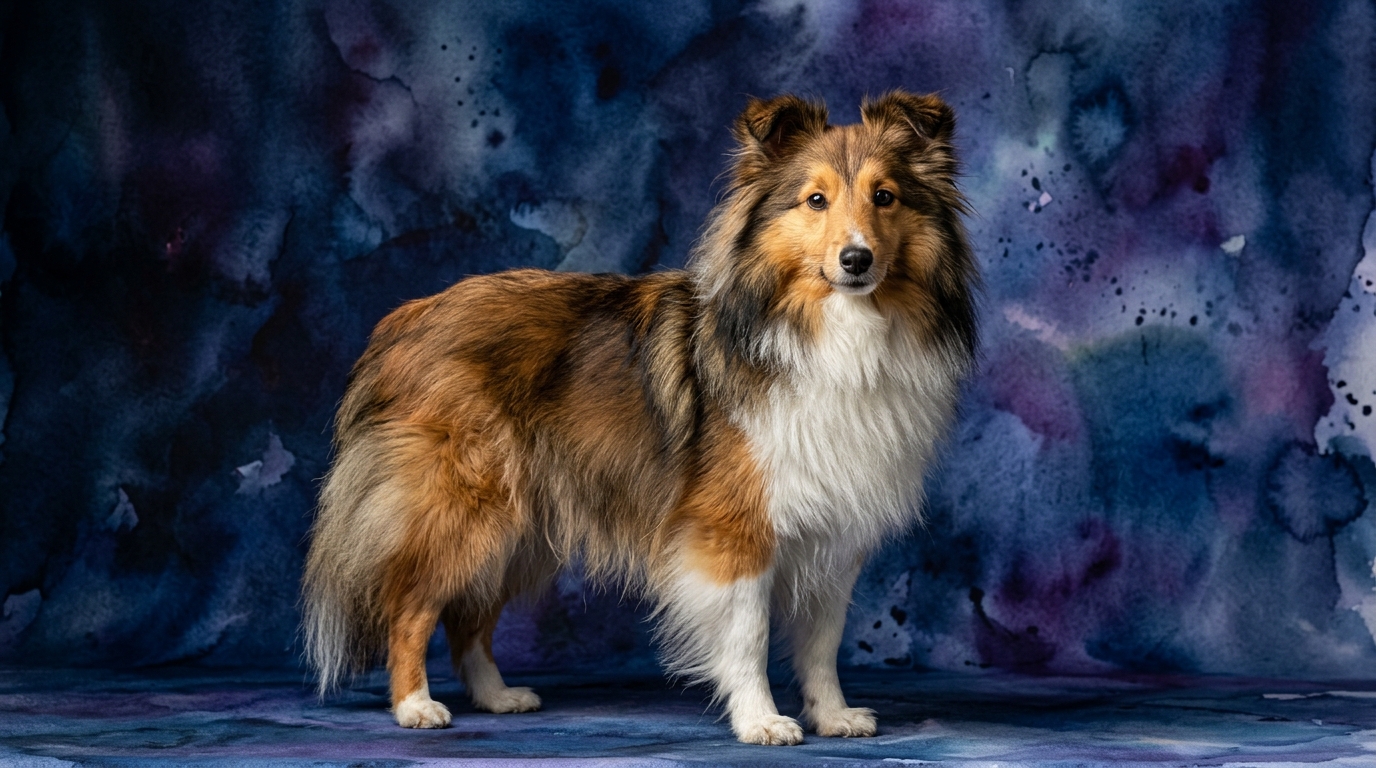
The Shetland Sheepdog, a member of the Herding group, registers a Coren rank of #6, signifying a breed with exceptional working and obedience intelligence. Their Problem Solving is rated at 4/5, indicating a capacity for strategic thought and adapting to dynamic situations, often seen in managing livestock or navigating complex agility courses. Training Speed is an impressive 5/5; Shelties absorb new commands and concepts with remarkable swiftness, mastering intricate sequences in fewer repetitions than many other breeds. Their Social Intelligence scores 4/5, reflecting a keen attunement to human emotions and intentions, making them highly responsive partners. An Instinctive Drive of 5/5 highlights their powerful herding impulse, a central component of their cognitive makeup that fuels their desire to gather and direct. Finally, their Memory is also 5/5, underpinning their rapid training acquisition and consistent performance in structured activities, allowing them to retain a vast lexicon of commands and recall them reliably.
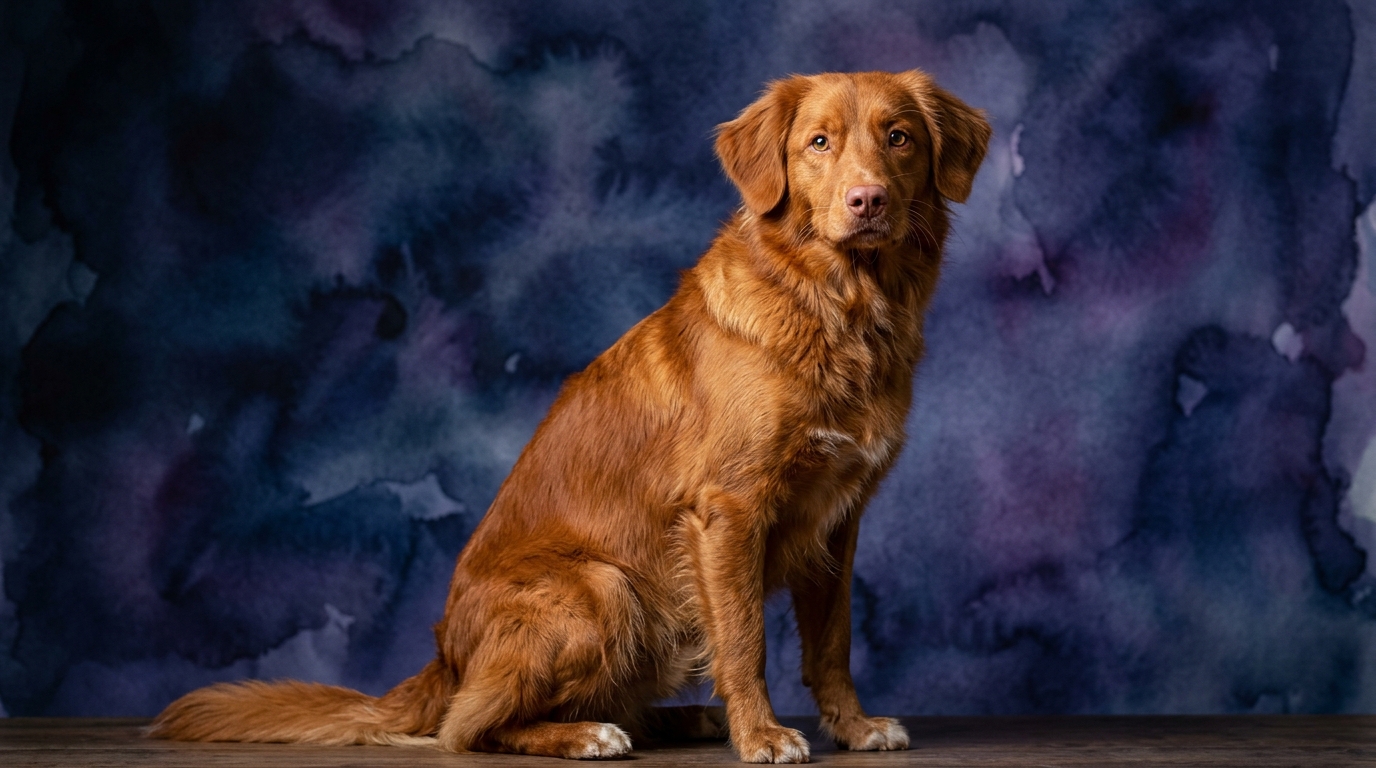
In contrast, the Nova Scotia Duck Tolling Retriever, from the Sporting group, is not Coren-ranked, suggesting their cognitive strengths manifest differently or require a distinct training approach from breeds primarily evaluated for obedience. Their Problem Solving is 3/5, demonstrating practical ingenuity, particularly in field scenarios like locating downed game or navigating obstacles. Training Speed is 3/5; while capable learners, Tollers typically require more consistent repetition and patience to solidify new commands, progressing steadily rather than with immediate mastery. Social Intelligence is 3/5; Tollers are cooperative partners, attentive to their handlers during collaborative tasks, such as understanding body language for direction during a retrieve. Their Instinctive Drive is also 3/5, rooted in their powerful retrieving and tolling instincts—an intense desire to chase, fetch, and engage in energetic play that mimics hunting. Lastly, their Memory is 3/5, providing functional recall for learned tasks and routines, especially those related to their retrieving work, but perhaps not for a vast repertoire of abstract commands.
Where Shetland Sheepdog Wins Cognitively
The Shetland Sheepdog's cognitive strengths truly shine in areas demanding precision, rapid learning, and intricate pattern recognition. Their training speed of 5/5 is unparalleled, allowing them to grasp complex multi-step commands and sequences almost immediately. For example, a Sheltie can quickly learn an agility course with numerous obstacles and directional changes after just a few repetitions, remembering the exact path and necessary cues. Their 5/5 memory underpins this, enabling them to retain a vast lexicon of commands and recall them reliably, even after long breaks. Furthermore, their 4/5 social intelligence means they are exceptionally attuned to their handler's subtle signals, often anticipating a request before it's fully voiced. This intuitive connection, combined with their problem-solving ability, makes them adept at adapting to novel situations within established structures, such as figuring out a new trick or navigating an unfamiliar environment under guidance. The Sheltie’s cognitive 'wins' are in the realm of systematic learning and precise execution.
Where Nova Scotia Duck Tolling Retriever Wins Cognitively
While the Toller's IQ scores may appear lower numerically, their cognitive strengths are deeply rooted in their specialized purpose, emphasizing resourcefulness and sustained drive in natural settings. Their 3/5 problem-solving, though not as abstract as a Sheltie's, excels in practical, field-oriented challenges. A Toller might not strategize complex herding patterns, but they will ingeniously figure out how to retrieve a decoy from dense cover or how to lure ducks more effectively through their unique 'tolling' action—a series of playful movements designed to pique waterfowl curiosity. Their 3/5 instinctive drive, while not a 5/5, is a powerful engine of sustained enthusiasm for repetitive tasks like fetching or swimming for extended periods, far outlasting many breeds. This drive translates into an unwavering focus on their retrieving goal. Their social intelligence, also 3/5, is particularly strong in collaborative, active partnerships, where they work seamlessly with a handler in a dynamic outdoor environment, maintaining focus and engagement despite distractions. The Toller's cognitive triumphs are in their robust, persistent application of instinctual intelligence to achieve specific, tangible outcomes.
Which is Easier to Train and Why
When it comes to ease of training, the Shetland Sheepdog holds a clear advantage, primarily due to their stellar 5/5 Training Speed and 5/5 Memory. Shelties possess an innate desire to please and a profound capacity to understand and internalize human instructions quickly. Their herding background necessitates rapid response to commands and the ability to work independently yet cohesively with a handler. This translates into a dog that picks up basic obedience commands in very few sessions and can progress to advanced tasks like scent work or complex choreography with relative ease. They generalize learned behaviors well across different environments. In contrast, the Nova Scotia Duck Tolling Retriever, with 3/5 Training Speed and Memory, requires more patience and repetition. Tollers are enthusiastic learners, but their independent hunting drive can sometimes lead to a 'what's in it for me?' attitude, and they may take longer to commit commands to memory consistently. While they are certainly trainable, their progress is often slower, and they might need more creative motivation, often involving their strong retrieving drive, to maintain engagement and ensure reliable recall in distracting environments. Real behavioral differences include the Sheltie's inherent focus on the handler versus the Toller's occasional strong environmental focus.
Which Suits Active Owners vs. Relaxed Owners
Neither the Shetland Sheepdog nor the Nova Scotia Duck Tolling Retriever are suited for truly 'relaxed' owners who prefer minimal engagement. Both breeds thrive with active lifestyles, but their activity needs differ in nature. The Sheltie, with its high mental stimulation requirements stemming from its 4/5 problem-solving and 5/5 instinctive drive, suits owners who enjoy structured activities. These might include dog sports like agility, obedience, rally, or even dabbling in herding. They need daily mental 'work' as much as physical exercise, enjoying puzzle toys, learning new tricks, and engaging in interactive play that challenges their quick minds. Owners who appreciate a canine partner eager to learn and excel in various disciplines will find a Sheltie rewarding. The Toller, on the other hand, while also needing mental engagement, has a stronger emphasis on vigorous physical activity driven by their 3/5 instinctive drive, especially for retrieving. They are ideal for owners who love the outdoors, enjoy long hikes, swimming, fetching, or participating in high-energy dog sports like dock diving or field trials. Their activity is often more about sustained physical output and vigorous play, making them perfect companions for adventurers who want a dog to keep pace on long excursions.
The Verdict
Choose the Shetland Sheepdog if you seek a highly trainable, mentally agile companion eager for structured learning, precision tasks, and a deep, intuitive bond rooted in quick understanding. They excel with owners who can provide consistent mental challenges and appreciate a dog that learns at an exceptional pace.
Opt for the Nova Scotia Duck Tolling Retriever if your lifestyle revolves around vigorous outdoor activities, sustained physical engagement, and a partner who brings boundless enthusiasm to retrieving and water-based adventures. They suit owners who value a resilient, driven companion for active, natural pursuits.
🧠 Find Your Pet's IQ Score
Our Pet IQ Lab assessment covers 25+ tests across 5 cognitive dimensions — personalized to your breed.
Take the Full IQ Test →Frequently Asked Questions
Do Shetland Sheepdogs have a strong prey drive?
While their primary instinctive drive is herding (5/5), Shelties can exhibit a prey drive, particularly towards small, fast-moving objects. This is often channeled into chasing toys or participating in lure coursing, but it's distinct from the Toller's retrieving focus.
How much exercise does a Nova Scotia Duck Tolling Retriever need daily?
Tollers require substantial daily exercise, typically 1-2 hours of vigorous activity, such as running, swimming, or extended fetching sessions. Their 3/5 instinctive drive means they need outlets for their energy to prevent boredom.
Are Shetland Sheepdogs good with children?
Shelties, with their 4/5 social intelligence, are generally gentle and observant with children, often forming strong bonds. However, their herding instinct might lead to nipping at heels, requiring supervision and early training to redirect this behavior.