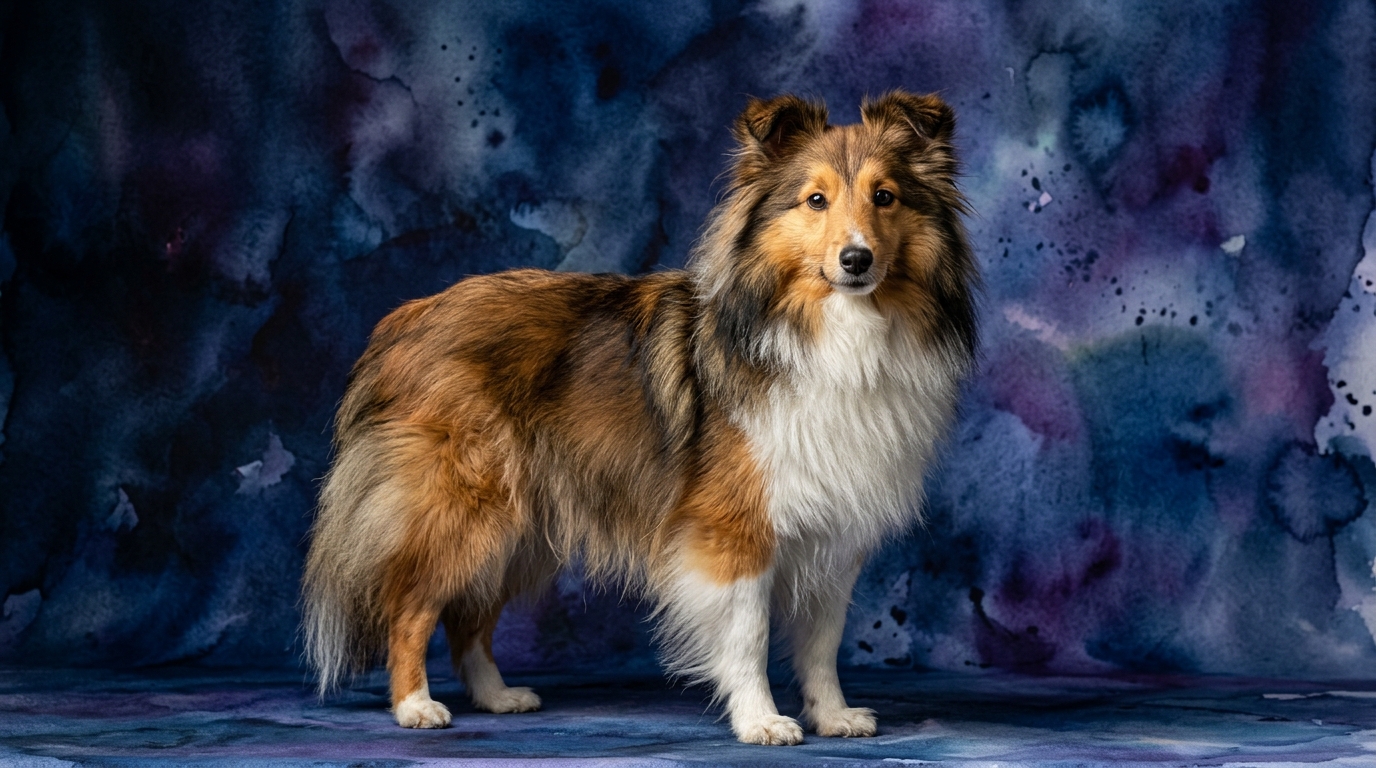
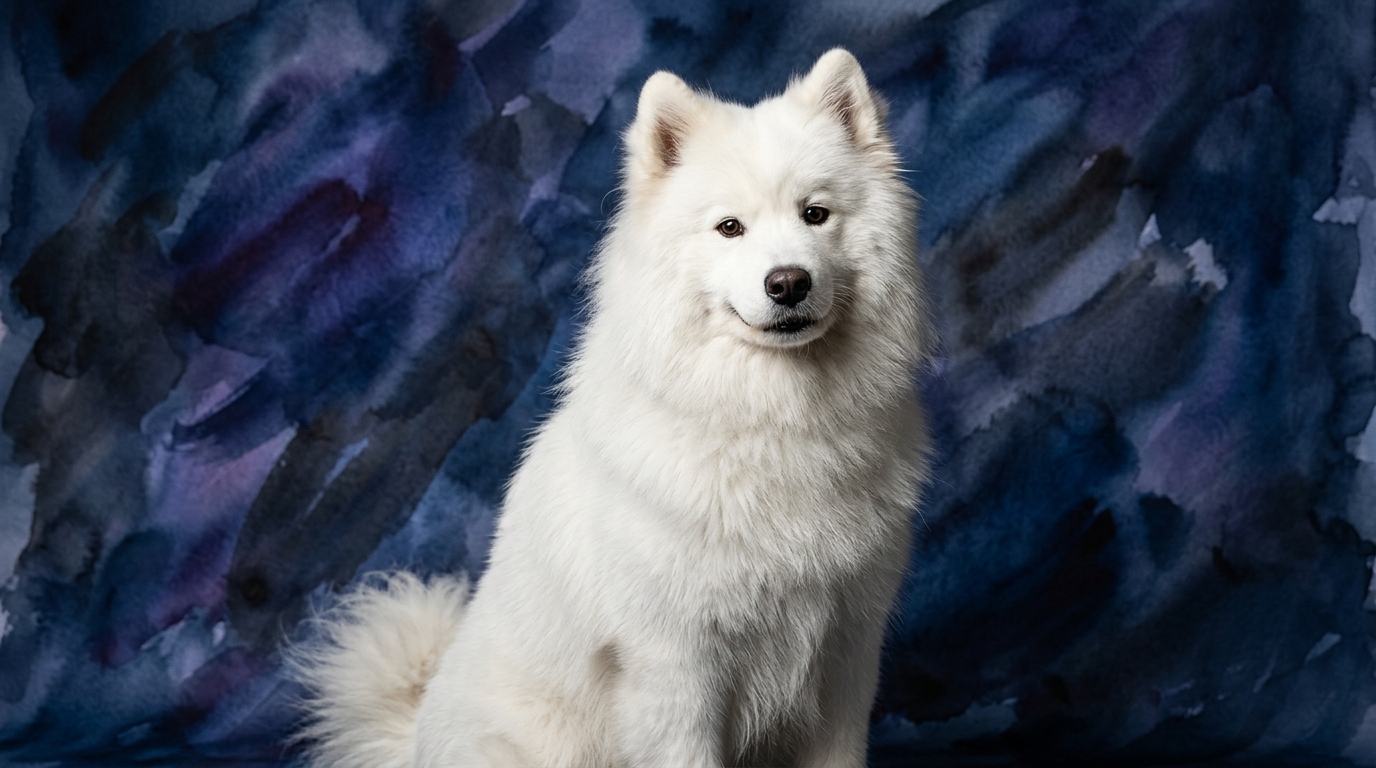
Side-by-Side IQ Profile: Sheltie vs. Samoyed
The Cosmic Pet Pet IQ Lab evaluates canine cognition across five distinct dimensions, offering a nuanced understanding of each breed's mental makeup. For the Shetland Sheepdog, a Coren rank #6 places them among the most adept learners, while the Samoyed, at Coren rank #33, demonstrates solid, though distinct, cognitive strengths.
**Shetland Sheepdog:** Excelling in "Problem Solving" (4/5), Shelties independently figure out complex tasks, a trait honed by their herding need for quick decisions. Their "Training Speed" (5/5) is exceptional, quickly grasping commands due to focus and eagerness. "Social Intelligence" (4/5) allows them to keenly read human cues, forming deep bonds, though they can be reserved with strangers. A powerful "Instinctive Drive" (5/5) for herding manifests as a strong work ethic. Their "Memory" (5/5) ensures skills are retained impressively.
**Samoyed:** With "Problem Solving" at 3/5, Samoyeds approach challenges practically, often in relation to their environment, but may not seek novel solutions. "Training Speed" (3/5) indicates they require more repetition due to their independent nature. They shine in "Social Intelligence" (5/5), forming strong, affectionate bonds and openly engaging with people. Their "Instinctive Drive" (4/5) centers on endurance and pack cooperation, valuing shared effort. "Memory" (3/5) is functional for routines, but might need refreshers.
Where the Shetland Sheepdog Wins Cognitively
Shetland Sheepdogs undeniably outpace the Samoyed in areas demanding rapid cognitive processing and precise execution. Their perfect "Training Speed" (5/5) means they absorb new commands and complex sequences with remarkable efficiency, often requiring minimal repetition. This makes them outstanding candidates for intricate dog sports like agility, competitive obedience, or rally, where quick, accurate responses are paramount.
Further bolstering this advantage is their "Memory" (5/5), ensuring that once a skill is acquired, it's retained with impressive fidelity. Coupled with a "Problem Solving" score of 4/5, Shelties frequently display an inventive knack for navigating obstacles or mastering puzzle toys, demonstrating less trial and error than many other breeds. This combination allows them to excel in tasks requiring both learned precision and adaptive application of knowledge.
Where the Samoyed Wins Cognitively
The Samoyed's preeminent cognitive strength is its perfect "Social Intelligence" (5/5), reflecting a profound capacity to connect with and intuitively understand human emotions and intentions. Unlike the Sheltie's occasional reserve, Samoyeds typically display an open, engaging disposition towards both their family and strangers, fostering deeply affectionate and empathetic relationships. Their social acumen allows them to respond to subtle shifts in human mood, making them exceptional companions.
While their "Instinctive Drive" is 4/5, it manifests as a strong desire for companionship and collaborative activity, rather than the Sheltie's herding focus. Rooted in their history as pack-working dogs, Samoyeds thrive on shared experiences and tasks, preferring to work alongside their human "pack." This cooperative spirit, combined with their high social intelligence, makes them superb therapy dogs or family members who naturally integrate into social activities, valuing shared presence over independent task completion.
Which Is Easier to Train and Why
For owners prioritizing training ease, the Shetland Sheepdog generally offers a smoother experience. Their outstanding "Training Speed" (5/5) and "Memory" (5/5) mean Shelties absorb new commands and behaviors with minimal repetition. Their "eager to please" disposition and sharp focus on their handler contribute significantly to this rapid acquisition. The Sheltie’s high "Instinctive Drive" (5/5) for work, when properly channeled, translates into a strong desire to perform tasks for their human, making them highly responsive to positive reinforcement and capable of mastering a wide range of skills quickly.
The Samoyed, with "Training Speed" and "Memory" both at 3/5, requires a different approach. Their independent nature, stemming from their history of making decisions in vast environments, means they can be more selective in compliance. While trainable, owners need consistency, patience, and engaging sessions. Samoyeds respond best when training feels like a fun, collaborative game, appealing to their strong "Social Intelligence" (5/5) and desire for shared activity. Their "Instinctive Drive" (4/5) for endurance can be channeled, but it demands understanding guidance over strict instruction.
Which Suits Active Owners vs. Relaxed Owners
Active owners will find engagement in both, but with distinct demands. The Shetland Sheepdog, with its "Instinctive Drive" (5/5) for herding and inherent agility, flourishes with structured activities that challenge both mind and body. Owners who enjoy dog sports like agility, obedience, or complex trick training will find a Sheltie an enthusiastic, capable partner. Their significant need for mental stimulation and physical exercise makes them ideal for individuals committed to daily training, long walks, and regular competitive outlets; a Sheltie needs a "job."
The Samoyed also suits active owners, particularly those who enjoy sustained outdoor adventures and companionship. Their "Instinctive Drive" (4/5) for endurance and pulling makes them excellent partners for hiking, jogging, or snowshoeing, happily joining extended family excursions. They revel in shared experiences. However, for more relaxed owners, a Samoyed might be preferable if "active" means long, leisurely strolls and ample social interaction rather than intense, structured training. While they need exercise, their mental stimulation often comes from social engagement and exploring with their human "pack," valuing shared presence over intricate problem-solving tasks.
The Verdict
Choose a Shetland Sheepdog if you're seeking a highly trainable, quick-witted partner for dog sports, complex tasks, or advanced obedience, and are prepared to provide consistent mental and physical challenges.
Opt for a Samoyed if you prioritize a deeply social, empathetic, and collaborative companion for outdoor adventures and family life, and are willing to invest patience in training an independent spirit.
🧠 Find Your Pet's IQ Score
Our Pet IQ Lab assessment covers 25+ tests across 5 cognitive dimensions — personalized to your breed.
Take the Full IQ Test →Frequently Asked Questions
Do Shetland Sheepdogs bark a lot due to their herding instincts?
Yes, Shelties often use barking as a communication tool, a remnant of their herding origins where they'd use their voice to direct sheep. While this can be managed with consistent training, it's a natural expression of their high instinctive drive and alertness. Owners should be prepared for their vocal nature.
Are Samoyeds difficult to train because of their independence?
Samoyeds are not inherently difficult, but their independence means training requires more patience, positive reinforcement, and making sessions enjoyable. They respond best to owners who understand their collaborative nature and make learning a fun, shared activity, rather than relying solely on strict commands. Consistency is key to navigating their independent streak.
Which breed is better with children, considering their IQ profiles?
The Samoyed's perfect 5/5 "Social Intelligence" often makes them naturally more outwardly affectionate and tolerant with children, enjoying being part of family activities. Shelties (4/5 social intelligence) can be wonderful with children but might be more reserved initially and could be prone to "herding" smaller, fast-moving children, requiring supervision and guidance.