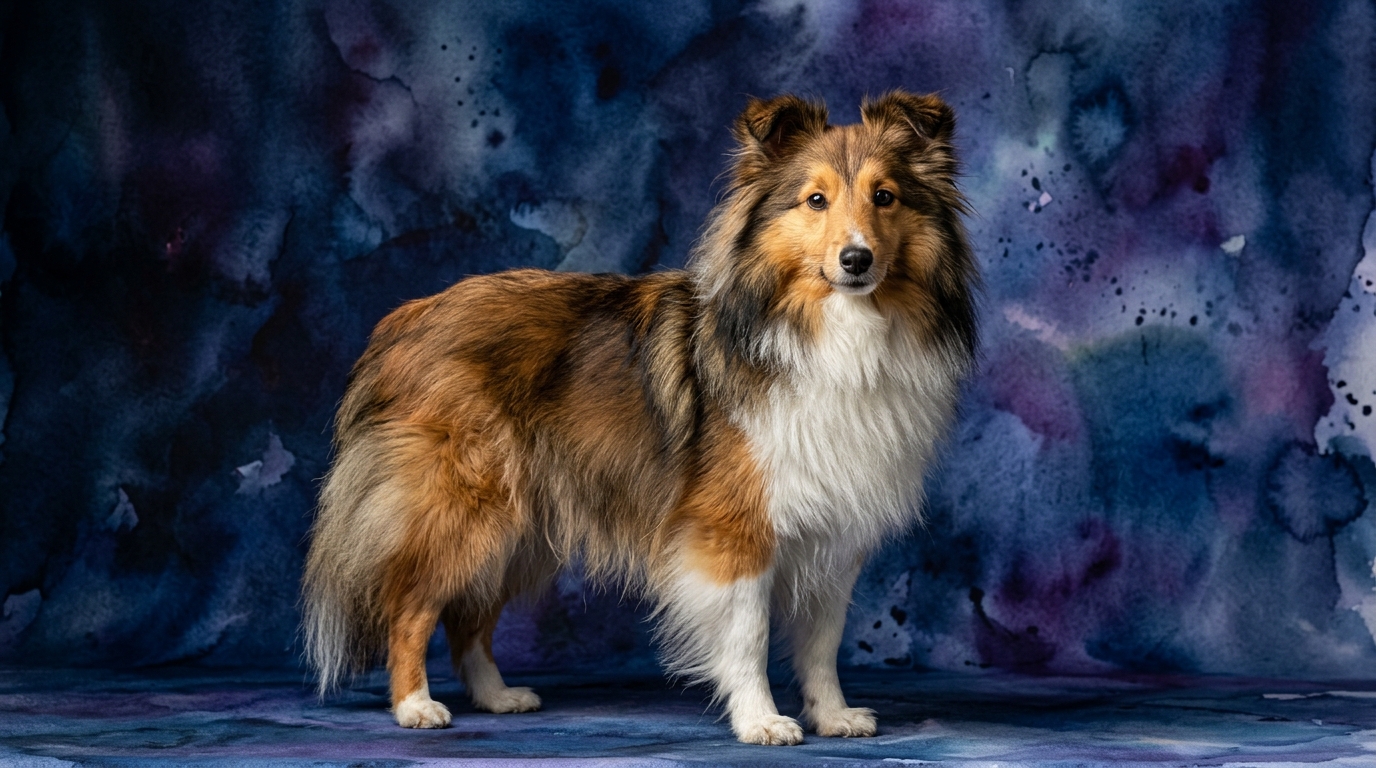
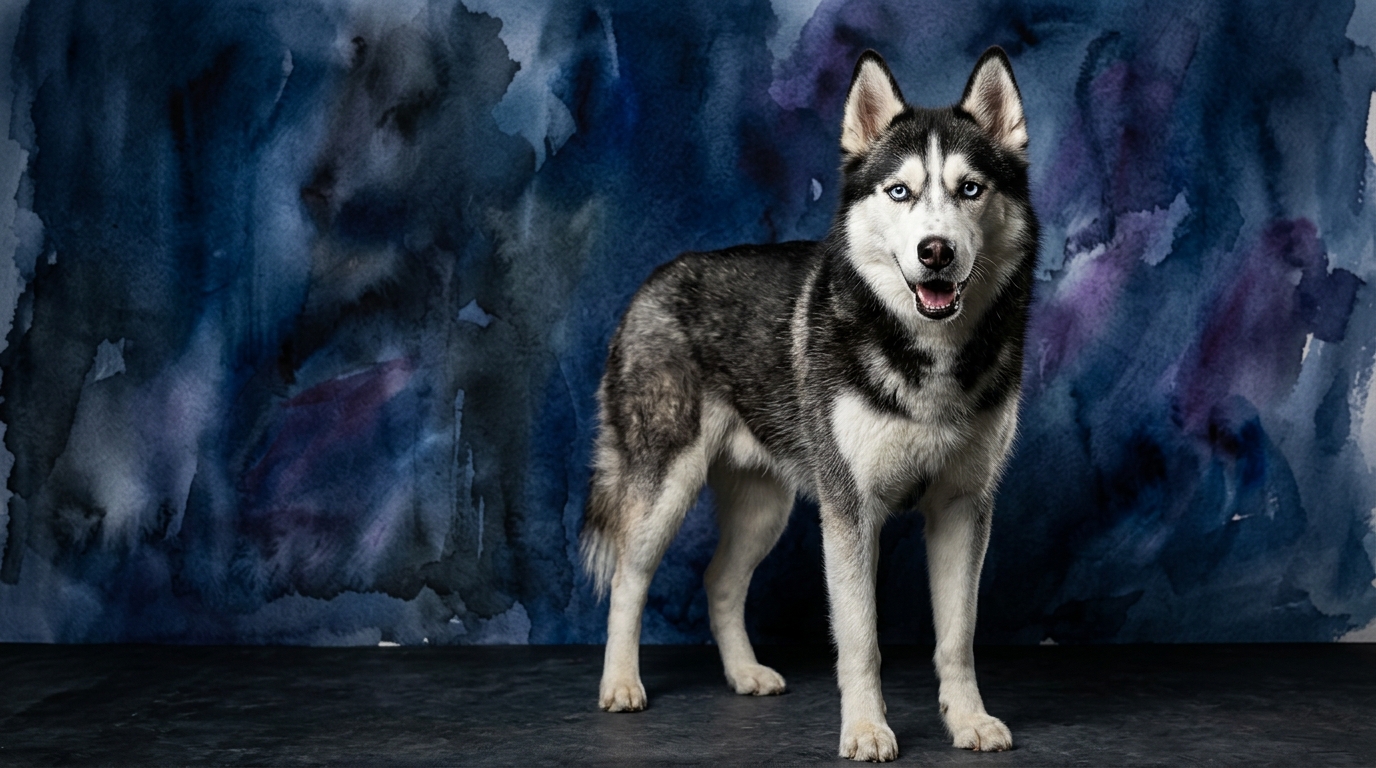
Side-by-Side IQ Profile: Sheltie vs. Husky
The Shetland Sheepdog, a Herding breed, ranks #6 on the Coren intelligence scale, boasting an impressive IQ profile: Problem Solving 4/5, Training Speed 5/5, Social Intelligence 4/5, Instinctive Drive 5/5, and Memory 5/5. This profile suggests a dog that not only grasps new commands with exceptional speed but also retains them reliably, indicating a strong working memory and an eagerness to engage. Their social intelligence score points to a keen awareness of human cues and intentions, crucial for herding, while their high instinctive drive translates into a persistent motivation to work and fulfill tasks.
In contrast, the Siberian Husky, a Working breed, holds a Coren rank of #45, with an IQ profile of: Problem Solving 4/5, Training Speed 2/5, Social Intelligence 3/5, Instinctive Drive 5/5, and Memory 4/5. The Husky’s profile highlights a breed capable of independent thought and finding solutions, but with a slower uptake in formal training, suggesting a preference for self-directed action over human-led instruction. Their social intelligence, while present, is less attuned to nuanced human directives, reflecting their role as independent sled dogs. A robust instinctive drive ensures they are motivated for strenuous physical tasks, and a solid memory allows them to recall routes and experiences, albeit perhaps not human commands with the same precision as a Sheltie.
Where the Shetland Sheepdog Wins Cognitively
The Shetland Sheepdog's cognitive strengths are particularly evident in its remarkable capacity for rapid learning and recall. With a training speed score of 5/5 and memory at 5/5, the Sheltie processes and embeds new information almost instantly, often requiring minimal repetition to master a new skill or command. This cognitive agility allows them to excel in dog sports like agility, obedience, and rally, where precision, quick adaptation, and a vast repertoire of learned behaviors are paramount, showcasing their ability to handle complex cognitive loads.
Their superior social intelligence (4/5) further enhances this advantage, enabling them to finely tune into human emotions and intentions. This sensitivity means they often anticipate owner requests and respond with a cooperative spirit, a trait rooted in their herding heritage where precise communication with their handler was essential for managing livestock. This nuanced understanding of human-dog partnership positions the Sheltie as a canine companion exceptionally adept at collaborative cognitive tasks, making them highly receptive to joint problem-solving endeavors.
Where the Siberian Husky Wins Cognitively
While not excelling in traditional obedience speed, the Siberian Husky's cognitive profile demonstrates a unique prowess in independent problem-solving and enduring focus, scoring 4/5 in problem solving and 5/5 in instinctive drive. Their ancestral role as sled dogs demanded autonomous decision-making in vast, challenging environments, leading to a mind that can navigate obstacles and strategize without constant human direction. This manifests as an ability to find creative solutions to environmental puzzles, such as escaping enclosures or figuring out how to access desired resources through sheer ingenuity and persistence.
The Husky's robust instinctive drive, coupled with their problem-solving ability, shines in scenarios requiring sustained effort and self-motivation over long distances. Their cognitive stamina allows them to maintain focus on a singular, physically demanding task for extended periods, a distinct advantage when pulling loads or traversing complex trails where self-direction is key. This independence, often perceived as stubbornness in training, is, in fact, a cognitive strength for self-sufficiency and resilience in their specialized working context, allowing them to thrive in environments where constant human guidance isn't feasible.
Which is Easier to Train and Why
When evaluating ease of training, the Shetland Sheepdog clearly presents a more straightforward path for most owners, primarily due to its exceptional training speed (5/5) and memory (5/5). Shelties absorb new commands and routines with impressive efficiency, often requiring fewer repetitions to solidify a behavior. Their high social intelligence (4/5) means they are generally eager to please and highly attentive to their handler's instructions, making them highly responsive to positive reinforcement methods. This combination results in a dog that learns quickly, remembers consistently, and actively seeks to understand and comply with human directives, making training a rewarding and relatively quick process.
The Siberian Husky, in contrast, offers a different training experience, marked by its training speed of 2/5. While certainly capable of learning (Problem Solving 4/5), their independent nature and lower social intelligence score (3/5) mean they often require more patience, consistency, and creative motivation. Huskies tend to evaluate commands through the lens of their own self-interest, and if a task doesn't align with their innate drives, they can appear resistant or 'stubborn.' Their memory (4/5) is solid, but their application of that memory to human-imposed rules can be selective, often prioritizing their strong instinctive drive (5/5) for exploration or chasing over immediate obedience. Training a Husky often involves channeling their considerable drive into acceptable outlets rather than simply suppressing it, demanding a nuanced approach.
Which Suits Active Owners vs. Relaxed Owners
For owners seeking a highly engaged and collaborative companion for active pursuits, the Shetland Sheepdog is an excellent match. Their intense instinctive drive (5/5) translates into a boundless enthusiasm for activities like agility, herding trials, and long, stimulating walks where they can utilize their sharp minds. Shelties thrive on mental challenges and physical activity that involves their owner, making them suitable for individuals who enjoy teaching new tricks, participating in dog sports, or simply engaging in interactive play that taps into their problem-solving and social intelligence. A relaxed owner might find a Sheltie's need for engagement overwhelming, potentially leading to boredom-induced behaviors and vocalizations if their cognitive and physical needs are not met.
The Siberian Husky, also possessing a robust instinctive drive (5/5), demands a profoundly active lifestyle, but with a different flavor. Their need for sustained, strenuous physical exertion is paramount; they are built for endurance running and pulling. Owners who are avid runners, hikers, or enjoy activities like bikejoring or skijoring will find a willing and tireless partner in a Husky. Their independent streak means they can be content with long, self-directed runs or explorations, though they still benefit immensely from owner-led adventures. A relaxed owner who cannot provide hours of vigorous daily exercise would likely struggle with a Husky, as unmet energy demands can lead to destructive behaviors and attempts to 'self-exercise' by escaping, indicating their profound need for physical outlets.
The Verdict
Choose a Shetland Sheepdog if you desire a highly responsive, eager-to-please companion deeply attuned to your cues, ideal for dog sports, complex training, and a close partnership.
Choose a Siberian Husky if you are an experienced, highly active owner seeking an independent, enduring partner for strenuous outdoor adventures, appreciating their self-reliant problem-solving and boundless physical stamina.
🧠 Find Your Pet's IQ Score
Our Pet IQ Lab assessment covers 25+ tests across 5 cognitive dimensions — personalized to your breed.
Take the Full IQ Test →Frequently Asked Questions
Do Shetland Sheepdogs require a lot of mental stimulation?
Absolutely. With a problem-solving score of 4/5 and high social intelligence, Shelties thrive on mental challenges and interactive play. Without adequate mental engagement, they can become bored and develop undesirable behaviors, often expressing their frustration through barking or destructive chewing.
Is a Siberian Husky difficult to train for a first-time dog owner?
A Siberian Husky can present significant challenges for a first-time owner due to their independent nature and lower training speed score of 2/5. They require consistent, patient training and an understanding of their strong instinctive drives, often needing an owner who can be more creative and persistent in their methods.
Which breed is better for a family with young children, based on their social intelligence?
The Shetland Sheepdog, with a social intelligence score of 4/5, is generally more attuned to human cues and can be more sensitive and responsive around children, often forming close bonds. Huskies, while often friendly (3/5 social intelligence), are more independent and may not tolerate constant interaction from young children as readily, sometimes preferring to disengage rather than actively participate in child-led play.