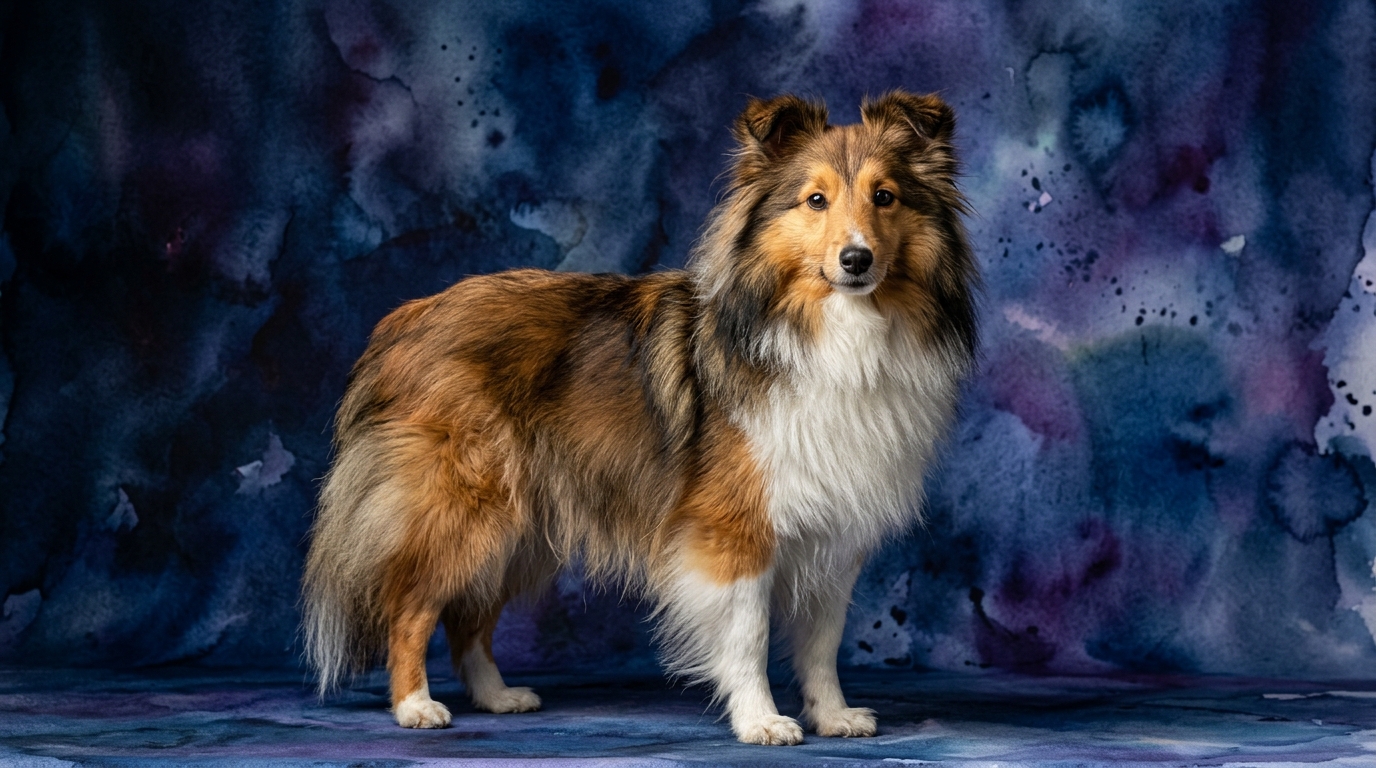
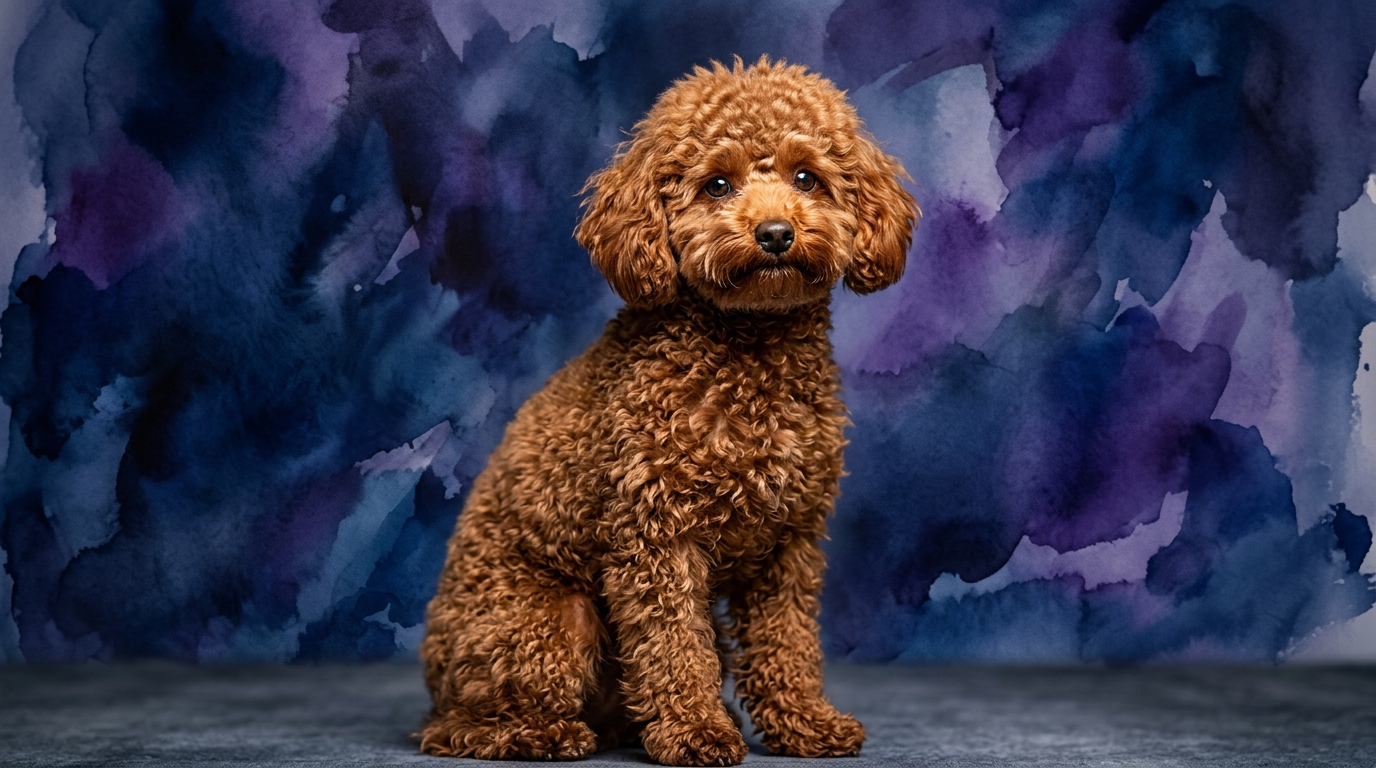
Side-by-Side IQ Profile: Shetland Sheepdog vs. Toy Poodle
The Cosmic Pet Pet IQ Lab evaluates canine cognition across five crucial dimensions, offering a granular view into each breed's unique strengths. Understanding these profiles helps prospective owners align with a companion whose cognitive makeup complements their lifestyle and training aspirations.
The Shetland Sheepdog, a member of the Herding group, registers a Coren rank of #6, indicating a high capacity for obedience and working intelligence. Their Problem Solving score is 4/5, reflecting strong practical reasoning skills, particularly when faced with physical obstacles or sequential tasks. They excel at figuring out how to move objects or navigate complex environments to achieve a goal.
In Training Speed, Shetland Sheepdogs achieve a perfect 5/5, demonstrating exceptional aptitude for learning new commands and routines with minimal repetition. Their keen focus and desire to engage with their handler contribute significantly to rapid skill acquisition. Their Social Intelligence is robust at 4/5, meaning they possess a strong understanding of human emotions, intentions, and subtle social cues. They are adept at reading body language and adapting their behavior accordingly.
Perhaps most defining for the Sheltie is their Instinctive Drive, rated a perfect 5/5. This reflects an exceptional innate desire to herd, chase, and work, often manifesting as a strong internal motivation that directs their energies towards specific tasks and activities. Finally, their Memory is also a perfect 5/5, indicating exceptional recall for commands, routines, and past experiences, retaining learned information over long periods with impressive reliability.
The Toy Poodle, originating from the Toy group, holds an impressive Coren rank of #2, signifying a truly exceptional level of working intelligence. Their Problem Solving score is a perfect 5/5, showcasing an exceptional capacity for abstract reasoning and complex analytical thinking. They frequently devise novel solutions to unfamiliar challenges, often connecting disparate concepts to solve problems.
Toy Poodles also achieve a perfect 5/5 in Training Speed, learning new behaviors and commands with remarkable swiftness. They absorb information and associate actions with consequences almost instantly, making them highly responsive to instruction. Their Social Intelligence registers at 3/5, indicating a moderate understanding of social nuances. While they bond deeply with their primary human, they might prefer direct interaction and clear communication over interpreting subtle group dynamics.
Their Instinctive Drive is moderate at 3/5, meaning they possess a less specialized set of innate motivations compared to working breeds. Their drives are often more generalized towards companionship, engagement, and play, rather than specific tasks like herding or guarding. Lastly, Toy Poodles also boast a perfect 5/5 Memory, exhibiting exceptional long-term retention of commands, tricks, and past experiences, ensuring their learned behaviors remain consistent.
Comparing these profiles reveals fascinating contrasts in their cognitive architectures, despite both breeds demonstrating remarkable overall intellect. While both are quick learners with excellent memory, their approaches to problem-solving, social interaction, and fundamental motivations diverge significantly.
Where the Shetland Sheepdog Wins Cognitively
The Shetland Sheepdog's cognitive strengths shine particularly brightly in areas demanding practical application and nuanced social awareness. Their robust 4/5 Problem Solving, combined with a perfect 5/5 Instinctive Drive, makes them adept at tasks requiring sequential logic and persistence, especially those with a physical component. They can methodically work through a series of steps to achieve an outcome, driven by an inherent desire to complete a 'job'.
Furthermore, the Sheltie's 4/5 Social Intelligence gives them an edge in understanding complex social dynamics and human emotional states. This means they are often more attuned to the subtle changes in their owner's mood or the atmosphere of a room, allowing them to adjust their behavior accordingly. This makes them particularly responsive to indirect cues and excellent at anticipating needs within a family unit. Their perfect 5/5 Memory further solidifies their capacity to learn and retain complex patterns of interaction and routine within their social environment.
Where the Toy Poodle Wins Cognitively
The Toy Poodle's cognitive superiority is evident in its exceptional abstract reasoning and rapid conceptual learning. With a perfect 5/5 in Problem Solving, they are remarkable at figuring out novel solutions to challenges that don't rely on instinct or physical manipulation alone. This includes complex puzzle toys, learning intricate multi-step tricks, or adapting quickly to entirely new environments and rules. Their mind thrives on intellectual stimulation that demands creative thought.
Their perfect 5/5 Training Speed, coupled with a 5/5 Memory, means Toy Poodles can master an extensive repertoire of commands and tricks with astonishing efficiency and long-term retention. They are often quicker to grasp the 'why' behind an action, making them prime candidates for advanced obedience, agility, or even specialized roles requiring rapid, precise learning. The Poodle's lower instinctive drive, while different from a herder's, can also be a cognitive advantage in some contexts, allowing them to focus more intensely on human-directed tasks without strong inherent urges diverting their attention.
Which is Easier to Train and Why
Both the Shetland Sheepdog and the Toy Poodle register a perfect 5/5 in Training Speed and Memory, suggesting both breeds are exceptionally easy to train in terms of command acquisition and retention. However, the 'easier' aspect often boils down to the type of training and the owner's approach, influenced by their other cognitive dimensions.
The Sheltie's 5/5 Instinctive Drive means they come pre-programmed with a strong work ethic and a desire to engage in purposeful activities. Channeling this drive can make training incredibly rewarding, as they are motivated by the 'job' itself. However, if not appropriately directed, this drive might lead to independent herding behaviors (like nipping at heels) or excessive vocalization. Their 4/5 Social Intelligence makes them highly sensitive to their handler's cues and emotions, often eager to please and responsive to positive reinforcement, but also potentially sensitive to harsh corrections.
The Toy Poodle's 5/5 Problem Solving and lower 3/5 Instinctive Drive mean they approach training with a different cognitive framework. They are less driven by inherent tasks and more by the challenge and the interaction with their human. They excel at learning complex sequences and understanding abstract concepts, making them superb for intricate trick training or advanced obedience. Their 3/5 Social Intelligence suggests they might be less attuned to subtle emotional shifts but respond exceptionally well to clear, consistent communication and reward-based methods. For an owner who enjoys teaching complex, novel behaviors, the Poodle's cognitive style might feel more 'effortless' in its rapid comprehension.
Which Suits Active Owners vs. Relaxed Owners
The choice between a Shetland Sheepdog and a Toy Poodle significantly depends on an owner's lifestyle and their capacity to meet a dog's cognitive and physical needs. Active owners, who enjoy outdoor activities, dog sports, or have a desire for a 'working' companion, will likely find a strong match in the Shetland Sheepdog.
The Sheltie's 5/5 Instinctive Drive and Herding background mean they thrive on purpose and require significant mental and physical engagement. They excel in agility, obedience, herding trials, and long walks or hikes. Owners who can provide consistent training, complex tasks, and plenty of exercise will find a Sheltie to be a highly engaged and cooperative companion. Their robust social intelligence means they enjoy being an integral part of family activities.
Conversely, while not a couch potato, the Toy Poodle, with its 3/5 Instinctive Drive, can adapt more readily to a somewhat less intensely active lifestyle, making them suitable for owners who prefer more relaxed, indoor-focused companionship, provided their intellectual needs are met. They still require daily walks and benefit immensely from mental enrichment like puzzle toys, learning new tricks, and interactive play that stimulates their 5/5 Problem Solving ability.
A relaxed owner doesn't mean a cognitively disengaged owner for a Poodle. They will thrive with an owner who enjoys consistent, positive-reinforcement training sessions, teaching new skills, and engaging in brain games, rather than solely relying on high-intensity physical exertion. Their adaptability and capacity for companionship make them excellent pets for individuals or families who can offer consistent attention and mental challenges without necessarily demanding hours of strenuous outdoor activity every day.
The Verdict
Choose the Shetland Sheepdog if you seek a highly engaged, sensitive companion eager for purposeful activity, outdoor adventures, and a partner in structured tasks.
Opt for the Toy Poodle if you prefer a highly adaptable, quick-witted partner who thrives on intricate mental challenges and enjoys a more companion-oriented, though still active, lifestyle.
🧠 Find Your Pet's IQ Score
Our Pet IQ Lab assessment covers 25+ tests across 5 cognitive dimensions — personalized to your breed.
Take the Full IQ Test →Frequently Asked Questions
Are Shetland Sheepdogs good for first-time dog owners?
Shetland Sheepdogs can be excellent for first-time owners who are committed to consistent training and providing ample mental and physical stimulation. Their high social intelligence and eagerness to please make them responsive, but their strong instinctive drive requires thoughtful management to prevent unwanted herding behaviors.
Do Toy Poodles require a lot of exercise?
While Toy Poodles have a moderate instinctive drive, they are still active dogs that require daily exercise, typically 30-60 minutes of walking or play. Crucially, their exceptional problem-solving abilities demand significant mental stimulation through training, puzzle toys, and interactive games to keep them content and prevent boredom.
Which breed is better with children?
Both breeds can be good with children, but their suitability depends on individual temperament and proper socialization. Shetland Sheepdogs, with their higher social intelligence, are often gentle and patient, but their herding instincts might lead to nipping at running children if not managed. Toy Poodles are generally playful and affectionate, thriving in a family environment where their intelligence is engaged, though their moderate social intelligence means they might prefer more predictable interactions.