Side-by-Side IQ Profile: Siberian Husky vs. Norwegian Elkhound
The Cosmic Pet Pet IQ Lab employs a five-dimensional framework to assess canine intelligence, offering a nuanced view beyond a simple 'smart' label. Here’s how the Siberian Husky (Coren rank #45) and the Norwegian Elkhound (Coren rank #36) stack up:
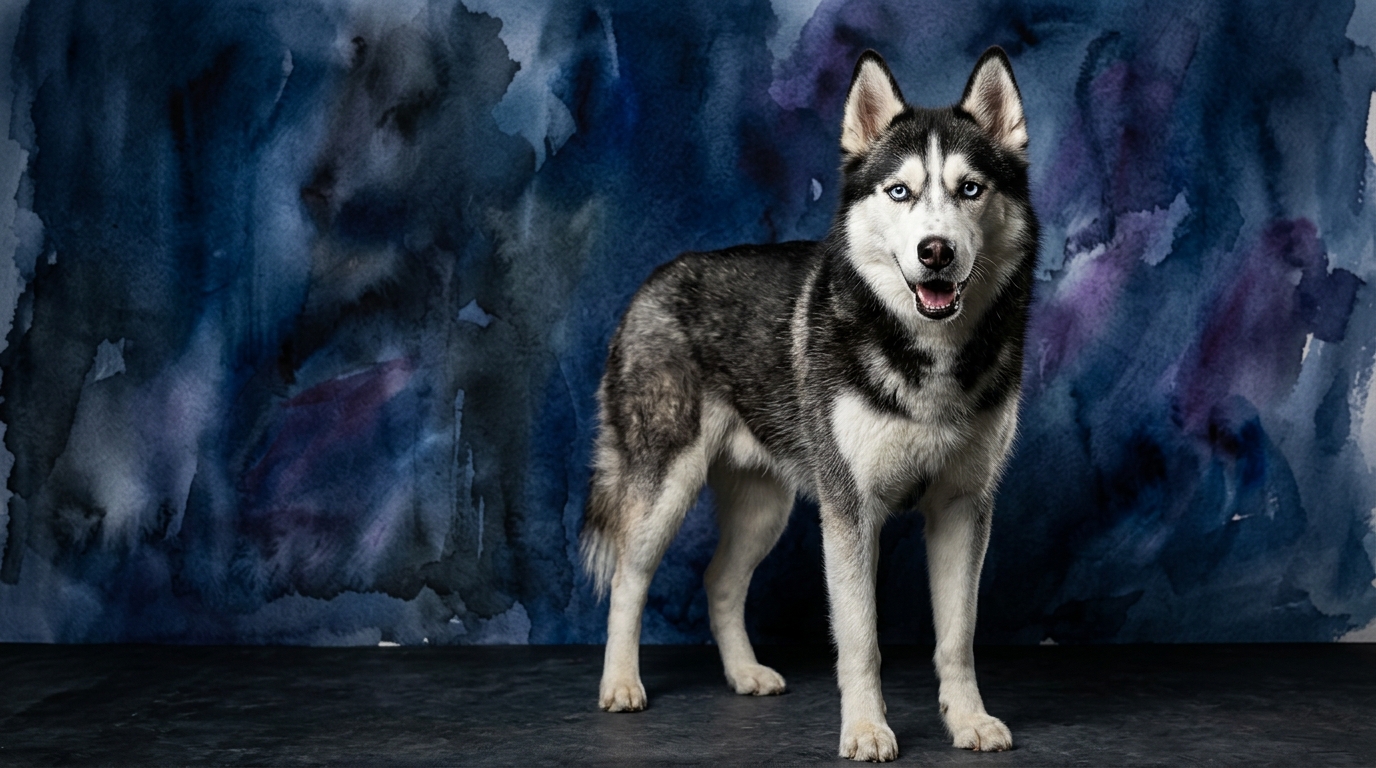
**Siberian Husky (Working Group):** This breed’s cognitive profile is a testament to its heritage as an endurance sled dog, requiring immense independence and resilience. Its Problem Solving is rated 4/5, reflecting a resourceful nature often applied to self-serving endeavors like strategizing escapes or finding food, driven by autonomous decision-making in challenging environments. Training Speed scores 2/5, indicating a strong-willed disposition where commands are often weighed against personal interest, demanding exceptional patience and high motivation from handlers. Social Intelligence is 3/5; Huskies are pack animals, forming bonds but maintaining a degree of independence in their interactions, observing group dynamics rather than being overly clingy. Instinctive Drive is a profound 5/5, encompassing an intense desire to run, pull, and explore, fueled by a powerful prey drive and wanderlust. Memory is 4/5, showing a commendable ability to recall routes, environmental layouts, and past experiences, crucial for navigation and adapting to their surroundings.
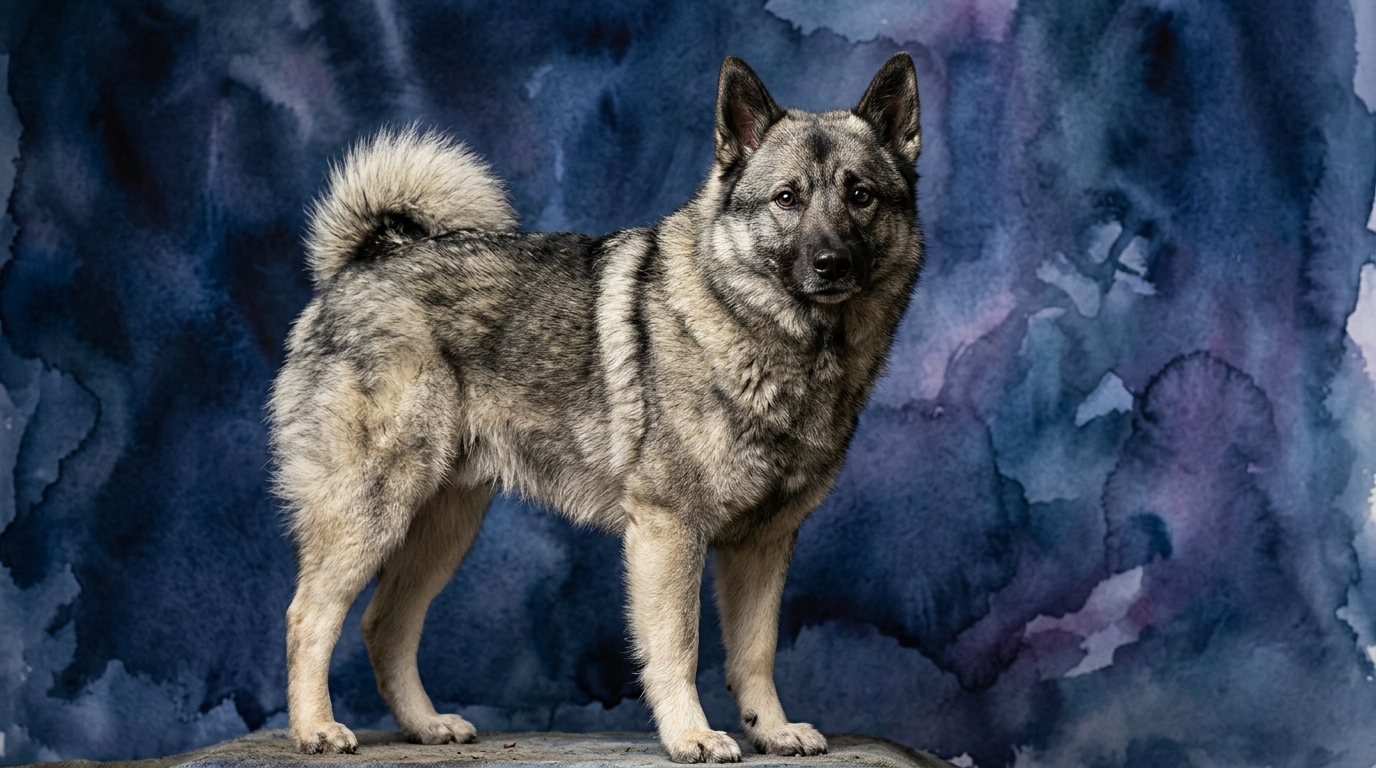
**Norwegian Elkhound (Hound Group):** The Elkhound’s cognitive strengths are finely tuned for its role as a tenacious hunter of large game, emphasizing partnership and focused tracking. Its Problem Solving also ranks 4/5, but unlike the Husky, this is often applied to complex hunting strategies—assessing scent trails, navigating varied terrain, and strategically holding prey while alerting a human companion. Training Speed is a higher 4/5, indicating a generally more cooperative and attentive nature, making them quicker to grasp and execute human-directed commands. Social Intelligence is 3/5; Elkhounds are deeply loyal and form strong, protective bonds with their immediate family, though they can be reserved or watchful with strangers, stemming from their guardian instincts. Instinctive Drive is 3/5, focused primarily on scent-tracking, alerting, and baying, rather than the sheer running and pulling of a Husky, reflecting a more controlled, cooperative hunting impulse. Memory is 4/5, particularly strong for scent discrimination, recalling specific training cues, and remembering family members, which is vital for their tracking abilities and consistent responsiveness.
Where the Siberian Husky Wins Cognitively
The Siberian Husky's cognitive strengths shine brightest in areas demanding extreme independence, resilience, and an unwavering drive to perform its ancestral tasks. Its 5/5 Instinctive Drive is a profound win, manifesting as an unparalleled motivation for sustained physical effort and exploration. This isn't just about running; it's a deep-seated mental compulsion that allows them to endure and thrive in challenging environments. Their 4/5 Problem Solving, when coupled with this drive, enables them to autonomously figure out solutions to environmental obstacles – be it finding a weakness in a fence, remembering the most efficient route through snow, or strategizing to obtain a coveted treat. While this can sometimes translate into mischievous behavior from a human perspective, it's a testament to their inherent capacity for self-reliance. For instance, a Husky might remember the precise sequence of events leading to a door being left ajar, or how to manipulate a latch, showcasing a practical, goal-oriented application of their memory and problem-solving skills, often directed towards achieving their own objectives like exploring or finding food. Their memory (4/5) for routes and environmental details is exceptional, a critical asset for a breed bred to navigate vast, featureless expanses, ensuring they can consistently find their way back or maintain a course, even without direct human guidance. This combination of powerful instinct, practical problem-solving, and robust spatial memory makes the Husky a master of independent survival and task execution within its specific working domain.
Where the Norwegian Elkhound Wins Cognitively
In contrast, the Norwegian Elkhound's cognitive victories lie in its more cooperative and attentive nature, making it a highly effective partner in complex tasks. Its 4/5 Training Speed is a significant advantage, demonstrating a greater willingness and aptitude for learning human-directed commands and routines quickly. This responsiveness stems from a historical role where close collaboration with a hunter was paramount, requiring the dog to understand and execute specific instructions. Their Problem Solving (4/5), while equal to the Husky in score, is applied differently; it's geared towards strategic hunting and tracking, requiring the dog to make intelligent decisions in the field *in conjunction with* its human companion, rather than purely independently. For example, an Elkhound will adeptly follow a complex scent trail, determine the best approach to 'bay' an elk, and maintain its position while alerting the hunter, all requiring nuanced decision-making and a strong memory for a sequence of actions. This involves sophisticated sensory processing and an ability to focus on a primary task despite distractions. Their Memory (4/5) is particularly strong for scent discrimination and recalling specific training cues, allowing them to build a vast repertoire of learned behaviors and apply them reliably. The Elkhound's cognitive profile is thus optimized for a more integrated partnership, where its intelligence is channeled into understanding and responding to human direction, while still retaining the independent judgment necessary for its specialized work.
Which is Easier to Train and Why?
When it comes to ease of training, the Norwegian Elkhound holds a clear advantage over the Siberian Husky, a difference rooted deeply in their breed histories and inherent drives. The Elkhound's Training Speed of 4/5 reflects a generally more biddable and attentive disposition. They typically possess a stronger desire to please their primary handler and respond more readily to positive reinforcement. Their ancestral role as a hunting partner required them to work closely with humans, following commands and making nuanced decisions in cooperation. This historical imperative has fostered a temperament that is generally more focused on the handler during training sessions. An Elkhound is often eager to learn new commands and enjoys the mental stimulation of training, making the process smoother and more rewarding for both dog and owner. They are less likely to become bored or selectively deaf, provided the training is engaging and consistent.
In contrast, the Siberian Husky's Training Speed of 2/5 illustrates its famed independence and strong will. Bred to make autonomous decisions while pulling sleds over vast distances, Huskies are not inherently inclined to obey commands simply because they are given. Their problem-solving skills (4/5) are often applied to finding ways around rules or achieving their own goals, rather than adhering strictly to human directives. Training a Husky requires immense patience, creativity, and a deep understanding of their motivations. They are easily distracted by their powerful instinctive drives (5/5), such as the urge to run or chase. A Husky might perfectly execute a 'sit' command indoors, but completely ignore it outdoors if a squirrel crosses their path, demonstrating that their learning is often context-dependent and heavily influenced by their immediate environment and perceived self-interest. Therefore, while both breeds are capable of learning, the Elkhound's inherent cooperativeness makes the training journey significantly less challenging and often more successful in achieving a high level of obedience.
Which Suits Active Owners vs. Relaxed Owners
Both the Siberian Husky and the Norwegian Elkhound are breeds that demand an active lifestyle, making neither suitable for truly relaxed or sedentary owners. However, the *nature* of their activity requirements differs significantly, influencing which breed might be a better fit for specific types of active individuals. The Siberian Husky, with its 5/5 Instinctive Drive for running and pulling, is an ideal companion for owners who are deeply committed to high-intensity, endurance-based activities. This means daily, vigorous exercise like long-distance running, biking (canicross), skijoring, or sledding. A Husky needs an owner who can consistently provide an outlet for this immense physical energy and mental drive. Their problem-solving skills (4/5) also mean they need mental challenges that channel their intelligence productively, or they will find their own, often destructive, entertainment. They thrive with owners who understand the concept of a working dog and can integrate their dog into a highly active, outdoor-oriented lifestyle. For owners seeking a companion for casual walks around the block or occasional park visits, a Husky will likely become bored, destructive, and prone to escape.
The Norwegian Elkhound also requires an active owner, but its exercise needs are typically less extreme and more varied. While they still need daily, substantial exercise—think long hikes, vigorous games of fetch, or regular jogs—their 3/5 Instinctive Drive means they are less likely to require the sheer mileage of a Husky. Elkhounds excel in activities that engage their tracking abilities, such as scent work, or agility, which combines physical activity with mental problem-solving. They are well-suited to owners who enjoy being outdoors, hiking, and engaging in structured activities with their dog, but perhaps aren't training for a marathon. After their exercise needs are met, an Elkhound is generally more content to relax indoors with their family, whereas a Husky often maintains a higher level of restless energy. Therefore, neither is for the truly relaxed owner, but the Husky demands an owner whose life revolves around intense physical activity, while the Elkhound suits an active owner who also appreciates a more settled home life once exercise is fulfilled.
The Verdict
Choose the Siberian Husky if you are an experienced, highly active individual seeking an independent, resilient, and enduring companion for intense outdoor sports like sledding or long-distance running, and are prepared for consistent, creative training to manage their profound drives and strong will.
Choose the Norwegian Elkhound if you desire a steadfast, capable, and cooperative companion for active pursuits like hiking, tracking, or agility, and appreciate a dog that learns readily and forms strong family bonds, while still possessing a strong, protective spirit and moderate exercise needs.
🧠 Find Your Pet's IQ Score
Our Pet IQ Lab assessment covers 25+ tests across 5 cognitive dimensions — personalized to your breed.
Take the Full IQ Test →Frequently Asked Questions
Do Siberian Huskies or Norwegian Elkhounds bark more?
Norwegian Elkhounds are generally more vocal, known for their characteristic "baying" or sustained barking, especially when alerting or tracking. Huskies tend to vocalize with howls and "talk" but are not typically incessant barkers unless left alone or bored.
Are Huskies or Elkhounds better with children?
Both breeds can be good with children when properly socialized and raised, but their approaches differ. Huskies are often playful and tolerant but can be boisterous. Elkhounds are typically very loyal and protective of their family children, though they may be more reserved with unfamiliar kids. Supervision is always essential.
Which breed is more prone to destructive behavior?
The Siberian Husky is generally more prone to destructive behavior if their immense exercise and mental stimulation needs are not met. Their high problem-solving skills and strong drives can lead them to dig, chew, or escape when bored or under-exercised. Elkhounds, while capable of mischief, are usually less destructive provided they receive adequate activity and attention.