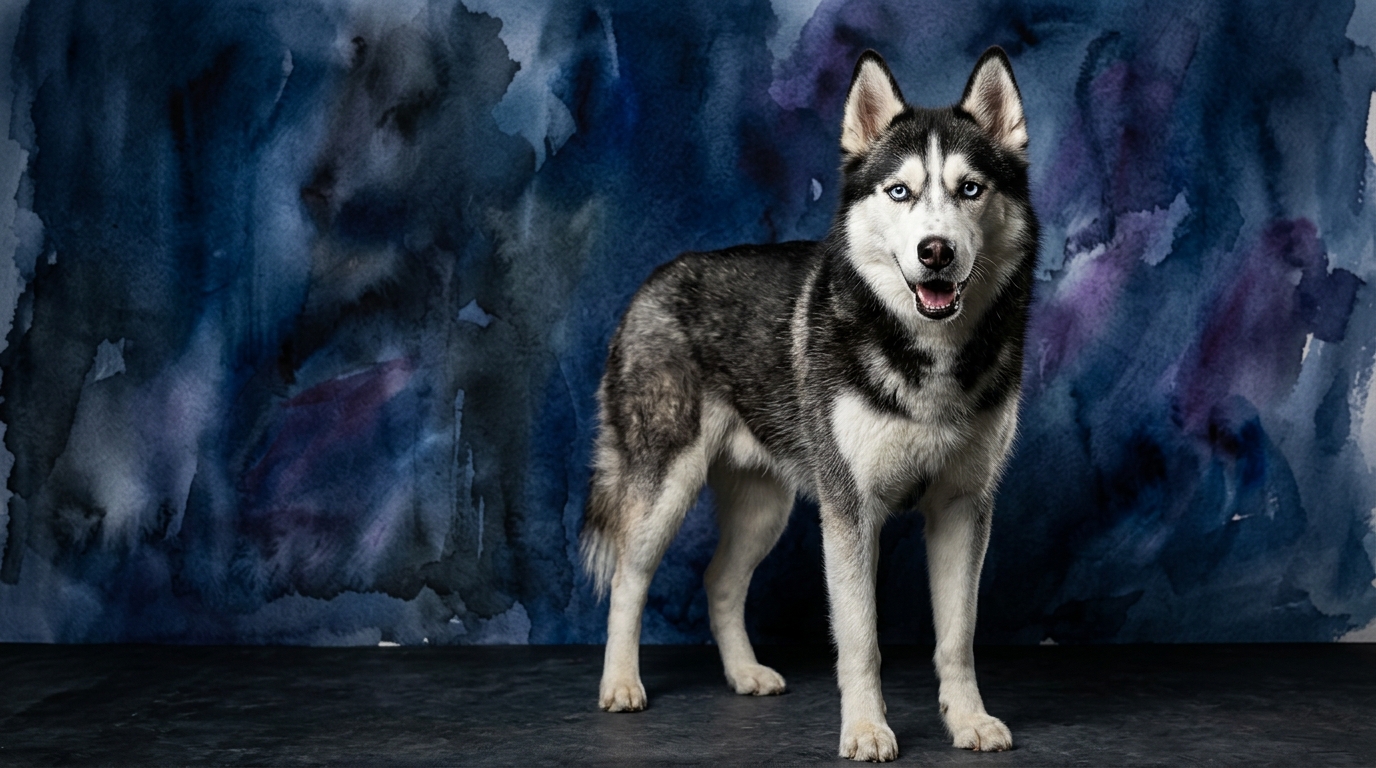
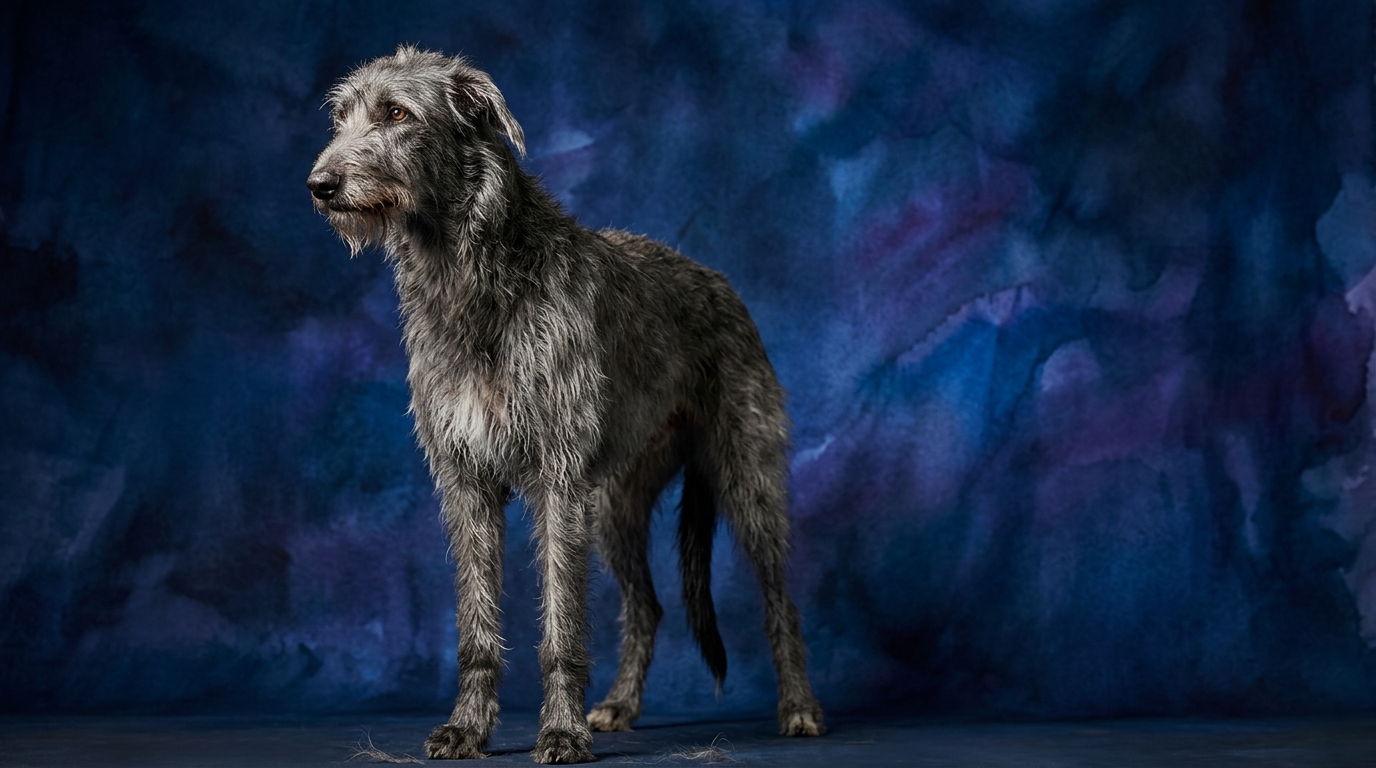
Side-by-Side IQ Profile: Siberian Husky vs. Scottish Deerhound
To understand the cognitive landscape of these two distinct breeds, we examine their mental attributes across five key dimensions, as measured by The Cosmic Pet Pet IQ Lab.
**Siberian Husky: The Resilient Thinker**
**Problem Solving (4/5):** Huskies excel at independent thought and finding creative solutions, often driven by curiosity or a desire for freedom. Their resourcefulness is evident in their ability to outsmart enclosures, navigate complex trails, or even orchestrate a cooperative escape. This isn't about pleasing a human; it's about achieving their own objectives.
**Training Speed (2/5):** This breed often requires significant patience in training. Their strong independent streak means they frequently weigh commands against their own internal motivations, which are usually geared towards running, exploring, or investigating. They learn, but often on their own terms, making initial compliance a slower process.
**Social Intelligence (3/5):** Huskies possess a moderate understanding of social cues, forming deep bonds within their chosen pack, human or canine. While affectionate, their social interactions are often direct and less geared towards 'eager to please' behaviors; they communicate their needs and boundaries clearly.
**Instinctive Drive (5/5):** An unparalleled drive for sustained activity defines the Husky. Their instinct to run, pull, and cover vast distances is profound, originating from their sled dog heritage. This intense internal compass fuels their need for exploration and physical exertion daily.
**Memory (4/5):** Huskies demonstrate a robust memory, particularly for spatial information, routes, and learned sequences. They recall complex environments and past experiences, which aids their navigational skills and helps them remember which actions led to which outcomes.
**Scottish Deerhound: The Gentle Observer**
**Problem Solving (3/5):** Deerhounds are capable problem-solvers, especially when tasks align with their natural hunting instincts, such as tracking a lure or navigating familiar terrain efficiently. Their approach is often more direct and less overtly 'inventive' than a Husky's, focusing on practical solutions to immediate sensory challenges.
**Training Speed (3/5):** While still possessing a hound's independent spirit, Deerhounds generally learn new commands at a moderate pace. They are sensitive and respond well to gentle, consistent methods. Their challenge often lies in maintaining focus amidst distracting environmental stimuli, rather than active defiance.
**Social Intelligence (3/5):** Deerhounds are known for their gentle and affectionate nature within their family unit. They are sensitive to human moods and form strong, devoted connections. Their social understanding allows them to be wonderful, calm companions, though they may be reserved with strangers.
**Instinctive Drive (3/5):** The Deerhound's primary drive revolves around sight-hunting – the thrill of the chase. They possess a strong impulse to pursue moving objects, but this drive is typically less sustained and less generalized than a Husky's. After a burst of speed, they are often content to rest.
**Memory (3/5):** Deerhounds have a good memory for routines, familiar people, and places. They remember their training and household patterns reliably, contributing to their calm demeanor within a structured environment. Their recall of complex, multi-step sequences might be less pronounced compared to breeds designed for intricate tasks.
Where the Siberian Husky Wins Cognitively
When we compare their cognitive profiles, the Siberian Husky demonstrates distinct strengths in areas reflecting their heritage as endurance working dogs. Their **Problem Solving (4/5)** score surpasses the Deerhound's (3/5), reflecting a breed adept at independent thought and navigating complex challenges without direct human instruction. This manifests in their remarkable ability to figure out latch mechanisms, find weaknesses in fences, or remember the most efficient path through varied terrain, often driven by an intrinsic desire for exploration rather than a reward. This resourcefulness is a hallmark of their self-sufficient nature. Furthermore, the Husky's **Instinctive Drive (5/5)** is significantly higher than the Deerhound's (3/5). This isn't just about physical energy; it’s a profound internal motivation for sustained activity, pulling, and covering vast distances. This drive translates into an unwavering focus on their own objectives, be it a long run or a determined investigation of their surroundings. Finally, the Husky's **Memory (4/5)**, scoring one point higher than the Deerhound's (3/5), supports their exceptional navigational capabilities and their capacity to recall intricate sequences of events or complex routes, crucial for a dog expected to perform tasks over expansive, often featureless, landscapes.
Where the Scottish Deerhound Wins Cognitively
While the Siberian Husky excels in several cognitive dimensions, the Scottish Deerhound presents a nuanced advantage in one crucial area: **Training Speed (3/5)**, slightly surpassing the Husky’s (2/5). This difference is subtle but significant when considering trainability. Deerhounds, while still independent hounds, tend to be more responsive to initial commands and less overtly resistant than Huskies. Their independence often manifests as distraction by sensory input (like a distant scent or movement) rather than a Husky’s deliberate assessment of whether a command aligns with its immediate, deep-seated drive to run or explore. A Deerhound might be momentarily sidetracked, but with consistent, gentle reinforcement, they are generally more amenable to cooperative learning in structured environments. Their sensitivity means they respond well to positive methods, and while they won't typically offer eager-to-please behaviors, they are generally willing to comply once they understand and accept the expectation, making the foundational stages of training potentially smoother than with their more self-directed Husky counterparts.
Which is Easier to Train and Why?
Considering the distinct cognitive profiles, the **Scottish Deerhound is generally easier to train** in terms of initial compliance and foundational obedience, though both breeds present their own unique training challenges. The Deerhound's **Training Speed (3/5)**, while not exceptionally high, indicates a moderate willingness to learn and accept direction. Their primary hurdle in training stems from their hound heritage; they can be easily distracted by compelling sights or scents, demanding an owner's patience and ability to maintain focus. However, they are sensitive dogs that respond very well to positive reinforcement and gentle guidance, often seeking to understand what is asked of them without the inherent challenge to authority sometimes seen in other breeds. In contrast, the Siberian Husky's **Training Speed (2/5)** highlights a significant independent streak. Huskies are not typically motivated by a strong desire to please and often prioritize their own instincts—particularly their profound **Instinctive Drive (5/5)** for running and exploration—over human commands. This translates into a 'what's in it for me?' attitude, and a tendency for 'selective hearing' when their instincts are engaged. Training a Husky requires immense consistency, creativity, and a deep understanding of their motivations. They learn quickly what *they* want to learn, but convincing them to follow *your* agenda demands more effort and a greater tolerance for a dog that will frequently test boundaries and assert its own will, often finding cognitive loopholes in rules.
Which Suits Active Owners vs. Relaxed Owners?
The choice between a Siberian Husky and a Scottish Deerhound often hinges on an owner's lifestyle and their capacity to meet a breed's innate drives. **Active owners are ideally suited for the Siberian Husky.** With an **Instinctive Drive of 5/5**, Huskies demand an extraordinary amount of physical and mental engagement. They thrive in environments where they can run for miles, participate in activities like canicross or skijoring, and use their **Problem Solving (4/5)** and **Memory (4/5)** to navigate new trails or master complex tasks. An owner who embraces long, vigorous runs, provides consistent mental stimulation, and understands their need for purpose will find a Husky an unparalleled adventure companion. For owners seeking a more serene, yet still active, companion, the **Scottish Deerhound is a better fit for those with a relaxed approach.** While they certainly need regular exercise, including opportunities for impressive sprints to satisfy their **Instinctive Drive (3/5)** for chase, their energy levels are less relentless than a Husky's. Deerhounds are often described as 'couch potatoes' indoors, content to lounge elegantly after their exercise needs are met. They appreciate a calm home environment and are generally less demanding of constant engagement, making them suitable for owners who enjoy daily walks and occasional bursts of outdoor activity, but also value quiet companionship and extended periods of relaxation at home. They offer a balance of athletic grace and dignified calm.
The Verdict
Choose the Siberian Husky if you are an experienced, highly active individual or family prepared to dedicate significant time to rigorous exercise, consistent boundary-setting, and a partner who challenges you cognitively with their independent thought and resourceful spirit.
Opt for the Scottish Deerhound if you seek a gentle, affectionate giant who enjoys a good sprint but values calm companionship indoors, and you are prepared to offer patient, positive training to a sensitive hound with a strong sight-hunting instinct.
🧠 Find Your Pet's IQ Score
Our Pet IQ Lab assessment covers 25+ tests across 5 cognitive dimensions — personalized to your breed.
Take the Full IQ Test →Frequently Asked Questions
Do Siberian Huskies try to escape often?
Yes, Siberian Huskies have a strong problem-solving ability (4/5) and a high instinctive drive (5/5) for exploration, often leading them to test fences and find ways to expand their territory. Secure containment is crucial for this resourceful breed.
Are Scottish Deerhounds good with other pets?
Scottish Deerhounds can live peacefully with other pets, especially if raised with them. However, their instinctive drive (3/5) for chasing means they may view smaller, fast-moving animals as prey, requiring careful introductions and supervision with cats or small dogs.
Which breed is more vocal, the Husky or the Deerhound?
Siberian Huskies are generally more vocal, known for their unique howls, yips, and 'talking' rather than traditional barking. Scottish Deerhounds are typically quieter, barking only when necessary, aligning with their calm demeanor.