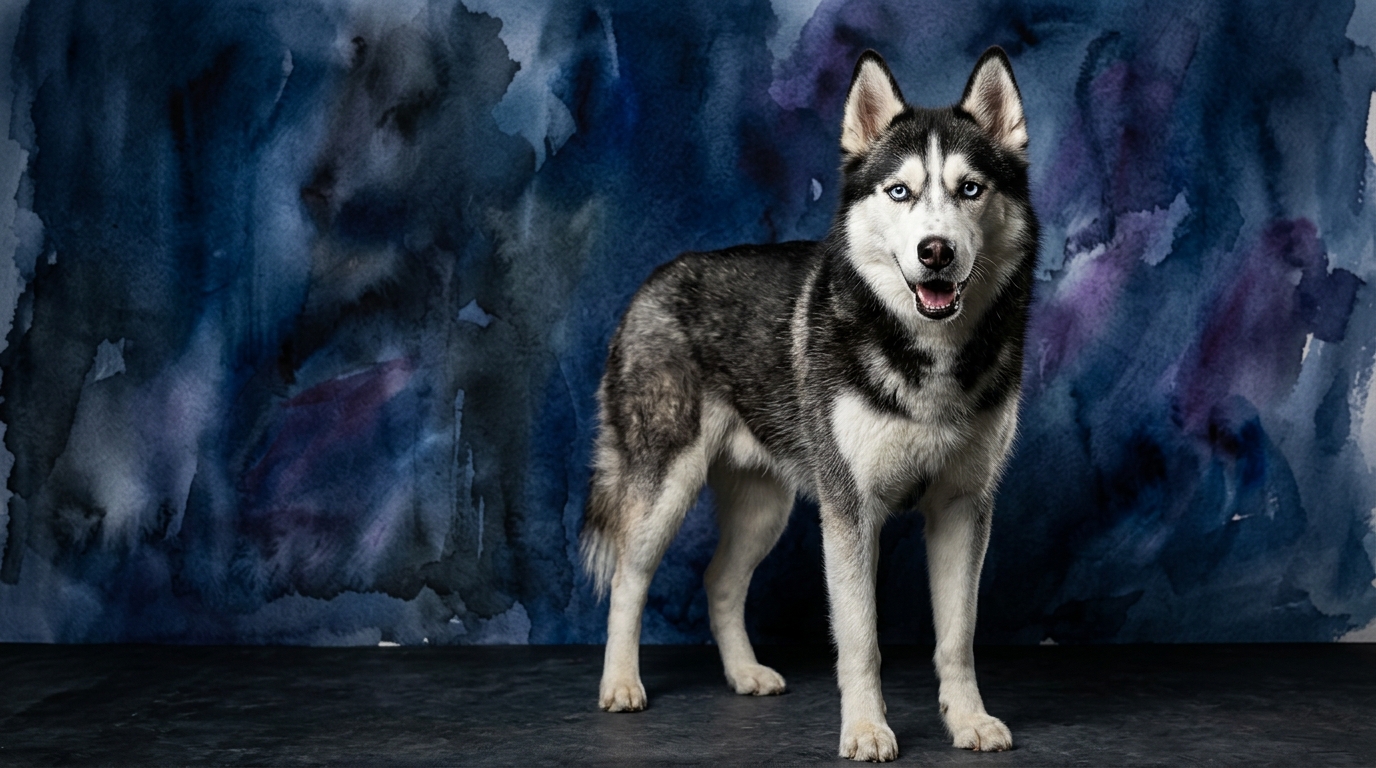
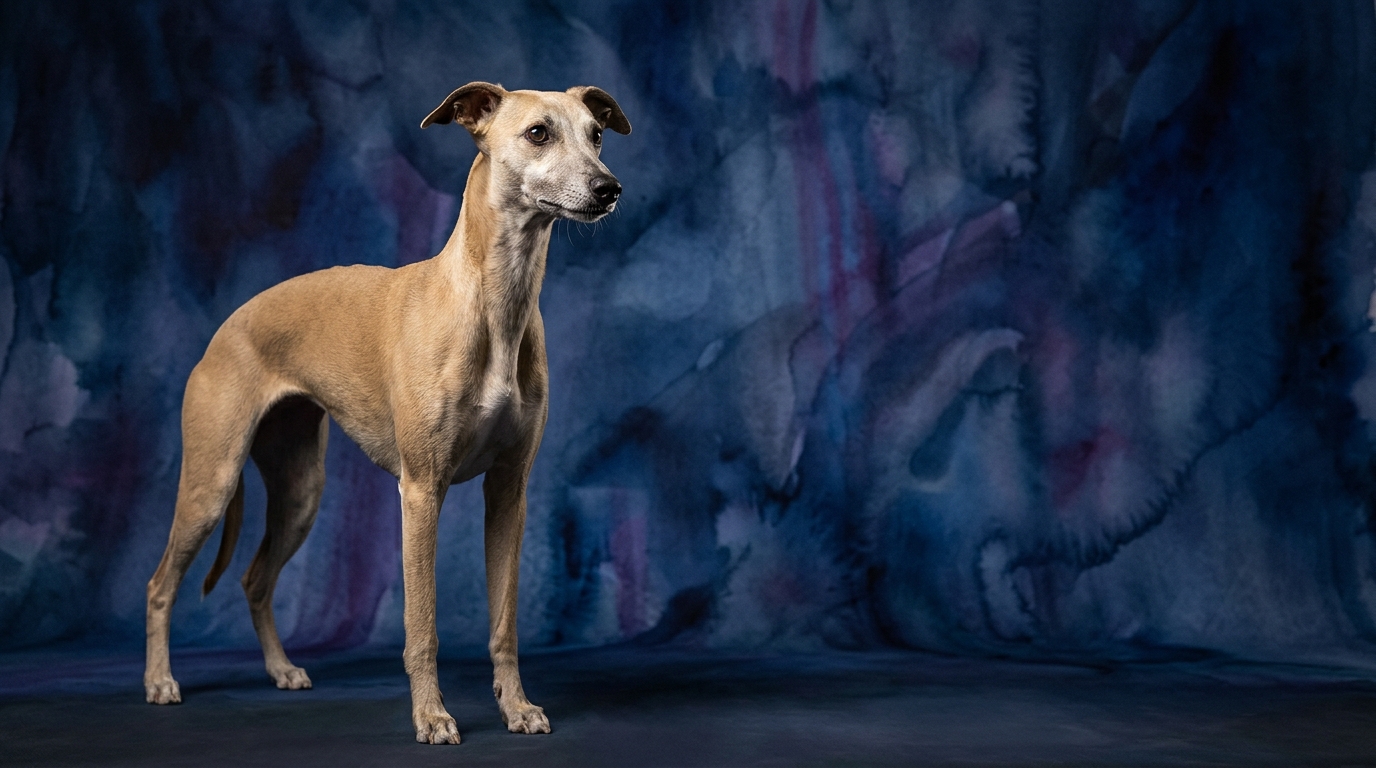
Side-by-Side IQ Profile: Husky vs. Whippet
At The Cosmic Pet Pet IQ Lab, we analyze canine intelligence across five key dimensions, providing a nuanced view beyond mere obedience. The Siberian Husky, ranking #45 in Coren's intelligence scale, presents a fascinating cognitive blueprint. Their Problem Solving is rated 4/5, indicating a remarkable capacity for figuring out complex situations, often to their own benefit, such as devising ingenious escape routes or manipulating objects to reach desired items. Their Training Speed is 2/5, reflecting an independent streak; while capable of learning, they often require significant motivation and consistent reinforcement, preferring to make their own decisions rather than blindly follow commands. Social Intelligence for a Husky is 3/5; they are generally amiable with people and other dogs, but their focus is less on human direction and more on their own pursuits. Instinctive Drive is a powerful 5/5, manifesting as an intense desire to run, pull, and chase, deeply ingrained from their sled dog heritage. Finally, their Memory is 4/5, allowing them to retain learned behaviors and experiences, both positive and negative, over long periods.
In contrast, the Whippet, placing #51 on the Coren scale, offers a different intellectual landscape. Their Problem Solving ability is rated 3/5; while capable of navigating their environment and understanding simple causal relationships, they are less inclined towards complex, manipulative problem-solving than their Husky counterparts. Their Training Speed, like the Husky, is 2/5, but for different reasons: Whippets are sensitive and can be easily distracted by environmental stimuli, particularly prey, or become overwhelmed by harsh training methods, requiring gentle, consistent, and positive reinforcement. Whippets excel in Social Intelligence with a score of 4/5; they are highly attuned to human emotions, thrive on companionship, and often seek close physical contact, displaying a profound sensitivity to their owner's mood. Their Instinctive Drive is also 5/5, driven by an overwhelming urge to chase anything that moves, a hallmark of their sighthound lineage. Their Memory is 3/5; they remember commands and routines, but consistent reinforcement is key to ensuring long-term retention, as their focus can shift quickly.
Where the Siberian Husky Wins Cognitively
The Siberian Husky truly shines in autonomous problem-solving and strategic thinking, earning a 4/5 in this dimension. Their cognitive strength lies in their ability to assess situations independently and devise solutions that serve their own interests, a trait invaluable for a breed historically tasked with navigating vast, often challenging, terrains without constant human guidance. This manifests in behaviors like figuring out how to open gates, unlatch crates, or even coordinate with other dogs to achieve a common goal, such as escaping an enclosure. Owners often describe them as "masterminds" of mischief, a testament to their resourceful intellect. Furthermore, their 4/5 Memory score means they retain these learned strategies and experiences, good or bad, with remarkable persistence. A Husky will remember a successful escape route or a trick that yielded a reward, making them adaptable but also requiring owners to be consistently one step ahead in managing their environment and training. Their independence in thought allows them to process and react to their surroundings with a self-reliant logic, a distinct cognitive advantage when facing novel challenges.
Where the Whippet Wins Cognitively
The Whippet's cognitive strengths are deeply rooted in their social and emotional intelligence, scoring an impressive 4/5 in this area. Unlike the Husky's more independent focus, the Whippet's intellect is highly tuned to human connection and environmental subtlety. They possess a remarkable capacity to read and respond to human emotions, often sensing shifts in mood or stress levels in their owners with uncanny accuracy. This makes them incredibly empathetic companions, often offering comfort without direct prompting. Their social intelligence also extends to their adaptability within a household; they integrate smoothly into family dynamics, understanding social cues from both humans and other pets with grace. This sensitivity, while making them sometimes prone to anxiety in high-stress situations, also fosters a deep bond, making them exceptionally responsive to positive interactions and gentle guidance. Their cognitive processing is geared towards maintaining harmony and seeking approval from their chosen human companions, contrasting sharply with the Husky's more self-directed pursuits. This ability to form profound, emotionally intelligent connections is a significant cognitive advantage for owners seeking a responsive and intuitive companion.
Training Dynamics: Husky vs. Whippet
Both the Siberian Husky and the Whippet are rated 2/5 for Training Speed, indicating that neither breed is inherently "easy" to train, but the reasons for their training challenges differ significantly. The Siberian Husky's lower trainability stems from their robust independence and strong self-will. As a working breed historically required to make decisions in challenging environments, they are not naturally inclined to blindly follow commands. Their intelligence often manifests as a desire to understand the "why" behind a command, or to prioritize their own agenda over their handler's. This requires an owner who is patient, consistent, and creative in making training engaging and rewarding, often needing to outsmart their clever companion. Repetitive drills can bore a Husky, leading to disengagement or even outright defiance. Their strong instinctive drives for running and exploring also frequently override any desire to perform a command, demanding an owner who can channel these drives productively.
The Whippet, while equally rated 2/5 for Training Speed, presents a different set of obstacles. Their challenge isn't defiance, but rather sensitivity and distractibility. Whippets are highly sensitive to tone of voice and body language; harsh corrections can cause them to shut down, become anxious, or even develop aversions to training. Their intense instinctive drive (5/5) to chase means that any moving object in their environment can instantly capture their full attention, making focus difficult in distracting settings. While they are eager to please their beloved humans (4/5 Social Intelligence), their easily overwhelmed nature and prey drive necessitate a training approach that is consistently positive, calm, and highly rewarding. Short, fun sessions are more effective than long, demanding ones. Understanding these distinct cognitive and behavioral underpinnings is crucial for successful training with either breed, emphasizing that "ease" is less about inherent capability and more about matching the training methodology to the breed's specific mental makeup.
Matching Breed to Owner Lifestyle
The choice between a Siberian Husky and a Whippet also hinges significantly on an owner's lifestyle and energy levels. The Siberian Husky, with its 5/5 Instinctive Drive for running and pulling, is unequivocally suited for highly active owners. This breed demands substantial physical exercise, often requiring multiple hours of vigorous activity daily, whether it's long runs, hiking, sledding, or extensive play. Their problem-solving intellect (4/5) also necessitates consistent mental stimulation to prevent boredom, which can lead to destructive behaviors. Owners who thrive on outdoor adventures and are prepared to dedicate significant time to physical and mental engagement will find a Husky an invigorating companion. They are not a breed for a relaxed, sedentary lifestyle; an under-exercised Husky will often become a frustrated and challenging one.
Conversely, the Whippet, while possessing an equally strong 5/5 Instinctive Drive for chasing, integrates more flexibly into various owner lifestyles. They require daily opportunities for bursts of speed in a secure area to satisfy their sighthound instincts, such as a fenced yard or a dog park. However, once these energy demands are met, Whippets are famously calm and relaxed indoors, often content to lounge on a soft bed or couch. Their higher social intelligence (4/5) means they genuinely enjoy quiet companionship and being close to their people. This makes them an excellent choice for owners who appreciate active outings but also value downtime and a serene home environment. A Whippet can suit a moderately active owner who enjoys regular walks and occasional sprints, but who also desires a peaceful, affectionate companion for the majority of their time at home.
The Verdict
Choose a Siberian Husky if you are an experienced, active owner seeking an independent, resourceful companion who thrives on intense physical and mental challenges, and you are prepared for consistent, creative training to channel their strong will and drives.
Choose a Whippet if you desire an affectionate, sensitive companion who enjoys both energetic sprints and extended periods of quiet companionship, and you are committed to gentle, positive training methods that respect their delicate nature and strong chase instinct.
🧠 Find Your Pet's IQ Score
Our Pet IQ Lab assessment covers 25+ tests across 5 cognitive dimensions — personalized to your breed.
Take the Full IQ Test →Frequently Asked Questions
Are Siberian Huskies good at learning tricks?
Huskies are capable of learning a wide array of tricks due to their 4/5 problem-solving ability and 4/5 memory. However, their 2/5 training speed means they require patient, engaging, and highly motivating training sessions, as they often prefer to follow their own agenda.
Do Whippets need a lot of space to run?
While Whippets have a 5/5 instinctive drive for chasing, they don't necessarily need vast amounts of space all the time. They thrive on short, intense sprints in a securely fenced area daily, but are otherwise quite content in smaller living spaces, provided their exercise needs are met.
Which breed is more likely to escape a yard?
The Siberian Husky, with its 4/5 problem-solving and 5/5 instinctive drive, is significantly more prone to escaping due to their resourcefulness in finding weaknesses in fences and their strong desire to explore. Whippets also have a strong chase drive (5/5) but are generally less inclined to actively problem-solve escape routes, though they will bolt if an opportunity arises.