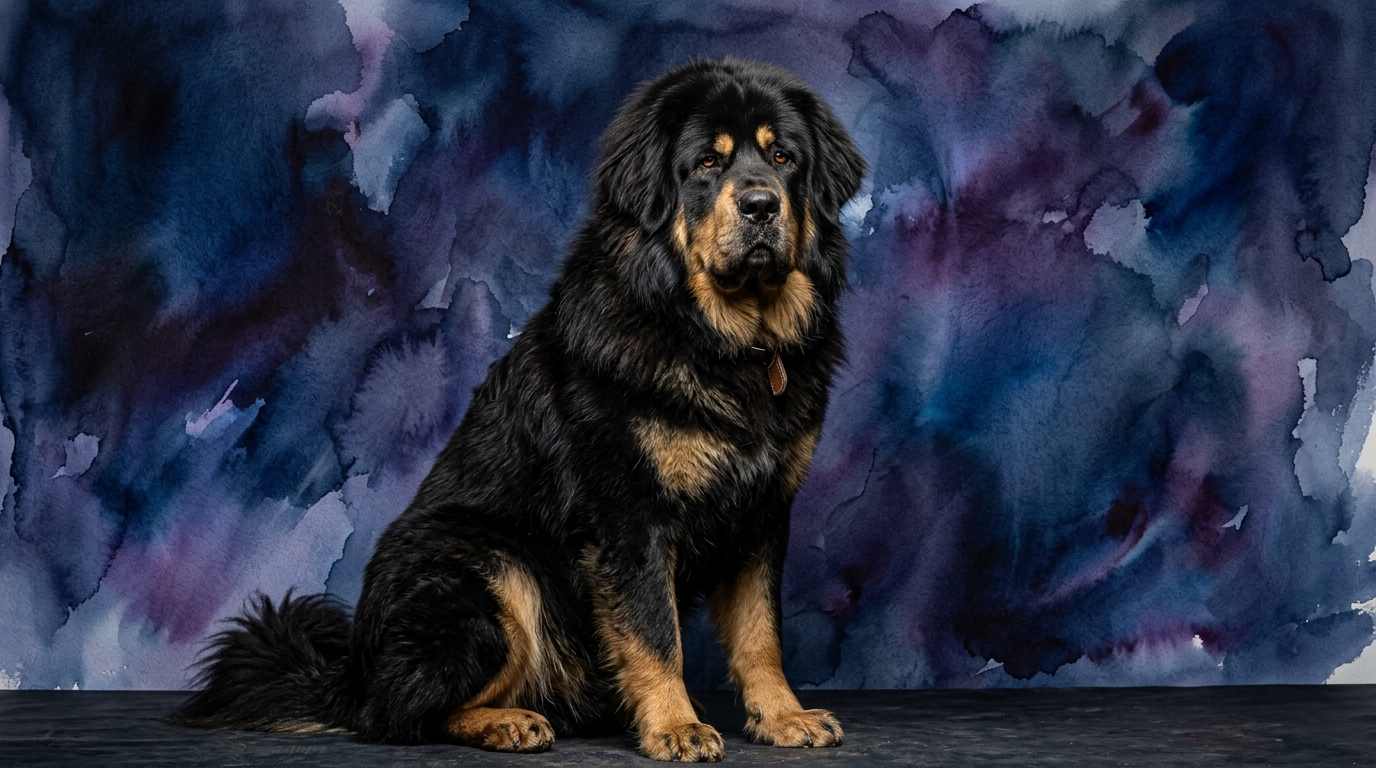
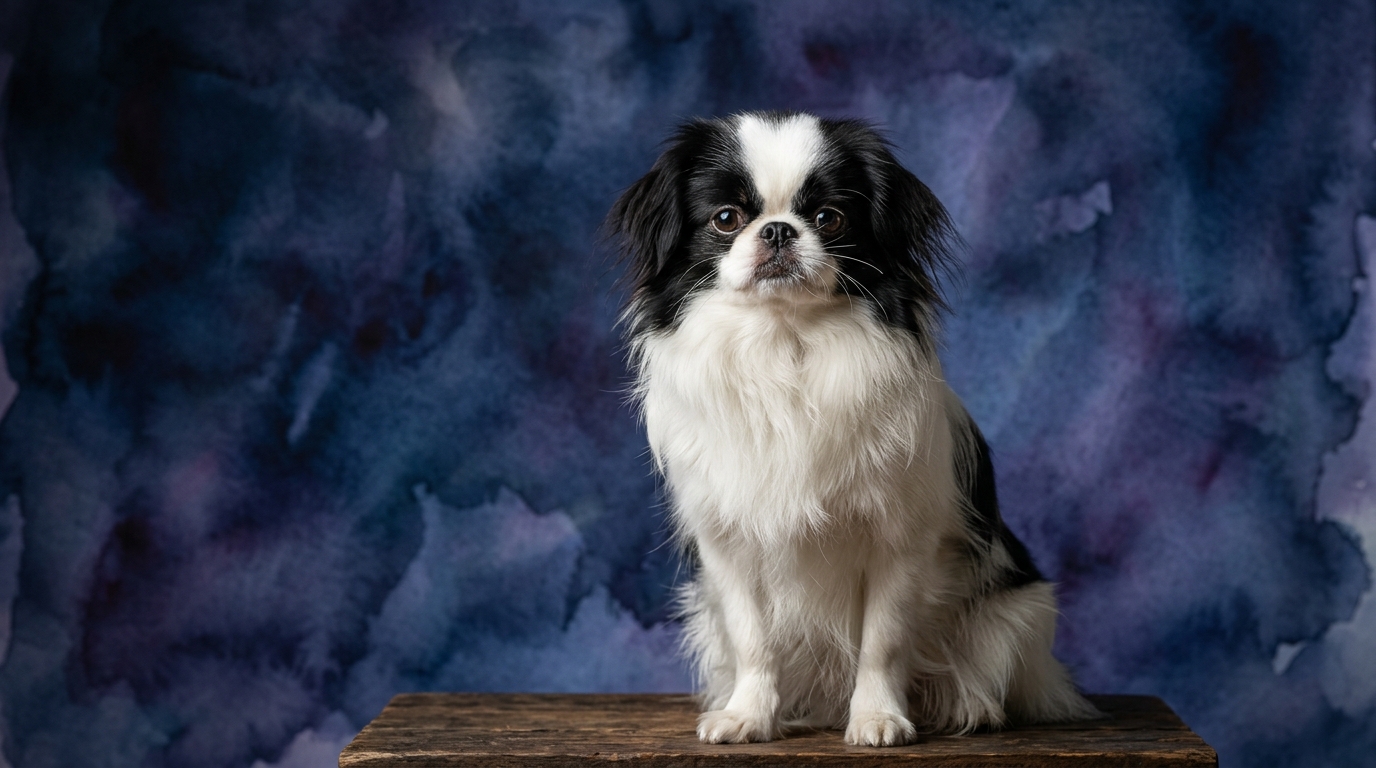
Side-by-Side IQ Profile: Tibetan Mastiff vs. Japanese Chin
At The Cosmic Pet Pet IQ Lab, we evaluate canine cognition across five key dimensions. Interestingly, both the Tibetan Mastiff and the Japanese Chin score 3/5 across all categories, indicating a moderate, capable level of cognitive function. However, the manifestation and application of these abilities are profoundly shaped by their breed's history and purpose.
The **Tibetan Mastiff (Working Dog)**, originating from the Himalayas as a formidable guardian, applies its cognitive skills to self-reliant protection. Its **Problem Solving (3/5)** is evident in its ability to assess environmental cues for potential threats and make independent decisions regarding territory and family safety, often without direct human instruction. **Training Speed (3/5)** for this breed requires significant patience; while capable of learning, their independent spirit means commands are often weighed against their own judgment or protective instincts, making progress steady rather than rapid. Their **Social Intelligence (3/5)** is keenly developed within their family unit, allowing them to discern intentions and emotional states among their trusted circle, though they remain reserved with strangers. The **Instinctive Drive (3/5)** is powerfully geared towards guardianship, manifesting as unwavering vigilance and a profound sense of responsibility for their charge. Finally, their **Memory (3/5)** is robust for territory, routines, and the identities of those within their protective sphere, ensuring consistent adherence to their duties.
The **Japanese Chin (Toy Dog)**, historically a companion to royalty, utilizes its cognitive abilities for refined social interaction and domestic harmony. Its **Problem Solving (3/5)** often surfaces as clever strategies to gain attention, manipulate situations for comfort, or navigate household dynamics to their advantage, such as coaxing treats or finding the coziest spot. Their **Training Speed (3/5)** is moderate; they can learn tricks and commands, especially when motivation comes from positive reinforcement and social engagement, but their somewhat independent, cat-like nature means compliance is often conditional on their mood or perceived benefit. **Social Intelligence (3/5)** is a hallmark of the Chin, making them highly attuned to human emotions and subtle cues, adapting their behavior to maintain a harmonious bond. Their **Instinctive Drive (3/5)** is primarily focused on companionship, seeking close proximity and interaction with their human family, which is a powerful motivator for their actions. Their **Memory (3/5)** is strong for routines, familiar faces, and the consequences of their actions within the domestic sphere, allowing them to quickly adapt to household life.
Where the Tibetan Mastiff Wins Cognitively
Despite identical numerical scores, the Tibetan Mastiff's cognitive strengths shine in areas demanding independent judgment and resilience, particularly in a guardian role. Their problem-solving (3/5) is uniquely applied to complex environmental assessments, such as distinguishing legitimate threats from harmless passersby, a nuanced task for a protector. Their memory (3/5) is robust for territorial boundaries and the identities of those within their protective circle, ensuring consistent vigilance over time. Furthermore, their instinctive drive (3/5) for protection translates into an unwavering resolve, enabling them to maintain focus on their duties even over extended periods, a cognitive endurance less critical for a companion breed. This blend of independent assessment, spatial memory, and persistent drive positions them as formidable, self-reliant protectors.
Where the Japanese Chin Wins Cognitively
The Japanese Chin's cognitive strengths are evident in their sophisticated social engagement and adaptability to domestic life. Their problem-solving (3/5) often manifests as clever strategies to gain human attention or comfort, such as "accidentally" dropping a toy near their owner or finding the warmest, coziest spot in the house. Their social intelligence (3/5) allows them to interpret subtle human cues with remarkable accuracy, making them highly responsive companions attuned to emotional nuances. Furthermore, their training speed (3/5), while not rapid in a formal sense, is exceptional for learning intricate social routines and engaging in interactive play, showcasing a willingness to cooperate for affection and positive reinforcement. This combination of social acumen and adaptable learning makes them masters of harmonious cohabitation.
Which is Easier to Train and Why
Determining which breed is “easier” to train depends heavily on the training goals and the owner's approach. The Japanese Chin, with its primary instinctive drive (3/5) for companionship, often responds well to positive reinforcement tied to social interaction and treats. They generally enjoy engagement and can learn a variety of tricks and commands, but their independent streak means that consistency and making training fun are crucial to maintain their interest; they might perform a command perfectly one day and ignore it the next if they don't perceive a benefit.
The Tibetan Mastiff, conversely, presents a different training landscape. Their strong instinctive drive (3/5) for guardianship means they often question commands that don't align with their perceived role or appear illogical to them. Their problem-solving (3/5) often leads them to make independent decisions rather than simply obeying. Training requires immense patience, clear boundaries, and establishing a relationship built on mutual respect. While capable of learning, their training speed (3/5) is moderate, and they are not typically eager to please in the same way a more biddable breed might be. Their substantial size and protective nature make early and consistent socialization and obedience training absolutely essential, often requiring an experienced handler. Therefore, for general obedience and responsiveness, the Japanese Chin is typically easier for the average owner, while the Tibetan Mastiff demands a more dedicated and experienced approach due to their inherent independence and strength of purpose.
Suitability for Active vs. Relaxed Owners
The Tibetan Mastiff, despite its often-calm demeanor indoors, is better suited for owners who are active in a specific sense: active in managing their environment, providing consistent mental stimulation related to their guarding instincts, and engaging in regular, moderate exercise. Their problem-solving (3/5) and instinctive drive (3/5) require outlets; this isn't about running marathons, but about patrolling a secure yard, engaging in scent work, or having a “job” to do, even if that job is simply observing their territory. An owner who can provide structured activities that tap into their natural inclinations will find a more content companion.
The Japanese Chin, on the other hand, is a superb match for relaxed owners. Their moderate instinctive drive (3/5) for companionship means their primary activity is often being close to their human. While they enjoy short bursts of play and walks, their exercise needs are modest, fitting well into a sedentary or less physically demanding lifestyle. Their social intelligence (3/5) thrives on gentle interaction, lap time, and being an integral, if quiet, part of daily household life. For individuals seeking a devoted, low-impact companion who finds mental stimulation in social dynamics and comfortable routines, the Japanese Chin is an ideal choice.
The Verdict
Choose the Tibetan Mastiff if you are an experienced dog owner prepared for a large, independent guardian whose cognitive strengths lie in territorial vigilance and self-reliant decision-making, requiring consistent, respectful guidance.
Opt for the Japanese Chin if you desire a charming, adaptable companion whose moderate cognitive abilities are finely tuned for intimate social interaction and comfortable domestic life, thriving on affection and gentle engagement.
🧠 Find Your Pet's IQ Score
Our Pet IQ Lab assessment covers 25+ tests across 5 cognitive dimensions — personalized to your breed.
Take the Full IQ Test →Frequently Asked Questions
Do the identical IQ scores mean these breeds are equally 'smart' in every way?
No, identical numerical scores indicate a similar level of ability within that dimension, but the application and manifestation of that ability differ greatly between breeds. For instance, problem-solving for a Tibetan Mastiff is about environmental assessment, while for a Japanese Chin, it's about social manipulation.
Why might a Tibetan Mastiff seem harder to train if its training speed is rated 3/5?
While a 3/5 training speed indicates a moderate capacity to learn, the Tibetan Mastiff's strong independent nature and protective instincts often mean they evaluate commands rather than obeying reflexively. Their motivation is less about pleasing and more about purpose, requiring a different, more patient training approach focused on mutual respect.
Which breed is better for a first-time dog owner?
Generally, the Japanese Chin is a more suitable choice for a first-time dog owner due to its manageable size, lower exercise needs, and primary drive for companionship. The Tibetan Mastiff's formidable size, strong guarding instincts, and independent cognitive style require an experienced owner committed to extensive training and socialization.