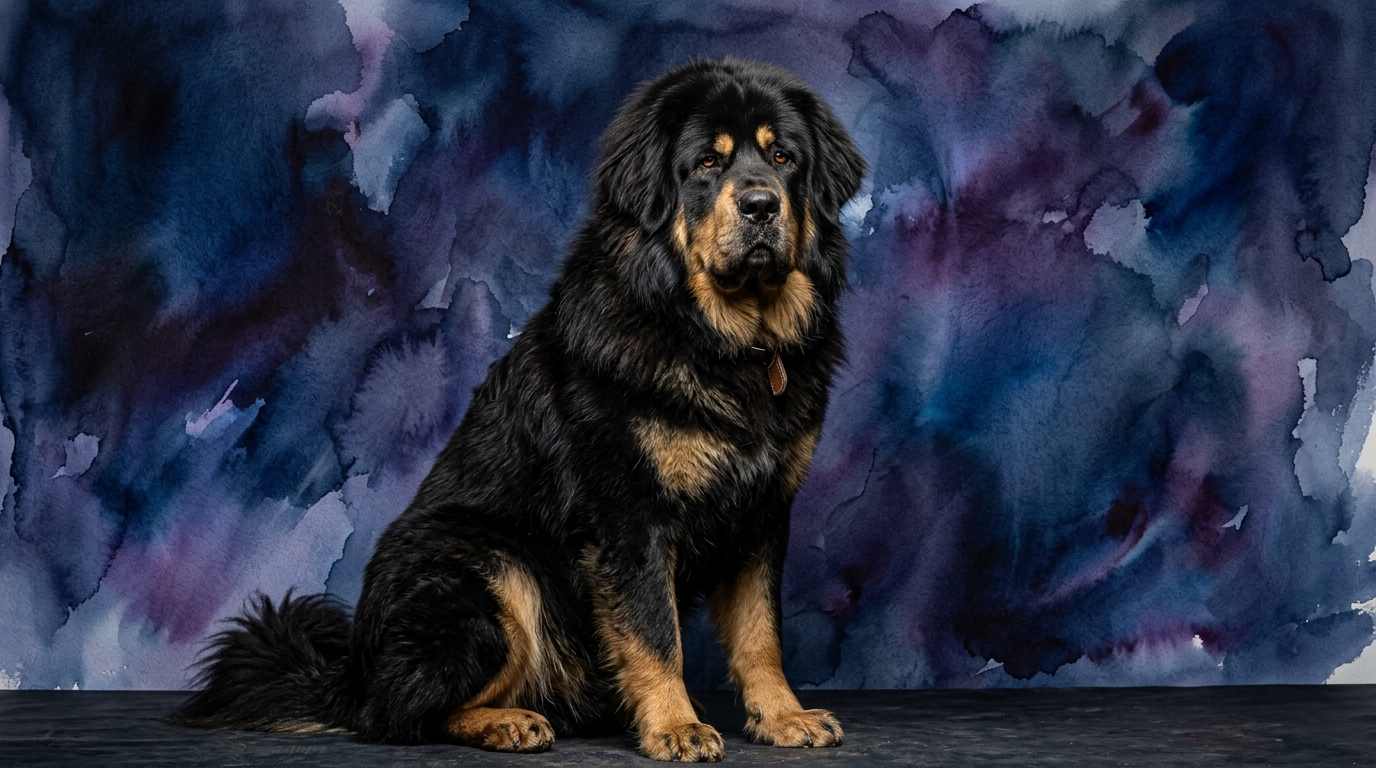
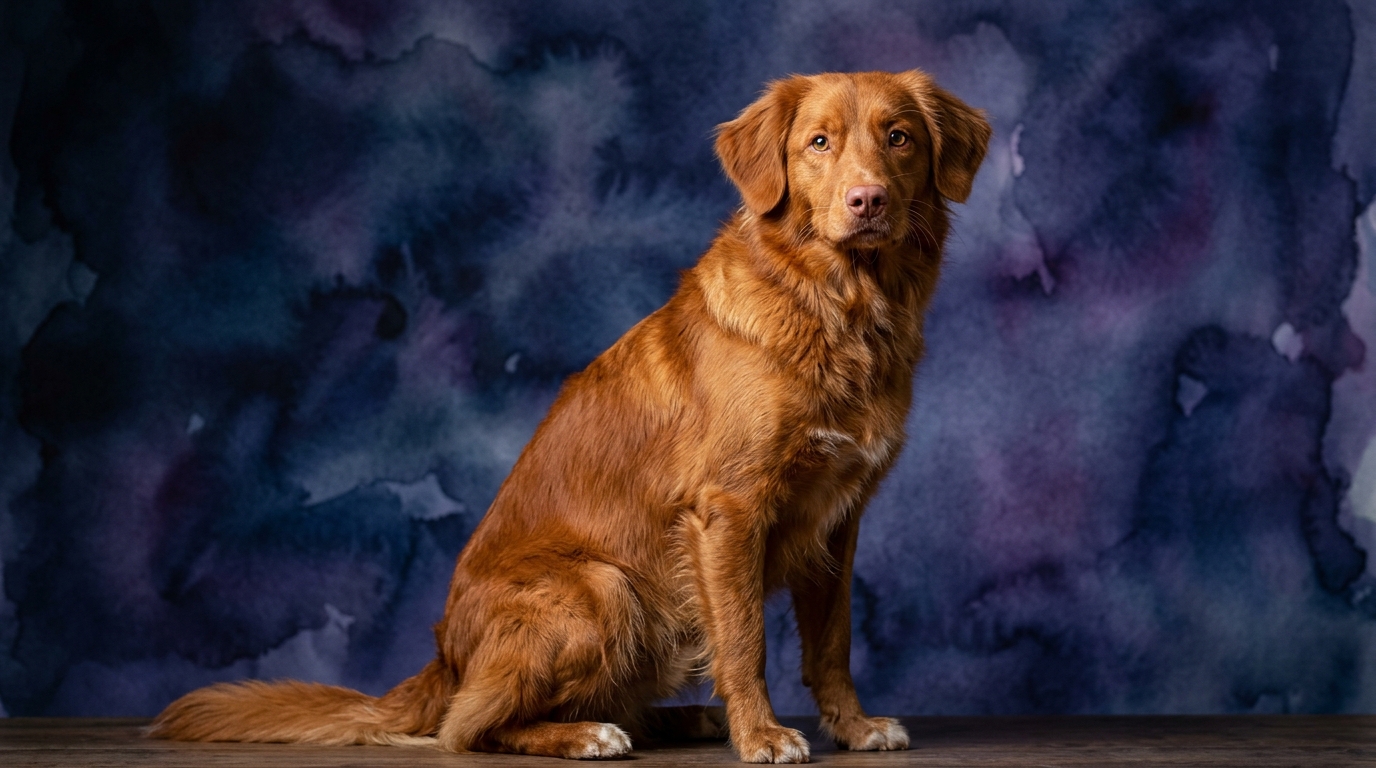
Side-by-Side IQ Profile: Tibetan Mastiff vs. Nova Scotia Duck Tolling Retriever
The Cosmic Pet Pet IQ Lab assesses canine intelligence across five key dimensions, each rated on a scale of 1 to 5. Interestingly, both the Tibetan Mastiff and the Nova Scotia Duck Tolling Retriever score a solid 3/5 in every category, suggesting a balanced, mid-range cognitive capacity. However, the manifestation of these scores differs profoundly due to their distinct historical roles and inherent temperaments.
For the **Tibetan Mastiff**, a 3/5 in **Problem Solving** indicates a practical intelligence focused on their primary role: guardianship. They are adept at assessing environmental threats, identifying intruders, and strategically positioning themselves to deter danger, rather than solving complex puzzles for human amusement. Their **Training Speed** at 3/5 reflects a moderate pace of learning, often requiring consistent, patient reinforcement due to their independent nature and preference for self-directed actions over rote obedience. A 3/5 in **Social Intelligence** means they keenly observe their trusted family's dynamics and intentions but remain reserved or suspicious of strangers, reading external cues with a cautious discernment. Their **Instinctive Drive** is strongly rooted in territorial protection and vigilance, manifesting as an unwavering commitment to their perceived duties. Finally, a 3/5 in **Memory** allows them to retain crucial information about their environment, routines, and who belongs versus who poses a potential threat, recalling past interactions with remarkable accuracy.
Conversely, the **Nova Scotia Duck Tolling Retriever's** 3/5 in **Problem Solving** leans towards tasks requiring ingenuity and persistence, especially those related to their retrieving heritage. They can figure out how to access a hidden toy or navigate obstacles to retrieve a thrown object, demonstrating a goal-oriented cleverness. Their **Training Speed** at 3/5 is influenced by their eager-to-please nature and strong motivation for engagement, allowing them to learn new commands and tricks at a steady, if not lightning-fast, pace when presented with clear, rewarding methods. A 3/5 in **Social Intelligence** highlights their ability to read human body language and tone effectively, using these cues to cooperate and elicit interaction, making them highly attuned to their human companions' moods and desires. Their **Instinctive Drive** is characterized by a powerful retrieving instinct, a desire to work collaboratively, and the unique 'tolling' behavior, a captivating blend of vocalization and enticing movement to lure waterfowl. A 3/5 in **Memory** for Tollers ensures they remember complex sequences of commands, the location of retrieved items, and positive training experiences, contributing to their reliability in repetitive tasks.
Where the Tibetan Mastiff Shines Cognitively
The Tibetan Mastiff's cognitive strengths are intrinsically tied to its ancestral role as a formidable guardian. While not excelling in obedience competitions, their problem-solving ability is unparalleled when it comes to independent threat assessment and strategic defense. A Mastiff can survey its territory, identify unusual movements or sounds, and make autonomous decisions on how to respond without direct human command, a trait born from centuries of solitary vigilance in harsh environments. This self-reliance in judgment, coupled with a memory for specific individuals and past encounters, allows them to accurately distinguish between a harmless passerby and a genuine threat, making them profoundly effective at their intended purpose. Their social intelligence, though appearing aloof to strangers, is acutely developed for discerning intent, providing a deep layer of security for their chosen family.
Where the Nova Scotia Duck Tolling Retriever Excels Cognitively
The Nova Scotia Duck Tolling Retriever's cognitive prowess is most evident in its collaborative work ethic and adaptability to human-directed tasks. Their problem-solving skills are finely tuned for practical, interactive challenges, such as navigating varied terrain to retrieve a decoy or figuring out a new agility course. This breed shows a remarkable capacity for sustained focus on a task when engaged with a human partner, a testament to their strong instinctive drive for retrieving and their social intelligence that prioritizes cooperation. Their memory for sequences and positive reinforcement makes them excellent candidates for advanced training in dog sports, where recalling complex routines and commands is paramount. The Toller's ability to quickly process and respond to human cues, often anticipating the next instruction, showcases a cognitive flexibility geared towards partnership and shared activity.
Which is Easier to Train and Why?
When considering ease of training, the Nova Scotia Duck Tolling Retriever generally presents a more straightforward experience for most owners compared to the Tibetan Mastiff. The Toller's inherent eagerness to please, coupled with its strong retrieving drive and a social intelligence that makes them highly attuned to human interaction, means they are typically more motivated by praise, toys, and food rewards. They thrive on having a 'job' and enjoy the process of learning, making them responsive to consistent, positive reinforcement methods. Their moderate training speed is well-supported by their cooperative nature, leading to quicker acquisition of basic and even advanced commands.
In contrast, the Tibetan Mastiff’s training journey requires significant patience, consistency, and a deep understanding of their independent and protective nature. Their 3/5 training speed is often hampered by a strong sense of self-will and a primary focus on guarding rather than rote obedience. They learn best when commands are integrated into their daily routine and presented as logical extensions of their natural behaviors, rather than arbitrary rules. Their social intelligence, while keen within their family, does not translate into an overwhelming desire to please an owner in the same way a Toller's does, often leading to a 'what's in it for me?' attitude. This doesn't mean they are untrainable, but rather that their training requires a different approach, one that respects their independence and leverages their protective instincts rather than trying to suppress them.
Suitability for Active vs. Relaxed Owners
The distinction in cognitive profiles between these two breeds also dictates their suitability for different owner lifestyles. The Nova Scotia Duck Tolling Retriever, with its strong instinctive drive for activity and cooperative social intelligence, is an ideal companion for active owners. They thrive on mental and physical stimulation, excelling in dog sports like agility, obedience, and especially retrieving activities. Owners who enjoy hiking, running, or spending time engaging in structured play and training will find a Toller to be an enthusiastic and fulfilling partner. Their need for consistent engagement means they are not suited for a sedentary lifestyle; an under-stimulated Toller may develop unwanted behaviors simply out of boredom and a desire for a 'job'.
The Tibetan Mastiff, while requiring regular exercise to maintain health, is generally better suited for more relaxed owners in terms of daily interactive activity. Their independent nature and primary focus on territorial watchfulness mean they are content with patrolling their property and observing their surroundings. While they appreciate companionship and family time, they do not demand constant, high-intensity engagement in the same way a Toller does. Their cognitive strengths lie in patient observation and judicious action, making them less inclined towards frantic play or continuous training sessions. An owner who appreciates a majestic, self-possessed guardian and has the experience to manage a large, independent breed will find the Tibetan Mastiff a profoundly rewarding, albeit less 'active-partner' oriented, companion.
The Verdict
Choose the Tibetan Mastiff if you are an experienced owner seeking a self-reliant, watchful guardian who will make independent decisions to protect your home, and you appreciate a dog with a reserved yet deeply loyal temperament. They are best for those who understand and respect a strong-willed, ancient breed focused on territorial vigilance.
Opt for the Nova Scotia Duck Tolling Retriever if you are an active, engaged owner looking for an enthusiastic, cooperative partner who thrives on mental and physical challenges, and you enjoy participating in dog sports or regular interactive training sessions. They are ideal for those who can provide consistent stimulation and appreciate a breed that is eager to work alongside them.
🧠 Find Your Pet's IQ Score
Our Pet IQ Lab assessment covers 25+ tests across 5 cognitive dimensions — personalized to your breed.
Take the Full IQ Test →Frequently Asked Questions
Are Tibetan Mastiffs difficult to train due to their independence?
Tibetan Mastiffs can be challenging to train for those accustomed to more biddable breeds, primarily due to their strong independent streak and guardian instincts. They respond best to patient, consistent training that respects their self-willed nature and integrates commands into their natural behaviors, rather than demanding strict obedience.
Do Nova Scotia Duck Tolling Retrievers require a lot of mental stimulation?
Yes, Nova Scotia Duck Tolling Retrievers absolutely thrive on mental stimulation and a purpose. Their high instinctive drive and problem-solving abilities mean they need regular engagement through training, dog sports, and interactive play to prevent boredom and ensure a well-adjusted temperament.
Can a Tibetan Mastiff adapt to an apartment living environment?
A Tibetan Mastiff is not well-suited for apartment living due to their large size, strong territorial instincts, and need for space to patrol. They are happiest with a secure yard and an environment where they can fulfill their natural guardian role, making apartment living generally unsuitable for their cognitive and physical needs.