Side-by-Side Cognitive Profiles
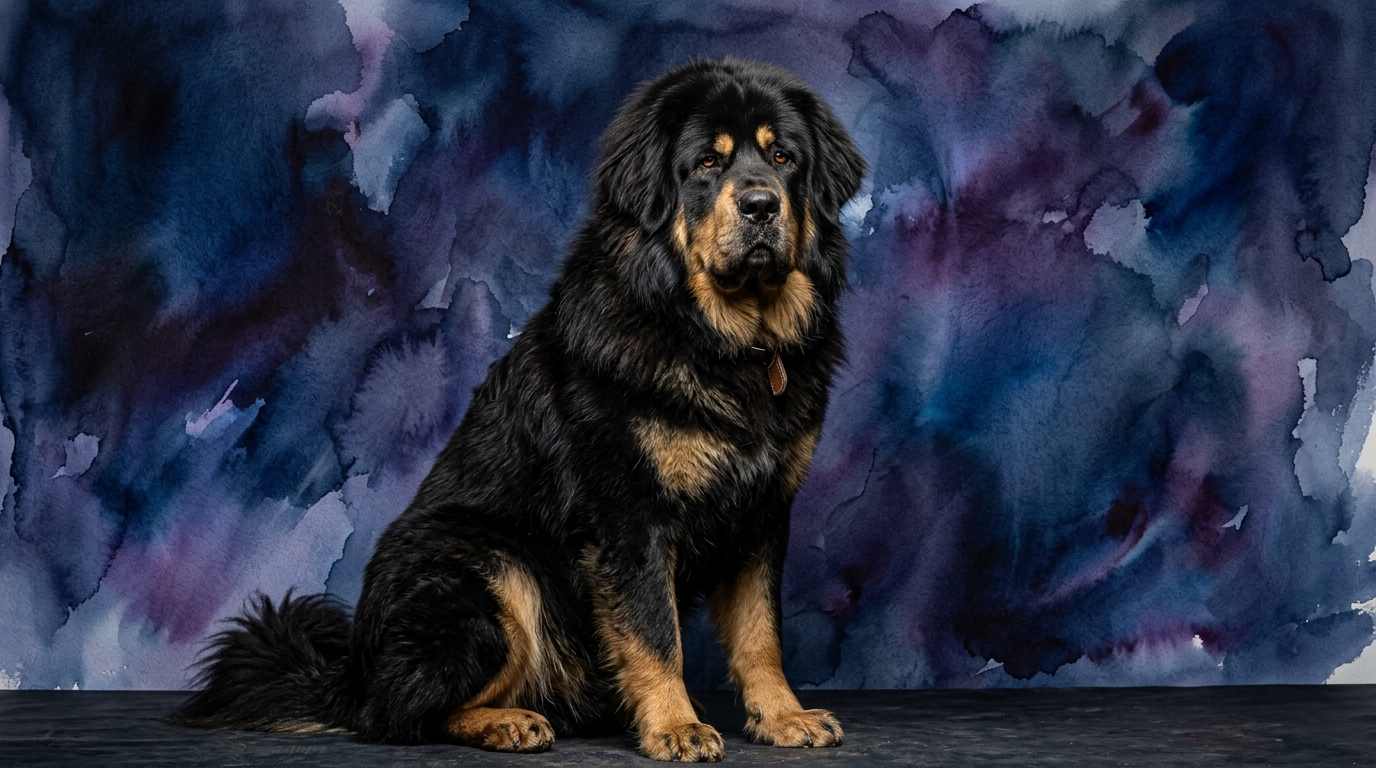
Delving into The Cosmic Pet Pet IQ Lab's assessment reveals both the Tibetan Mastiff and the Otterhound scoring 3/5 across problem solving, training speed, social intelligence, instinctive drive, and memory. For the majestic Tibetan Mastiff, a Working Group dog, this 3/5 in problem solving signifies a capacity for independent, practical decision-making, particularly concerning the security of their territory and family. Their training speed rating suggests they are capable learners, but their self-reliant nature often means they process commands through their own lens of utility and purpose. Social intelligence for a Mastiff means a deep, protective bond with their immediate family, coupled with a discerning and often aloof demeanor towards strangers, prioritizing vigilance over gregariousness. Their instinctive drive is profoundly rooted in guardianship and territorial defense, while their memory is robust for retaining spatial knowledge, recognizing individuals, and recalling past events pertinent to their protective duties.
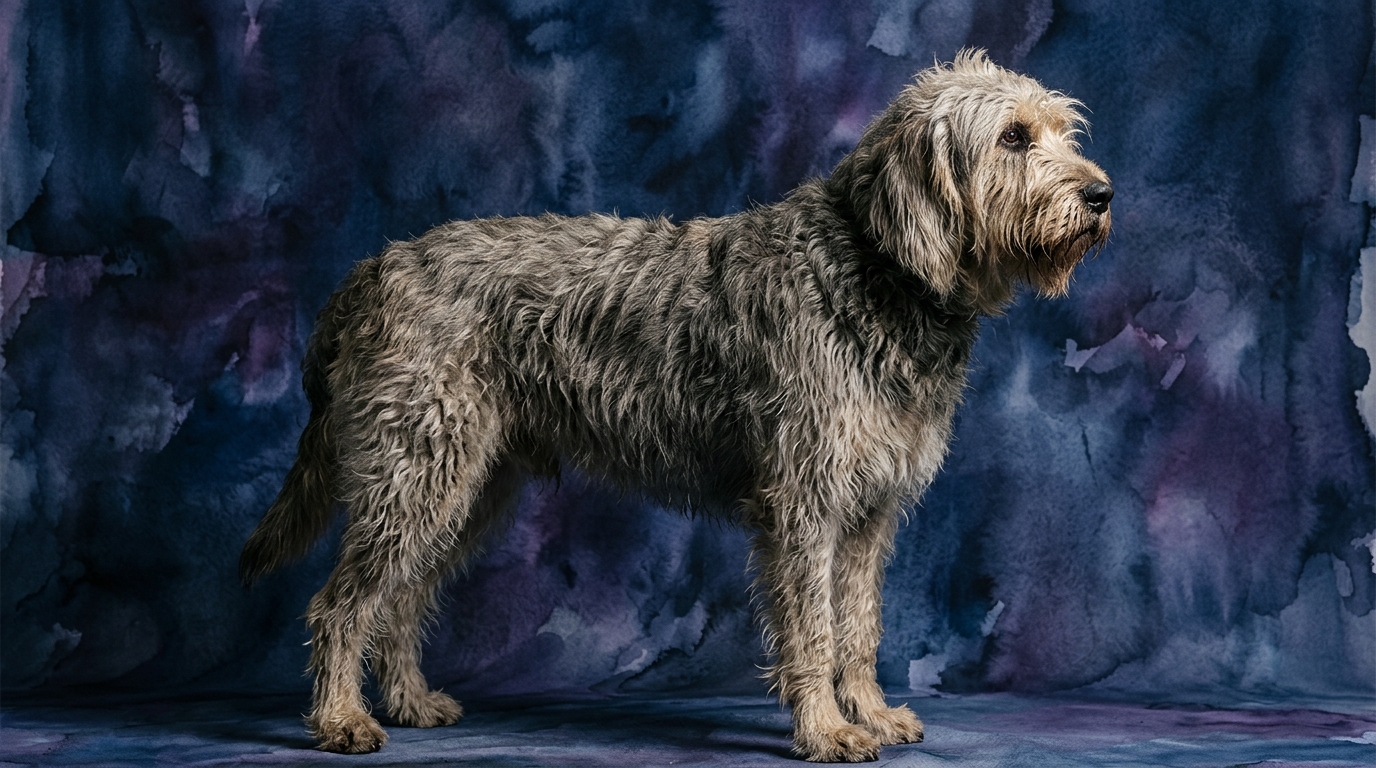
The Otterhound, a member of the Hound Group, interprets the same 3/5 scores through a completely different functional lens. Their problem-solving prowess is acutely honed for tracking, involving the complex deciphering of scent trails and navigating varied terrains to pursue quarry. A 3/5 in training speed for the Otterhound indicates they possess the ability to learn, yet their formidable instinctive drive—an overwhelming dedication to scent work—can easily distract them, making consistent recall a significant challenge. Social intelligence in an Otterhound manifests as an affectionate, often boisterous nature within their human and canine pack, reflecting their history as cooperative hunters. Their memory is specialized for retaining intricate scent patterns and routes, essential for successful pursuit over long distances.
Where the Tibetan Mastiff Excels Cognitively
The Tibetan Mastiff's cognitive strengths are deeply intertwined with its ancient role as a formidable guardian. Their 3/5 problem-solving and social intelligence scores are not about performing tricks or solving puzzles, but about making nuanced, autonomous judgments in complex, real-world scenarios. They excel at assessing potential threats, discerning between welcomed guests and intruders, and deciding the appropriate level of response without constant human intervention. This breed's self-possessed nature means they possess a remarkable ability to read subtle environmental cues and human intentions, contributing to their reputation as discerning protectors. Their memory supports this by allowing them to build an extensive mental catalog of safe and unsafe individuals, patterns of activity, and the layout of their protected domain, making them exceptionally reliable sentinels. The Mastiff's independent thought process, while sometimes perceived as stubbornness during training, is precisely what makes them so effective in their intended role, enabling them to act decisively when their family or territory is perceived to be at risk.
Where the Otterhound Excels Cognitively
The Otterhound's cognitive strengths are unequivocally rooted in its specialized purpose as a scent hound. Their 3/5 problem-solving and instinctive drive ratings are best understood through the lens of their extraordinary olfactory capabilities. Otterhounds demonstrate an exceptional aptitude for following intricate scent trails, even those that are cold or difficult, through diverse and challenging environments like water, dense undergrowth, and varied terrains. This involves sophisticated mental mapping, pattern recognition, and an unwavering focus to parse out the target scent from countless others. Their social intelligence, also rated 3/5, shines in their capacity for cooperative work within a pack, whether canine or human. They are capable of synchronizing their efforts, communicating through vocalizations, and maintaining a collective focus on the hunt. This blend of individual scent-tracking prowess and pack cohesion is a testament to their unique cognitive adaptation, allowing them to solve complex environmental puzzles related to scent and navigate social dynamics crucial for their traditional hunting role.
Training Dynamics: Independence vs. Instinct
When considering ease of training, both breeds present unique challenges despite their identical 3/5 training speed rating. The Tibetan Mastiff's independence and self-sufficiency mean they are not inherently eager to please in the conventional sense. They are capable of learning and retaining commands, but their compliance is often conditional on their assessment of the command's value or necessity. Training a Mastiff requires immense patience, consistency, and a deep understanding of their guardian mindset; force or heavy-handed methods are counterproductive and can lead to resistance or distrust. Owners must earn their respect and demonstrate leadership through calm, confident guidance, making training feel like a partnership rather than strict obedience.
The Otterhound, on the other hand, is generally more outgoing and can be quite enthusiastic, but their training is profoundly impacted by their overwhelming instinctive drive for scent. Once an Otterhound locks onto a compelling scent, it can be incredibly difficult to redirect their attention, making recall particularly challenging in unfenced areas. Their jovial nature means they can be a joy to train with positive reinforcement, but competing with their primal drive requires high-value rewards, engaging methods, and a secure environment where their tracking instincts can be safely managed or channeled. For a novice owner, managing the Mastiff's independent will might feel like a slow, uphill battle, while the Otterhound's persistent scent-driven distractions could lead to frustration. Neither is 'easy' in the way some highly biddable breeds are, demanding dedicated, informed owners who understand their breed-specific motivations.
Lifestyle Suitability: Calm Vigilance vs. Boisterous Exploration
The distinct cognitive leanings of these breeds directly influence their suitability for various owner lifestyles. The Tibetan Mastiff, with its profound sense of territoriality and discerning social intelligence, is best suited for owners who appreciate a calm, watchful companion and can provide a secure, spacious environment. While they are large, their exercise needs are moderate; rather than needing intense physical activity, they thrive on having a 'job' – observing their domain and ensuring its safety. They are not typically suited for highly active, on-the-go lifestyles that involve frequent outings to crowded public places, preferring a stable routine and familiar surroundings. Owners who are relaxed in their daily pace but diligent in providing consistent, respectful guidance will find a devoted, albeit independent, companion.
Conversely, the Otterhound is a breed for active owners who relish outdoor adventures and can provide ample opportunities for physical and mental stimulation. Their strong instinctive drive and problem-solving skills, centered around scent, mean they need long, engaging walks, opportunities to safely explore new smells, and potentially participate in scent-work sports. A relaxed or sedentary owner would likely find an Otterhound's boisterous nature and need for stimulation overwhelming, potentially leading to destructive behaviors born of boredom. They thrive in environments where their working heritage can be honored, making them ideal for individuals or families who embrace an energetic lifestyle and can integrate their dog into their active pursuits.
The Verdict
Choose the Tibetan Mastiff if you seek a discerning, independent guardian who appreciates quiet companionship and a dog that makes its own judgments, provided you can offer a secure environment and consistent, respectful guidance.
Opt for the Otterhound if you are an active, experienced owner who enjoys outdoor adventures, can provide ample exercise and mental stimulation centered around scent work, and appreciates a boisterous, affectionate, and sometimes stubborn companion.
🧠 Find Your Pet's IQ Score
Our Pet IQ Lab assessment covers 25+ tests across 5 cognitive dimensions — personalized to your breed.
Take the Full IQ Test →Frequently Asked Questions
Are Tibetan Mastiffs good family dogs?
Tibetan Mastiffs form deep, protective bonds with their immediate family, showing a discerning social intelligence. While devoted to their own 'pack,' they are typically reserved with strangers, making early socialization crucial for them to comfortably accept new people into their environment.
Do Otterhounds bark or bay a lot?
Yes, Otterhounds are hounds, and their instinctive drive includes vocalizations like baying, especially when they catch a scent or are excited. Prospective owners should be prepared for their distinctive, resonant voice and consider how it fits into their living situation.
Are either of these breeds recommended for first-time dog owners?
Generally, neither the Tibetan Mastiff nor the Otterhound is recommended for first-time dog owners. Both breeds possess strong, independent temperaments and specific needs—the Mastiff's guardian instincts and the Otterhound's intense scent drive—that require experienced handling and dedicated training.