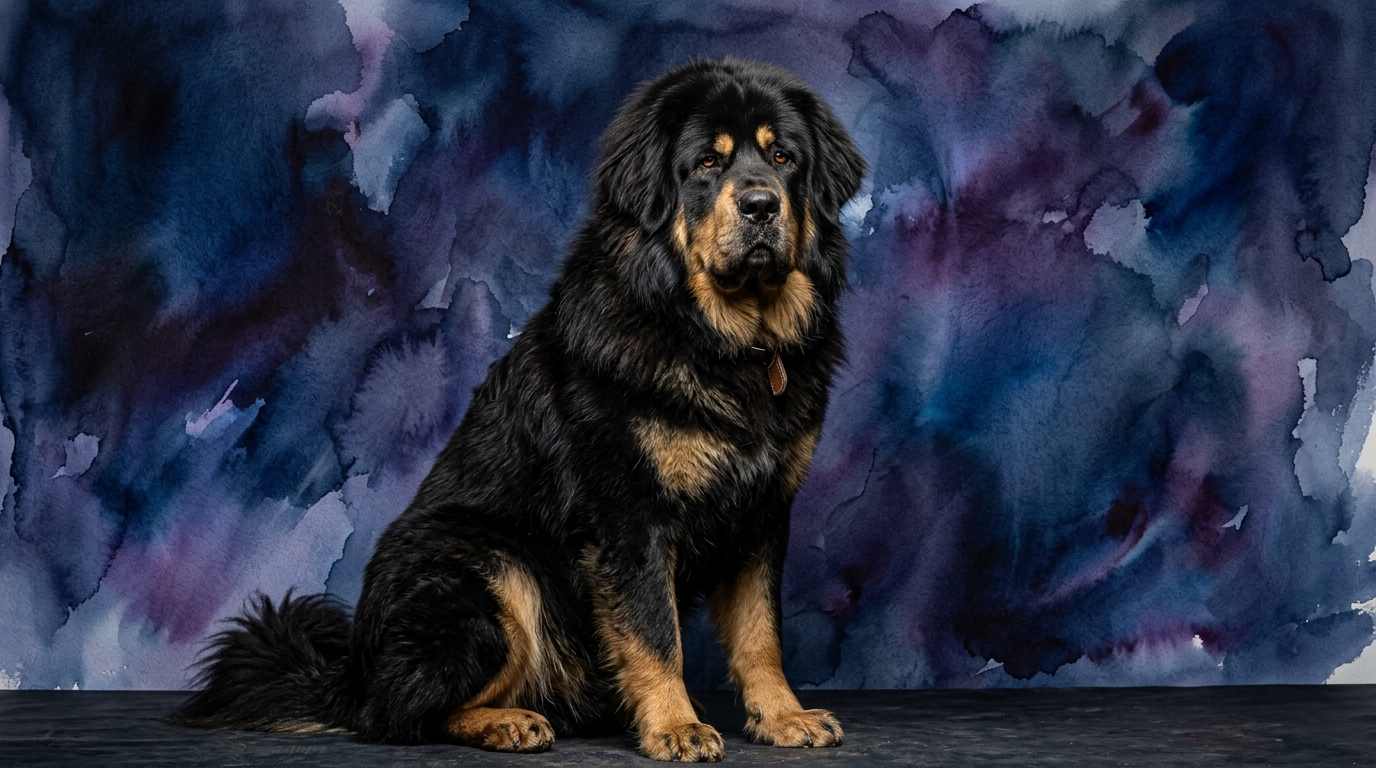
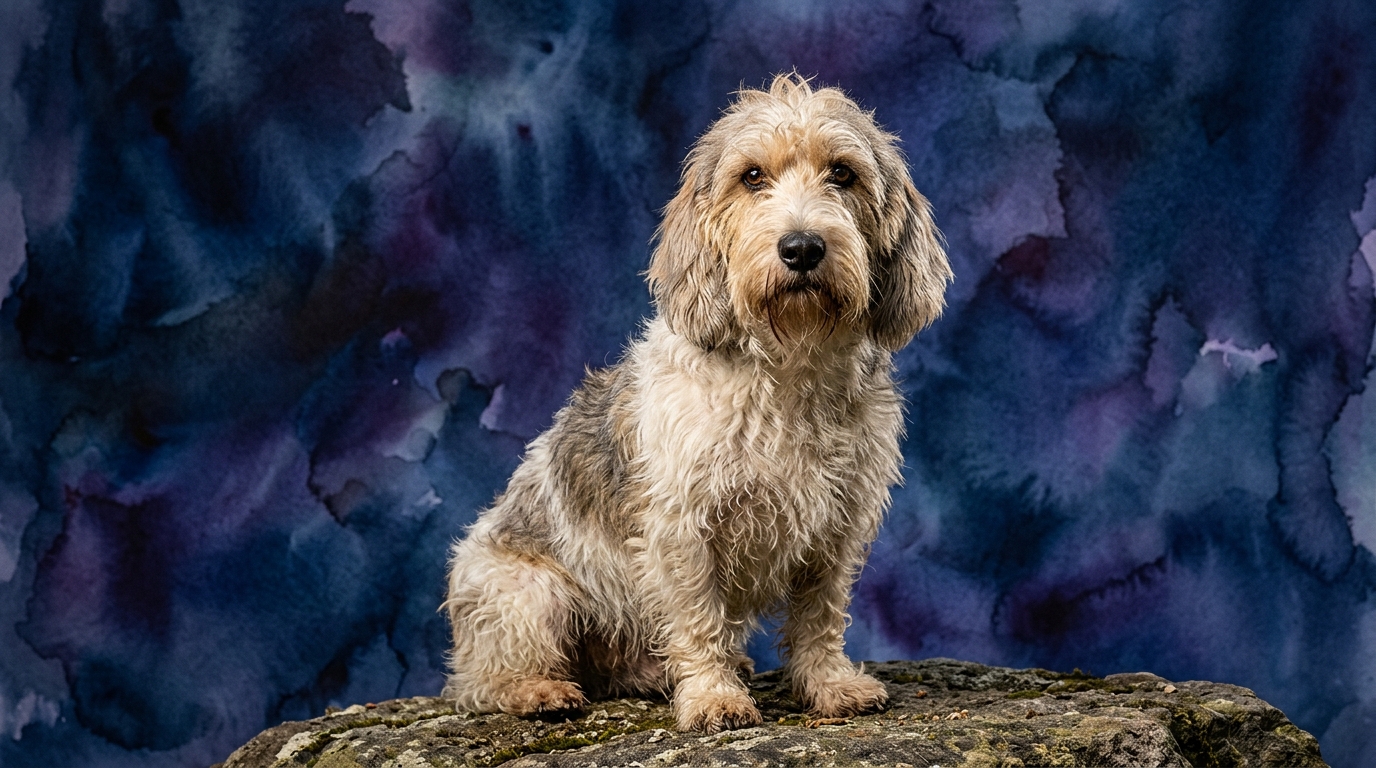
Side-by-Side IQ Profile: Guardians vs. Scent Trackers
At first glance, the IQ profiles from The Cosmic Pet Pet IQ Lab for the Tibetan Mastiff and the Petit Basset Griffon Vendéen (PBGV) appear identical, with both breeds scoring a consistent 3 out of 5 across all five cognitive dimensions: Problem Solving, Training Speed, Social Intelligence, Instinctive Drive, and Memory. However, these identical scores do not imply identical minds; rather, they highlight how different breeds apply similar cognitive capacities to their specific, historically ingrained roles. Understanding these nuances requires looking beyond the numbers and into the unique behavioral expressions of each breed.
For the Tibetan Mastiff, a 3/5 in Problem Solving often translates to independent decision-making in protective scenarios. They excel at assessing situations, identifying potential threats, and determining the most effective course of action to safeguard their territory or family, often without direct human instruction. Their Training Speed at 3/5 reflects a capacity to learn, but also a selective adherence to commands; they process information efficiently but may weigh the command against their own perceived priorities, especially if it conflicts with their guardian instincts. Social Intelligence at 3/5 means they are deeply attuned to their immediate family unit, discerning intentions and emotional states within their inner circle, while remaining aloof and cautious with strangers. Their Instinctive Drive, a strong 3/5, is overwhelmingly geared towards territorial protection and vigilance. Finally, a 3/5 in Memory for the Tibetan Mastiff indicates a robust recall of their territory, its inhabitants, and past interactions, allowing them to maintain consistent boundaries and relationships.
The Petit Basset Griffon Vendéen, in contrast, expresses its 3/5 scores through the lens of a tenacious scent hound. Their Problem Solving at 3/5 is keenly focused on navigating complex environments and overcoming obstacles to follow a scent trail, demonstrating remarkable persistence and ingenuity in their pursuit. A 3/5 in Training Speed means they are capable learners, but their strong scent drive can make them easily distracted, requiring engaging and positive reinforcement methods to hold their attention. Their Social Intelligence at 3/5 is characterized by a jovial, outgoing nature, adept at interacting within a pack (canine or human) and often using their charm to solicit attention or treats. The PBGV's Instinctive Drive, also a 3/5, is dominated by an insatiable desire to track and bay, a primal urge to follow a scent wherever it leads. Their Memory, a 3/5, is particularly strong for scent patterns, successful hunting routes, and positive experiences, remembering where the best smells or treats can be found.
Where the Tibetan Mastiff Excels Cognitively
The Tibetan Mastiff's cognitive strengths truly shine in contexts demanding independent judgment and unwavering vigilance. Their 3/5 Problem Solving manifests as a profound ability to autonomously manage and secure a perimeter. Unlike breeds that might wait for a command, the Mastiff processes environmental cues and makes calculated decisions about potential intrusions, often acting proactively. This isn't about solving abstract puzzles, but rather about practical, real-world security challenges, such as identifying a subtle change in the environment that signals an approaching stranger or assessing the perceived threat level of an unfamiliar animal.
Their 3/5 Social Intelligence, though often misinterpreted as aloofness, is a specialized form of social acuity focused on loyalty and protection within their defined family unit. They exhibit a remarkable capacity to discern genuine threats from benign visitors, reading subtle human body language and intentions with precision. This allows them to function as highly effective, self-regulating guardians, understanding the social dynamics of their household and acting to preserve its harmony and safety. Their Memory at 3/5 contributes significantly here, enabling them to recall past interactions and categorize individuals as 'safe' or 'potential concern,' building a comprehensive mental map of their social world.
Where the Petit Basset Griffon Vendéen Excels Cognitively
The Petit Basset Griffon Vendéen's cognitive prowess is most evident in its single-minded pursuit of scent and its engaging social interactions. Their 3/5 Problem Solving is a testament to their unwavering determination in the field; they can navigate dense undergrowth, cross streams, and circumvent obstacles, all while maintaining focus on a faint scent trail. This isn't just brute persistence; it involves a continuous re-evaluation of the environment and scent cues, making real-time adjustments to their path to ensure the trail isn't lost. They excel at sensory interpretation, building complex mental maps based on olfaction.
Their 3/5 Social Intelligence allows them to thrive in varied social settings, whether as part of a hunting pack or a family household. PBGVs are adept at engaging with humans and other animals, often using their expressive nature to communicate needs or desires. They read social cues well, understanding how to elicit play, affection, or food from their human companions. This makes them highly adaptable in social situations, charming their way into hearts and often diffusing tension with their boisterous, happy-go-lucky demeanor. Their Memory at 3/5 particularly aids in recalling positive social interactions and the locations of previous successful 'hunts' for treats or toys, reinforcing their optimistic outlook.
Which Is Easier to Train and Why?
When considering ease of training, the differences between the Tibetan Mastiff and the Petit Basset Griffon Vendéen, despite their identical 3/5 Training Speed scores, become quite pronounced due to their underlying motivations and breed-specific drives. The Tibetan Mastiff, with its profound independence and guardian instincts, often approaches training with a 'what's in it for me?' or 'is this truly necessary?' attitude. They are capable of learning complex commands, but their compliance is often contingent on their perceived relevance to their role or their respect for the trainer. For instance, a Mastiff might quickly learn to patrol a boundary but might be slower to master a 'recall' if they are engrossed in surveying their territory. Their training requires immense patience, consistency, and a deep understanding of their inherent self-reliance; direct confrontation is rarely effective.
The PBGV, while also an independent thinker due to its hound heritage, presents a different set of training challenges and opportunities. Their 3/5 Training Speed is heavily influenced by their powerful Instinctive Drive for scent. They learn quickly when training is fun, engaging, and plays into their natural curiosity and desire for positive interaction. However, once a compelling scent is detected, their focus can shift entirely, making consistent obedience difficult in environments rich with olfactory stimuli. Training a PBGV often involves making lessons feel like a game or a mini-hunt, using high-value rewards, and working extensively on impulse control around scents. While they might learn a 'sit' quickly for a treat, maintaining that sit when a squirrel dashes by requires significant dedication. Ultimately, neither breed is considered 'easy' in the conventional sense, but the PBGV's social nature and desire for engagement can make initial training phases feel more cooperative, even if consistency requires ongoing effort against their primal drives, whereas the Mastiff's profound independence requires a different, more nuanced approach from the outset.
Which Suits Active Owners vs. Relaxed Owners?
The choice between a Tibetan Mastiff and a PBGV based on owner lifestyle preferences reveals stark contrasts. The Tibetan Mastiff, despite its often-calm demeanor indoors, is fundamentally a working breed with significant needs for purpose and space. While not requiring hours of high-intensity running, they thrive with owners who can provide a large, secure yard where they can patrol and observe. Their activity is less about frantic energy and more about deliberate, watchful movement and mental engagement in their role as guardian. They suit owners who appreciate a reserved, independent companion and are prepared for the responsibility of managing a powerful dog with strong protective instincts. A 'relaxed' owner for a Tibetan Mastiff is someone who is relaxed in their daily routine, providing consistent structure and a calm environment, rather than someone who expects a low-maintenance, sedentary pet.
The Petit Basset Griffon Vendéen, on the other hand, is a vibrant, energetic hound that requires substantial daily physical and mental stimulation. Their 3/5 Instinctive Drive for scent demands outlets, whether through long walks where they can explore smells, engaging scent work games, or even participation in dog sports like agility or tracking. They are not content to be couch potatoes and will develop undesirable behaviors if their needs for activity and engagement are not met. Therefore, PBGVs are ideally suited for active owners who enjoy outdoor adventures, have a good sense of humor for their antics, and are committed to providing consistent exercise and mental challenges. A truly 'relaxed' owner who prefers minimal activity might find the PBGV's boundless energy and inquisitive nature overwhelming, as they are dogs that actively seek out interaction and exploration.
The Verdict
Choose the Tibetan Mastiff if you seek an independent, vigilant guardian for a spacious, secure property and appreciate a companion with profound loyalty and a reserved demeanor.
Opt for the Petit Basset Griffon Vendéen if you are an active individual or family who enjoys outdoor adventures and desires a spirited, charming, and scent-driven companion with a lively personality.
🧠 Find Your Pet's IQ Score
Our Pet IQ Lab assessment covers 25+ tests across 5 cognitive dimensions — personalized to your breed.
Take the Full IQ Test →Frequently Asked Questions
Are Tibetan Mastiffs good family dogs?
Tibetan Mastiffs can be excellent family dogs, exhibiting deep loyalty and protectiveness towards their immediate human family. However, their reserved nature with strangers and strong guarding instincts mean they require early socialization and consistent training to ensure they are well-adjusted and safe in various social settings.
Do Petit Basset Griffon Vendéens bark a lot?
Yes, Petit Basset Griffon Vendéens are known for their vocal nature, often using their distinctive baying bark to communicate, especially when following a scent or seeking attention. This trait, stemming from their hunting heritage, means prospective owners should be prepared for a vocal companion and potentially consider soundproofing or training to manage barking.
Which breed is better for first-time dog owners?
Neither the Tibetan Mastiff nor the Petit Basset Griffon Vendéen are typically recommended for first-time dog owners due to their strong breed-specific traits and independent natures. Both require experienced handling, consistent training, and a deep understanding of their unique needs to thrive.