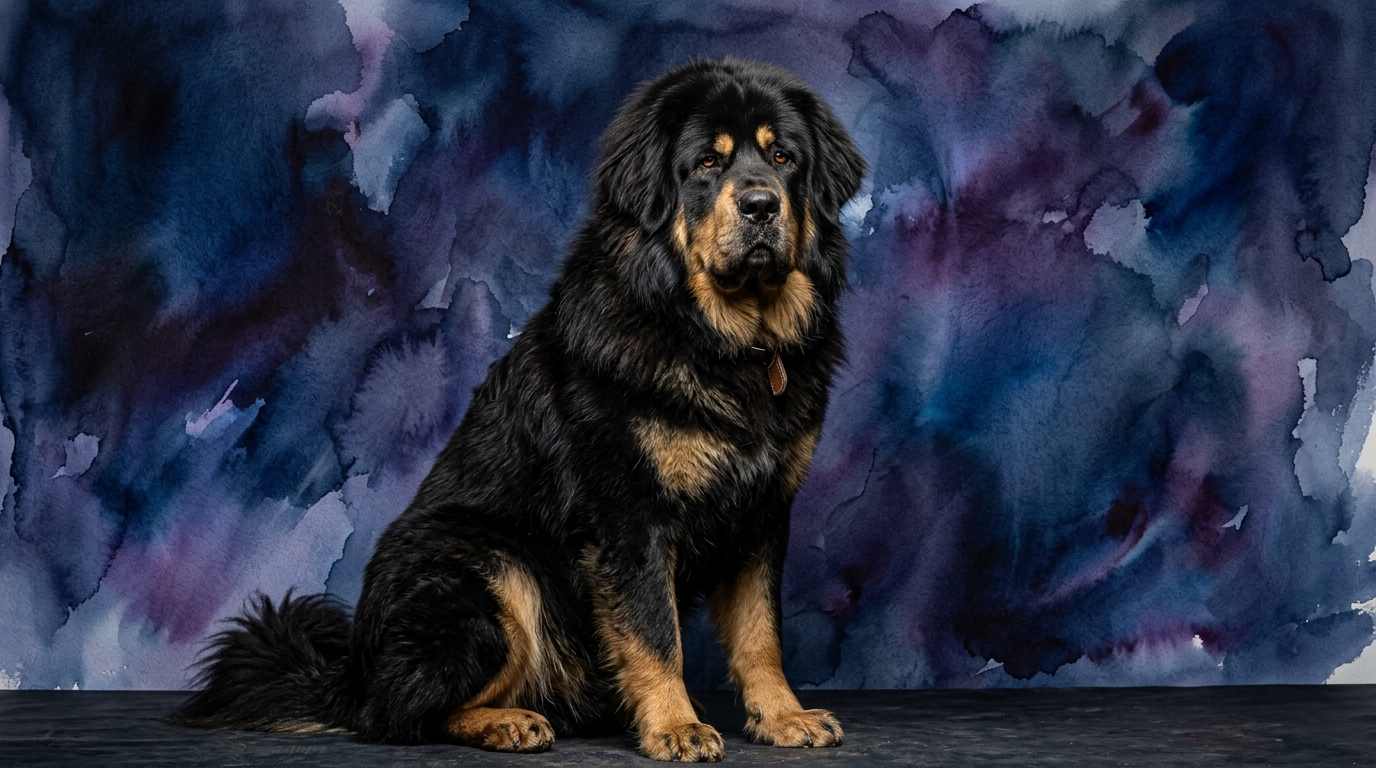
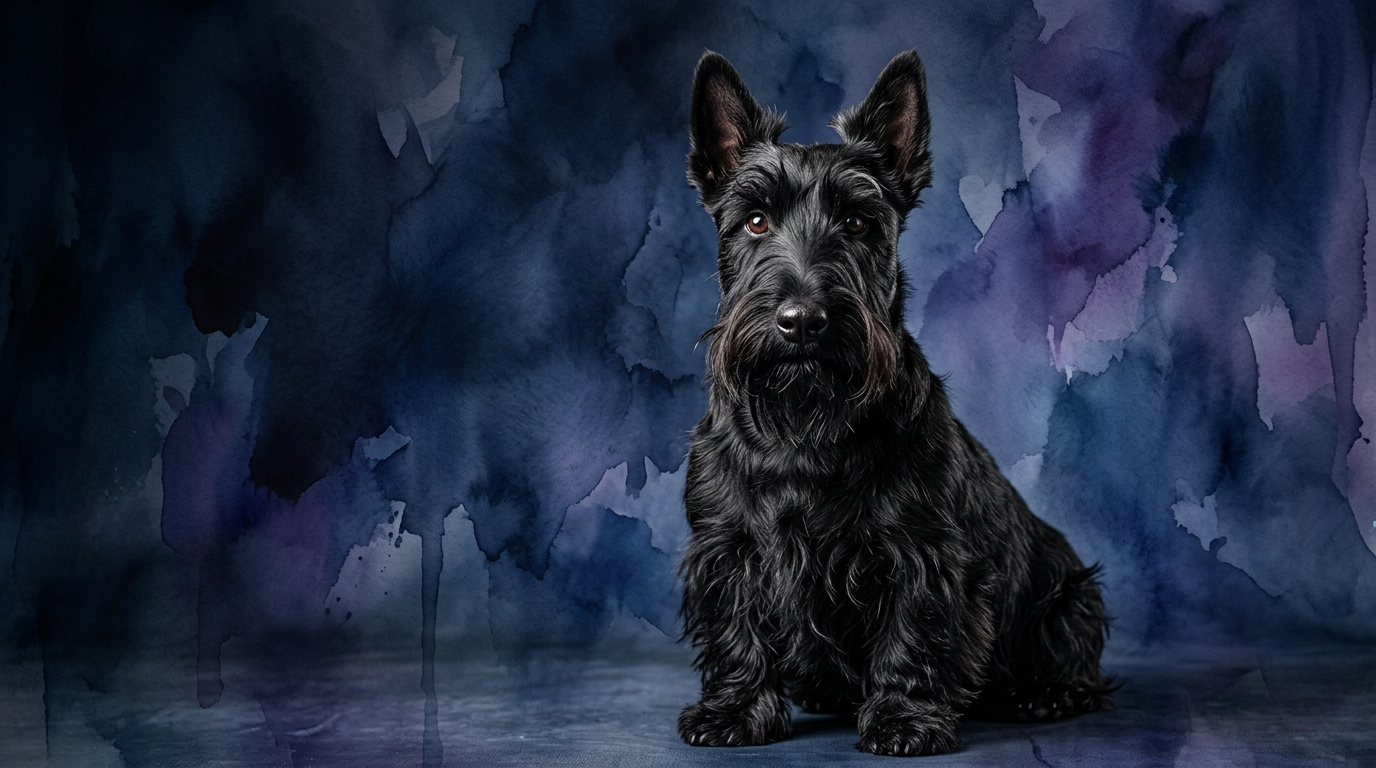
Side-by-Side IQ Profile: Tibetan Mastiff vs. Scottish Terrier
While both the Tibetan Mastiff and the Scottish Terrier share a 3/5 score across five core intelligence dimensions, the expression of these cognitive traits is deeply influenced by their distinct breed histories and roles. Understanding these nuances provides a richer picture of their individual capacities.
The Tibetan Mastiff, a Working dog not ranked by Coren, exhibits a Problem Solving (3/5) capacity geared towards independent guardian decisions. This involves assessing threats and making autonomous judgments crucial for protecting livestock or property without constant human input. Its Training Speed (3/5) reflects a moderate learning pace, but compliance often hinges on the dog perceiving the command's utility, rather than blind obedience. Social Intelligence (3/5) is expressed as a discerning nature towards strangers, coupled with deep devotion to its family unit, understanding social hierarchies. Its Instinctive Drive (3/5) is predominantly guardianship, manifesting as vigilance and territorial defense. Finally, its Memory (3/5) is robust for people, places, and experiences, particularly those related to its territory, informing consistent protective behaviors.
The Scottish Terrier, a Terrier breed ranked #65 by Coren, applies its Problem Solving (3/5) to tenacious pursuit and ingenuity, often in hunting-related contexts like navigating tight spaces to reach a target. Its Training Speed (3/5), while moderate, is influenced by a terrier's stubborn streak, meaning consistent positive reinforcement is essential for compliance. Social Intelligence (3/5) in a Scottie involves a keen understanding of human family dynamics and asserting its place, communicating desires with subtle cues. Its Instinctive Drive (3/5) is rooted in vermin hunting, manifesting as a strong prey drive, digging tendencies, and acute senses for detecting small creatures. Its Memory (3/5) is good for routines, commands, and the locations of interesting smells, contributing to consistent behaviors and efficient navigation of its environment.
Where the Tibetan Mastiff Wins Cognitively
The Tibetan Mastiff excels in cognitive areas demanding independent judgment and self-sufficiency, particularly within its guardian role. Despite a 3/5 in problem-solving and social intelligence, its application is unique. A Mastiff demonstrates superior autonomous evaluation of complex environmental cues, such as discerning between a harmless visitor and a genuine threat approaching its territory, without explicit human direction. This nuanced threat assessment and decision-making on a grand scale, involving weighing multiple factors like intent, body language, and context, showcases a profound situational awareness that is deeply ingrained. Their robust memory allows them to recall specific individuals and their past behaviors, informing future interactions and solidifying their protective instincts, making them exceptionally reliable as sentinels.
Where the Scottish Terrier Wins Cognitively
The Scottish Terrier shines in cognitive domains requiring persistent focus and a resourceful, tenacious approach to problem-solving within a more confined or specific context. Despite also scoring 3/5 in problem-solving and instinctive drive, the Scottie's application is geared towards overcoming obstacles with determined ingenuity, often related to their historical role as hunters. They demonstrate superior cognitive persistence when faced with a challenge, such as figuring out how to access a hidden toy or navigating a complex scent trail. Their acute sensory perception and memory contribute to their ability to quickly map out their immediate surroundings and recall precise locations, making them adept at navigating familiar spaces with purpose and efficiency, often outsmarting perceived barriers through sheer will.
Which is Easier to Train and Why
While both breeds share a 3/5 training speed score, the Scottish Terrier generally presents an easier, albeit still challenging, training experience compared to the Tibetan Mastiff, largely due to their differing motivations and historical roles. The Scottie's Coren rank of #65 indicates a more consistent ability to respond to and retain obedience commands when properly motivated, even with their characteristic terrier stubbornness. Their desire to engage with their human companions, combined with a strong prey drive that can be channeled into focused tasks, means they often find value in working alongside their owners for rewards. In contrast, the Tibetan Mastiff, with no Coren rank, is bred for independent thought and guarding, often viewing commands as suggestions rather than directives. Their training requires immense patience, a deep understanding of canine behavior, and a focus on building a relationship where the dog chooses to cooperate. They are less driven by traditional obedience and more by their own assessment of a situation's utility, making them less inclined to perform repetitive tasks simply to please. Their sheer size and strength also mean that any behavioral issue is significantly magnified, requiring early and consistent foundational training.
Which Suits Active Owners vs. Relaxed Owners
Neither the Tibetan Mastiff nor the Scottish Terrier are ideal for entirely "relaxed" owners in the sense of minimal engagement, but their activity needs differ considerably. The Tibetan Mastiff, despite its imposing size, is not a high-energy dog in terms of needing constant physical exertion like a Border Collie. However, it requires a "mentally active" owner who can provide consistent, firm, and fair leadership, manage its strong guardian instincts, and offer ample space for patrolling and observation. They thrive with owners who understand their independent nature and can provide a secure, stimulating environment where their cognitive abilities for territorial assessment are utilized. The Scottish Terrier, while smaller, is surprisingly active and requires a moderately active owner who enjoys regular walks, engaging play sessions, and mental puzzles. Their tenacious spirit means they need outlets for their instinctive drives, such as digging or chasing, which can be channeled into appropriate activities. Owners who appreciate a spirited companion with a robust personality and are prepared for consistent training and socialization will find a great match in a Scottie.
The Verdict
Opt for a Tibetan Mastiff if you are an experienced dog owner seeking an independent, majestic guardian for a spacious property, prepared for a long-term commitment to nuanced training and management of their protective instincts.
Select a Scottish Terrier if you desire a spirited, tenacious companion for a moderately active household, appreciating their distinct personality and ready to provide consistent mental and physical engagement within a structured routine.
🧠 Find Your Pet's IQ Score
Our Pet IQ Lab assessment covers 25+ tests across 5 cognitive dimensions — personalized to your breed.
Take the Full IQ Test →Frequently Asked Questions
Do Tibetan Mastiffs learn quickly?
Tibetan Mastiffs learn at a moderate pace, but their independent nature means they often prioritize their own judgment over immediate compliance. Successful training requires patience, strong relationship building, and making cooperation seem beneficial to them.
Are Scottish Terriers easy to train for obedience?
Scottish Terriers are moderately trainable for obedience, ranking #65 by Coren. While they can grasp commands, their terrier stubbornness often requires consistent, positive reinforcement and a clear understanding of their motivations to ensure compliance.
How do their social skills differ with strangers?
Tibetan Mastiffs are typically reserved and discerning with strangers, relying on their social intelligence to assess intentions for guardianship. Scottish Terriers can also be reserved but are more likely to assert their personality or indifference rather than engaging in deep assessment.