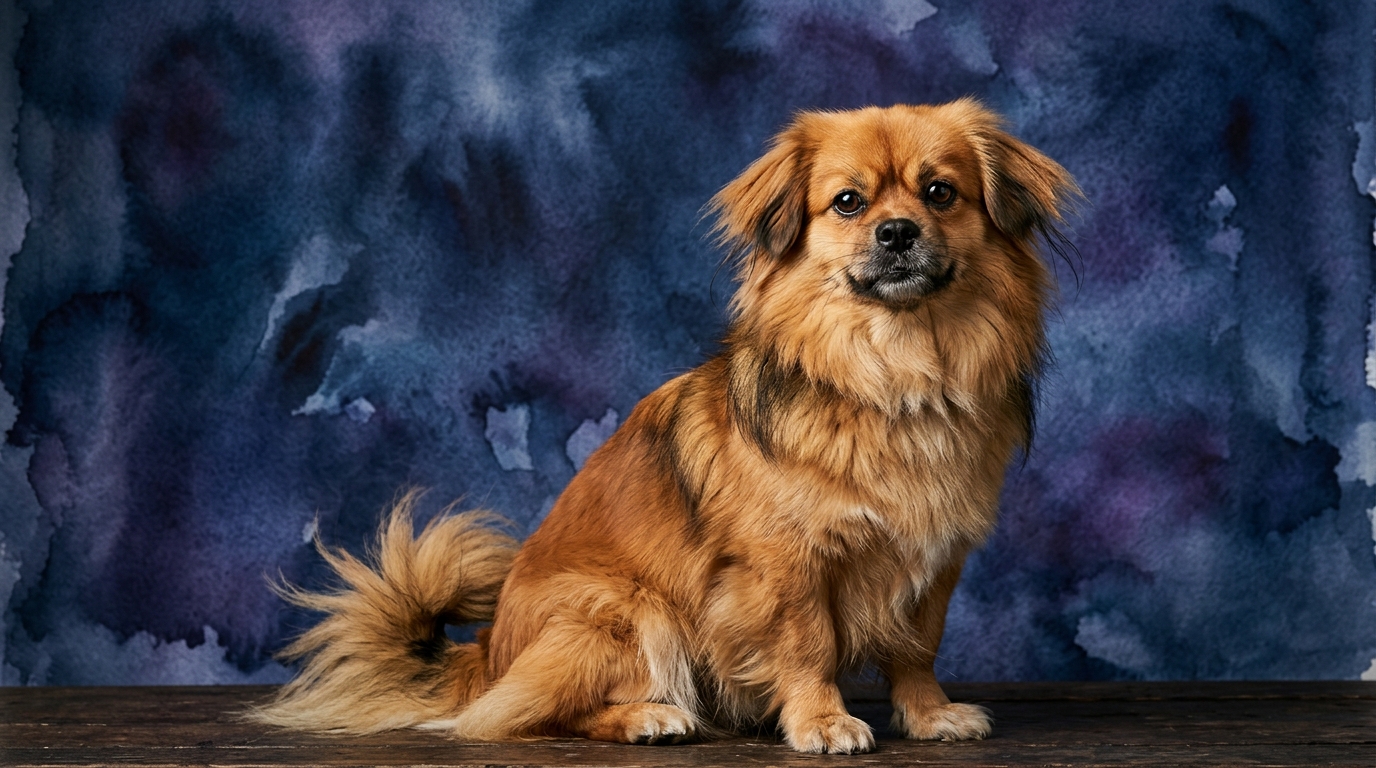
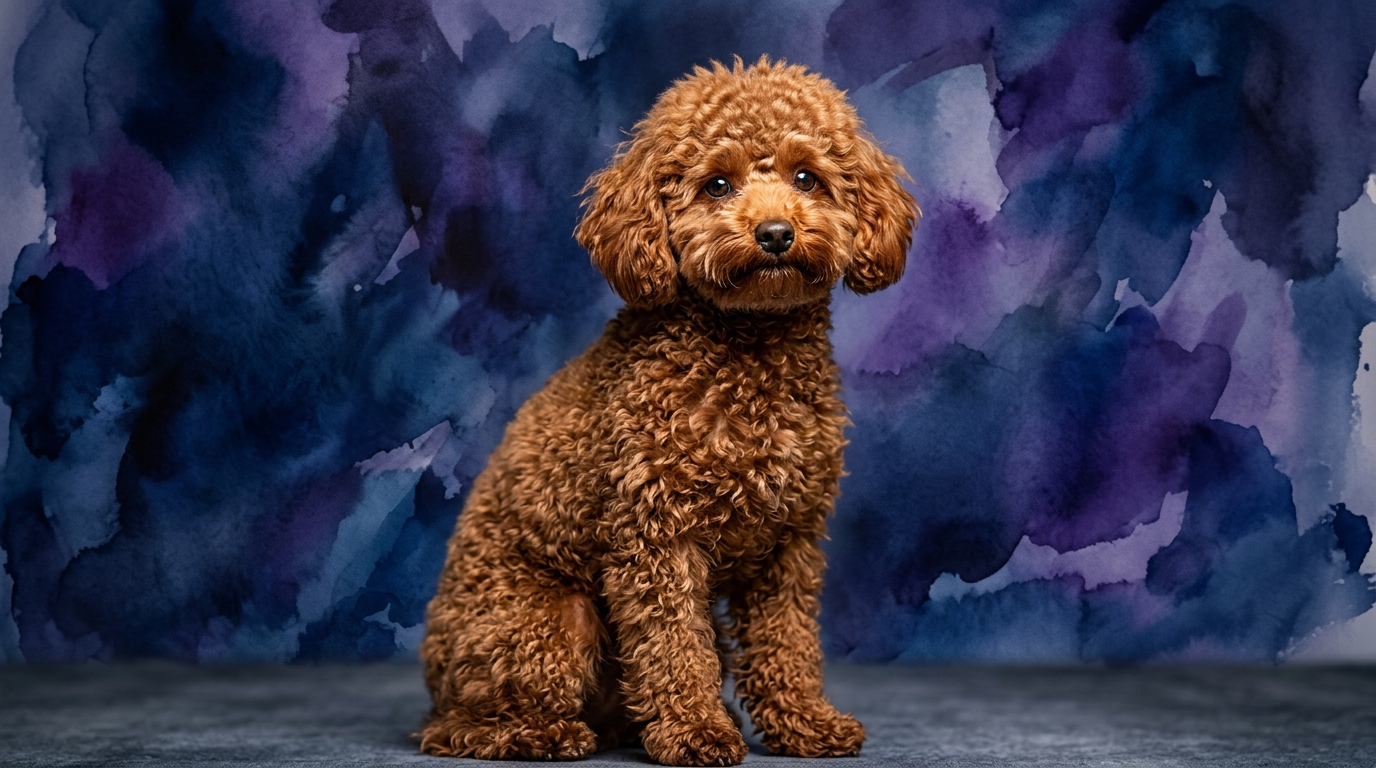
Side-by-Side IQ Profile: Tibetan Spaniel vs. Toy Poodle
The Cosmic Pet Pet IQ Lab employs a five-dimensional framework to assess canine cognition, providing a granular view beyond simple rankings. Let's dissect how the Tibetan Spaniel, an ancient companion breed, and the Toy Poodle, a refined performer, measure up.
For the Tibetan Spaniel, a breed from the Non-Sporting group, our analysis shows a balanced yet moderate cognitive profile. Their Problem Solving is rated 3/5, indicating an ability to navigate moderately complex situations, often through trial and error or by observing their environment, but without the immediate Eureka moments seen in other breeds. Training Speed also sits at 3/5; they are capable of learning commands and routines, but typically require consistent, patient repetition and clear motivation, reflecting a certain independence in their learning pace. Social Intelligence is 3/5, suggesting they can read human cues and interact appropriately within their social structure, often exhibiting a subtle understanding of household dynamics without being overly demonstrative. Their Instinctive Drive, at 3/5, points to a moderate level of inherent behaviors, such as vigilance or companionship, rather than strong prey or work drives. Finally, Memory is 3/5, meaning they retain learned behaviors and recall specific events or people reliably over time, though perhaps not with the precision or detail of breeds scoring higher.
In stark contrast, the Toy Poodle, a member of the Toy group and notably ranked #2 by Coren, presents a profile marked by exceptional aptitudes in several key areas. Their Problem Solving stands at an impressive 5/5, demonstrating a remarkable capacity to analyze new situations, devise novel solutions, and quickly adapt to changing circumstances. This is often observed in their ability to manipulate objects, figure out complex puzzles, or understand multi-step sequences. Training Speed is also 5/5, meaning they grasp new commands and concepts with astonishing rapidity, often requiring minimal repetitions before achieving mastery. This eagerness to learn and process information swiftly makes them highly receptive students. Social Intelligence is 3/5, mirroring the Tibetan Spaniel; while adept at reading human emotions and social cues, their primary drive may not always be overt social collaboration. Their Instinctive Drive is 3/5, similar to the Tibetan Spaniel, indicating a moderate expression of breed-specific instincts without extreme predispositions. However, their Memory is 5/5, allowing them to retain vast repertoires of commands, tricks, and routines over extended periods, making them excellent candidates for advanced obedience or performance sports where recall of sequences is paramount.
Where the Tibetan Spaniel Wins Cognitively
While the Toy Poodle excels in raw processing speed, the Tibetan Spaniel's cognitive strengths lie in a different domain: nuanced observation and self-sufficiency. Their 3/5 in Social Intelligence, combined with a moderate Instinctive Drive, allows them to be astute observers of their environment without an overwhelming need to intervene or seek constant direction. They often demonstrate a quiet understanding of household routines and human moods, positioning themselves strategically to observe and participate on their own terms. This breed can be remarkably adept at assessing situations independently, such as finding the most comfortable and secure vantage point in a room, or subtly communicating a need without demanding attention. Their moderate Problem Solving, though not as swift, often results in practical, self-serving solutions, like figuring out how to get to a favorite sunbeam or a comfy lap, rather than performing complex tasks for human approval.
Where the Toy Poodle Wins Cognitively
The Toy Poodle's cognitive victories are evident in their exceptional capacity for learning, retention, and abstract thought. Their perfect 5/5 scores in Problem Solving, Training Speed, and Memory truly set them apart. This breed doesn't just learn commands; they often generalize concepts, applying learned principles to new scenarios. For instance, if taught to retrieve a specific toy, they might quickly understand the concept of 'fetch' for other objects. Their rapid acquisition of skills means they can master complex sequences of actions, making them formidable competitors in agility, obedience, and even service roles. The Toy Poodle's ability to remember intricate routines over long periods allows for an unparalleled depth of training, enabling them to perform elaborate tricks or follow multi-step instructions with precision and consistency.
Which Is Easier to Train and Why?
When it comes to ease of training, the Toy Poodle holds a clear advantage. Their 5/5 Training Speed means they absorb new information with remarkable efficiency, often requiring only a few repetitions to understand a command. This is coupled with their 5/5 Problem Solving, allowing them to quickly figure out what is being asked of them and adapt their behavior accordingly. Toy Poodles often exhibit a strong desire to engage with their handlers and are highly motivated by positive reinforcement, making training sessions productive and enjoyable. Their capacity for advanced learning means they can progress rapidly through various levels of obedience and trick training, constantly seeking new mental challenges.
The Tibetan Spaniel, with a 3/5 Training Speed, requires a more patient and nuanced approach. They are not inherently driven to perform complex tasks for human approval in the same way a Poodle might be. Their independence means they might question the necessity of a command or simply decide it's not worth their effort at that moment. Training a Tibetan Spaniel often involves finding the right motivation, whether it's a specific treat, a favorite toy, or simply their desire for comfortable companionship. While they are capable of learning all necessary household manners and basic obedience, the process will generally be slower and require more consistent effort from the owner, focusing on clear, concise instructions and positive reinforcement to build a cooperative relationship rather than relying on an innate eagerness to please.
Which Suits Active Owners vs. Relaxed Owners?
The Toy Poodle, despite its small size, is better suited for owners who are active in their approach to mental engagement and consistent training. Their high Problem Solving and Memory scores mean they thrive on mental stimulation and can become bored or exhibit undesirable behaviors if not adequately challenged. Owners who enjoy teaching tricks, participating in dog sports, or simply engaging in regular, varied training sessions will find a highly rewarding partnership with a Toy Poodle. They appreciate a structured routine that includes opportunities for learning and problem-solving, even if their physical exercise needs are moderate.
The Tibetan Spaniel, with its more moderate cognitive profile across the board, often suits owners who appreciate a more relaxed, yet still engaged, companion. While they benefit from regular walks and play, their primary need is often companionship and a secure, comfortable environment. They are content to observe and be part of the household without requiring constant mental tasks or intricate training regimens. Owners who enjoy a dog that is self-contained, observant, and affectionate on its own terms, and who are prepared for a more independent learning curve, will find the Tibetan Spaniel a delightful fit. They are excellent for those seeking a loyal presence that doesn't demand intense mental gymnastics every day.
The Verdict
Choose the Tibetan Spaniel if you seek an independent, observant companion content with moderate mental engagement and a more relaxed training pace, valuing subtle companionship over overt performance.
Opt for the Toy Poodle if you are an owner eager to engage in consistent, advanced training and provide ample mental stimulation, valuing a highly trainable and responsive partner capable of mastering complex tasks.
🧠 Find Your Pet's IQ Score
Our Pet IQ Lab assessment covers 25+ tests across 5 cognitive dimensions — personalized to your breed.
Take the Full IQ Test →Frequently Asked Questions
Do Tibetan Spaniels respond well to advanced training?
Tibetan Spaniels can learn advanced commands, but their 3/5 Training Speed means it will take more time and consistent effort. They excel when training is made into a fun, rewarding interaction rather than a strict performance demand, often responding better to positive reinforcement and patience.
What kind of mental stimulation do Toy Poodles need?
Toy Poodles require significant mental stimulation to prevent boredom, given their 5/5 Problem Solving and Memory. This includes daily training sessions, puzzle toys, learning new tricks, participating in dog sports like agility or obedience, and engaging in interactive play that challenges their intellect.
Are Tibetan Spaniels good at reading human emotions?
With a Social Intelligence of 3/5, Tibetan Spaniels are generally good at reading human emotions and social cues, often demonstrating a quiet understanding of household dynamics. They might not be overtly demonstrative in their responses, but they are astute observers of their human companions' moods and routines.