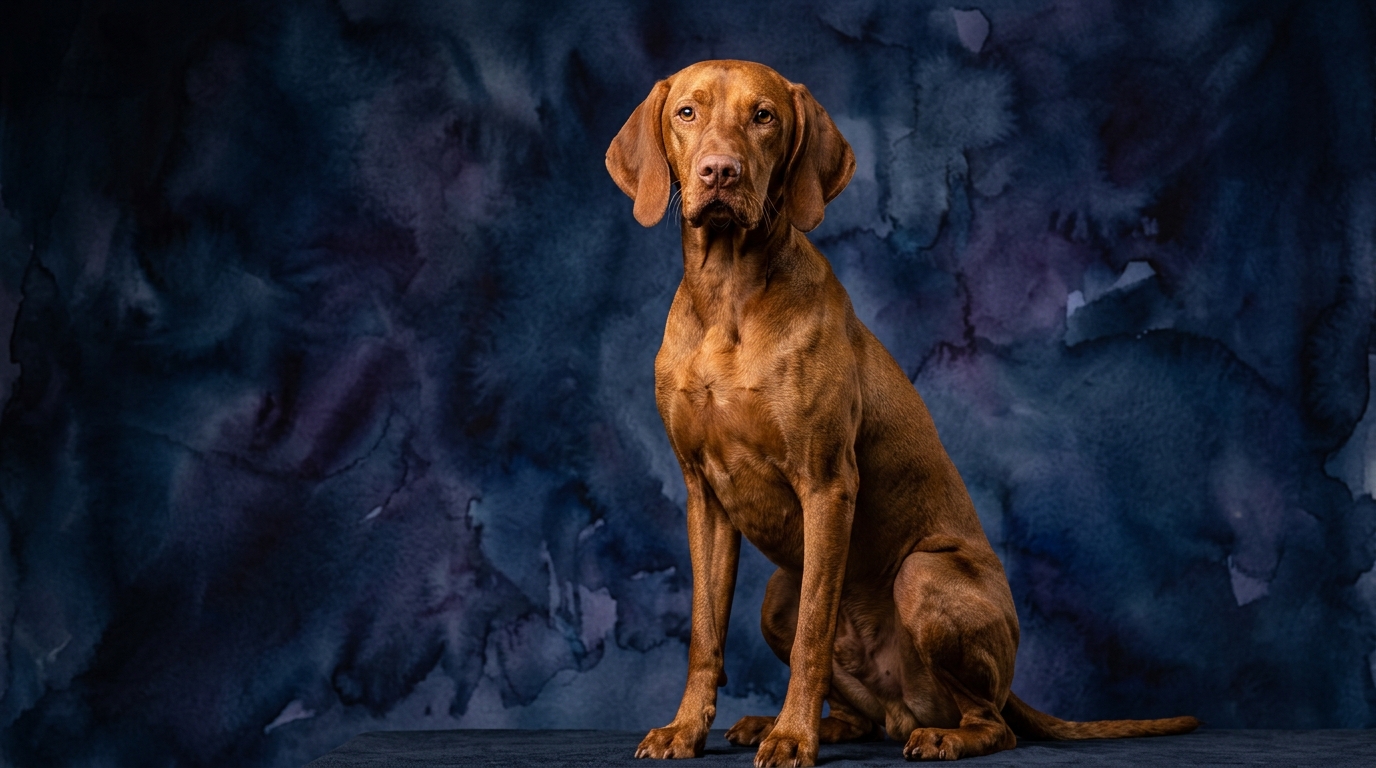
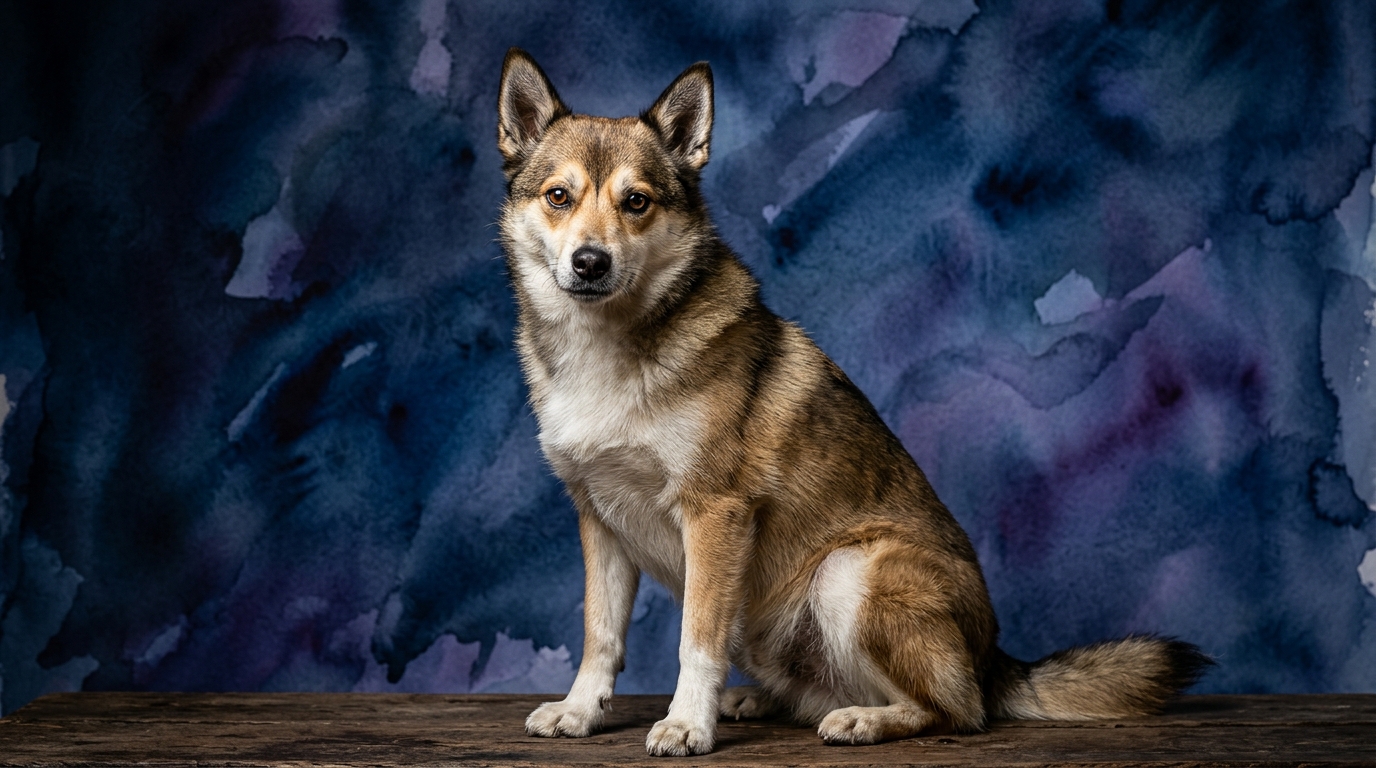
Side-by-Side Pet IQ Profile
The Cosmic Pet Pet IQ Lab employs a five-dimensional framework to assess canine intelligence, offering a nuanced view beyond simplistic rankings. For the Vizsla, a sporting breed, we observe a robust cognitive profile: Problem Solving at 4/5, Training Speed at 4/5, Social Intelligence at a remarkable 5/5, Instinctive Drive also at 5/5, and Memory at 4/5. This comprehensive assessment positions the Vizsla as a highly engaged and perceptive companion, reflecting their heritage as close working partners.
In contrast, the Norwegian Lundehund, a non-sporting breed with a specialized history, presents a distinct cognitive blueprint. Across all five dimensions—Problem Solving, Training Speed, Social Intelligence, Instinctive Drive, and Memory—the Lundehund scores 3/5. While these scores might appear moderate compared to the Vizsla, they are deeply indicative of a breed whose cognitive strengths are tailored for extreme independence and a very specific, physically demanding role. Understanding these scores requires appreciating the unique demands of their historical function rather than a direct comparison of generalized aptitude.
Where Vizsla Wins Cognitively
The Vizsla's cognitive strengths shine brightly, particularly in areas demanding close human interaction and purposeful work. Their 5/5 Social Intelligence indicates an exceptional capacity to understand and respond to human emotions, body language, and subtle cues, fostering a profound bond that few breeds achieve. This makes them incredibly attuned companions, often anticipating their owner's needs or moods. Coupled with a 4/5 in Problem Solving, Vizslas are adept at navigating complex tasks, such as intricate scent work or multi-step obedience routines, often figuring out solutions with minimal guidance.
Their Instinctive Drive, also rated at 5/5, is a powerful cognitive asset, translating into unwavering focus and persistence when engaged in activities aligned with their hunting heritage. This isn't just about physical energy; it's a mental tenacity that allows them to track, point, and retrieve with remarkable dedication. Furthermore, their 4/5 Memory ensures they retain learned behaviors and experiences efficiently, building upon past lessons to refine their actions. This combination of social awareness, problem-solving, and ingrained drive creates a dog that thrives on engagement and partnership, consistently seeking to understand and participate in their human's world.
Where Norwegian Lundehund Wins Cognitively
While the Norwegian Lundehund’s cognitive scores are consistently 3/5, these numbers reflect an intelligence uniquely honed for extreme specialization rather than a deficit. Their Problem Solving at 3/5, for instance, is not about generalized puzzle-solving but about navigating treacherous, slippery cliff faces and extracting puffins from narrow crevices. This demands exceptional spatial reasoning, agility-focused problem-solving, and precise motor control, cognitive skills that are highly specific and survival-critical in their native environment. Their ability to contort their bodies, enabled by unique skeletal features, is a physical manifestation of a cognitive adaptability for a niche task.
The Lundehund’s 3/5 Social Intelligence indicates a more independent nature compared to the highly people-focused Vizsla. This independence was a winning trait for a dog expected to work alone for extended periods without constant human direction. They are observant and capable of learning, but they process information through a lens of self-reliance, making their decisions often more self-directed. Their Instinctive Drive, also 3/5, is focused on their unique hunting methods, which prioritizes stealth, agility, and perseverance in challenging terrain over a broad prey drive. This specific, hardwired mental framework allowed them to excel in a demanding, solitary occupation, proving that cognitive "wins" can be highly contextual and not solely measured by high generalist scores.
Which is Easier to Train and Why
When considering ease of training, the Vizsla clearly presents a more straightforward path for most owners. Their 4/5 Training Speed and exceptional 5/5 Social Intelligence mean they are highly receptive to instruction, eager to please, and quick to grasp new commands. Vizslas thrive on positive reinforcement and the close interaction training provides, often seeing it as a cooperative game. Their strong instinctive drive can be effectively channeled into training, making them focused and motivated students, especially in activities like obedience, agility, or field trials. They form strong attachments, often referred to as "Velcro dogs," which translates into a desire to work closely with their human partners.
The Norwegian Lundehund, with 3/5 scores in both Training Speed and Social Intelligence, requires a different approach. Their historical independence means they are less inherently motivated by human approval and more by their own investigative instincts. Training a Lundehund often requires more patience, creativity, and consistency. They are capable of learning, but they may question the necessity of a command or prioritize an interesting scent over immediate obedience. Their unique cognitive makeup means they think for themselves, which can be challenging for an owner expecting instant compliance. Successful training with a Lundehund often involves making tasks engaging and rewarding them for independent thought within structured boundaries, rather than relying solely on a desire to please.
Which Suits Active Owners vs Relaxed Owners
The Vizsla is undeniably suited for active owners who are prepared to integrate their dog fully into their lifestyle. Their 5/5 Instinctive Drive and 4/5 in Problem Solving mean they require substantial physical exercise, such as running, hiking, or swimming, combined with consistent mental stimulation through training, puzzle toys, or dog sports. A Vizsla thrives when given a job or purpose, and their 5/5 Social Intelligence means they demand significant companionship; they are not dogs content to be left alone for long periods. Owners who enjoy outdoor activities and desire a constant, engaging partner will find the Vizsla a perfect match, as their cognitive makeup compels them to be active participants in their human's life.
The Norwegian Lundehund, while not a sedentary breed, offers a different kind of engagement, making them suitable for owners who might be "relaxed" in terms of constant companion interaction but still committed to providing specific outlets. Their 3/5 Instinctive Drive means they need regular exercise and opportunities to explore, but perhaps not the same relentless intensity as a Vizsla. Their independence (3/5 Social Intelligence) means they can be content with periods of self-directed activity, exploring a secure yard or engaging with scent games, without needing to be constantly at their owner's side. Owners who appreciate a dog with a unique personality, who can entertain themselves but still enjoy shared activities like hikes or agility, and who can provide a safe, varied environment for their natural curiosity and physical abilities to flourish, might find the Lundehund a fascinating and rewarding companion. They are not a "couch potato" but their need for constant human-centric activity is lower than a Vizsla's.
The Verdict
Choose a Vizsla if you desire a highly interactive, socially attuned partner for active pursuits and enjoy a dog that thrives on shared purpose and close companionship.
Opt for a Norwegian Lundehund if you appreciate a dog with independent thought, unique physical aptitudes, and are prepared to engage a curious mind with specific, self-directed exploration opportunities.
🧠 Find Your Pet's IQ Score
Our Pet IQ Lab assessment covers 25+ tests across 5 cognitive dimensions — personalized to your breed.
Take the Full IQ Test →Frequently Asked Questions
Does a lower IQ score mean a dog is less capable?
Not at all; our IQ scores reflect how a breed's cognitive traits are adapted for its historical purpose. A 3/5 score indicates functional aptitude for specific tasks, not a general lack of capacity compared to a breed with different evolutionary pressures.
How does the Vizsla's Coren rank of #31 relate to these IQ scores?
Coren's ranking primarily assesses "working and obedience intelligence," which aligns well with the Vizsla's high scores in Training Speed and Social Intelligence, reflecting their responsiveness to human direction and quick learning. Our IQ lab provides a more granular breakdown of cognitive dimensions.
What makes the Norwegian Lundehund's problem-solving unique despite its 3/5 score?
The Lundehund's 3/5 problem-solving is specialized for navigating complex, physically demanding environments like rocky cliffs to hunt puffins. This requires exceptional spatial awareness and physical dexterity, a different kind of cognitive challenge than generalized puzzle-solving.