Side-by-Side Cognitive Profiles
The Cosmic Pet Pet IQ Lab employs a multi-faceted approach to evaluate canine cognitive abilities, assessing problem-solving, training speed, social intelligence, instinctive drive, and memory. These dimensions offer a comprehensive look beyond simple obedience, delving into how a dog perceives and interacts with its world.
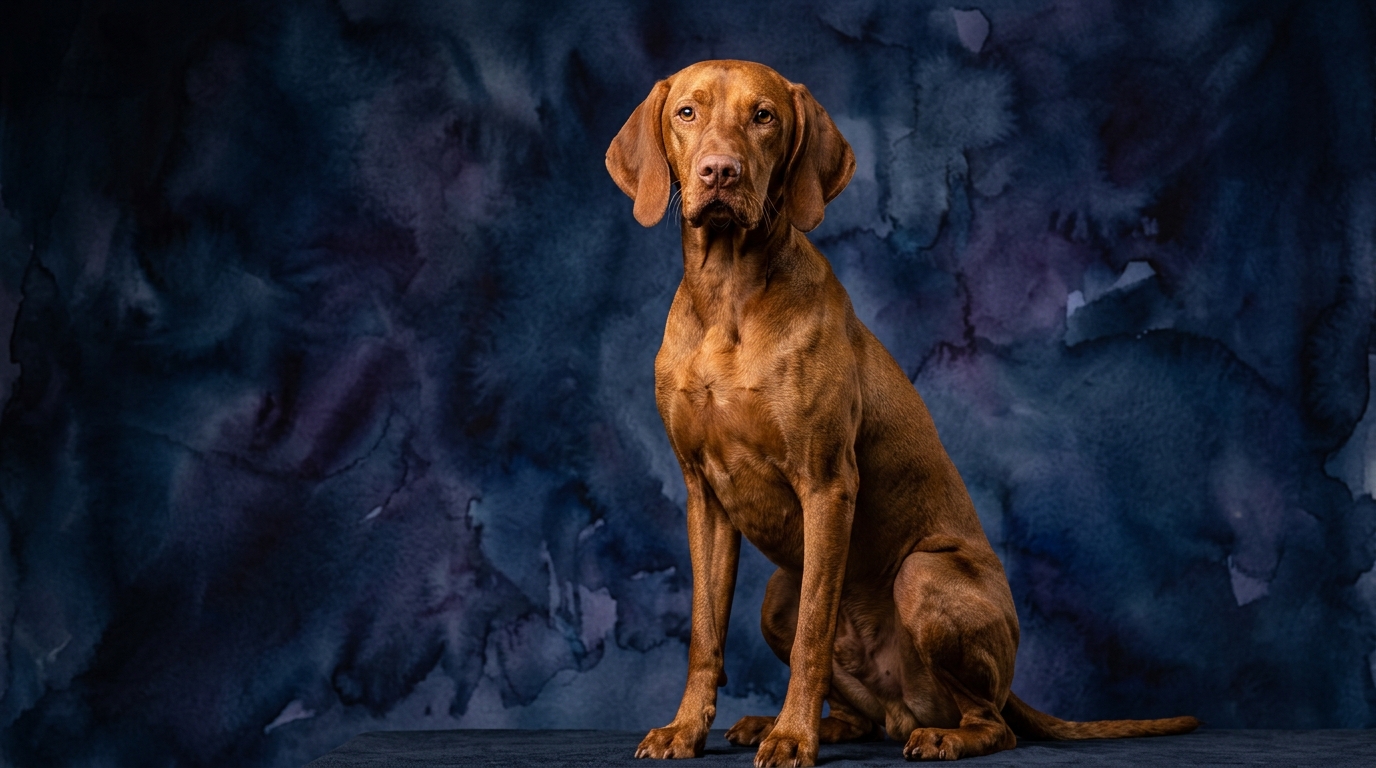
The Vizsla, a Sporting breed, ranks impressively at #31 on Stanley Coren's list, reflecting a robust cognitive toolkit. Their Problem Solving is rated 4/5, indicating a strong capacity for navigating complex situations and figuring out novel challenges. Training Speed stands at 4/5, suggesting a quick grasp of new commands and routines. Social Intelligence, at a remarkable 5/5, highlights their profound ability to understand human cues and integrate into family dynamics. An Instinctive Drive of 5/5 underscores their intense motivation and purpose-driven nature, while Memory, at 4/5, points to a lasting retention of learned experiences and associations.
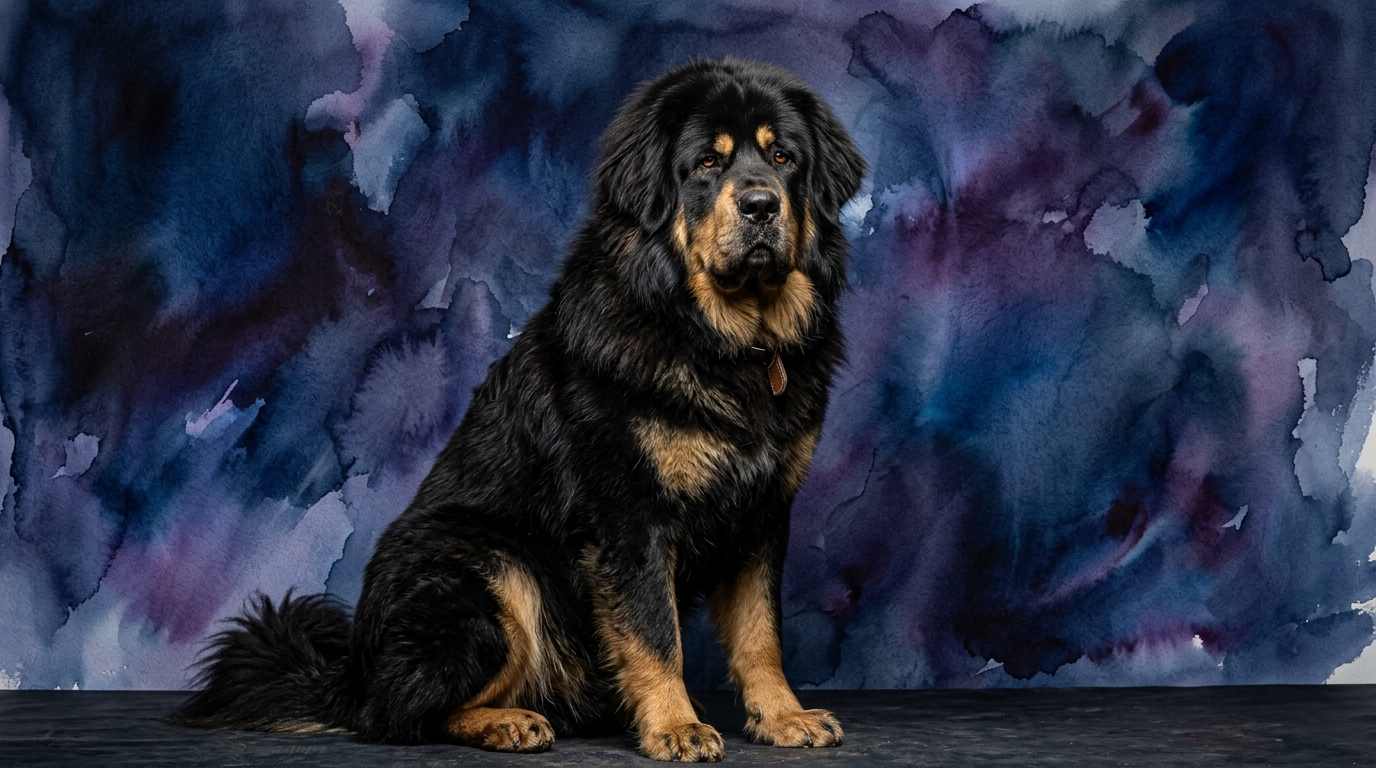
In contrast, the Tibetan Mastiff, a Working breed, does not appear on Coren's ranking, and its cognitive profile, while distinct, points to a different set of priorities. Their Problem Solving is rated 3/5, suggesting they can navigate practical challenges but might not seek out complex intellectual puzzles. Training Speed is 3/5, indicating a more measured pace for acquiring new skills. Social Intelligence scores 3/5, reflecting a selective approach to social interactions, often reserved with strangers. Instinctive Drive is also 3/5, geared towards independent guardianship rather than eager collaborative work. Memory, at 3/5, suggests they retain important information but might not recall every minor detail with the same precision as a Vizsla.
Where the Vizsla's Mind Excels
The Vizsla's cognitive architecture is built for engagement and partnership, making them remarkable in scenarios requiring quick wit and responsiveness. Their 4/5 problem-solving acumen means they don't just follow commands; they often anticipate them or devise clever ways to achieve a desired outcome, whether it's opening a gate or finding a hidden toy. This translates into a dog that enjoys mental games, puzzle toys, and complex training sequences, thriving on the challenge of figuring things out.
With a 4/5 training speed and 5/5 social intelligence, Vizslas demonstrate an exceptional aptitude for human-canine communication. They are acutely attuned to their owner's moods, gestures, and vocalizations, making them highly receptive to instruction. This social awareness, combined with their strong memory (4/5), means they learn rapidly and retain lessons over time, building a vast repertoire of understood commands and behaviors. Their 5/5 instinctive drive, originally for hunting, now manifests as an intense desire to work alongside their human companions, making them eager participants in almost any activity.
Where the Tibetan Mastiff's Cognitive Strengths Lie
While the Tibetan Mastiff's scores may appear lower in direct comparison, their cognitive profile is perfectly adapted to their millennia-old role as independent guardians. Their 3/5 problem-solving ability is not about agility course challenges, but about assessing and neutralizing potential threats within their territory. This requires a different type of cognitive processing: independent judgment, environmental awareness, and a capacity for strategic, rather than reactive, decision-making when protecting their home and family.
The Tibetan Mastiff's 3/5 social intelligence is not a deficit, but a deliberate selectivity. They are not prone to indiscriminate friendliness; instead, they carefully evaluate new individuals, reserving their trust and affection for their inner circle. This discerning social cognition is crucial for a guardian breed. Their 3/5 instinctive drive is deeply rooted in territorial vigilance and protection, demanding less direct human instruction and more self-directed action. This means they process information with a focus on security, remembering perceived threats or safe zones (3/5 memory) with a persistence vital for their role.
Trainability: A Tale of Two Approaches
When it comes to trainability, the Vizsla generally presents a more straightforward path for the average owner. Their high training speed (4/5) and profound social intelligence (5/5) mean they are eager to please and quick to pick up new commands. They thrive on positive reinforcement, understanding rapidly what is expected of them and performing tasks with enthusiasm. Their strong instinctive drive (5/5) often translates into a keen focus on their handler, making them highly biddable and responsive in structured training environments. This desire for collaboration means they view training as an enjoyable partnership, not a chore.
The Tibetan Mastiff, with a 3/5 training speed and 3/5 social intelligence, requires a different approach. They are not inherently driven by a desire to please their human in the same way. Their independent nature means they will comply if they understand the command and deem it reasonable, but they may question or ignore repetitive or seemingly pointless tasks. Training a Tibetan Mastiff demands patience, consistency, and a deep understanding of their guardian instincts. It's less about rapid compliance and more about earning respect and fostering a cooperative relationship built on mutual understanding, rather than immediate obedience.
Matching Minds to Lifestyles: Active vs. Relaxed Owners
For active owners seeking a canine partner for adventures, the Vizsla is an exceptional match. Their high instinctive drive (5/5), coupled with their problem-solving ability (4/5) and social intelligence (5/5), means they crave both physical exertion and mental engagement. They excel in dog sports like agility, flyball, or obedience trials, and are tireless companions for running, hiking, or cycling. Owners who can provide daily, varied stimulation – from long walks to complex training sessions – will find the Vizsla a joyful and responsive companion. Their cognitive makeup demands a dynamic lifestyle to prevent boredom and channel their considerable energy constructively.
The Tibetan Mastiff's cognitive profile suits a more relaxed, yet deeply committed, owner. While they are large and require space, their daily exercise needs are moderate compared to the Vizsla. Their independent nature and focus on territorial vigilance mean they are content with patrolling their yard and observing their surroundings. They are not typically suited for intense, structured activities or dog parks filled with strangers. Owners who appreciate a calm, watchful presence and can provide a secure, spacious environment will find the Tibetan Mastiff’s self-reliant cognition a good fit. They thrive with a family that understands and respects their inherent independence and protective instincts, rather than expecting eager participation in constant activities.
The Verdict
Choose a Vizsla if you seek an intensely bonded, highly trainable companion for an active lifestyle, thriving on constant interaction and mental challenges.
Opt for a Tibetan Mastiff if you desire an independent, watchful guardian with a calm demeanor, valuing self-reliance and territorial protection over eager participation.
🧠 Find Your Pet's IQ Score
Our Pet IQ Lab assessment covers 25+ tests across 5 cognitive dimensions — personalized to your breed.
Take the Full IQ Test →Frequently Asked Questions
Are Vizslas difficult to manage due to their high energy?
Vizslas possess a high instinctive drive and require substantial physical and mental stimulation daily. Without adequate outlets, their energy can lead to destructive behaviors, but with consistent exercise and training, they are well-managed and highly rewarding companions.
Do Tibetan Mastiffs make good family pets despite their independent nature?
Tibetan Mastiffs can be devoted family pets, forming strong bonds with their immediate household. Their independent nature means they are generally reserved with strangers but fiercely protective of their loved ones, requiring early socialization and consistent boundaries to ensure a well-adjusted temperament.
Which breed is better for first-time dog owners?
The Vizsla is generally a more suitable choice for first-time dog owners due to their higher trainability, eagerness to please, and social intelligence. The Tibetan Mastiff's independent and protective instincts require an owner with experience in handling strong-willed guardian breeds.