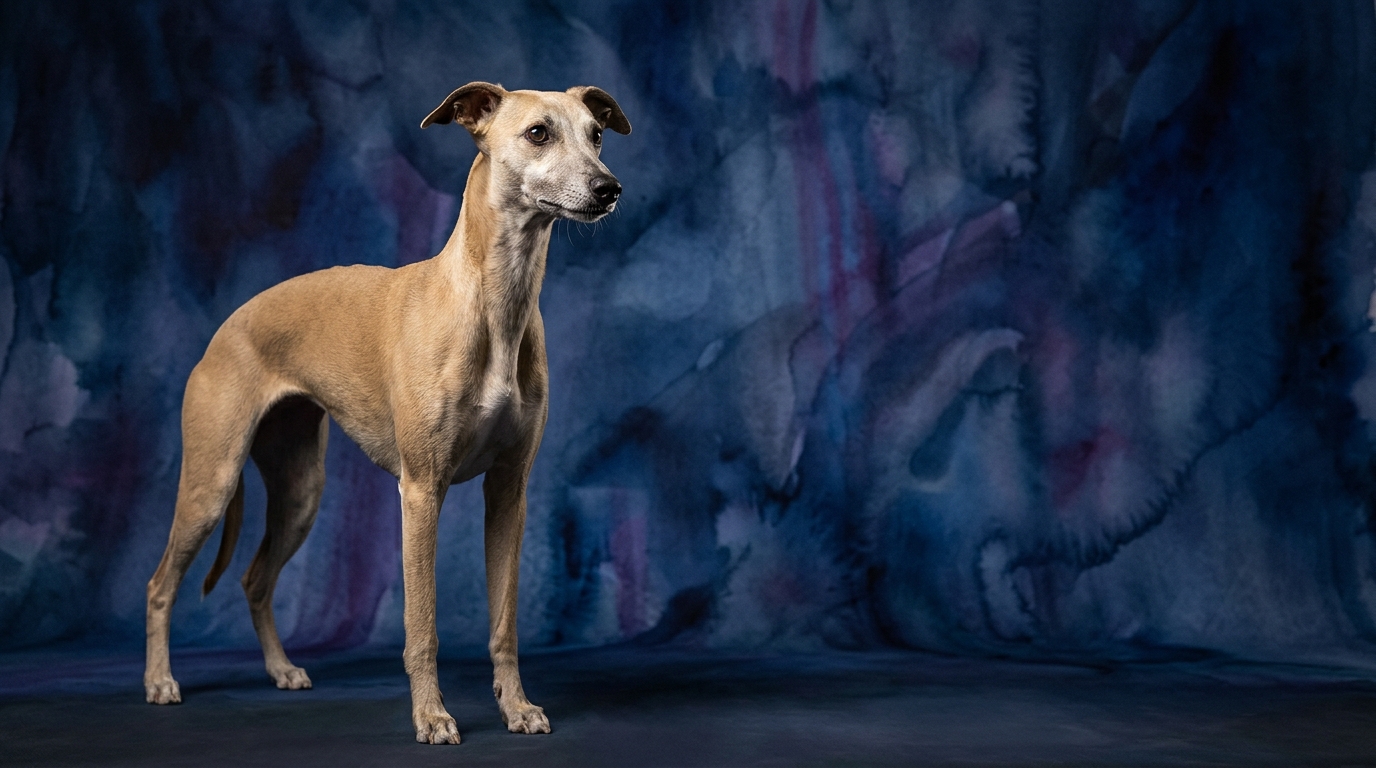
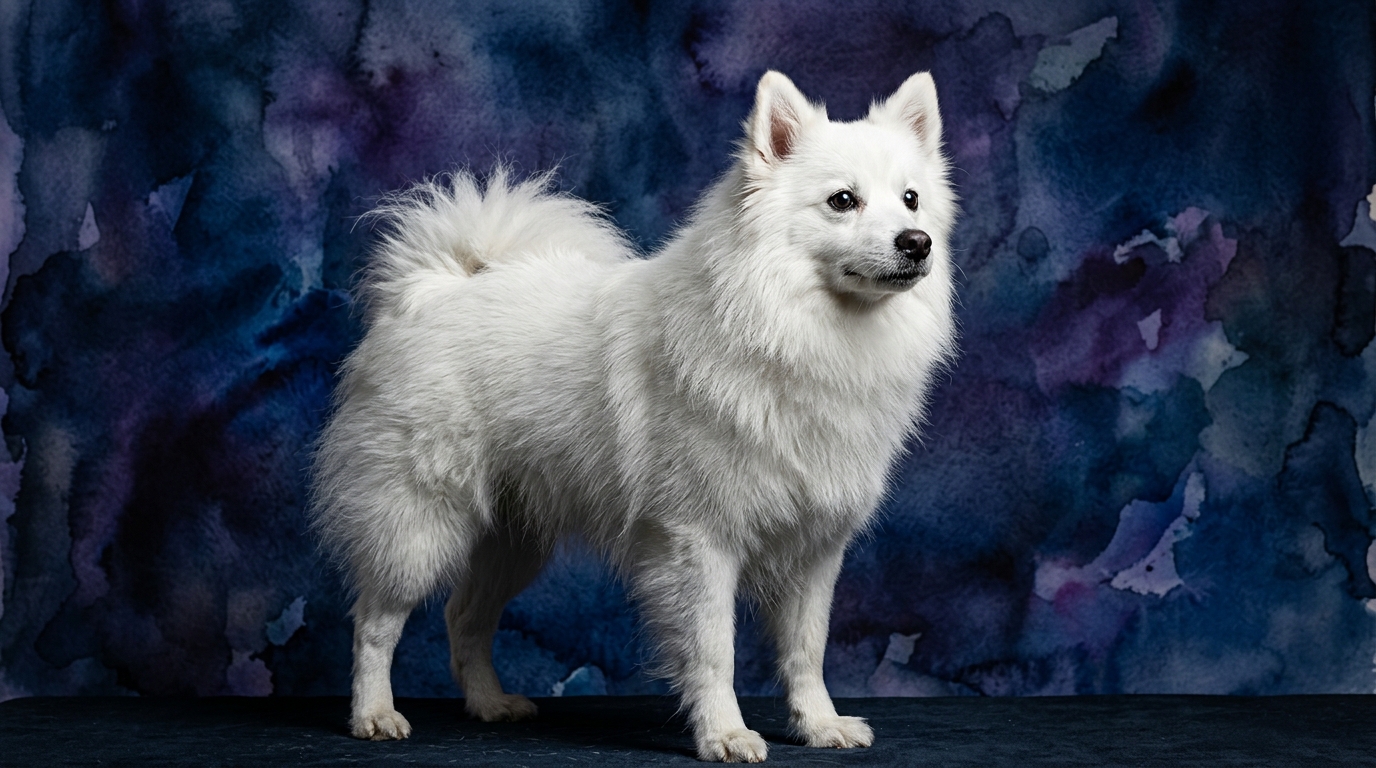
Side-by-side IQ Profile: Whippet vs. American Eskimo Dog
The Cosmic Pet Pet IQ Lab's five-dimensional model reveals distinct cognitive profiles. For the Whippet, a sighthound developed for speed and independent pursuit, Problem Solving at 3/5 indicates practical intelligence focused on efficiency and comfort. Training Speed, rated 2/5, suggests a deliberate, independent learning pace, demanding patience. Social Intelligence shines at 4/5, highlighting deep sensitivity and strong, selective bonds. Their Instinctive Drive is a powerful 5/5, a testament to their ingrained chase reflex, while Memory is 3/5, sufficient for routines.
In contrast, the American Eskimo Dog, a Spitz-type companion, offers a balanced toolkit: Problem Solving is 3/5, indicating capacity for tasks with moderate persistence. Training Speed of 3/5 points to a steady, willing learner. Social Intelligence is 3/5, reflecting a balanced, often alert companionship. Instinctive Drive is 3/5, encompassing moderate prey drive and watchfulness. Memory, like the Whippet, scores 3/5, retaining commands and experiences effectively.
Where the Whippet Wins Cognitively
The Whippet's distinct cognitive strengths emerge where sensitivity and instinct dominate. Their Social Intelligence, rated 4/5, surpasses the Eskie's 3/5, manifesting as an uncanny ability to attune to human moods and energy. A Whippet often senses when quiet companionship is needed, offering a comforting presence rooted in profound social perception.
Furthermore, the Whippet's Instinctive Drive, a perfect 5/5, represents unparalleled cognitive specialization. While challenging to manage in uncontrolled environments due to their powerful chase reflex, this score signifies extraordinary efficiency in their original purpose: identifying, pursuing, and catching moving objects with incredible focus and speed. This highly refined predatory sequence is a testament to unique cognitive efficiency in action, a singular purpose few other breeds possess to such a degree.
Where the American Eskimo Dog Wins Cognitively
The American Eskimo Dog's cognitive advantages often lie in their balanced learning approach and adaptable problem-solving. Their Training Speed, at 3/5, gives them an edge over the Whippet's 2/5. This moderate pace is bolstered by a strong desire to please and keen interest in interactive learning, making them more responsive to command acquisition and trick training. They approach new tasks with engaging curiosity, often showing persistence in understanding expectations.
While both breeds score 3/5 in Problem Solving and Memory, the Eskie's application often leans towards practical household challenges and interactive enrichment. An American Eskimo Dog might readily figure out how to open a cabinet or persistently work at a puzzle feeder, remembering successful strategies. Their moderate instinctive drive and biddable nature allow them to engage more consistently with human-directed cognitive challenges, leveraging memory for sequences in broader contexts than the comfort-oriented Whippet.
Which is Easier to Train and Why?
For formal training, the American Eskimo Dog generally offers an easier path. Their Training Speed of 3/5, combined with eagerness to please and moderate instinctive drive, means they are typically more motivated by praise and treats to learn and follow commands. They tend to maintain focus and enjoy the collaborative process of acquiring new skills.
The Whippet, with a Training Speed of 2/5, can be more challenging. Their sighthound heritage instilled an independent streak; they were bred to make decisions in pursuit without human direction. This means they often need significant motivation and consistent, positive reinforcement to engage fully. While capable of learning, their attention is easily diverted by stimuli triggering their powerful chase instinct, and they may prioritize a compelling alternative over a command. Training a Whippet requires understanding their unique motivations and working with their independent nature.
Matching Canine IQ to Owner Lifestyle: Active vs. Relaxed
The Whippet presents a fascinating paradox for owner lifestyles. While they possess an explosive Instinctive Drive (5/5) demanding short, intense bursts of running in a secure area, they are remarkably relaxed indoors. Often called "45 mph couch potatoes," they are perfectly content to nap for hours. This suits owners who enjoy high-energy sprints and dog sports but also value a quiet, undemanding companion indoors. They are ideal for those providing a safe space for athletic expression, followed by ample relaxation.
The American Eskimo Dog, conversely, suits consistently active owners who enjoy mental engagement. Their moderate instinctive drive and balanced IQ profile mean they thrive on daily walks, interactive play, and consistent mental stimulation through training and puzzle toys. They need more sustained engagement than a Whippet, flourishing with owners prepared to integrate their dog into an active, involved lifestyle, including regular training and problem-solving. They are not suited for purely relaxed owners preferring minimal interaction.
The Verdict
If you seek a sensitive, quiet companion who thrives on intense but brief bursts of speed and appreciates ample indoor relaxation, the Whippet will be an ideal match.
For those who desire an engaging, biddable dog eager to learn new things and thrive on consistent mental and moderate physical activity, the American Eskimo Dog is the clear choice.
🧠 Find Your Pet's IQ Score
Our Pet IQ Lab assessment covers 25+ tests across 5 cognitive dimensions — personalized to your breed.
Take the Full IQ Test →Frequently Asked Questions
Are Whippets difficult to train?
Whippets aren't inherently difficult, but their independent sighthound nature means they require patient, consistent, and highly motivating training methods. They may not always see the "point" of a command if their strong chase instinct is triggered, making recall a particular challenge in open spaces.
Do American Eskimo Dogs need a lot of exercise?
American Eskimo Dogs require moderate, consistent exercise and significant mental stimulation to thrive. Daily walks, interactive play, and regular training sessions are crucial to prevent boredom and channel their energy constructively.
How do their social needs differ?
Whippets typically exhibit high social intelligence, forming deep, sensitive bonds with their chosen family and often preferring quiet companionship, though they can be reserved with strangers. American Eskimo Dogs possess moderate social intelligence, are generally outgoing with their family, but can be more vocal and reserved or wary with unfamiliar people, serving as alert watchdogs.