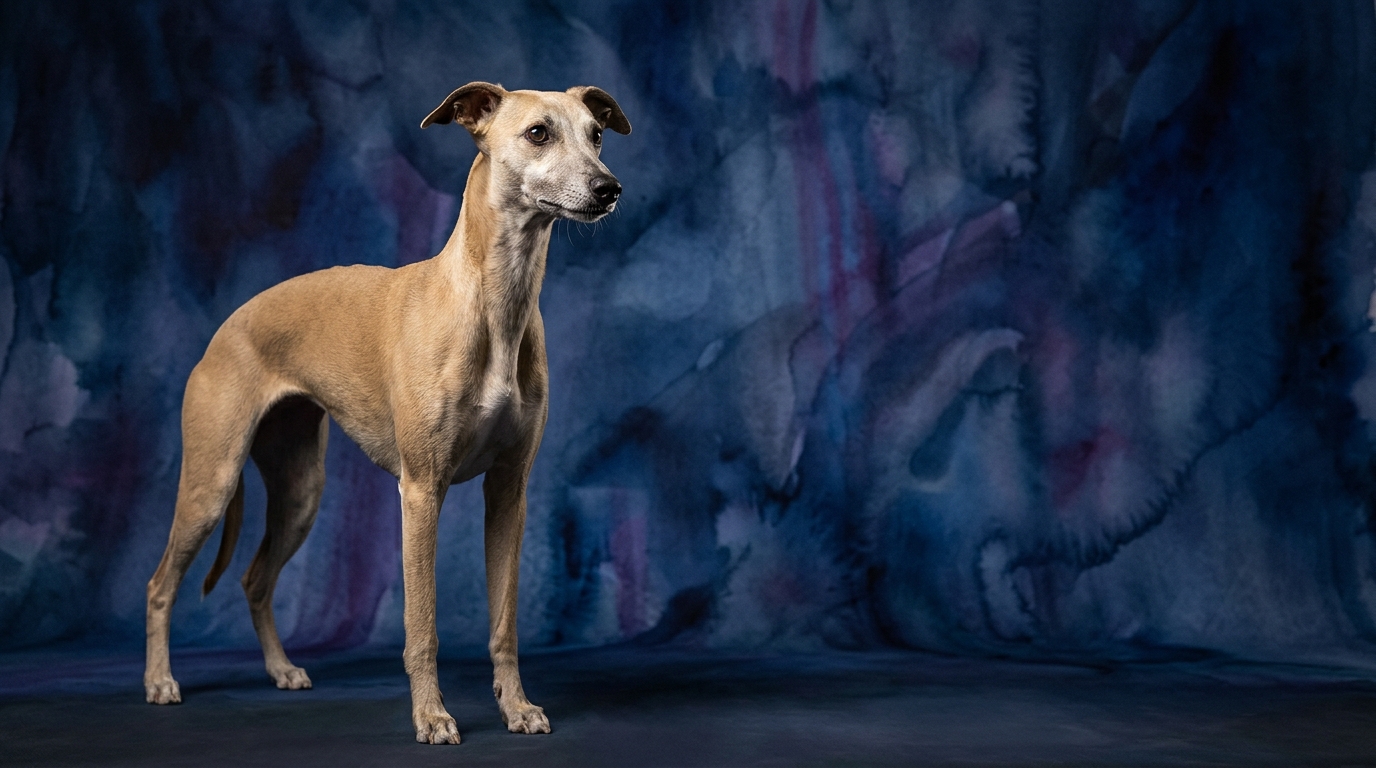
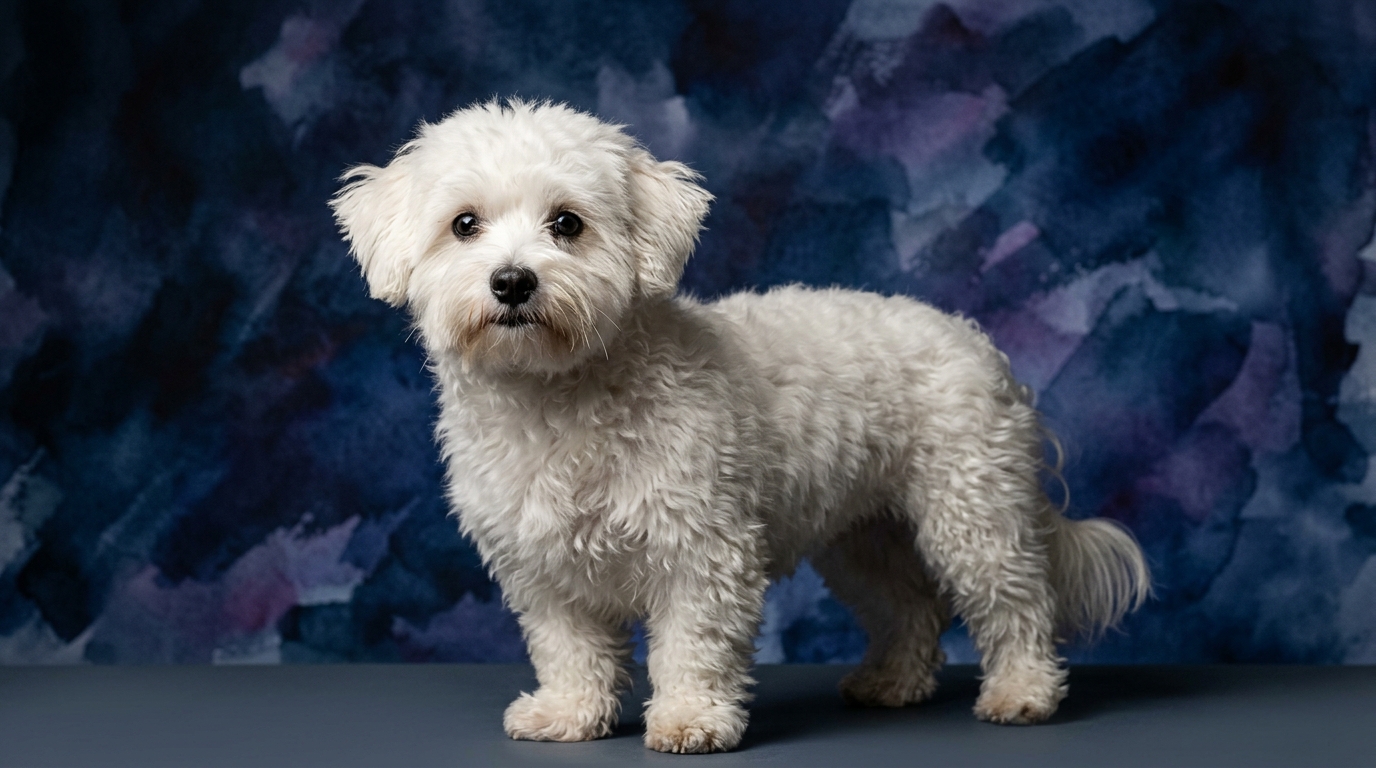
Side-by-Side IQ Profile: Whippet vs. Coton de Tuléar
To truly understand the cognitive makeup of these two breeds, The Cosmic Pet Pet IQ Lab meticulously assesses five key dimensions. For the Whippet, a breed ranked #51 by Coren, its profile reflects its sighthound heritage. Its Problem Solving is rated 3/5, indicating moderate abilities, often direct and efficient, guided by core drives to achieve goals involving speed or agility. Training Speed is 2/5, suggesting an independent streak requiring more repetition. Social Intelligence shines at 4/5, showing deep attunement to human emotions and social cues, fostering sensitive bonds. Instinctive Drive is a perfect 5/5, dominated by an unparalleled prey drive for spotting and chasing. Memory is 3/5, average, with stronger recall for instinct-related experiences.
The Coton de Tuléar, while not Coren-ranked, presents a different, balanced cognitive blueprint. Its Problem Solving is 3/5, moderate, allowing them to navigate household challenges and simple puzzles, often for comfort or companionship. Training Speed is 3/5, an average score that makes them willing learners, responding well to positive reinforcement due to their desire to please. Social Intelligence is also 3/5, indicating an affable nature and awareness of social dynamics within the family, adapting well to various settings. Instinctive Drive is 3/5, moderate, meaning natural dog instincts are present but less intense and more manageable than in specialized working breeds. Finally, Memory is 3/5, average, enabling them to recall routines, people, and experiences, contributing to their adaptability.
Where Whippet Wins Cognitively
Whippets distinctly outshine the Coton de Tuléar in two key cognitive dimensions: social intelligence and instinctive drive. Their social intelligence, a remarkable 4 out of 5, speaks to an exquisite sensitivity to human emotions. A Whippet often mirrors its owner's mood, offering quiet comfort during distress or joining in joyful exuberance. This isn't merely a desire for attention, but a profound capacity for emotional resonance, allowing them to integrate seamlessly into a family's emotional landscape. They are acutely aware of their human's state, often offering presence precisely when needed.
Furthermore, the Whippet's instinctive drive, a perfect 5 out of 5, represents a highly specialized and deeply ingrained cognitive strength. This involves complex visual acuity, rapid processing, and an unparalleled drive to pursue. When a Whippet spots something moving at a distance, its brain instantly calculates trajectory, speed, and potential intercept points. This cognitive specialization, honed over centuries for coursing, makes them masters of chase and capture. While this strong drive requires careful management, it's a testament to a highly efficient, purpose-built cognitive system dedicated to a specific task.
Where Coton de Tuléar Wins Cognitively
The Coton de Tuléar demonstrates a distinct cognitive advantage in training speed, rated 3 out of 5 compared to the Whippet's 2 out of 5. While not a vast difference, this incremental advantage translates into a more straightforward and less repetitive training experience for owners. Cotons generally possess a stronger desire to engage with their human companions in structured learning, often displaying a cheerful willingness to perform tasks for praise or treats. Their motivation is typically rooted in seeking interaction and positive reinforcement, making them more pliable students. This balanced training speed means they can grasp new commands and routines with greater consistency and fewer sessions, a significant plus for owners seeking easy integration.
Beyond raw speed, the Coton's cognitive profile benefits from a more balanced distribution across its dimensions. With problem-solving, social intelligence, instinctive drive, and memory all rated at 3 out of 5, the Coton presents a versatile and adaptable mind. This lack of extreme specialization, unlike the Whippet's intense instinctive drive, allows them to approach a broader range of domestic situations with equanimity. Their moderate instinctive drive means they are less likely to be overwhelmed by environmental stimuli or driven by an uncontrollable urge to chase. This cognitive balance contributes to their reputation as adaptable and agreeable companions.
Which is Easier to Train and Why
When evaluating ease of training, the Coton de Tuléar generally holds an advantage over the Whippet, primarily due to their respective training speed and instinctive drive scores. The Coton's training speed of 3/5, coupled with a moderate instinctive drive of 3/5, makes them more amenable to instruction. They are often eager to please and find intrinsic motivation in interacting with their owners during training sessions. This means a Coton is typically more responsive to cues, quicker to form associations between a command and an action, and less prone to being distracted by overwhelming external stimuli. For instance, teaching a Coton to “stay” in a moderately distracting environment is often achievable with consistent positive reinforcement, as their focus is more readily directed towards their human.
The Whippet, however, presents a different set of training challenges. Their training speed of 2/5 suggests they require more patience and consistency. More significantly, their exceptionally high instinctive drive (5/5), particularly their prey drive, often overrides learned behaviors. A Whippet might perfectly execute a recall in a quiet backyard, but the sight of a squirrel darting across a field can instantly trigger their deeply ingrained chase instinct, rendering previous training momentarily irrelevant. This isn't defiance, but rather the powerful pull of a highly specialized cognitive function. Owners often describe Whippets as having “selective hearing” when their chase drive is engaged. Therefore, while both breeds can learn, the Coton’s more balanced cognitive profile means fewer battles against ingrained instincts, leading to a smoother, less demanding training journey for the average owner.
Which Suits Active Owners vs. Relaxed Owners
The Whippet's unique blend of cognitive traits makes it an ideal match for active owners who appreciate a dog with bursts of energy and a deep, sensitive connection. While they are often described as “45 mph couch potatoes,” their need for intense, short periods of physical activity is non-negotiable. An owner who enjoys daily runs, engages in lure coursing, or provides opportunities for safe, off-leash sprinting will find the Whippet’s instinctive drive beautifully fulfilled. These activities not only provide physical outlets but also mentally stimulate their highly specialized chase cognition. Furthermore, their high social intelligence means they thrive on close companionship, making them excellent partners for owners who value a dog that is emotionally attuned and enjoys quiet time together after their exercise needs are met. They are not a dog for casual, infrequent walks; they require dedicated engagement with their speed and instincts.
In contrast, the Coton de Tuléar, with its balanced cognitive profile and moderate instinctive drive, is wonderfully suited for more relaxed owners or those seeking a versatile companion. Their moderate activity requirements mean they are content with daily walks, playtime in the yard, and indoor games. They don't possess an overwhelming urge to chase or a need for intense, specialized physical outlets. Their balanced social intelligence ensures they are amiable family members, happy to participate in daily routines without demanding constant emotional intensity or physical exertion. A Coton will thrive with an owner who enjoys consistent, gentle interaction, short training sessions, and the comfort of a charming, adaptable housemate. They are excellent choices for apartment dwellers or individuals who prefer a companion that can easily adapt to a calmer pace of life while still enjoying regular engagement.
The Verdict
Opt for a Whippet if you are an active owner who can fulfill their intense, albeit brief, need for speed and chase, and you cherish a deeply sensitive, emotionally attuned companion. They thrive with dedicated physical outlets and close human bonds.
Select a Coton de Tuléar if you prefer a versatile, adaptable companion with moderate exercise needs, and you value an agreeable, trainable dog that integrates smoothly into a more relaxed household environment.
🧠 Find Your Pet's IQ Score
Our Pet IQ Lab assessment covers 25+ tests across 5 cognitive dimensions — personalized to your breed.
Take the Full IQ Test →Frequently Asked Questions
Are Whippets difficult to train due to their low training speed?
Whippets require patience and consistency due to their 2/5 training speed and strong prey drive. Training needs to be highly rewarding, and owners must manage environments to minimize instinctual distractions.
How does the Coton de Tuléar's moderate instinctive drive manifest in daily life?
A Coton's moderate instinctive drive (3/5) means they enjoy chasing toys playfully but are less likely to bolt after wildlife. Their urges are generally manageable, channeling into interaction rather than intense pursuit.
Can a Whippet live in an apartment, despite its need for speed?
Yes, Whippets can thrive in apartments if their intense, short bursts of running are consistently met in a secure area. They are otherwise calm indoors, adapting well as long as physical and emotional needs are fulfilled.