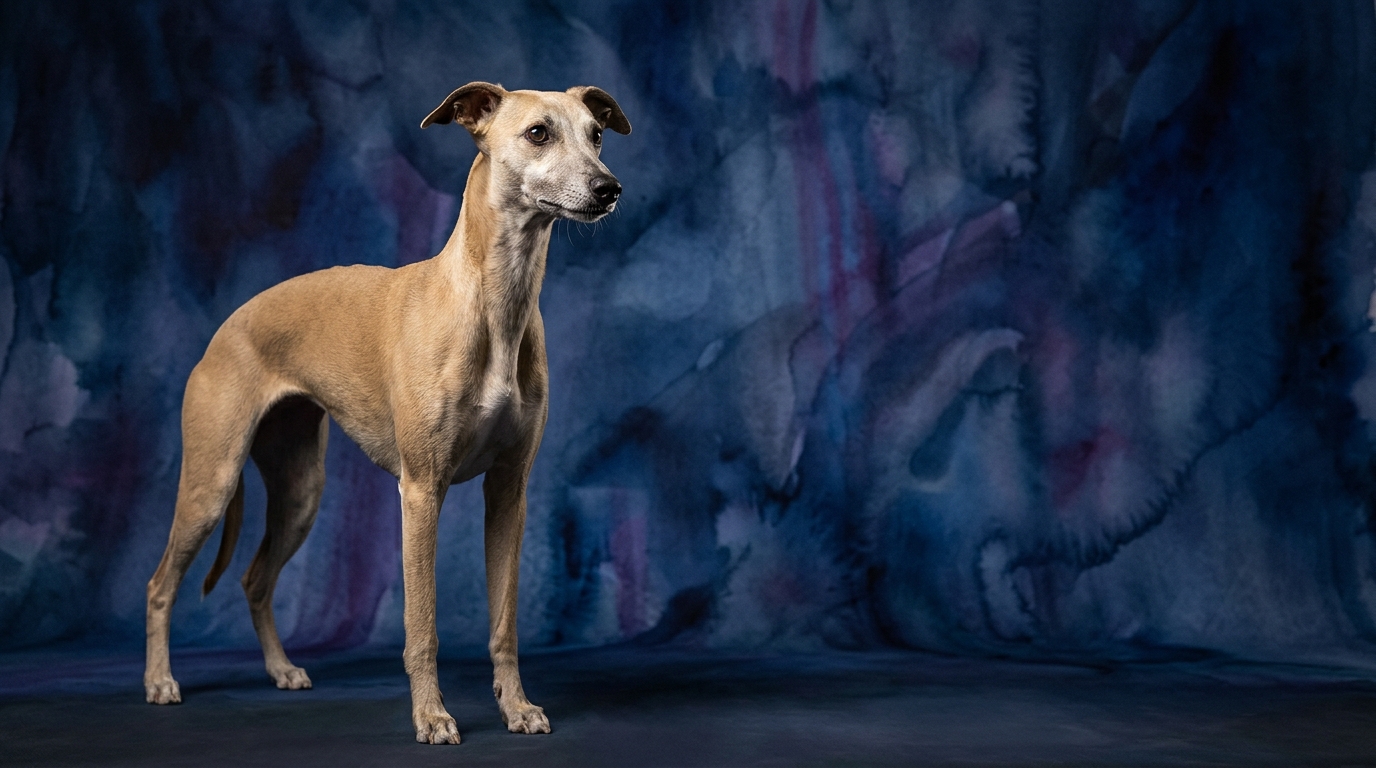
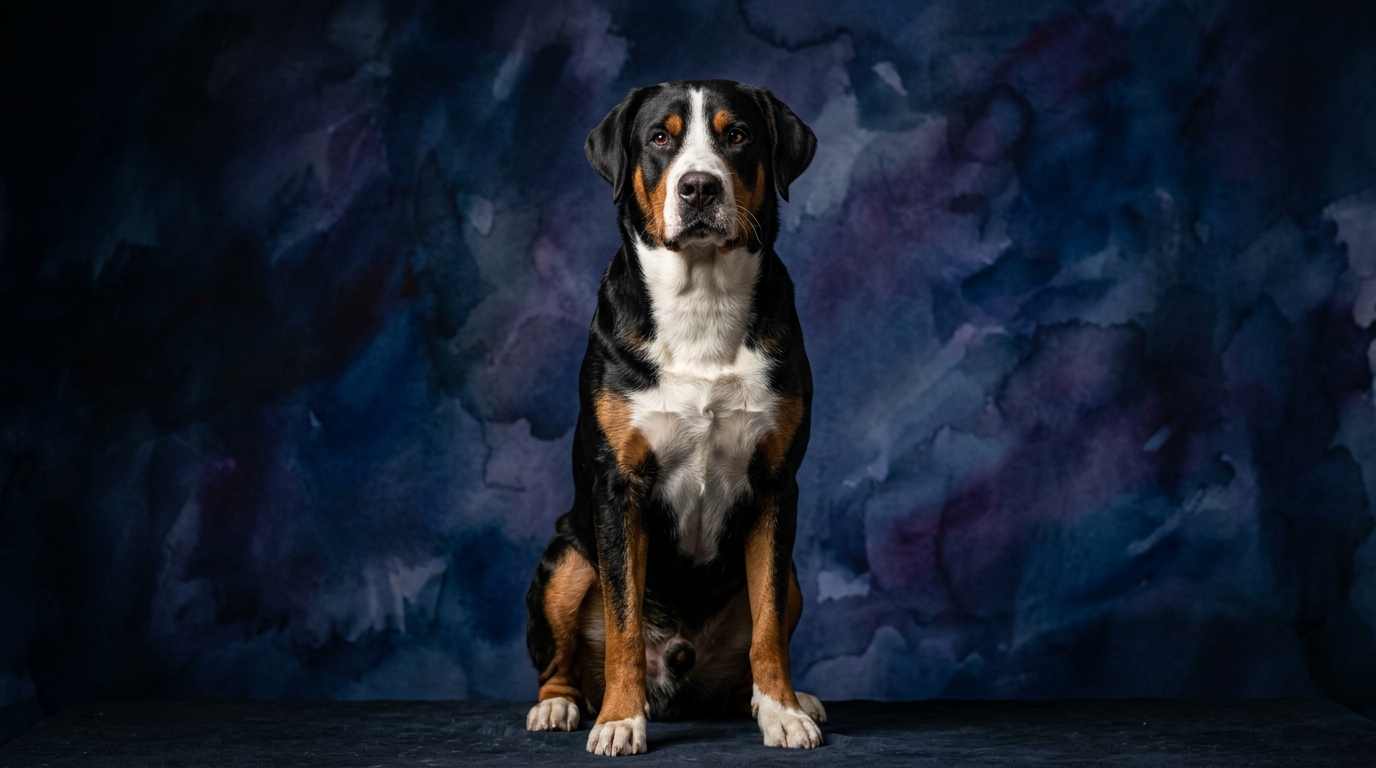
Side-by-Side IQ Profile: Whippet vs. Greater Swiss Mountain Dog
At The Cosmic Pet Pet IQ Lab, we evaluate canine intelligence across five key dimensions, offering a detailed perspective on a breed's cognitive strengths and inclinations. For the Whippet, a sighthound ranked #51 by Coren, and the Greater Swiss Mountain Dog, a robust working breed without a Coren ranking, these dimensions reveal distinct cognitive blueprints. Understanding these profiles helps us appreciate how each breed approaches learning, social interaction, and their environment.
The Whippet’s cognitive profile is characterized by a Problem Solving score of 3/5, indicating practical, often independent solutions to environmental challenges, particularly those related to movement. Their Training Speed is 2/5, suggesting they may require more patience and creative motivation during learning. A standout Social Intelligence of 4/5 highlights their profound sensitivity to human cues and deep emotional bonds. Their Instinctive Drive is a perfect 5/5, reflecting an intense, specialized focus on pursuit. Finally, their Memory is rated 3/5, an average capacity for recalling experiences and learned behaviors.
The Greater Swiss Mountain Dog presents a different cognitive array. Their Problem Solving is also 3/5, but typically manifests in task-oriented and spatial reasoning challenges common to working dogs. Their Training Speed is 3/5, indicating a generally quicker uptake of commands and a greater biddability compared to the Whippet. Social Intelligence stands at 3/5, reflecting a solid, straightforward understanding of human interactions. Their Instinctive Drive is 3/5, a moderate, multi-faceted drive encompassing vigilance and a desire for purpose. Like the Whippet, their Memory is 3/5, an average capacity for retaining routines and learned tasks.
Where the Whippet Wins Cognitively
The Whippet's cognitive strengths shine particularly bright in areas demanding refined perception and rapid, instinctual action. Their social intelligence, rated at 4/5, allows them to forge remarkably deep, almost telepathic bonds with their human companions. They are masters of reading subtle body language and vocal inflections, often anticipating a change in mood or a desire for comfort before it's explicitly expressed, making them incredibly empathetic partners. This isn't merely about affection; it’s a sophisticated ability to process and respond to complex social cues.
Furthermore, their instinctive drive, a perfect 5/5, represents a highly specialized cognitive prowess. This isn't just about raw speed, but the lightning-fast perceptual processing required to identify a moving target, calculate its trajectory, and execute a precise, efficient chase. It involves acute visual tracking, spatial reasoning under pressure, and the instant recall of motor patterns, all culminating in an unparalleled display of predatory focus and athletic grace. While this drive requires careful management, it signifies a peak in a specific cognitive domain.
Where the Greater Swiss Mountain Dog Wins Cognitively
Conversely, the Greater Swiss Mountain Dog excels in cognitive domains that underscore their heritage as steadfast, versatile working dogs. Their slightly higher training speed, at 3/5 compared to the Whippet's 2/5, signifies a greater innate willingness to engage in cooperative learning. GSMDs generally display a more pronounced desire to understand and execute tasks presented by their human, making them quicker to grasp and retain complex command sequences. This biddability is a distinct cognitive advantage for owners seeking a responsive and eager student.
While both breeds score 3/5 in problem-solving, the nature of the GSMD's problem-solving often leans towards practical, physical challenges related to their historical roles. They can be particularly adept at tasks requiring spatial awareness, strength application, and sequential planning, such as figuring out how to move an object or navigate an obstacle course with purpose. Their instinctive drive, while lower at 3/5, is also more broadly applicable, encompassing vigilance and a desire for meaningful work rather than a singular chase instinct, which can be a cognitive 'win' in terms of adaptability to diverse domestic roles and ease of integrating into various family structures.
Which Is Easier to Train and Why
For most owners, the Greater Swiss Mountain Dog will present as the easier breed to train, primarily due to their higher training speed and inherent biddability. GSMDs possess a strong desire to be involved in family activities and often thrive on having a 'job,' which translates into a more eager and cooperative attitude during training sessions. They respond well to positive reinforcement, consistency, and clear communication, showing genuine satisfaction in mastering new commands or tasks. Their working dog background means they are generally more inclined to look to their human for guidance and direction, making them responsive students.
The Whippet, on the other hand, with a training speed of 2/5, tends to be more independent in their learning approach. While capable of learning, they are not always motivated by the desire to please and can find repetitive drills tedious. Training a Whippet often requires more creativity, high-value rewards, and an understanding of their sighthound nature. Their intense instinctive drive means that recall in an open environment, without a secure fence, can be a lifelong training challenge, as the sight of a squirrel can instantly override learned commands. Whippets are sensitive, making harsh training counterproductive; they respond best to gentle, engaging methods that tap into their social intelligence rather than demanding strict obedience.
Which Suits Active Owners vs. Relaxed Owners
The choice between a Whippet and a Greater Swiss Mountain Dog also hinges significantly on an owner's lifestyle. For truly active owners who enjoy sustained, purposeful outdoor activities, the Greater Swiss Mountain Dog is often an excellent match. They thrive on long hikes, carting, or even engaging in dog sports that require strength and endurance. Their robust build and moderate instinctive drive mean they appreciate consistent, engaging exercise that provides both physical and mental stimulation. They are not content to be solely couch potatoes and will benefit from a structured routine that allows them to utilize their working dog traits.
Conversely, the Whippet can suit both active and more relaxed owners, depending on the type of activity. While they possess an explosive instinctive drive (5/5), necessitating opportunities for high-speed sprints in a safe, enclosed area, they are famously calm and relaxed indoors. An active owner might enjoy lure coursing or short, intense play sessions with a Whippet, while a more relaxed owner, provided they can facilitate those bursts of energy (perhaps in a large, securely fenced yard), will appreciate their quiet, gentle demeanor as an indoor companion. The Whippet’s exercise needs are often met in shorter, more intense bursts rather than sustained endurance, making them adaptable to different paces of life outside of those crucial sprints.
The Verdict
Choose a Whippet if you value a deeply empathetic, sensitive companion who excels in social nuances and offers intense, yet brief, bursts of athletic prowess, thriving on gentle engagement and secure spaces for their powerful instinctive drive.
Opt for a Greater Swiss Mountain Dog if your ideal companion is a steadfast, biddable partner who thrives on purposeful work, consistent activity, and cooperative training, eager to engage in the world alongside you with a steady, reliable temperament.
🧠 Find Your Pet's IQ Score
Our Pet IQ Lab assessment covers 25+ tests across 5 cognitive dimensions — personalized to your breed.
Take the Full IQ Test →Frequently Asked Questions
Are Whippets difficult to train?
Whippets are not inherently difficult, but their independent nature and lower training speed score mean they respond best to positive, patient, and engaging methods, often requiring more creativity from the trainer. Their strong prey drive also necessitates careful management in unfenced areas, as an instinctual chase can override learned commands.
Do Greater Swiss Mountain Dogs need a lot of exercise?
Yes, Greater Swiss Mountain Dogs require consistent, moderate daily exercise and mental stimulation to prevent boredom and maintain their robust physique. Activities like long walks, hiking, or even dog sports like carting are beneficial for their well-being, as they thrive on having a purpose.
Which breed is better with children?
Both can be good with children, but their approaches differ. Whippets are generally gentle and tolerant, though their delicate build means supervision is wise to prevent accidental injury during boisterous play. Greater Swiss Mountain Dogs are often patient and protective, but their large size requires careful supervision to prevent accidental bumps with small children.