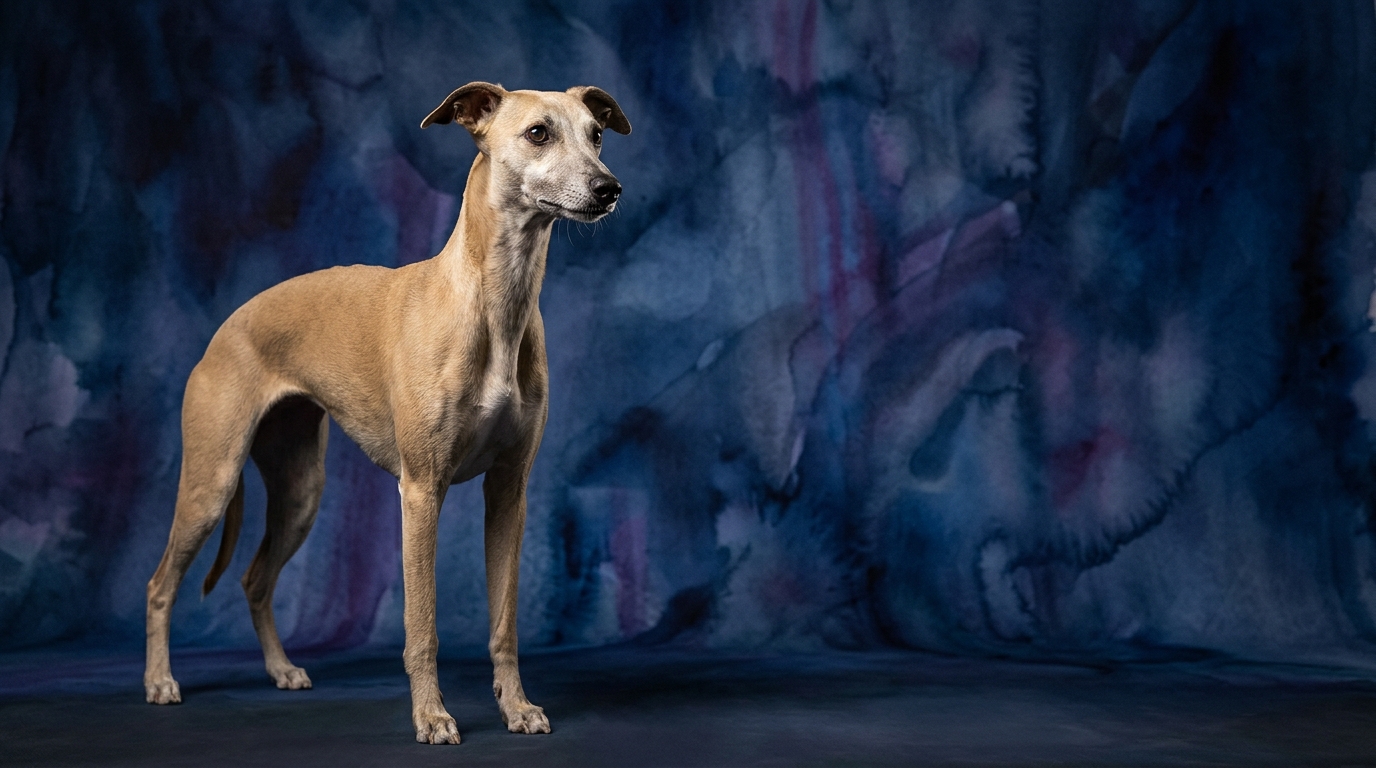
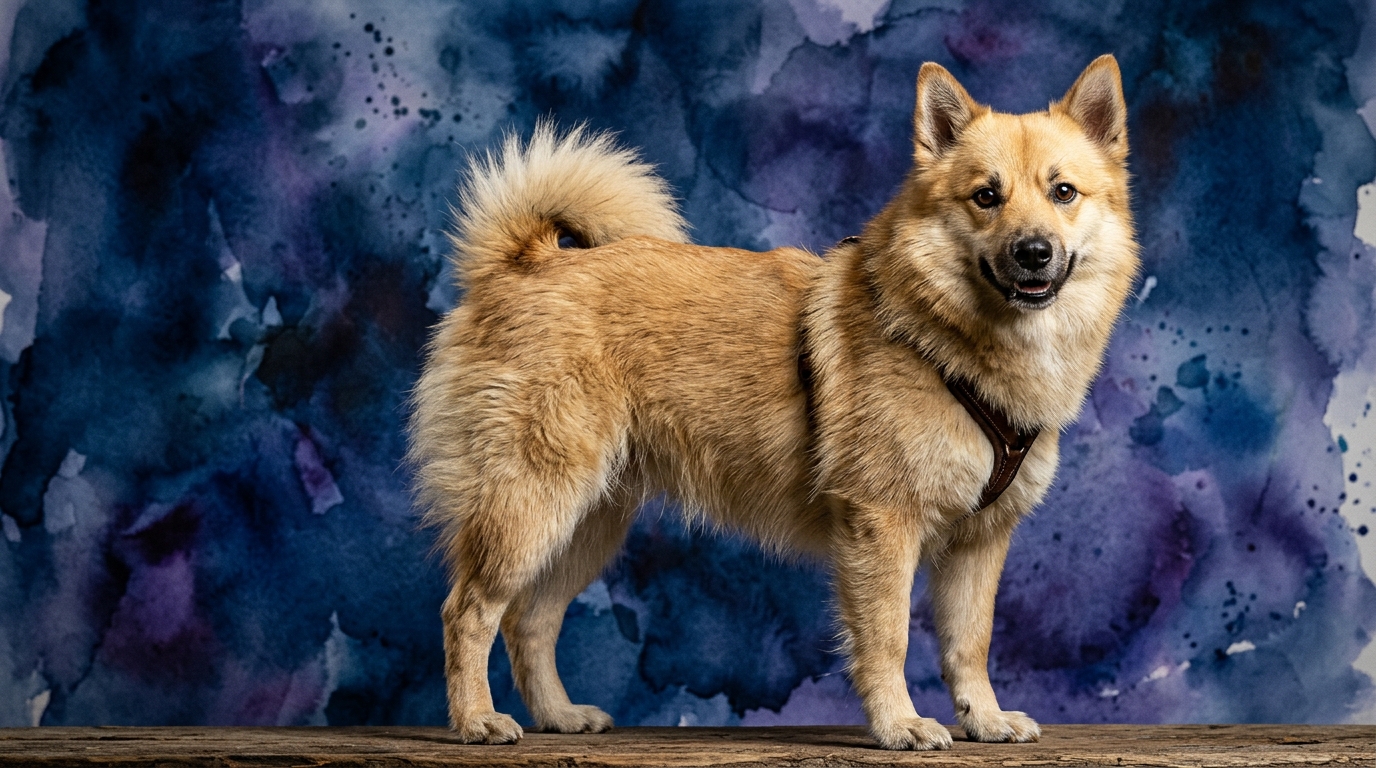
Side-by-Side Cognitive Profile: Whippet vs. Norwegian Buhund
The Cosmic Pet Pet IQ Lab employs a five-dimensional framework to assess canine intelligence, providing a nuanced view of how breeds process information and interact with their world. For the Whippet, a breed Coren-ranked at #51, and the Norwegian Buhund, which lacks a specific Coren ranking but holds a distinct cognitive profile, these dimensions illuminate their inherent strengths and challenges.
The Whippet's cognitive breakdown includes: Problem Solving (3/5), indicating an aptitude for navigating complex physical spaces, especially during pursuit, though they may show less initiative in abstract puzzle-solving without a clear, immediate reward. Their Training Speed (2/5) suggests that while capable of learning, their independent sighthound nature often requires motivation and consistent, patient reinforcement for compliance. Social Intelligence (4/5) highlights their deep attunement to human emotions and social cues within their immediate family, fostering empathetic bonds. Instinctive Drive (5/5) signifies an exceptionally strong prey drive, manifesting as an intense urge to chase anything that moves quickly. Memory (3/5) suggests they retain learned behaviors and routines, though recall can be selective when their primary instinct is engaged.
In contrast, the Norwegian Buhund presents a different cognitive landscape: Problem Solving (3/5) reflects practical skills, particularly in tasks related to herding or guarding, such as figuring out how to move livestock or alert to intruders. Their Training Speed (3/5) indicates a general eagerness to please and responsiveness to positive reinforcement, making them moderately quick learners for foundational obedience. Social Intelligence (3/5) shows they form strong bonds with their family and can read cues, but might be more reserved or watchful with strangers. Instinctive Drive (3/5) points to a well-rounded set of instincts including herding, guarding, and companionship, which are manageable and adaptable. Memory (3/5) supports good retention for commands and routines, useful for complex herding sequences or household rules.
Where the Whippet Excels Cognitively
Whippets exhibit a distinct cognitive advantage in domains demanding rapid physical execution and acute sensory processing tied to movement. Their Social Intelligence, rated 4/5, positions them as remarkably perceptive companions, adept at discerning subtle emotional shifts and non-verbal cues from their primary caregivers. This heightened social acumen allows them to forge profound, almost intuitive connections, often anticipating their owner's needs and moods without explicit instruction. This deep empathy is a hallmark of their cognitive style, making them incredibly sensitive and responsive to their human family's internal states.
Furthermore, the Whippet's Instinctive Drive, a perfect 5/5, translates into an unparalleled focus and determination when their sighthound instincts are activated. This isn't merely a brute force drive; it's a cognitive specialization in processing visual stimuli related to high-speed movement with exceptional efficiency. This allows for lightning-fast decision-making in pursuit scenarios, making them supreme athletes in activities like lure coursing, where pure, unadulterated chase is the core objective. Their problem-solving in such contexts is less about abstract thought and more about dynamic, real-time spatial reasoning and trajectory prediction.
Where the Norwegian Buhund Holds Cognitive Strengths
The Norwegian Buhund's cognitive strengths are rooted in a more balanced and adaptable intelligence, particularly evident in their versatile Instinctive Drive (3/5). Unlike the Whippet's specialized focus on chase, Buhunds possess a rich tapestry of instincts encompassing herding, guarding, and general farm dog duties. This allows them to engage effectively with a broader spectrum of tasks and environmental challenges, demonstrating a practical, multi-faceted application of their cognitive resources. Their instincts are designed for utility and cooperation rather than singular pursuit.
Their Training Speed, rated 3/5, suggests a more consistent willingness to engage in learning across various contexts. This tractability makes them generally more amenable to diverse command sets and training disciplines. Coupled with their Problem Solving (3/5), which is highly practical rather than abstract, Buhunds can devise functional solutions to real-world scenarios, such as managing livestock or alerting to unusual situations in their environment. This indicates a cognitive style geared towards practical application and responsiveness to their surroundings, supported by a Memory (3/5) that effectively retains varied and complex task sequences, essential for their historical roles as working dogs.
Training Aptitude: Whippet vs. Norwegian Buhund
When evaluating ease of training, the Norwegian Buhund generally possesses an advantage due to its higher Training Speed (3/5) and more balanced Instinctive Drive (3/5). Buhunds typically exhibit a stronger desire to collaborate and work alongside their human companions, a characteristic intrinsic to many herding breeds. They are often eager to please and respond favorably to positive reinforcement, which makes teaching foundational obedience and even more complex tasks relatively straightforward. Their practical problem-solving skills allow them to grasp the functional purpose behind commands in a tangible context.
Conversely, the Whippet, with a Training Speed of 2/5 and a dominant Instinctive Drive (5/5), can present more significant training challenges. While perfectly capable of learning, their sighthound independence means they may opt not to comply if their instincts are more compelling or if they don't perceive immediate value in a command. Their profound chase drive can readily override recall in an open environment, necessitating extensive, consistent off-leash training conducted exclusively in securely fenced areas. Therefore, the Buhund's inherent biddability and versatile drive render it a more consistently amenable student for a wider array of training disciplines, whereas the Whippet demands a trainer who understands and respects their unique motivations.
Lifestyle Match: Active Owners vs. Relaxed Owners
The ideal owner for a Whippet versus a Norwegian Buhund largely hinges on lifestyle and activity level. Whippets, despite their reputation as '45-mph couch potatoes,' are best suited for owners who can accommodate their intense, explosive bursts of speed and powerful instinctive drive. An owner who enjoys activities like lure coursing, has access to a securely fenced area for high-speed sprints, or is committed to regular leash walks supplemented with controlled off-leash runs will find a Whippet a delightful companion. Their periods of intense activity are typically followed by long stretches of serene napping, making them surprisingly adaptable for relaxed indoor living, provided their specific exercise requirements are consistently met.
In contrast, the Norwegian Buhund is better suited for active owners who thrive on engagement and purpose-driven activities. Their herding background dictates a need for regular mental and physical stimulation that extends beyond simple leash walks. Owners interested in dog sports such as agility, obedience, herding trials, or even long, challenging hikes will discover a willing and capable partner in the Buhund. A Buhund flourishes when given a 'job' or consistent training, indicating they are less ideal for owners seeking a purely relaxed, low-engagement companion who requires minimal mental investment.
The Verdict
Choose a Whippet if you appreciate a deeply empathetic, quiet companion who enjoys explosive sprints followed by long naps, and you can responsibly manage their profound chase instinct.
Choose a Norwegian Buhund if you seek an engaged, versatile, and biddable partner for an active lifestyle, willing to participate in diverse training and dog sports.
🧠 Find Your Pet's IQ Score
Our Pet IQ Lab assessment covers 25+ tests across 5 cognitive dimensions — personalized to your breed.
Take the Full IQ Test →Frequently Asked Questions
Are Whippets difficult to train due to their independence?
Whippets can present training challenges due to their sighthound independence and high prey drive, which sometimes makes them selective in their obedience. Consistent, positive reinforcement and understanding their intrinsic motivation for chase are key to successful training, especially for reliable recall in open environments.
Do Norwegian Buhunds require a lot of mental stimulation?
Yes, Norwegian Buhunds, stemming from a herding background, thrive on mental stimulation and purpose. They benefit greatly from activities like puzzle toys, training sessions, and dog sports that engage both their bodies and minds, which helps prevent boredom and potential destructive behaviors.
Which breed is better with children?
Both breeds can be good with children when properly socialized and raised in a consistent home environment. Whippets are often gentle and patient, enjoying quiet companionship. Norwegian Buhunds are typically watchful and protective, and their robust nature can make them resilient playmates, though their herding instincts might need gentle guidance.