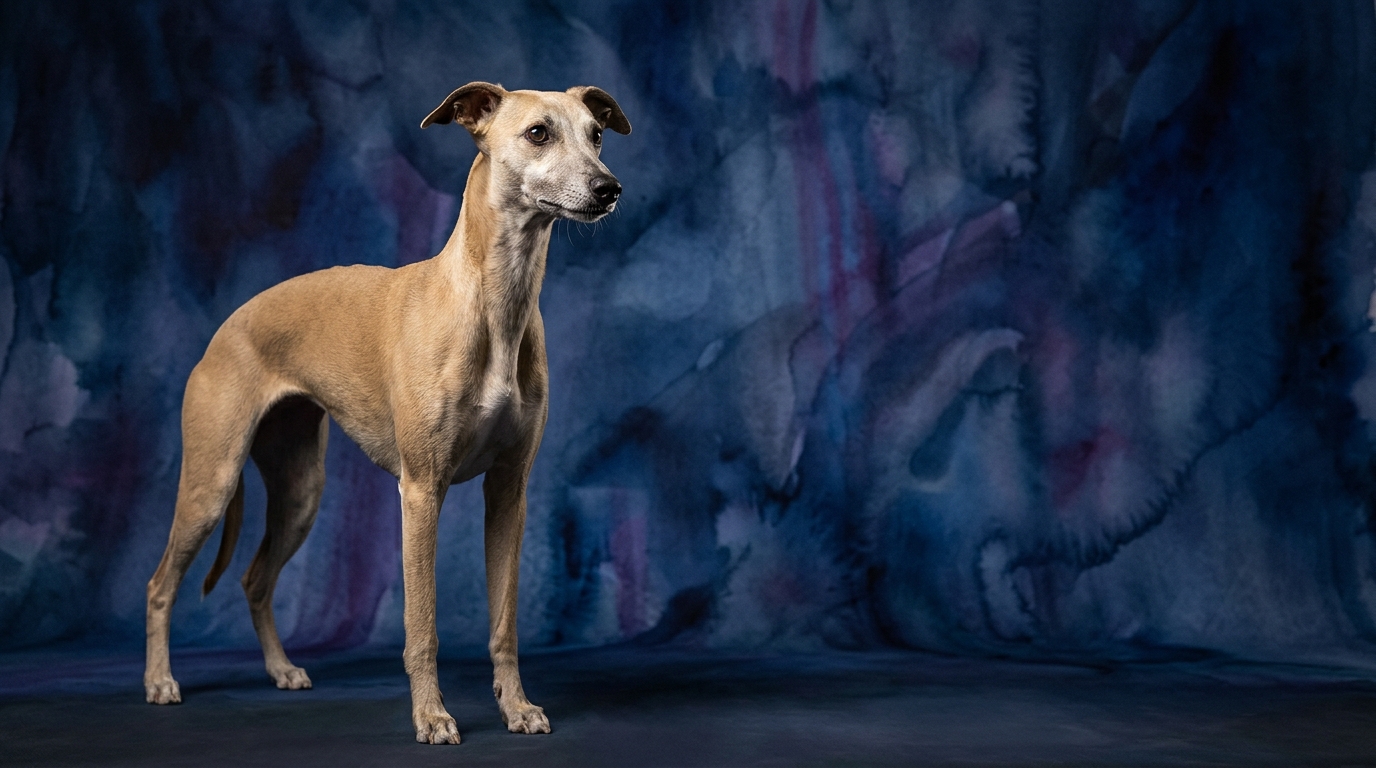
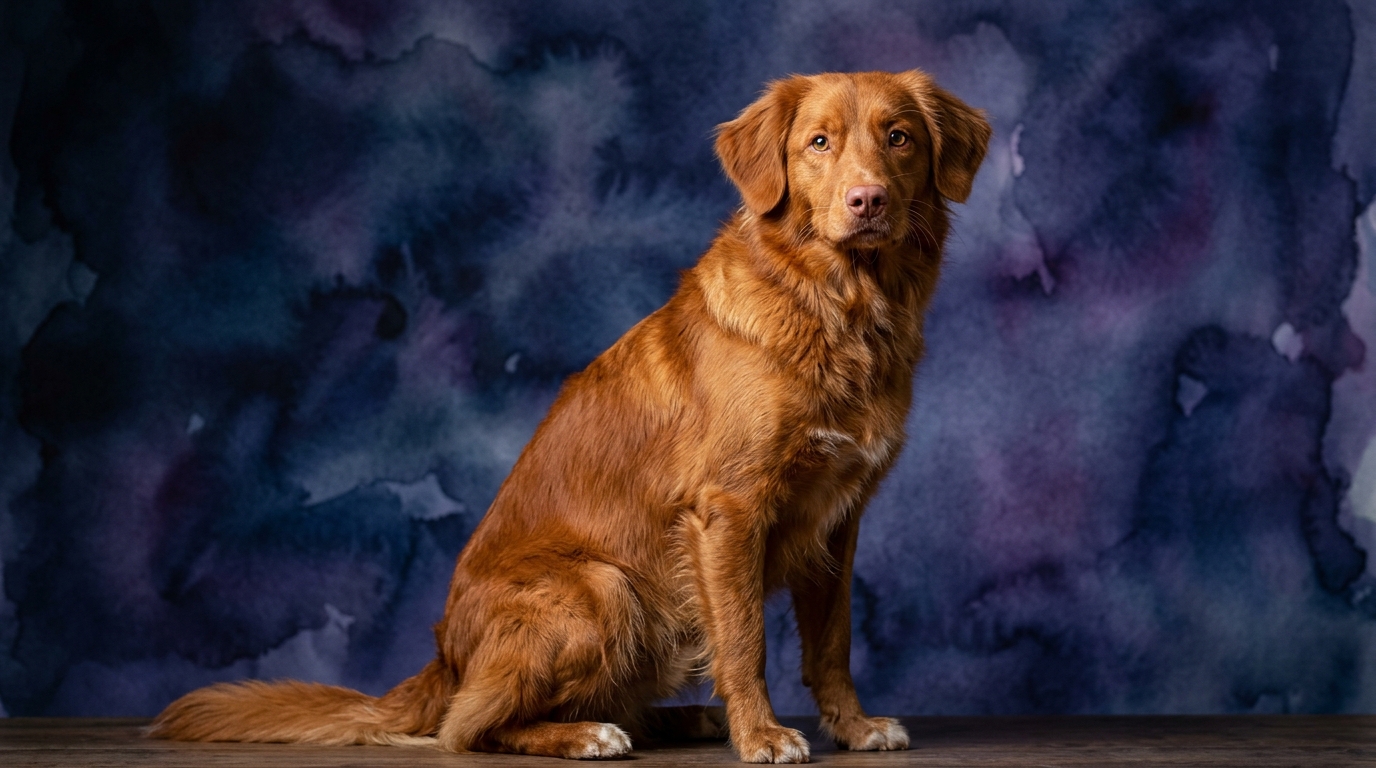
Side-by-Side IQ Profile: Whippet vs. Toller
The Whippet, a sleek member of the Hound group, exhibits a unique cognitive makeup shaped by its sighthound heritage. Its Problem Solving score of 3/5 suggests an ability to navigate moderate challenges, often relying on observation and speed rather than intricate multi-step solutions. Training Speed at 2/5 indicates a breed that can learn, but might require patience and varied approaches to maintain engagement, reflecting an independent streak.
Where the Whippet truly shines is in Social Intelligence, scoring 4/5, demonstrating a keen perception of human emotions and social cues, fostering deep bonds with its family. Its Instinctive Drive is a powerful 5/5, manifesting as an intense pursuit of moving objects and an inherent need to run. Memory, at 3/5, is solid, allowing them to recall routines and learned behaviors consistently, though perhaps not with the precision of some working breeds.
In contrast, the Nova Scotia Duck Tolling Retriever (NSDTR), a Sporting breed, presents a more balanced, albeit distinct, cognitive profile. Its Problem Solving at 3/5 mirrors the Whippet, showing competence in tackling moderate mental tasks. The Toller’s Training Speed, scoring 3/5, suggests a more readily trainable disposition than the Whippet, indicating an eagerness to learn and retain commands more quickly.
The NSDTR’s Social Intelligence sits at 3/5, meaning they are generally good at interacting with humans and other dogs, but perhaps less acutely attuned to subtle emotional shifts than a Whippet. Their Instinctive Drive is 3/5, focused on retrieving and "tolling" (luring waterfowl), a drive that is purposeful and cooperative rather than purely predatory. Memory, also at 3/5, ensures they reliably recall commands and learned tasks, essential for their working role.
Where the Whippet Wins Cognitively
The Whippet's cognitive strengths distinctly lie in its profound Social Intelligence and unparalleled Instinctive Drive. With a 4/5 in Social Intelligence, Whippets often display a nuanced understanding of their human companions' moods and intentions, frequently anticipating needs or offering comfort without explicit prompts. This heightened sensitivity can make them incredibly intuitive companions, forming exceptionally close, almost empathic, bonds.
Furthermore, the Whippet’s 5/5 Instinctive Drive is a cognitive specialization for speed and pursuit. This isn't merely physical prowess; it's a deeply ingrained mental framework for identifying, tracking, and reacting to movement with incredible focus and efficiency. While it necessitates careful management in certain environments, this drive represents a highly evolved form of predatory cognition, enabling them to make rapid, independent decisions in high-speed scenarios, showcasing a distinct type of problem-solving related to their ancestral hunting role.
Where the Nova Scotia Duck Tolling Retriever Wins Cognitively
The Nova Scotia Duck Tolling Retriever demonstrates a clear cognitive advantage in Training Speed, scoring 3/5 compared to the Whippet's 2/5. This indicates a breed that generally picks up new commands and behaviors with greater alacrity and less repetition. Their historical role as working retrievers fostered a desire to collaborate and please their handlers, making them more receptive to structured learning environments and consistent instruction.
While their individual scores in other categories like Problem Solving and Memory are on par with the Whippet, the Toller's balanced profile across these dimensions, coupled with their superior training speed, suggests a more adaptable and versatile learner for a wider range of tasks. This equilibrium in their cognitive abilities allows them to engage effectively in various dog sports, obedience, and complex task training, thriving on mental engagement that requires consistent application of learned skills.
Which is Easier to Train and Why?
Based on their cognitive profiles, the Nova Scotia Duck Tolling Retriever is generally considered easier to train than the Whippet, primarily due to its higher Training Speed score of 3/5. Tollers possess a strong innate desire to work alongside their human partners and a greater willingness to repeat actions for rewards, which accelerates the learning process for obedience and advanced commands. Their cooperative nature means they often seek to understand and comply with instructions.
Conversely, the Whippet's 2/5 Training Speed and strong independent sighthound instincts can present more challenges in traditional obedience. While capable of learning, their high Instinctive Drive (5/5) means they can be easily distracted by environmental stimuli, prioritizing a chase over a 'sit' command. Their social intelligence allows them to understand what's asked, but their independent nature often dictates whether they choose to comply, requiring more creative and patient training approaches to harness their attention and motivation.
Cognitive Alignment: Active vs. Relaxed Owners
For owners seeking a companion that aligns with a more relaxed indoor lifestyle but demands intense, focused outdoor activity, the Whippet might be a suitable cognitive match. While they are often content to nap indoors for hours, their profound Instinctive Drive (5/5) necessitates outlets for bursts of high-speed running and engaging their chase instincts in safe, enclosed spaces. Owners must be prepared to manage their powerful prey drive and provide opportunities for exhilarating physical expression, understanding that a Whippet's mental well-being is tied to satisfying this deep-seated cognitive need.
The Nova Scotia Duck Tolling Retriever, with its balanced cognitive profile and superior Training Speed, suits active owners who thrive on consistent engagement and mental stimulation. Tollers are not content to be solely decorative; their cognitive makeup requires a 'job' or regular activities like retrieving, scent work, or agility to keep their minds occupied. An NSDTR owner should be prepared for daily structured activities that challenge their problem-solving and memory, fostering their natural cooperative intelligence and preventing boredom-driven behaviors.
The Verdict: When to Choose Each Breed
The Verdict
Choose a Whippet if you appreciate a highly intuitive, emotionally connected companion that thrives on short, intense bursts of physical activity and you are prepared to manage a strong, independent chase drive.
Opt for a Nova Scotia Duck Tolling Retriever if you are an active individual seeking a highly trainable, versatile partner for dog sports, outdoor adventures, and consistent mental engagement.
🧠 Find Your Pet's IQ Score
Our Pet IQ Lab assessment covers 25+ tests across 5 cognitive dimensions — personalized to your breed.
Take the Full IQ Test →Frequently Asked Questions
Do Whippets have good memory?
Whippets possess a solid memory, scoring 3/5, allowing them to recall routines, learned commands, and familiar people and places reliably. While not exceptional, their memory is sufficient for daily life and consistent training.
Are Nova Scotia Duck Tolling Retrievers good at problem-solving?
Nova Scotia Duck Tolling Retrievers demonstrate moderate problem-solving abilities, scoring 3/5. They can navigate various mental challenges and learn to overcome obstacles, especially when tasks are linked to their natural retrieving instincts or involve cooperation with their handler.
Which breed is more sensitive to human emotions?
The Whippet, with a Social Intelligence score of 4/5, is generally more attuned to human emotions and subtle social cues than the Nova Scotia Duck Tolling Retriever (3/5). This makes Whippets exceptionally empathetic and intuitive companions, often anticipating their owner's moods.