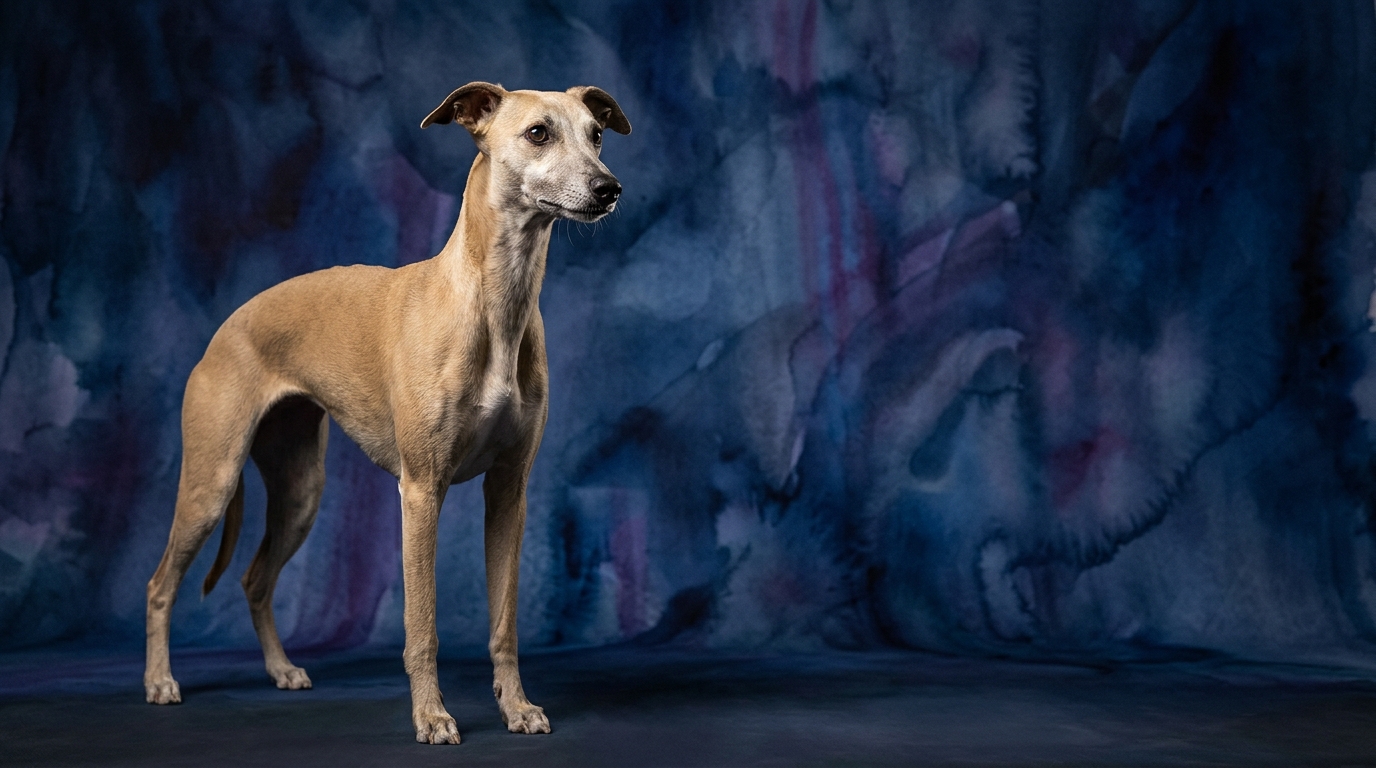
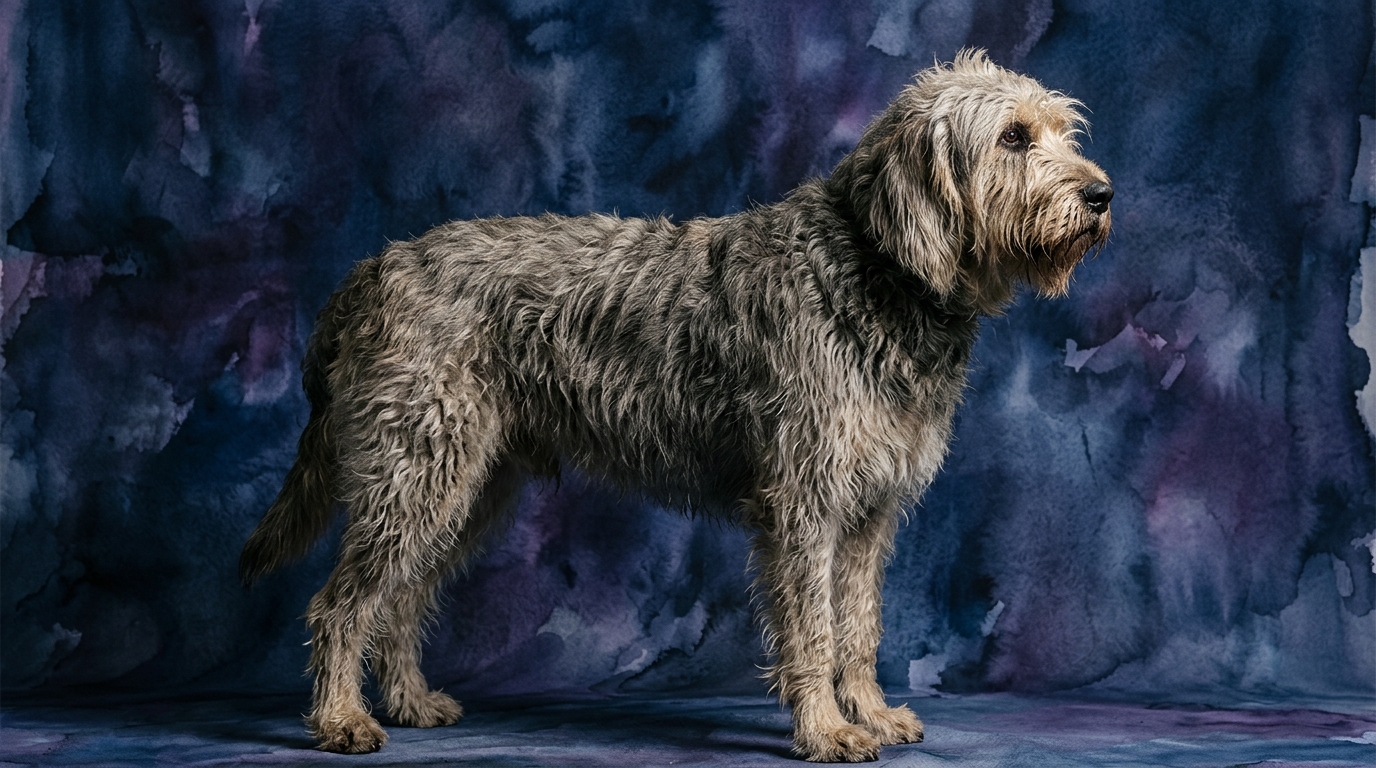
Side-by-Side IQ Profile: Whippet vs. Otterhound
The Cosmic Pet Pet IQ Lab employs a five-dimensional framework to assess canine intelligence, offering a nuanced view beyond simple obedience. For the Whippet, Coren-ranked #51, their profile is: Problem Solving 3/5, indicating an ability to navigate direct routes to goals but perhaps not multi-step complexities; Training Speed 2/5, suggesting a need for consistent, patient instruction due to their independent nature; Social Intelligence 4/5, highlighting their strong attunement to human emotions and household dynamics; Instinctive Drive 5/5, reflecting their powerful sight hound prey drive and explosive pursuit; and Memory 3/5, good for routines and familiar faces.
The Otterhound, while not Coren-ranked, presents a distinct cognitive blueprint: Problem Solving 3/5, showing a practical ability to overcome obstacles, especially scent-related ones; Training Speed 3/5, indicating a slightly more receptive attitude to learning than some hounds; Social Intelligence 3/5, signifying a friendly disposition and good family integration, though perhaps less subtle emotional sensitivity; Instinctive Drive 3/5, revealing a persistent, scent-driven focus rather than explosive speed; and Memory 3/5, capable of retaining learned behaviors and experiences reasonably well.
Where the Whippet Wins Cognitively
The Whippet's superior Social Intelligence, rated at 4/5, is a clear cognitive advantage. These dogs often demonstrate an exceptional capacity for reading human emotions and subtle social cues, frequently anticipating their owner's moods or desires without explicit commands. This sensitivity allows them to form incredibly deep, empathetic bonds, adapting their behavior to the household's emotional climate and offering quiet comfort or playful engagement as appropriate. Their ability to subtly navigate complex social interactions within a family environment showcases a refined emotional intelligence.
Furthermore, the Whippet's Instinctive Drive, scored at an impressive 5/5, represents a pinnacle of visually-driven cognitive processing. This isn't just about raw speed; it's about the lightning-fast perception of movement, rapid decision-making in pursuit, and the exquisite coordination of body and mind to execute a chase. Their ability to lock onto a moving target, calculate its trajectory, and respond with immediate, powerful action highlights a specialized form of intelligence geared towards precision and efficiency in their ancestral role as sight hounds. This acute sensory processing and motor planning sets them apart in their specific domain.
Where the Otterhound Wins Cognitively
The Otterhound edges out the Whippet in Training Speed, rated 3/5 compared to the Whippet's 2/5. While still possessing a hound's independent spirit, Otterhounds often exhibit a more robust enthusiasm for engaging in structured learning activities with their owners. Their cheerful disposition and desire to be part of the family's activities can translate into a slightly smoother and more cooperative training experience, especially when the tasks are stimulating and rewarding. They often respond well to playful, positive reinforcement methods, making them generally more amenable to picking up new commands.
While both breeds score 3/5 in general Problem Solving, the Otterhound's unique strength lies in its specialized, persistent problem-solving related to its Instinctive Drive (3/5) for scent work. Their historical role required them to methodically unravel complex scent trails over varied terrain and extended periods. This demands a specific type of cognitive endurance: the ability to focus intensely on an olfactory puzzle, filter out distractions, and systematically follow a trail until the source is found. This isn't about speed, but about sustained, analytical investigation and the robust mental fortitude required to complete a challenging, scent-driven task.
Which is Easier to Train and Why
The Otterhound generally presents a slightly easier training experience due to its 3/5 Training Speed rating, compared to the Whippet's 2/5. Otterhounds often enjoy the process of learning and working alongside their humans, particularly if it involves engaging their formidable sense of smell or provides mental stimulation. Their more robust physical build and playful nature can make them more forgiving of repetition and eager to please in a structured setting, as long as the training is varied, positive, and consistently rewarding. They often possess a joyful willingness to participate, even if their hound nature means occasional independent decisions.
Whippets, while certainly capable of learning, can be more challenging to train due to their independent streak and lower training speed. Their primary motivations often lie in their instinctual desire to chase or their comfort, rather than constant human approval. This means training requires immense patience, highly motivating rewards, and an understanding that they might 'choose' not to perform a command if a more compelling stimulus (like a squirrel) is present. Their sensitive nature also means harsh training methods are counterproductive, demanding a truly positive reinforcement approach that builds trust and makes learning intrinsically rewarding.
Which Suits Active Owners vs. Relaxed Owners
For active owners, both breeds require exercise, but their activity styles differ significantly. The Whippet, with its explosive 5/5 instinctive drive, thrives with owners who can provide opportunities for intense, short bursts of speed in a secure area, such as lure coursing, fetch, or zoomies in a large, fenced yard. They need to run, and run hard, but are perfectly content to transition to being quiet, relaxed companions indoors, often preferring a soft couch. An active owner for a Whippet understands the critical need for safe, off-leash running and provides mental stimulation to prevent boredom.
The Otterhound, while needing regular exercise, might appeal more to owners who prefer steady, purposeful activity rather than high-speed sprints. Their 3/5 instinctive drive translates to a love for long, meandering walks where they can follow fascinating scent trails, or engaging in scent work games. Their more moderate energy levels indoors, combined with their affectionate nature, can make them suitable for owners who enjoy a calmer, yet still engaged, companion. These owners appreciate a dog that thrives on consistent companionship, routine exploration, and a good sniffari.
The Verdict
Opt for a Whippet if you value an acutely socially intelligent, sensitive companion who thrives on intense bursts of speed and will elegantly share your couch after a good run.
Select an Otterhound if you seek a cheerful, persistent, scent-driven companion who enjoys methodical exploration and a slightly more robust, yet still affectionate, presence.
🧠 Find Your Pet's IQ Score
Our Pet IQ Lab assessment covers 25+ tests across 5 cognitive dimensions — personalized to your breed.
Take the Full IQ Test →Frequently Asked Questions
Do Whippets and Otterhounds have similar memory capabilities?
Both breeds are rated 3/5 for memory, suggesting they have comparable abilities to recall routines, people, and learned commands. Consistent positive reinforcement will help solidify their learning and recall over time for both, making repetition beneficial.
How does the Coren rank apply to these breeds?
The Whippet is Coren-ranked at #51, indicating a solid capacity for obedience and working intelligence. The Otterhound is not Coren-ranked, which doesn't diminish their cognitive capabilities but rather suggests their specific type of intelligence might not align as directly with Coren's primary metrics of obedience and adaptive learning from human cues.
Which breed is more prone to independent thinking?
Both breeds, being hounds, exhibit independent thinking, but the Whippet's lower training speed (2/5) often means their independent streak is more pronounced in training contexts, where they might prioritize their own desires. Otterhounds (3/5 training speed) can also be independent, especially when following a captivating scent, but may show a slightly greater willingness to engage in cooperative tasks with their owners.