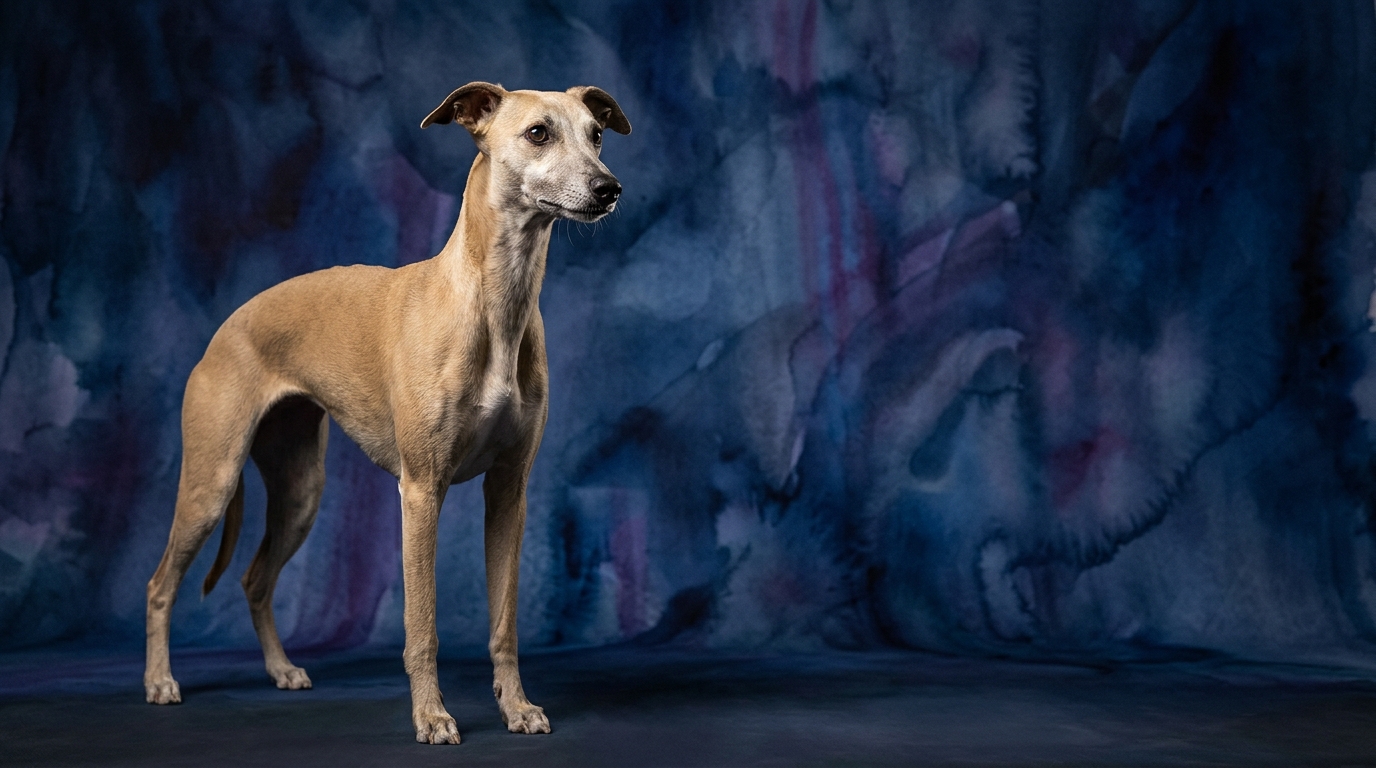
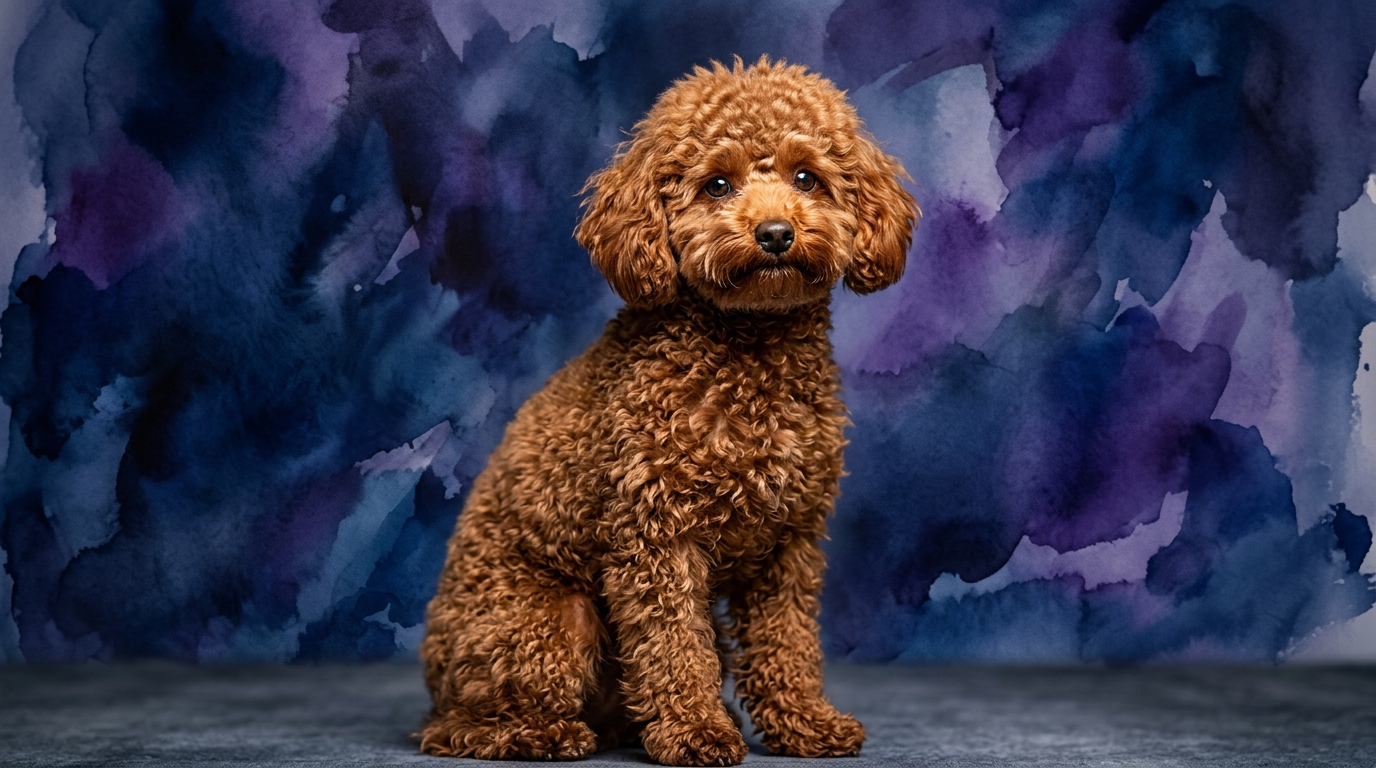
Side-by-Side IQ Profile: Whippet vs. Toy Poodle
**Whippet (Hound, Coren Rank #51)**: Whippets approach novel situations with a practical, often direct strategy, leveraging their physical capabilities rather than intricate planning, earning a Problem Solving score of 3/5. Their Training Speed is 2/5; they learn commands at a moderate pace, often requiring consistent, patient repetition and motivation due to their independent nature. With a Social Intelligence of 4/5, these dogs are adept at reading human emotions and intentions, forming strong, empathetic bonds with their family members and responding well to nuanced social cues. Their sighthound heritage manifests in a powerful chase drive, giving them an Instinctive Drive of 5/5, making them highly responsive to movement and possessing an innate ability to pursue. Whippets retain learned behaviors and social interactions adequately, but might require refreshers for less frequently practiced commands or situations, hence a Memory score of 3/5.
**Toy Poodle (Toy, Coren Rank #2)**: Toy Poodles excel at analyzing complex situations, often demonstrating creative solutions to obstacles and puzzles, reflected in their Problem Solving score of 5/5. Their capacity for rapid learning means they pick up new commands and routines with remarkable speed, often after just a few repetitions, leading to a Training Speed of 5/5. While affectionate, Toy Poodles tend to be more focused on their immediate human companions, sometimes showing less nuance in interpreting broader social dynamics with strangers or other animals, resulting in a Social Intelligence of 3/5. Though they retain some retrieving instincts from their larger ancestors, this drive is less pronounced in the Toy Poodle, manifesting more as playfulness than a strong working urge, giving them an Instinctive Drive of 3/5. These small dogs possess exceptional recall for commands, routines, and experiences, making them highly reliable once a behavior is established, hence their Memory score of 5/5.
Where the Whippet Wins Cognitively
The Whippet's cognitive strengths primarily lie in their advanced social intelligence and potent instinctive drive. With a social intelligence score of 4/5, Whippets possess a refined ability to perceive and interpret human emotions, often responding with genuine empathy and understanding. This makes them incredibly attuned companions, capable of sensing a shift in mood and offering comfort without explicit instruction. Their instinctive drive, rated at a perfect 5/5, represents a cognitive triumph in a different domain: the mastery of their primal sighthound abilities. This isn't merely physical speed; it's a finely tuned perceptual system that processes movement with extraordinary efficiency, allowing for rapid decision-making in pursuit scenarios. While less about abstract thought, this specialized intelligence makes them exceptional at tasks requiring quick, instinctual responses to visual stimuli, a form of active, real-time problem-solving unique to their heritage. This keen awareness of their surroundings and their human's emotional state often means they anticipate needs or reactions before they are overtly expressed, a subtle yet powerful cognitive advantage in a home environment.
Where the Toy Poodle Wins Cognitively
The Toy Poodle shines brightest in the realms of problem-solving, training speed, and memory. Their problem-solving score of 5/5 indicates a remarkable capacity for analytical thought, allowing them to decipher complex puzzles, learn intricate sequences of actions, and even manipulate their environment to achieve desired outcomes. This isn't just about repetition; it's about understanding the underlying mechanics of a challenge. Complementing this is their training speed, also rated 5/5. Toy Poodles grasp new commands and concepts with astonishing rapidity, often requiring only a handful of repetitions to solidify a behavior. This quick uptake is a direct result of their strong memory (5/5), which ensures that learned information is retained reliably over long periods. Owners frequently report their Toy Poodles remembering commands or tricks years after they were last practiced. This combination of superior analytical ability, rapid learning, and robust memory makes the Toy Poodle an exceptionally versatile learner, capable of mastering a vast repertoire of skills and adapting quickly to new routines or environments. Their capacity for intricate learning extends to understanding human language cues beyond simple commands, often appearing to grasp the context of conversations.
Which is Easier to Train and Why
Without a doubt, the Toy Poodle is generally easier to train, primarily due to their superior scores in training speed, problem-solving, and memory. Their 5/5 training speed means they pick up new commands almost instantly, reducing the frustration for both dog and owner. They don't just memorize actions; their 5/5 problem-solving ability allows them to understand the 'why' behind a command, making them more adaptable when faced with variations. For instance, if taught to 'sit' in the living room, a Toy Poodle will readily generalize this to 'sit' in the park, demonstrating a deeper cognitive grasp. Their 5/5 memory ensures that once a behavior is learned, it sticks, requiring minimal refreshers. In contrast, the Whippet, with a training speed of 2/5 and memory of 3/5, requires more patience and consistency. While they are willing to please their humans (thanks to good social intelligence), their independent sighthound nature means they might choose to comply only when sufficiently motivated or if they see a clear benefit. A Whippet might perform a 'stay' perfectly indoors but become 'deaf' to the command outdoors if a squirrel catches their eye, highlighting their strong instinctive drive overriding learned behaviors. Successful Whippet training often involves tapping into their social bond and making training feel like a collaborative game, rather than relying on rote memorization.
Which Suits Active Owners vs. Relaxed Owners
Determining suitability for active versus relaxed owners depends less on their raw energy levels and more on their cognitive engagement needs. The Whippet, despite its reputation for bursts of speed, is ultimately well-suited for owners who appreciate a balance of activity and calm. They thrive with active owners who can provide opportunities for safe, off-leash running in a secure area, satisfying their 5/5 instinctive chase drive. However, indoors, they transition quickly into a relaxed, affectionate couch potato, making them surprisingly compatible with relaxed owners who enjoy quiet companionship but can commit to daily sprints. Their social intelligence (4/5) means they are content to simply be near their human. The Toy Poodle, while physically less demanding in terms of running, requires significant mental engagement. Owners who enjoy teaching tricks, participating in dog sports like agility or obedience, or providing puzzle toys will find the Toy Poodle's 5/5 problem-solving and memory capabilities immensely rewarding. A relaxed owner who only offers minimal mental stimulation might find a Toy Poodle developing undesirable behaviors born from boredom. Therefore, active owners seeking a dog for mental challenges will prefer the Poodle, while those who prioritize physical bursts followed by extensive relaxation, and value deep social connection, might lean towards the Whippet.
The Verdict
Choose a Whippet if you value a deeply empathetic companion who is highly attuned to your emotions, and you can provide outlets for their powerful instinctive drive through safe, exhilarating sprints.
Choose a Toy Poodle if you seek a highly trainable, quick-witted partner eager to learn complex commands and excel in mental challenges, making them ideal for dog sports or intricate trick training.
🧠 Find Your Pet's IQ Score
Our Pet IQ Lab assessment covers 25+ tests across 5 cognitive dimensions — personalized to your breed.
Take the Full IQ Test →Frequently Asked Questions
Is a Whippet difficult to train?
Whippets are not inherently difficult, but their training requires patience and understanding of their independent sighthound nature and moderate training speed. Positive reinforcement and making training feel like a game are key to engaging their social intelligence and overcoming their strong chase drive outdoors.
Do Toy Poodles need a lot of mental exercise?
Yes, Toy Poodles absolutely thrive on mental exercise due to their exceptional problem-solving and memory skills. Without sufficient mental stimulation through training, puzzles, or interactive play, they can become bored and potentially develop destructive behaviors, despite their smaller physical exercise needs.
Which breed is better with children?
Both breeds can be good with children, but their suitability varies. Whippets, with their higher social intelligence, are often gentle and patient, though their sensitive nature means rowdy play might overwhelm them. Toy Poodles, while sturdy and playful, might be less tolerant of rough handling and can be prone to nipping if not properly socialized and supervised, making calm, respectful interactions ideal for both.