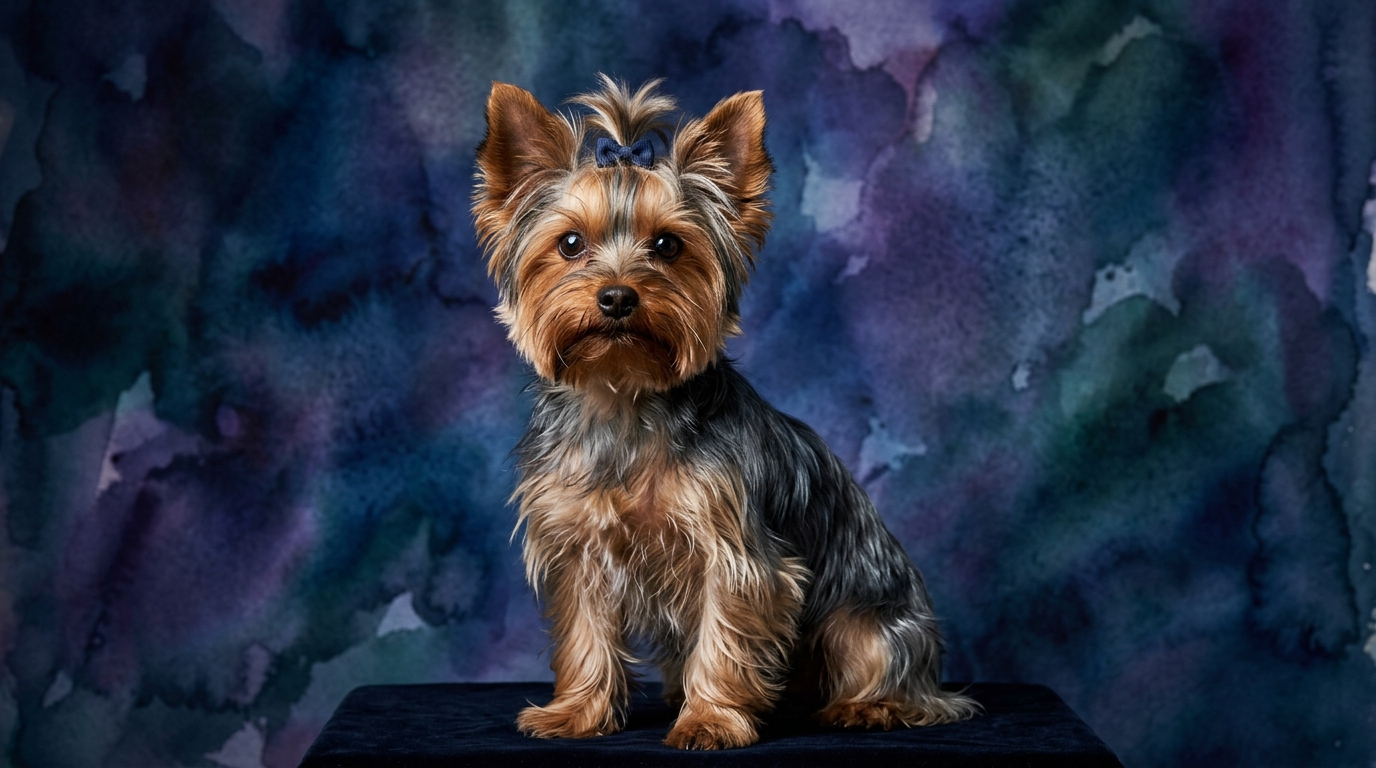
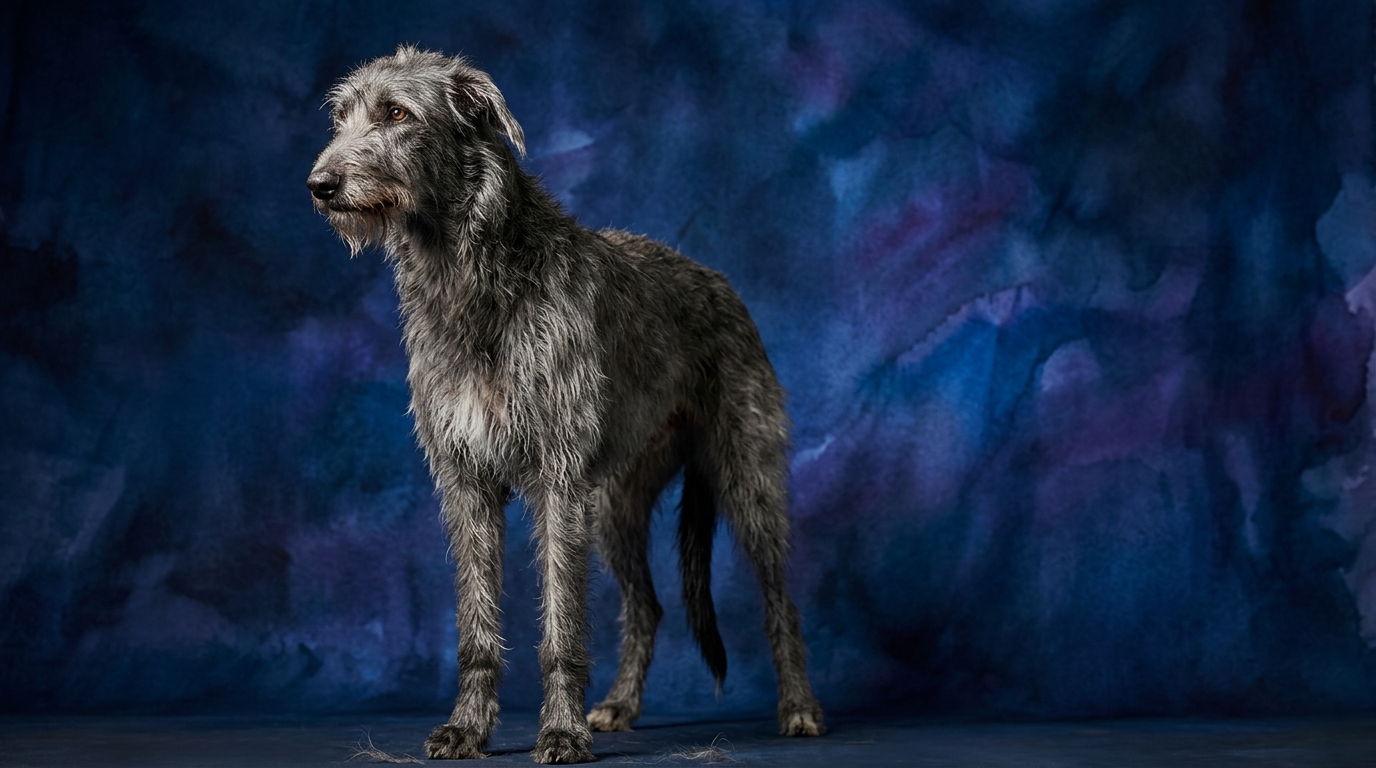
Side-by-Side IQ Profile: Yorkshire Terrier vs. Scottish Deerhound
The Cosmic Pet IQ Lab evaluates five key cognitive dimensions, offering a nuanced view of each breed's mental landscape.
Yorkshire Terrier IQ Profile (Coren Rank #27):
Problem Solving (3/5): Yorkies demonstrate practical intelligence in navigating their immediate environment, often figuring out how to access desired items or attention. Their solutions are typically direct and driven by immediate gratification.
Training Speed (4/5): These spirited terriers are quick to grasp new commands and routines, often thriving on the mental engagement of learning. Their eagerness to participate makes them responsive students.
Social Intelligence (4/5): Yorkies are adept at reading human emotions and social cues, using this understanding to form strong bonds and even cleverly influence their human companions. They are highly attuned to household dynamics.
Instinctive Drive (4/5): Their terrier heritage imbues them with a pronounced prey drive for small, scurrying creatures, coupled with a confident, territorial instinct that makes them vigilant guardians of their space.
Memory (4/5): Yorkshire Terriers exhibit strong recall for learned commands, established routines, and the outcomes of past interactions, whether positive or negative. This aids in consistent behavior modification.
Scottish Deerhound IQ Profile (Not Coren-ranked):
Problem Solving (3/5): Scottish Deerhounds approach problems with a blend of observation and efficiency. Their solutions often involve finding the path of least resistance or utilizing their physical attributes rather than intricate manipulation.
Training Speed (3/5): These sighthounds learn at a moderate pace, requiring consistent, patient, and engaging training methods. They can be easily distracted by compelling outdoor stimuli, demanding focused attention from their trainer.
Social Intelligence (3/5): Deerhounds possess a gentle, polite social demeanor but are generally less overtly expressive or manipulative than some breeds. They form deep, quiet bonds, often observing rather than constantly seeking interaction.
Instinctive Drive (3/5): Their core drive centers on the pursuit of moving objects over vast distances, a classic sighthound trait. This drive is typically expressed as a chase rather than a persistent, close-quarters hunt, and they are generally less territorial than terriers.
Memory (3/5): Deerhounds retain basic commands and established routines reliably. However, their memory might be less focused on intricate social nuances or complex, multi-step sequences compared to breeds with higher social or training scores.
Where the Yorkshire Terrier Wins Cognitively
The Yorkshire Terrier demonstrates clear cognitive advantages in several areas. Their Training Speed of 4/5, compared to the Deerhound's 3/5, means they typically absorb new commands and behaviors more rapidly, often enjoying the process of learning and performing. This makes them highly responsive to consistent, positive reinforcement training, quickly building a repertoire of tricks and obedience skills.
Furthermore, their superior Social Intelligence (4/5 vs. 3/5) allows Yorkies to excel at understanding and navigating complex human-dog interactions. They are masters at reading their owners' moods and intentions, often using this insight to solicit attention or treats. This deep social awareness fosters an incredibly interactive and responsive companionship, making them highly attuned to their family's needs and emotional states.
The Yorkie's Memory (4/5 vs. 3/5) further supports their training and social acumen. They vividly recall past lessons, preferred routines, and the consequences of their actions, enabling them to maintain consistent behavior over time. This strong memory, combined with a robust Instinctive Drive (4/5), means they can be incredibly persistent in achieving their small-scale goals, whether it’s retrieving a favorite toy or alerting to perceived threats.
Where the Scottish Deerhound Wins Cognitively
While their raw scores might seem lower in some dimensions, the Scottish Deerhound exhibits distinct cognitive strengths particularly suited to their heritage and lifestyle. Their Problem Solving score of 3/5, matching the Yorkie's, manifests differently; Deerhounds excel at spatial reasoning over open terrain, efficiently evaluating distances and trajectories during a chase. Their solutions are often about graceful efficiency and observation rather than direct, persistent engagement with small obstacles.
The nature of the Deerhound's Instinctive Drive (3/5) is also a unique cognitive asset. Unlike the terrier's intense, close-quarters hunting drive, the Deerhound's instinct is for the long, sweeping pursuit of large game. This translates to a remarkable ability to focus on a distant moving target and execute a sustained, high-speed chase, requiring a specific blend of visual processing and physical coordination that is a cognitive marvel in itself. This focused, less "busy" drive can be a cognitive advantage for owners who prefer a dog less prone to constant, small-scale territorial alerts or digging behaviors.
Moreover, their moderate Social Intelligence (3/5) often translates to a calm, dignified presence. They are less prone to demanding constant attention or exhibiting complex manipulative behaviors, which can be a cognitive 'win' for owners seeking a more independent and serene companion. This allows them to observe their environment with a quiet thoughtfulness, offering a different form of companionship that values peaceful coexistence over constant interaction.
Which is Easier to Train and Why?
Based on their IQ profiles, the Yorkshire Terrier is generally considered easier to train for typical household commands and tricks. Their Training Speed of 4/5 means they pick up new concepts quickly, and their high Social Intelligence (4/5) makes them eager to please and responsive to their owner's cues. Yorkies often view training as an engaging game, thriving on positive reinforcement and interactive learning sessions, and their excellent Memory (4/5) ensures lessons stick.
The Scottish Deerhound, with a Training Speed of 3/5 and Social Intelligence of 3/5, requires a different approach. While capable learners, they may not possess the same inherent eagerness to perform for social reward. Their sighthound instincts mean they can be easily distracted by movement or scents, especially outdoors, making consistent focus a challenge. Training a Deerhound demands patience, short and engaging sessions, and a deep understanding of their independent nature. Repetition might be more necessary to solidify commands due to their moderate memory score, ensuring long-term retention.
Which Suits Active Owners vs. Relaxed Owners?
The choice between these breeds significantly depends on an owner's lifestyle. For active owners, both breeds offer different forms of engagement. A Yorkshire Terrier suits owners who enjoy interactive play, agility, and consistent mental stimulation in various settings. They thrive on activities that challenge their quick wit and social acumen, even if their physical exercise is in shorter bursts. Their adaptable nature means they can accompany owners on many adventures, albeit often from a carrier or stroller.
Scottish Deerhounds, conversely, are ideal for active owners who can provide ample opportunity for sustained, high-speed running in a safe, expansive, and securely fenced area. Their activity is less about constant mental puzzles and more about fulfilling their innate drive for the chase. After their exercise needs are met, they transition into remarkably relaxed, dignified house companions, often described as 'couch potatoes.'
For relaxed owners, the Scottish Deerhound often proves to be a surprisingly good fit indoors, provided their exercise requirements are met. Their moderate social intelligence means they are less demanding of constant interaction and are content to observe quietly. A Yorkie, while small, might be less suitable for a truly 'relaxed' owner. Their high social intelligence and instinctive drive mean they often demand attention, require consistent mental engagement to prevent boredom-driven behaviors, and are vocal guardians of their home, making them a more 'present' companion.
The Verdict
Choose the Yorkshire Terrier if you desire a highly interactive, mentally agile companion eager to learn and engage, thriving on consistent social interaction and varied, moderate activity.
Opt for the Scottish Deerhound if you can provide ample space for their physical exertion in a contained environment, appreciating a calm, dignified, and somewhat independent companion indoors.
🧠 Find Your Pet's IQ Score
Our Pet IQ Lab assessment covers 25+ tests across 5 cognitive dimensions — personalized to your breed.
Take the Full IQ Test →Frequently Asked Questions
Are Yorkshire Terriers prone to being 'yappy' due to their intelligence?
Their high social intelligence and strong instinctive drive often translate into alert barking as a form of communication or territorial defense. Consistent training can help manage this, but it's a natural expression of their cognitive makeup.
Do Scottish Deerhounds get bored easily without constant mental puzzles?
While they benefit from enrichment, their mental needs lean more towards observation, spatial awareness, and fulfilling their chase instinct. They are generally content with a good run followed by calm relaxation, rather than requiring complex, continuous puzzle-solving.
How do their memory scores influence their ability to adapt to new environments?
A Yorkie's superior memory helps them quickly learn and adapt to new routines and spaces, recalling what's safe or forbidden. A Deerhound's moderate memory means they will also adapt, but might require more consistent guidance and patience to solidify new expectations in unfamiliar surroundings.