Side-by-Side Cognitive Profiles: Malamute vs. Elkhound
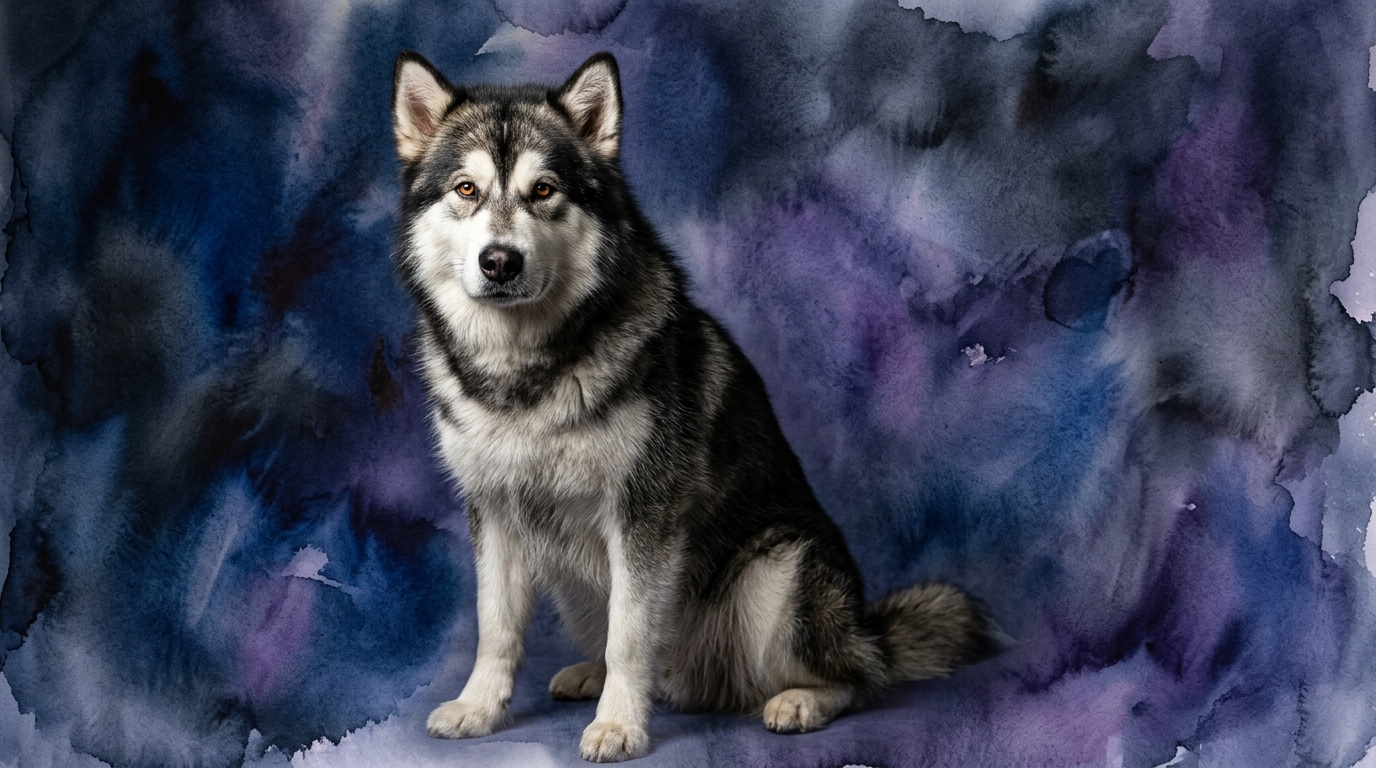
To understand the unique mental fabric of these breeds, The Cosmic Pet Pet IQ Lab breaks down their cognitive abilities across five key dimensions. The Alaskan Malamute, a powerful working dog, registers a Coren rank of #50, indicating a particular style of learning and responsiveness. Its problem-solving capacity is rated at 4/5, suggesting a strong ability to navigate complex situations independently. However, its training speed sits at 2/5, implying that while capable, it requires significant patience and specific methods to absorb new commands. Social intelligence for the Malamute is 3/5, demonstrating a moderate attunement to human cues, but its instinctive drive is an impressive 5/5, reflecting deeply ingrained natural behaviors for its original purpose. Memory for the Malamute is also robust at 4/5, allowing it to retain past experiences and spatial knowledge effectively.
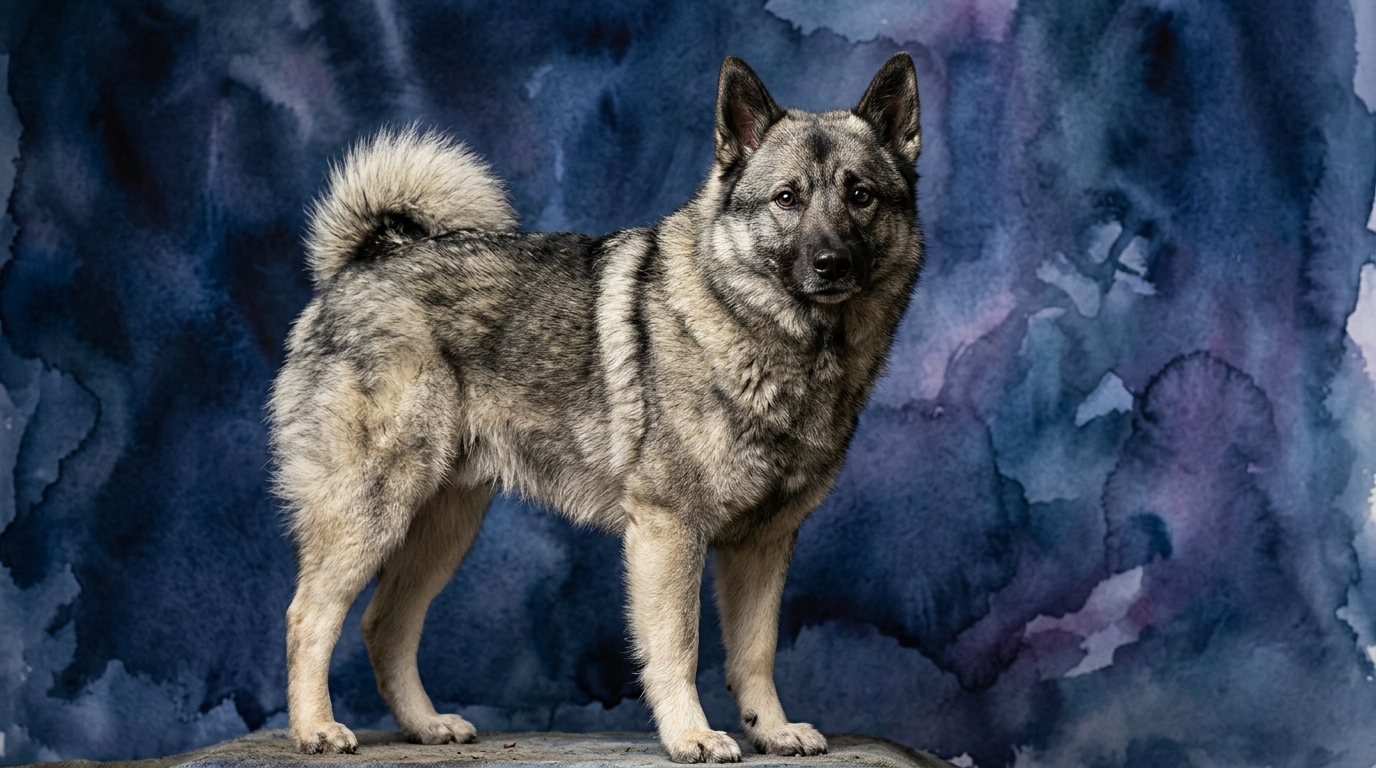
In contrast, the Norwegian Elkhound, a resilient hound breed, holds a Coren rank of #36, suggesting a quicker grasp of new instructions compared to the Malamute. Its problem-solving ability matches the Malamute at 4/5, highlighting its aptitude for figuring out challenges. Where it diverges significantly is in training speed, scoring 4/5, which indicates a much faster uptake of commands and routines. The Elkhound's social intelligence is also 3/5, similar to the Malamute, showing a comparable level of responsiveness to human interaction. Its instinctive drive is rated 3/5, present but perhaps less overwhelming than the Malamute's, primarily focused on hunting and tracking. Like the Malamute, the Elkhound possesses a strong memory at 4/5, essential for its historical role in tracking game over long distances.
Where the Alaskan Malamute's Cognition Excels
The Alaskan Malamute's cognitive strengths are deeply rooted in its heritage as a heavy-duty freight hauler and survivor in harsh environments. Its outstanding instinctive drive, rated at 5/5, is a primary cognitive asset. This isn't just about physical stamina; it represents an unparalleled mental fortitude and motivation for sustained, purposeful activity. A Malamute possesses an inherent, almost unstoppable desire to pull, to work, and to navigate challenging terrains, often requiring it to make independent decisions based on environmental cues rather than constant human direction. This drive, coupled with its 4/5 problem-solving ability, means a Malamute can efficiently strategize and execute solutions to physical obstacles, such as finding the optimal path through deep snow or figuring out how to bypass an unexpected barrier on a trail. Their strong memory (4/5) further supports this, allowing them to recall successful strategies and navigate familiar routes with precision.
This breed's problem-solving acumen is often expressed in its capacity for self-sufficiency. For example, a Malamute might independently assess a situation and determine the most energy-efficient way to achieve a goal, whether it's finding a cooler spot to rest or figuring out how to access a desired object. This independence, while sometimes perceived as stubbornness in a domestic setting, is a testament to their cognitive resilience and ability to think on their paws. Their strength lies in their ability to engage deeply with a task that aligns with their intrinsic motivations, demonstrating a focused, determined intelligence that, once engaged, is formidable.
Where the Norwegian Elkhound's Cognition Shines
The Norwegian Elkhound's cognitive advantages are distinctly shaped by its role as a keen hunting and tracking companion. Its superior training speed, at 4/5, is a clear cognitive win. This indicates a greater aptitude for quickly understanding and responding to new commands, making it generally more receptive to structured learning and sequential tasks. This responsiveness is critical for a hunting dog that needs to work closely with a handler, interpreting subtle cues and adapting to changing situations in the field. Their Coren rank of #36 further underscores this capacity for quicker comprehension and compliance with human instruction, compared to the Malamute's more independent learning style.
While their instinctive drive is 3/5, lower than the Malamute's, it is specifically honed for sustained focus on scent work and tracking. This translates into a remarkable cognitive ability for selective attention and perseverance in following complex scent trails, requiring significant mental endurance and a strong memory (4/5) to recall the path and potential distractions. An Elkhound's problem-solving (4/5) is often applied to navigating varied terrain while maintaining focus on a scent, making nuanced decisions about the freshest trail. They exhibit a watchful, alert intelligence, constantly scanning their environment and processing information, which makes them highly effective in roles requiring vigilance and precise application of their senses.
Training Dynamics: Which is Easier and Why?
When it comes to ease of training, the Norwegian Elkhound generally presents a more straightforward experience for most owners. Its training speed of 4/5 directly translates to a quicker grasp of commands and a greater eagerness to please, which simplifies the learning process. The Elkhound's historical role alongside hunters required it to be responsive and cooperative, developing a cognitive framework that favors working in partnership. This means they are often more amenable to positive reinforcement techniques and respond well to consistency, making them suitable for various dog sports and advanced obedience.
The Alaskan Malamute, with its training speed of 2/5, often presents a greater challenge. Their strong instinctive drive (5/5) means they possess a deep-seated desire to act on their own terms, prioritizing their innate motivations like pulling, exploring, or digging over immediate handler commands. This independence, while valuable for survival, can be perceived as stubbornness in a training context. Malamutes require immense patience, creativity, and a consistent, firm yet fair approach to training. Their problem-solving abilities (4/5) can sometimes be turned towards figuring out how to get their own way, necessitating a trainer who can anticipate and redirect these behaviors effectively. Early socialization and consistent, engaging training that channels their immense drive are crucial to fostering a cooperative relationship with a Malamute.
Suitability for Active vs. Relaxed Owners
Neither the Alaskan Malamute nor the Norwegian Elkhound are suitable for truly relaxed owners; both breeds possess significant physical and mental needs that demand an active lifestyle. However, the *type* and *intensity* of activity they require differ. The Alaskan Malamute, with its 5/5 instinctive drive and immense endurance, is best suited for owners who are not just active, but deeply committed to high-intensity, structured activities. This breed thrives on purposeful work like sledding, skijoring, backpacking, or extended, challenging hikes. Their cognitive engagement is often tied to physical output, and an owner must be prepared to provide outlets for their powerful desire to move and work. Without sufficient mental and physical stimulation, a Malamute's problem-solving skills might be directed towards destructive behaviors or escape attempts, reflecting their need for cognitive engagement.
The Norwegian Elkhound also requires an active owner, but perhaps one whose definition of 'active' aligns with consistent, vigorous exercise rather than extreme endurance sports. Their 3/5 instinctive drive, focused on hunting and tracking, means they excel in activities like long hikes, scent work, agility, or competitive obedience. They enjoy being outdoors and exploring, and their quicker training speed (4/5) makes them good candidates for various dog sports that challenge both their bodies and minds. While they need regular stimulation, the sheer volume and raw power required by a Malamute are generally not necessary for an Elkhound. An owner who enjoys daily rigorous walks, puzzle toys, and training sessions will find the Elkhound a rewarding companion, whereas a Malamute requires an owner prepared for an almost athletic partnership.
The Verdict: When to Choose Each Breed
The Verdict
Choose an Alaskan Malamute if you are an experienced, highly active owner seeking a powerful, independent working companion for high-endurance activities like sledding or backpacking, and are prepared for patient, consistent training to channel their immense drive. This breed suits those who appreciate a dog that thinks for itself and thrives on purposeful physical work.
Choose a Norwegian Elkhound if you are an active owner who values a responsive, alert, and trainable companion for activities like hiking, scent work, or agility, and appreciate a quicker training uptake. This breed is ideal for someone seeking a keen, watchful dog that enjoys a strong partnership in outdoor pursuits and mental challenges.
🧠 Find Your Pet's IQ Score
Our Pet IQ Lab assessment covers 25+ tests across 5 cognitive dimensions — personalized to your breed.
Take the Full IQ Test →Frequently Asked Questions
Is an Alaskan Malamute difficult to train?
With a training speed of 2/5, Alaskan Malamutes are considered more challenging to train due to their independent nature and strong instinctive drives. They require immense patience, consistency, and engaging methods to overcome their self-directed tendencies and develop cooperative behaviors effectively.
Which breed is better for scent work, Malamute or Elkhound?
The Norwegian Elkhound is generally better suited for scent work, given its historical role as a hunting hound and an instinctive drive tailored for tracking (3/5). While Malamutes have good memory, their primary drives are for endurance and pulling, not focused scent discrimination, making the Elkhound's cognitive profile more aligned with such tasks.
Do Alaskan Malamutes and Norwegian Elkhounds get along with other dogs?
Both breeds can coexist with other dogs, but early socialization is crucial. Alaskan Malamutes can exhibit strong prey drives and sometimes resource guarding, while Norwegian Elkhounds, being hounds, may have a strong chase instinct. Individual temperament and proper introduction play a significant role in their ability to get along.