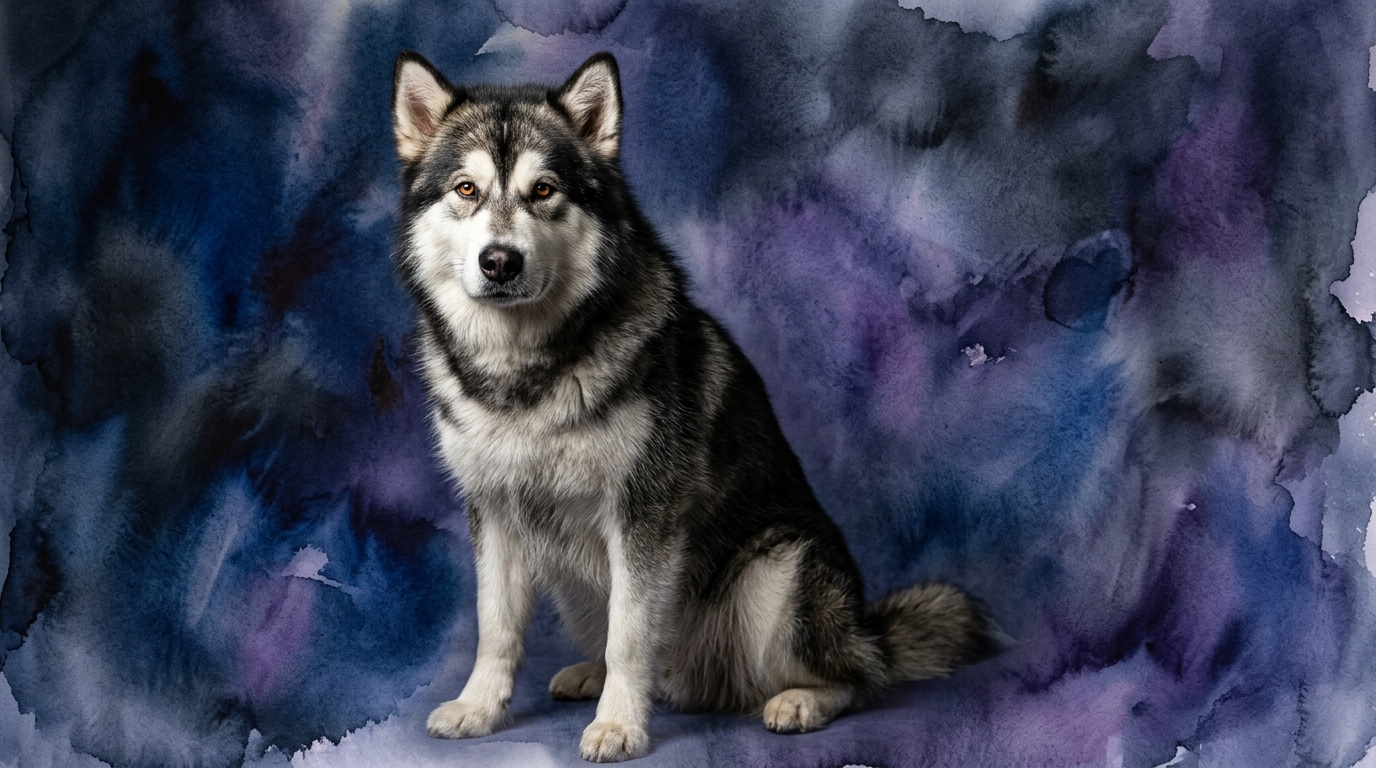
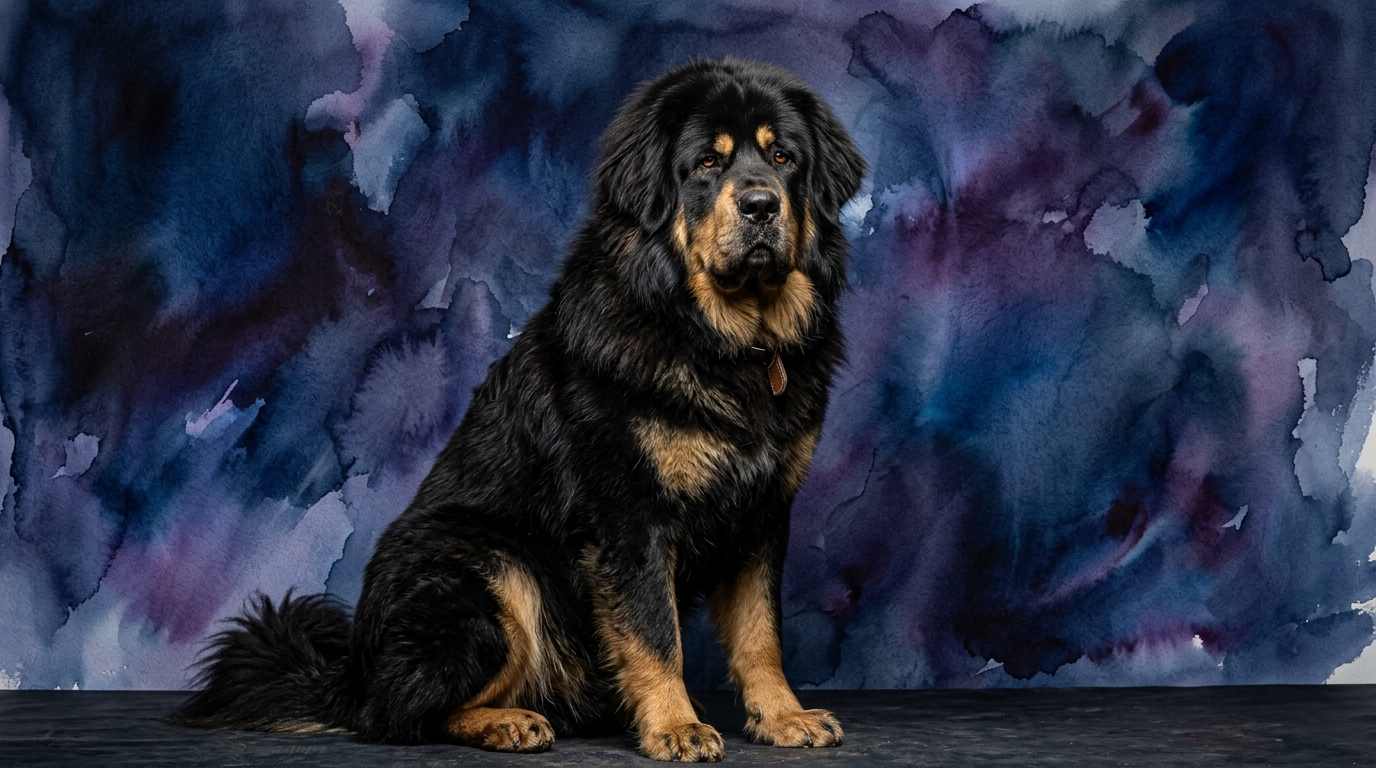
Side-by-Side Cognitive Profile: Malamute vs. Mastiff
The Alaskan Malamute, ranked #50 by Coren, demonstrates a robust cognitive makeup: Problem Solving 4/5, indicating a strong capacity for independent thought and ingenuity in navigating complex situations, often driven by their historical need for resourcefulness in Arctic environments. Their Training Speed is 2/5, reflecting a thoughtful, sometimes selective, approach to commands, requiring patience and clear motivation. Social Intelligence stands at 3/5, signifying an ability to form deep family bonds but also a need for early socialization to manage their pack instincts. An exceptionally high Instinctive Drive of 5/5 fuels their powerful compulsion for pulling, digging, and exploration, demanding purposeful activity. Finally, their Memory is 4/5, allowing them to retain learned behaviors and environmental cues with remarkable clarity, aiding in consistent recall over time.
The Tibetan Mastiff, while not Coren-ranked, presents a distinct cognitive profile: Problem Solving 3/5, showing a practical, observational approach to challenges, particularly in safeguarding their territory rather than abstract puzzles. Their Training Speed is 3/5, indicating they are capable learners but require a confident, consistent leader due to their independent and guardian-focused nature, leading to deliberate rather than eager responses. Social Intelligence is 3/5, characterized by profound loyalty to their immediate family and a discerning, often aloof, demeanor towards strangers, reflecting their guardian heritage. Their Instinctive Drive is 3/5, primarily centered on territorial protection and vigilance rather than active physical tasks. Their Memory is also 3/5, proving reliable for routines, boundaries, and recognizing trusted individuals, essential for their role as a steadfast protector.
Where the Alaskan Malamute Excels Cognitively
Alaskan Malamutes exhibit a clear advantage in problem-solving (4/5), often displaying remarkable ingenuity in figuring out how to open gates, escape enclosures, or access desired items. This is a direct reflection of their ancestral needs, where survival in harsh environments depended on individual resourcefulness and the ability to adapt to changing conditions. Their memory (4/5) also surpasses the Tibetan Mastiff's, allowing them to retain complex sequences of commands or remember subtle environmental cues over long periods, which can be beneficial in advanced training or navigating intricate paths. Furthermore, their exceptionally high instinctive drive (5/5), geared towards pulling and purposeful activity, signifies a profound cognitive engagement with tasks that align with their heritage, distinguishing them from the more territorially focused Mastiff.
Where the Tibetan Mastiff Holds Its Own Cognitively
While the Tibetan Mastiff may not outshine the Malamute in every cognitive metric, its specific strengths are deeply rooted in its ancient purpose. The Tibetan Mastiff's instinctive drive (3/5), though numerically lower than the Malamute's, is acutely specialized for vigilant guardianship, requiring a keen cognitive ability to discern threat from normalcy and assess situations with calm authority. This breed's social intelligence, while rated similarly at 3/5, manifests differently: it involves a profound loyalty and discernment towards its chosen family, coupled with a deliberate wariness towards strangers, indicating a sophisticated understanding of social boundaries. Their problem-solving (3/5) skills are highly practical, focused on securing their territory and protecting their charges, making them adept at assessing environmental cues related to security rather than abstract puzzles.
Training Dynamics: Malamute's Independence vs. Mastiff's Deliberation
Comparing training ease, the Alaskan Malamute presents a greater challenge due to its training speed (2/5) and strong independent streak. Malamutes possess an inherent desire to evaluate commands and decide if they are worth their effort, often responding best when they perceive a clear benefit or personal interest. Their high instinctive drive (5/5), particularly for exploration and pulling, means they can be easily distracted by novel scents or sights, requiring consistent, engaging, and highly rewarding training methods to maintain focus. In contrast, the Tibetan Mastiff, with a training speed of 3/5, is not necessarily 'easier' but approaches training with a different mindset. They are capable of learning, but their strong will and inherent desire to be a self-reliant guardian mean they require a leader who is consistently firm, fair, and patient. They are less likely to be swayed by mere enthusiasm and more by respect and clear, consistent boundaries, making training a steady, methodical process rather than a quick one. Real behavioral differences include the Malamute's tendency to 'selective deafness' when a more interesting scent calls, versus the Mastiff's deliberate assessment of whether a command truly warrants immediate action from their watchful post.
Lifestyle Match: Active Adventurer vs. Steadfast Guardian
For owners leading an active lifestyle, the Alaskan Malamute is typically the more fitting choice. Their exceptionally high instinctive drive (5/5) demands significant physical exertion and mental stimulation, ideally channeled through activities like hiking, sledding, or cani-cross. Owners who thrive on outdoor adventures and can commit to daily, vigorous exercise will find their Malamute a willing and capable companion, leveraging their problem-solving (4/5) skills in navigating trails or overcoming obstacles. A relaxed owner, however, would likely struggle to meet the Malamute's intense needs, potentially leading to destructive behaviors or persistent attempts to escape due to boredom and unfulfilled drive. The Tibetan Mastiff, while requiring regular exercise, is better suited for owners who appreciate a more relaxed, watchful presence within their home. Their instinctive drive (3/5) is primarily focused on territorial patrol and family protection, making them content with moderate daily walks and secure outdoor access for observation. They are not typically high-energy dogs in the same way a Malamute is, preferring to conserve energy for their guardian duties, making them a better match for owners who prefer a calm, contemplative companion with a strong sense of purpose.
The Verdict
Choose the Alaskan Malamute if you are an experienced, active owner seeking a resourceful, enduring partner for outdoor adventures, willing to invest significant time in consistent training to manage their independent spirit and high drive.
Opt for the Tibetan Mastiff if you are a patient, confident owner seeking a devoted, watchful guardian who thrives in a structured home environment and appreciates a discerning, calm companion with a strong sense of purpose.
🧠 Find Your Pet's IQ Score
Our Pet IQ Lab assessment covers 25+ tests across 5 cognitive dimensions — personalized to your breed.
Take the Full IQ Test →Frequently Asked Questions
Are Alaskan Malamutes good family dogs despite their training speed?
Alaskan Malamutes can be wonderful family dogs, forming strong bonds with their human 'pack' and exhibiting playful affection. However, their independent nature and high instinctive drive mean they require consistent training and early socialization to ensure appropriate behavior around children and other pets, making them best suited for experienced owners.
What kind of exercise does a Tibetan Mastiff need given its lower instinctive drive score?
While their instinctive drive (3/5) is not geared towards endless physical tasks, Tibetan Mastiffs still require regular, moderate exercise to maintain health and mental well-being. This typically includes daily walks, secure yard access for patrolling their territory, and opportunities for mental engagement, rather than intense, prolonged physical activity.
How does the 'not Coren-ranked' status for the Tibetan Mastiff impact understanding its intelligence?
The absence of a Coren rank for the Tibetan Mastiff does not imply a lack of intelligence, but rather reflects that it wasn't included in that specific study primarily focused on obedience and working intelligence from a trainer's perspective. Our IQ scores provide a more nuanced, multi-dimensional assessment, highlighting their practical problem-solving and specialized guardian instincts, which are distinct from obedience-based metrics.