Side-by-Side Cognitive Profiles
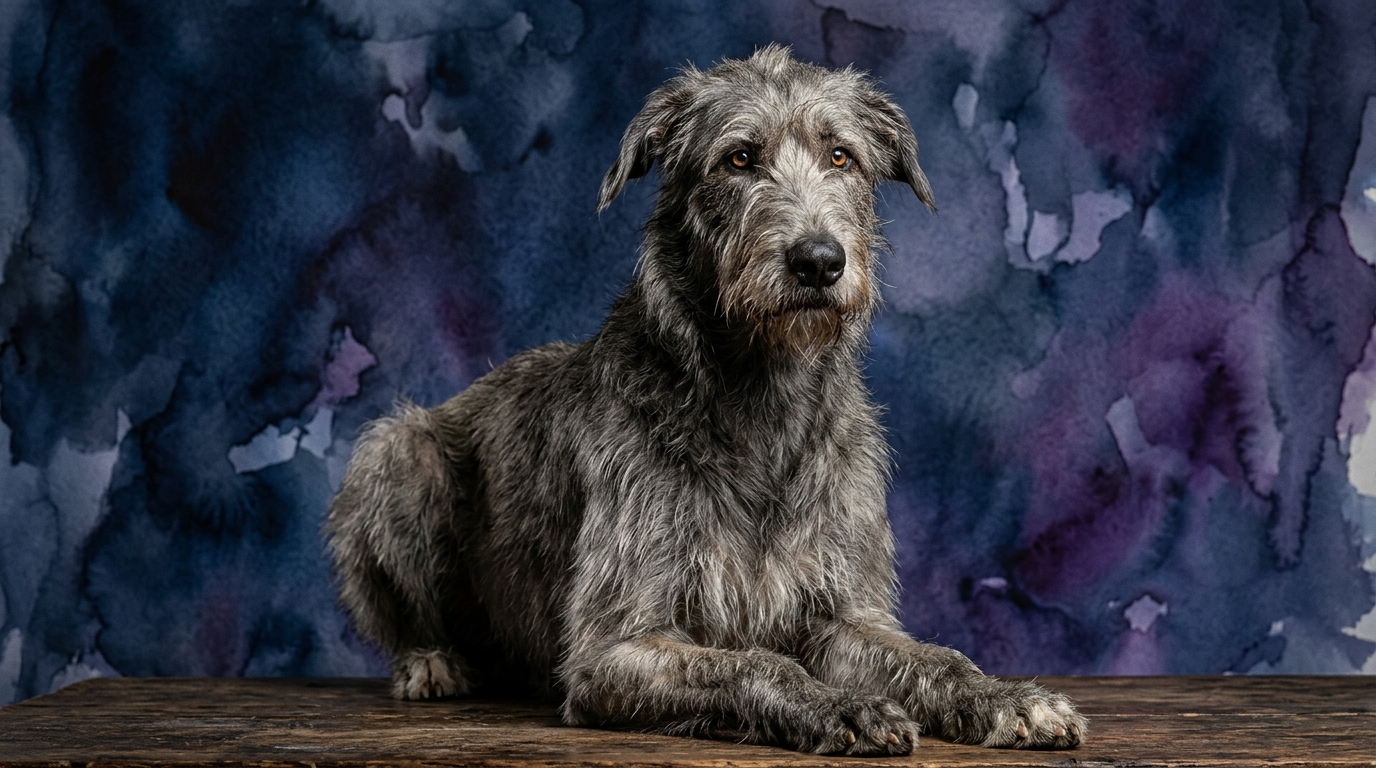
The Cosmic Pet Pet IQ Lab employs a five-dimensional framework to assess canine intelligence, offering a granular view into each breed's cognitive strengths. For the towering Irish Wolfhound, a breed not ranked by Coren, we observe a balanced set of scores across the board: Problem Solving at 3/5, Training Speed at 3/5, Social Intelligence at 3/5, Instinctive Drive at 3/5, and Memory also at 3/5. This suggests a dog with moderate aptitudes in these areas, indicating a steady, rather than overtly sharp or challenging, cognitive engagement.
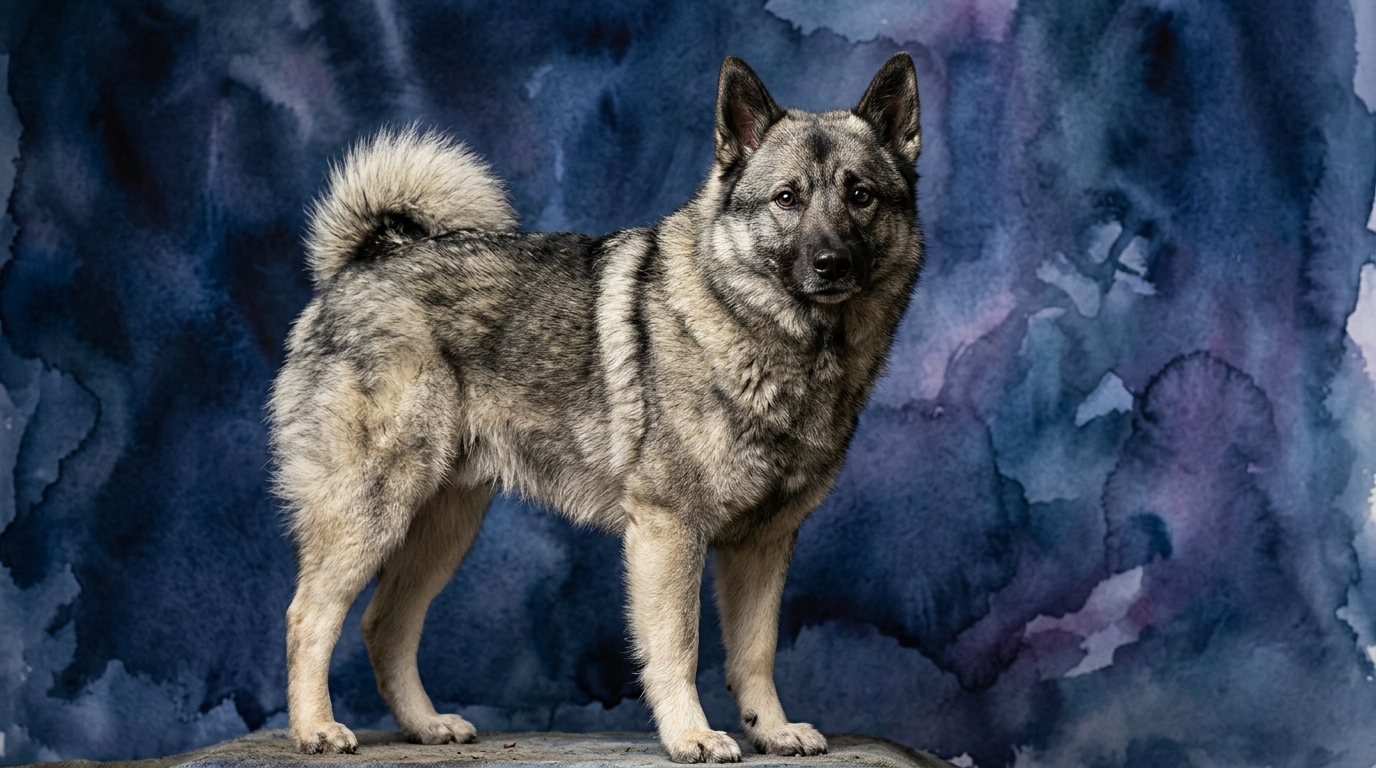
In contrast, the Norwegian Elkhound, recognized for its working heritage, holds a respectable Coren rank of #36, placing it among breeds with above-average working and obedience intelligence. Its IQ profile reflects this: Problem Solving at 4/5, Training Speed at 4/5, Social Intelligence at 3/5, Instinctive Drive at 3/5, and Memory at 4/5. The Elkhound's higher scores in specific domains point towards a more agile and responsive mind, particularly in learning and recall, while maintaining a similar baseline for social perception and inherent drives as its larger counterpart.
Where the Irish Wolfhound Cognitively Shines
While the Irish Wolfhound's individual scores of 3/5 might not immediately suggest a cognitive 'win' in terms of sheer speed or complexity, their balanced profile contributes to a unique form of cognitive strength that deeply aligns with their gentle giant persona. Their 3/5 in Problem Solving indicates a dog that isn't prone to devising elaborate schemes or constantly testing boundaries, offering a relatively straightforward companionship experience. This level of problem-solving means they are capable of learning routines and navigating their environment competently without being overly inclined to outsmart their owners or create complex challenges.
Furthermore, their 3/5 in Social Intelligence signifies a perceptive yet not overly demanding companion. They are adept at understanding human emotions and social cues at a foundational level, allowing for deep bonds without the need for constant, intricate mental stimulation from their human counterparts. This steady social perception means they are reliably empathetic and attuned to their family's mood, providing comfort and companionship without the complexities that might arise from a higher, more analytical social intelligence score that could lead to more manipulative or challenging social behaviors. For owners seeking a calm, predictable, and deeply affectionate presence, the Irish Wolfhound’s cognitive balance is a distinct advantage.
Where the Norwegian Elkhound Shows Cognitive Prowess
The Norwegian Elkhound's cognitive profile distinctly outperforms the Irish Wolfhound in several key areas, largely attributable to its history as a persistent hunting and herding dog. Its 4/5 score in Problem Solving indicates a dog with a greater aptitude for navigating complex situations and finding solutions, whether it's figuring out how to open a gate or strategizing to retrieve a toy. This higher score implies a dog that thrives on mental challenges and is less likely to be stumped by novel situations, making them more adaptable and resourceful in various environments.
Crucially, the Elkhound's 4/5 in Training Speed highlights its efficiency in acquiring new commands and behaviors. This breed is quicker to grasp concepts and form associations, translating into faster progress in obedience and trick training. Coupled with a 4/5 in Memory, the Elkhound not only learns quickly but also retains that information effectively over time, reducing the need for constant repetition. This robust memory and rapid learning ability make them excellent candidates for advanced training, dog sports, or roles requiring a consistent recall of learned tasks. Their cognitive agility makes them engaging partners for owners who enjoy interactive training and mental enrichment activities.
Training Dynamics: Biddability and Behavioral Differences
When considering ease of training, the Norwegian Elkhound holds a clear advantage, primarily due to its 4/5 Training Speed score compared to the Irish Wolfhound's 3/5. This numerical difference translates into practical behavioral distinctions. Elkhounds typically demonstrate a higher biddability and a more eager-to-please attitude during training sessions, absorbing new commands with fewer repetitions. Their superior Problem Solving (4/5) also means they are more likely to understand the 'why' behind a command or the desired outcome, rather than simply performing rote actions. This cognitive understanding can make them more resilient in varied training environments and quicker to generalize learned behaviors.
The Irish Wolfhound, with its 3/5 Training Speed, requires a more patient and consistent approach. While capable of learning, they may take longer to grasp new concepts and might not always display the same enthusiastic responsiveness. Their independent hound nature, common to many sighthounds, means they can be more easily distracted by environmental stimuli or their own thoughts, requiring trainers to maintain engagement and provide strong motivation. Owners of Irish Wolfhounds often find success through positive reinforcement methods that build trust and make training a rewarding, low-pressure experience, acknowledging that progress may be slower but ultimately achievable. The Elkhound's higher memory score (4/5 vs. 3/5) also means once an Elkhound learns something, it's likely to stick, whereas the Wolfhound may require more frequent refreshers.
Matching Cognitive Profiles to Lifestyles
The cognitive profiles of these two breeds naturally align with different owner lifestyles. For active owners who thrive on engagement, challenges, and consistent interaction, the Norwegian Elkhound is an ideal match. Its higher Problem Solving, Training Speed, and Memory scores mean it not only tolerates but actively benefits from regular mental stimulation, such as puzzle toys, scent work, agility, or advanced obedience. Their Instinctive Drive (3/5), combined with their intelligence, means they need outlets for their energy and a purpose, making them excellent companions for hiking, jogging, or participating in dog sports. Owners who are prepared to dedicate time to structured training and varied activities will find the Elkhound a responsive and rewarding partner, preventing boredom-related behaviors.
Conversely, the Irish Wolfhound's balanced cognitive profile, particularly its moderate Problem Solving and Training Speed, makes it well-suited for more relaxed owners or those seeking a gentle, less mentally demanding companion. While still requiring regular exercise appropriate for their giant size, their cognitive needs are less intense than the Elkhound's. They are content with a comfortable routine, family companionship, and less complex mental tasks. Their 3/5 Social Intelligence ensures they are perceptive and affectionate without constantly seeking complex interactions or needing to 'work' for their attention. Owners who appreciate a calm, dignified presence and are willing to embrace a more patient approach to training will find the Irish Wolfhound's steady intellect a comforting presence in their home, offering a deep bond without the constant need for advanced mental gymnastics.
The Verdict
Choose the Irish Wolfhound if you seek a calm, gentle companion with a balanced, predictable intellect, valuing steadfast affection over rapid training and complex mental tasks.
Choose the Norwegian Elkhound if you are an active owner who enjoys engaging in consistent training, mental challenges, and a partner that learns and retains information efficiently.
🧠 Find Your Pet's IQ Score
Our Pet IQ Lab assessment covers 25+ tests across 5 cognitive dimensions — personalized to your breed.
Take the Full IQ Test →Frequently Asked Questions
Does the Irish Wolfhound's lower IQ score mean it's difficult to train?
Not necessarily difficult, but it implies a different training approach. With a Training Speed of 3/5, Irish Wolfhounds require more patience and consistency than breeds with higher scores. They respond best to positive reinforcement and a calm environment, developing skills steadily rather than rapidly.
How does the Norwegian Elkhound's Coren rank of #36 impact its daily behavior?
The Coren rank #36, combined with 4/5 scores in Problem Solving, Training Speed, and Memory, indicates an Elkhound is generally more adaptable, quicker to learn routines, and more inclined to engage in mentally stimulating activities. This often translates to a dog that thrives on structure, consistent training, and purposeful tasks, potentially becoming bored or mischievous if not adequately challenged.
Are Irish Wolfhounds less socially intelligent than Norwegian Elkhounds?
Both breeds share a Social Intelligence score of 3/5, suggesting they are equally perceptive of human emotions and social cues at a foundational level. The difference lies more in how their other cognitive traits interact; the Irish Wolfhound's overall balance provides a steady, empathetic presence, while the Elkhound's higher problem-solving might lead to more active engagement within social contexts.