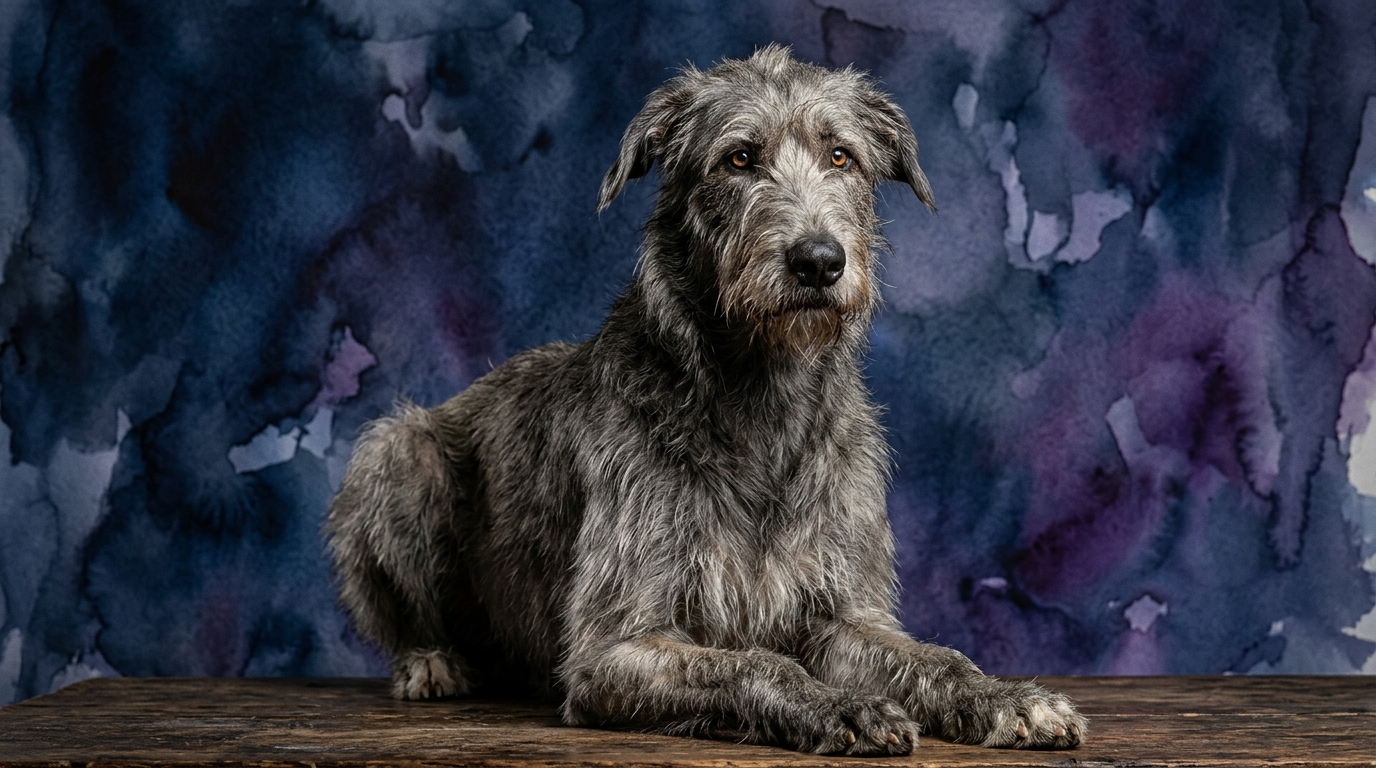
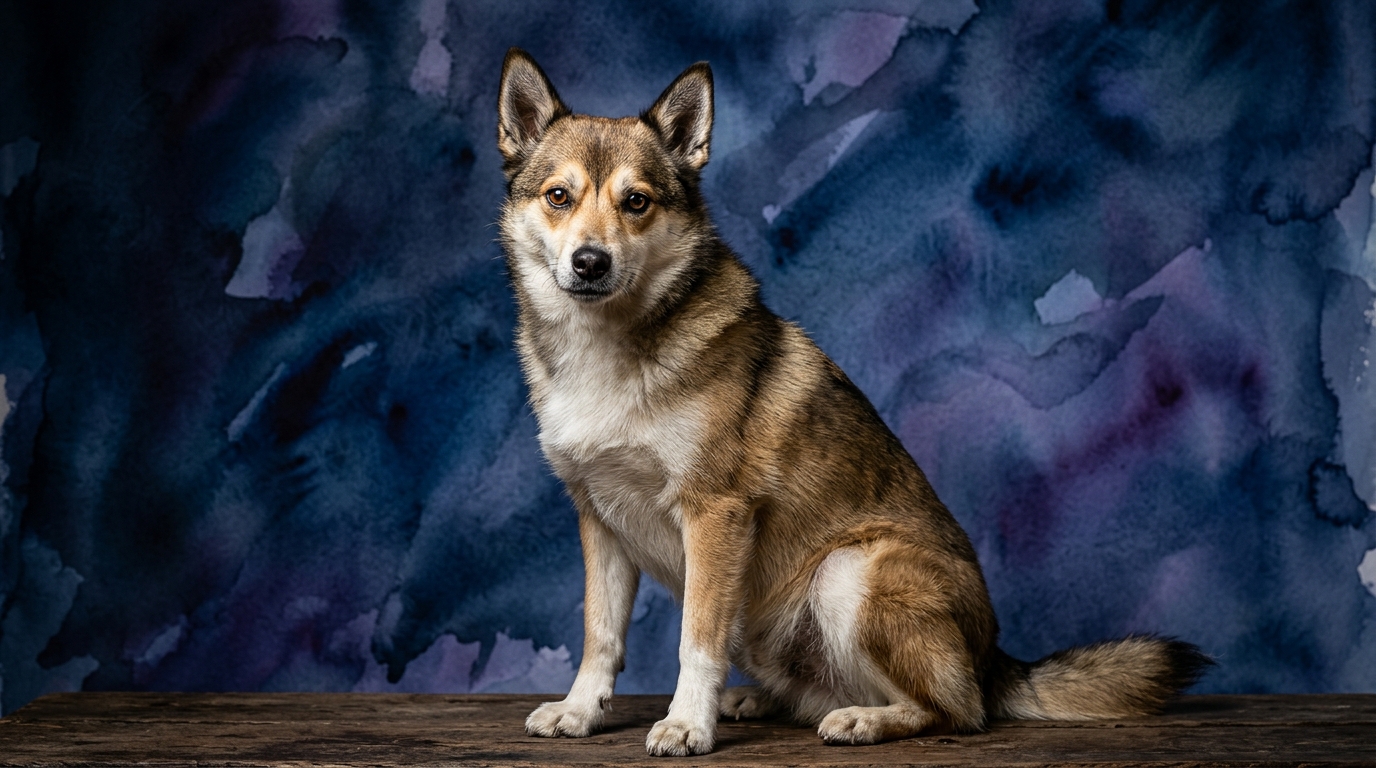
Side-by-Side IQ Profile: Gentle Giant vs. Agile Explorer
The Cosmic Pet Pet IQ Lab assigns both the Irish Wolfhound and the Norwegian Lundehund identical scores across five key cognitive dimensions: Problem Solving (3/5), Training Speed (3/5), Social Intelligence (3/5), Instinctive Drive (3/5), and Memory (3/5). While these scores suggest a similar foundational capacity, the *application* of these traits is profoundly influenced by each breed's unique heritage and physical design. For the Irish Wolfhound, a 3/5 in Problem Solving often manifests as a thoughtful approach to navigating its large body in domestic spaces, finding the most comfortable resting spot, or subtly communicating its needs to its human companions. Its Training Speed at 3/5 reflects a willingness to learn, tempered by the independent streak inherent to sighthounds, meaning consistency and positive reinforcement are crucial to maintain engagement.
Conversely, the Norwegian Lundehund's 3/5 in Problem Solving is historically geared towards highly specialized tasks, such as maneuvering its incredibly flexible body through tight crevices to hunt puffins on cliffsides. This entails a specific kind of spatial reasoning and physical ingenuity. Its 3/5 Training Speed speaks to an independent, often 'cat-like' nature; while capable of learning, the Lundehund often requires compelling motivation and creative methods, as it may weigh the value of a command against its own inherent exploratory or hunting instincts. Both breeds share a 3/5 in Social Intelligence, but the Wolfhound's tends towards gentle family devotion, while the Lundehund's can be more wary of strangers, forming deep but selective bonds. Their Instinctive Drives (3/5) are distinct: the Wolfhound's is a powerful sight-and-pursuit drive, while the Lundehund's is a tenacious, agile hunting and climbing drive. Finally, Memory (3/5) for both means they recall routines, people, and locations, but the context of what they prioritize remembering can differ significantly.
Where the Irish Wolfhound Excels Cognitively
The Irish Wolfhound's cognitive strengths often lie in its nuanced social navigation within a domestic environment and its ability to manage its imposing physical presence with grace. A 3/5 in Social Intelligence for a breed of its size is particularly significant; they excel at reading subtle human emotional cues, often acting as gentle, empathetic companions. This awareness allows them to adjust their behavior to avoid startling small children or to offer comfort to an upset owner, demonstrating a sophisticated understanding of family dynamics and personal space. Their Problem Solving, while not focused on intricate puzzles, shines in practical situations like finding the optimal, least disruptive path through a busy room or patiently waiting for an opportunity to claim a favorite napping spot, showcasing a blend of patience and spatial awareness.
Furthermore, the Wolfhound's Memory (3/5) is highly effective in remembering household routines and the specific preferences of its family members. This isn't just about recalling commands, but understanding the rhythm of a home – when walks happen, when meals are served, and who is most likely to offer a particular treat. Their calm demeanor, combined with their capacity for social awareness, allows them to integrate seamlessly and thoughtfully into family life, making them superb companions who understand and adapt to their human world with a quiet dignity.
Where the Norwegian Lundehund Excels Cognitively
The Norwegian Lundehund's cognitive triumphs are deeply rooted in its ancestral role as a puffin hunter, demanding highly specialized physical and mental agility. Its Problem Solving (3/5) is uniquely adapted to navigating complex, three-dimensional environments, such as rocky cliffs and narrow burrows. This involves not just spatial reasoning, but also an extraordinary understanding of its own body mechanics—utilizing its extra toes and flexible joints to achieve seemingly impossible contortions. This breed demonstrates remarkable ingenuity in finding hidden crevices, scaling obstacles, or extracting items from tight spaces, a testament to a very specific, persistent type of cognitive skill.
The Lundehund's Instinctive Drive (3/5) translates into an unwavering tenacity and curiosity, which, while challenging in training, makes it an exceptional explorer and problem-solver in its own right. Their Memory (3/5) is likely highly attuned to remembering complex routes and potential hiding spots, a legacy of caching and retrieving prey. This combination of physical adaptability and persistent, independent problem-solving sets the Lundehund apart, showcasing a mind that thrives on intricate physical challenges and rewards self-sufficiency.
Which is Easier to Train and Why?
Despite both breeds scoring 3/5 in Training Speed, the Irish Wolfhound generally presents as the easier of the two to train due to fundamental behavioral differences stemming from their historical roles. The Wolfhound, while possessing a hound's independent streak, often exhibits a strong desire to please its human companions, which is a powerful motivator in training. Their social intelligence allows them to grasp human intentions and expectations more readily, and their gentle nature means they are generally receptive to positive reinforcement. Their sheer size necessitates early and consistent training for safety, and they typically respond well to patient, consistent methods, even if they don't always offer instant, robotic compliance.
The Norwegian Lundehund, by contrast, can be significantly more challenging to train for obedience tasks. Their ancestral role demanded self-reliance and independent decision-making rather than strict adherence to human commands. This translates into an independent, sometimes stubborn, personality in a domestic setting. A Lundehund might understand a command perfectly but choose to ignore it if it perceives a more interesting activity or a lack of personal benefit. Training a Lundehund requires immense patience, creativity, and a deep understanding of their unique motivations, often turning training into a game or a puzzle that engages their problem-solving instincts rather than a straightforward command-and-response session. Their tendency to explore and climb also means that 'proof of concept' for commands often needs to be established in varied and stimulating environments.
Which Suits Active Owners vs. Relaxed Owners?
When considering lifestyle fit, both breeds demand specific types of engagement. The Irish Wolfhound, despite its 'gentle giant' moniker, is not a sedentary couch potato. It requires substantial exercise to maintain its impressive physique and mental well-being, including opportunities for long, striding walks or bursts of running in a secure area. However, once adequately exercised, they are content to be very relaxed companions indoors, often seeking out comfortable spots to nap for extended periods. They suit owners who appreciate a calm, dignified presence but are committed to providing daily, moderate-to-vigorous physical activity and mental stimulation that respects their sighthound nature.
The Norwegian Lundehund, conversely, is better suited for highly active and engaged owners. This breed possesses surprising energy for its size and a deep-seated need for mental and physical challenges that tap into its unique heritage. They thrive on activities that allow them to climb, explore, dig, and solve problems, making them excellent companions for hikers, agility enthusiasts, or those who enjoy interactive puzzle toys and creative training. A truly 'relaxed' owner who cannot provide consistent outlets for their investigative and agile nature might find a Lundehund prone to boredom-driven behaviors. Their independence and unique physical attributes mean they require owners who are prepared to think outside the box to keep them stimulated and content.
The Verdict
Choose the Irish Wolfhound if you seek a gentle, empathetic giant, are prepared for consistent training of a large hound, and can offer regular exercise followed by dignified indoor companionship.
Opt for the Norwegian Lundehund if you are an experienced, active owner intrigued by unique canine traits, willing to engage in creative training, and can provide ample opportunities for climbing, exploring, and independent problem-solving.
🧠 Find Your Pet's IQ Score
Our Pet IQ Lab assessment covers 25+ tests across 5 cognitive dimensions — personalized to your breed.
Take the Full IQ Test →Frequently Asked Questions
Do Irish Wolfhounds require a lot of space?
Yes, Irish Wolfhounds, due to their immense size, require ample indoor space to move comfortably and significant outdoor space for regular exercise. They are not suited for small apartments unless owners are exceptionally dedicated to daily outdoor activity.
Are Norwegian Lundehunds good with children?
Norwegian Lundehunds can be good with respectful, older children, but their independent nature and wariness of strangers mean they might not tolerate rough play or unfamiliar kids well. Early socialization and supervision are crucial for positive interactions.
What unique physical traits influence the Lundehund's intelligence?
The Lundehund's unique traits, like six toes, highly flexible joints, and the ability to close their ear canals, directly influenced their historical problem-solving intelligence for puffin hunting. These adaptations fostered a mind adept at complex spatial navigation and physical manipulation in challenging environments.