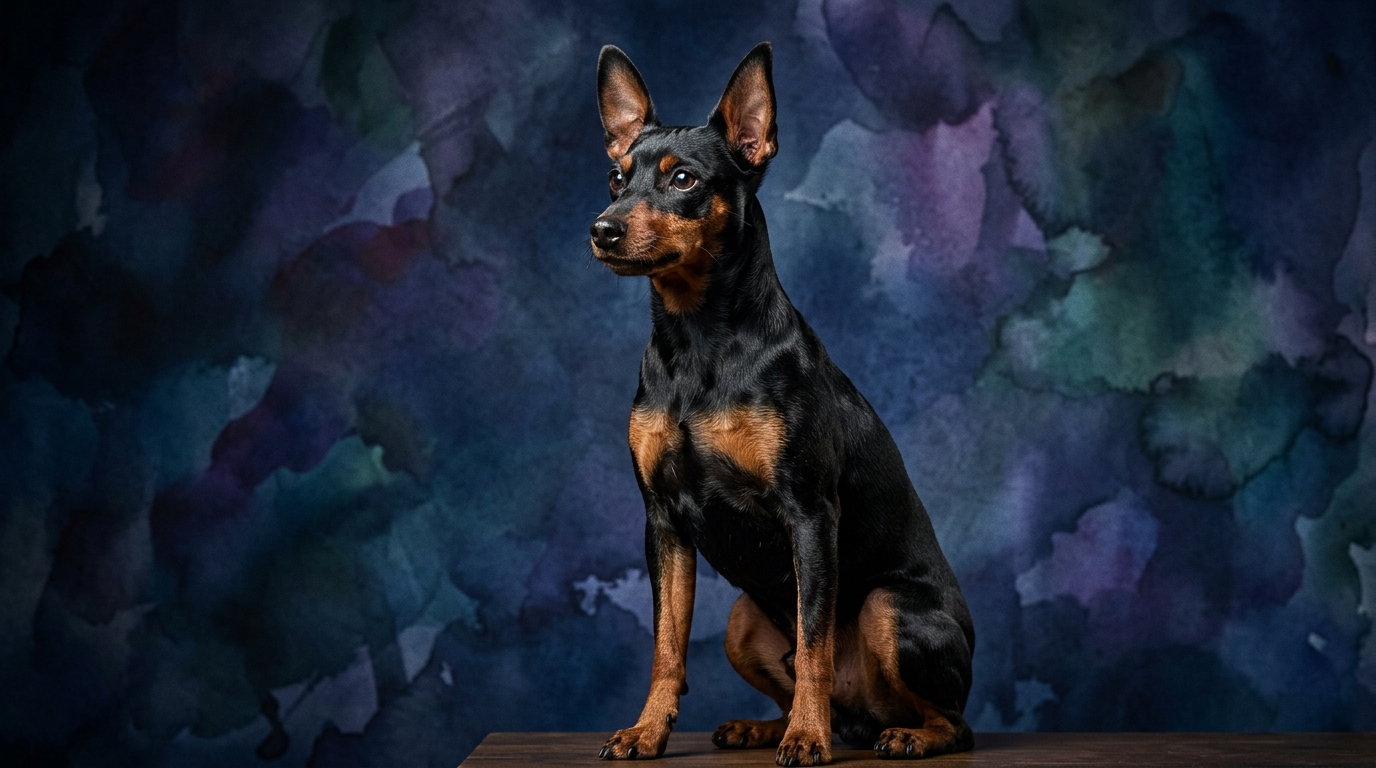
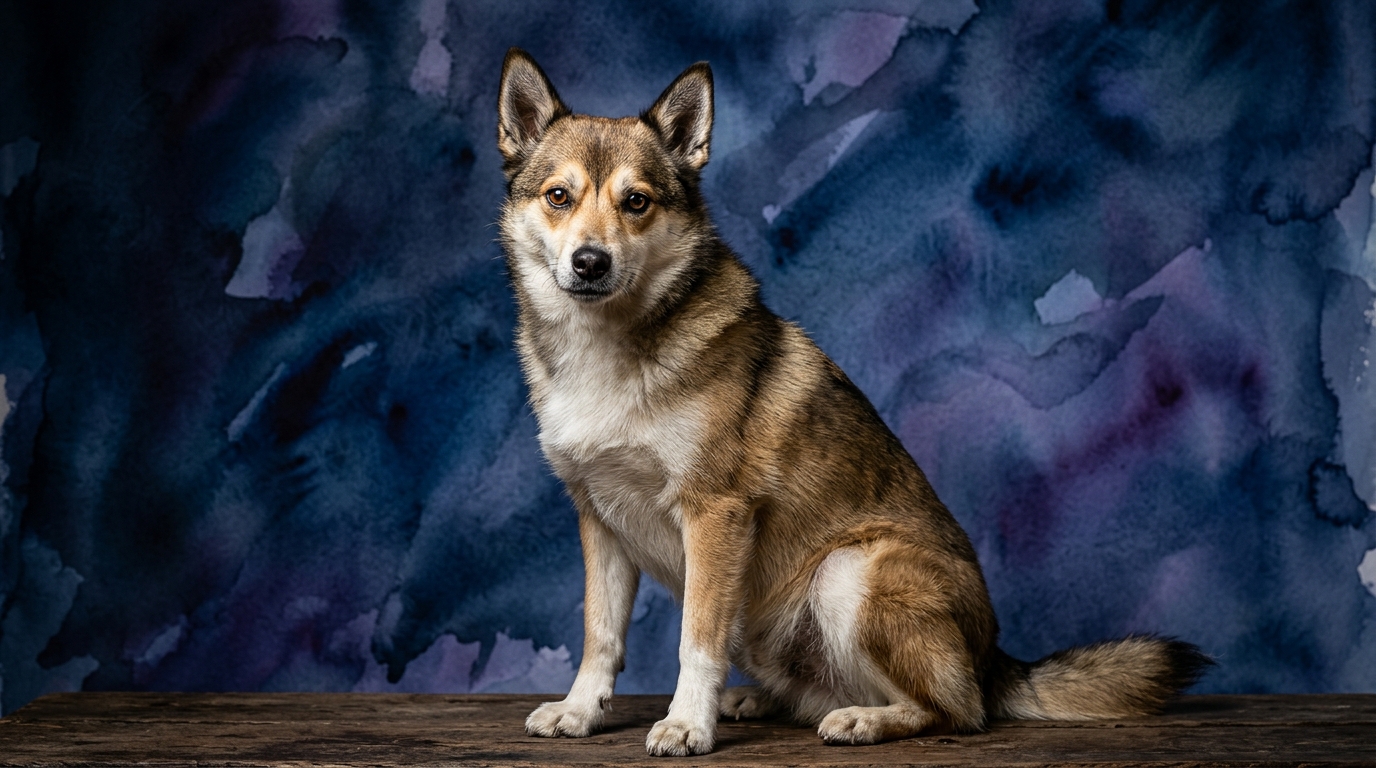
Side-by-Side IQ Profile: Identical Scores, Unique Minds
The Cosmic Pet Pet IQ Lab assigns both the Miniature Pinscher and the Norwegian Lundehund a uniform score of 3 out of 5 across all five evaluated cognitive dimensions, suggesting a baseline of moderate canine intelligence, yet their application of these skills is distinctly influenced by their breed heritage. For Problem Solving (3/5), both breeds demonstrate an ability to navigate moderately complex challenges, learning from experience to achieve desired outcomes, though they may not independently devise intricate, multi-step solutions. A Miniature Pinscher might quickly figure out how to open a simple cabinet door, while a Lundehund could adeptly find an obscure path around an obstacle. Training Speed (3/5) indicates both breeds learn new commands at a moderate pace, requiring consistent reinforcement without excessive repetition; the Min Pin’s confident nature and the Lundehund’s independent streak both contribute to a need for engaging, positive training methods. Social Intelligence (3/5) reveals their capacity to read social cues and form bonds, yet the Min Pin often displays a discerning loyalty to its inner circle and a watchful nature with strangers, while the Lundehund, historically more isolated, can be reserved and highly bonded to its select family. Their Instinctive Drive (3/5) reflects moderate expression of inherent behaviors: the Min Pin exhibits a spirited prey drive and alertness, while the Lundehund possesses a unique drive for navigating challenging terrain and exploring, rooted in its puffin-hunting ancestry. Finally, Memory (3/5) suggests both breeds retain learned information and experiences reasonably well, remembering routines, commands, and familiar faces, allowing them to adapt to their environments and maintain learned behaviors over time.
Where the Miniature Pinscher Wins Cognitively
While their raw IQ scores align, the Miniature Pinscher's cognitive strengths often manifest in their assertive, confident navigation of a domestic environment, giving them a perceived edge in certain contexts. Their Problem Solving at 3/5 is frequently applied with a bold, tenacious spirit, making them adept at figuring out how to access 'forbidden' areas or manipulate situations to their advantage, often driven by sheer will and a desire for engagement. This breed’s Social Intelligence, also 3/5, is expressed through a keen ability to gauge their human companions and other pets, often using their charming yet demanding presence to solicit attention or assert their place within the household hierarchy. Their strong sense of self, combined with moderate Memory, means they quickly learn what behaviors yield desired results from their owners, making them remarkably effective at training their humans, even if it's not always in the way we intend. The Miniature Pinscher's compact size belies a robust mental energy, and their cognitive skills are frequently employed in a dynamic, 'big dog in a small body' approach to life.
Where the Norwegian Lundehund Wins Cognitively
The Norwegian Lundehund’s cognitive strengths, though scoring identically to the Min Pin, shine in their unique ability to interact with and master complex physical environments, a direct legacy of their puffin-hunting past. Their Problem Solving (3/5) is uniquely geared towards spatial reasoning and navigating intricate landscapes; a Lundehund might meticulously plan a route through a dense thicket or scale an unusually challenging obstacle with remarkable foresight and physical precision. This breed’s Instinctive Drive (3/5) is highly specialized, compelling them to explore, climb, and burrow, translating into a cognitive advantage in tasks requiring agility and environmental mastery. Their moderate Memory is particularly strong for terrain and pathways, allowing them to remember complex routes and the location of various 'treasures' or interesting spots. The Lundehund's Social Intelligence (3/5), while sometimes reserved with strangers, fosters deep, nuanced bonds with their chosen family, allowing them to read subtle cues within their trusted circle and respond with a quiet, independent devotion. Their cognitive profile is deeply intertwined with their extraordinary physical adaptations, making them unparalleled in tasks requiring both mental and physical dexterity.
Which is Easier to Train and Why?
Despite both breeds scoring 3/5 in Training Speed, their underlying behavioral tendencies create distinct training experiences. The Miniature Pinscher, with its confident and often 'bossy' demeanor, responds well to consistent, positive reinforcement from a handler who establishes clear leadership. Their desire for interaction and attention, combined with their moderate social intelligence, means they are often motivated by pleasing their human, even if they periodically test boundaries with spirited independence. They learn commands efficiently when adequately motivated, and their spirited nature can be channeled into focused training with engaging games and treats. In contrast, the Norwegian Lundehund’s training journey can be more nuanced. While equally capable of learning due to their 3/5 Training Speed, their historical role as autonomous hunters fostered a strong sense of self-reliance and independence. A Lundehund might understand a command but choose not to execute it if they perceive a more interesting or pressing personal agenda. Their motivation often stems from their own curiosity and desire to explore, rather than solely from handler approval. This means training requires immense patience, creative strategies to make learning intrinsically rewarding, and a deep understanding of their unique, independent spirit to overcome perceived stubbornness.
Matching Cognitive Profiles to Lifestyles: Active vs. Relaxed Owners
The choice between a Miniature Pinscher and a Norwegian Lundehund also hinges on an owner’s lifestyle and how they prefer to engage with their canine companion. The Miniature Pinscher, despite its small size, is a dynamo of energy and spunk, making it an excellent fit for active owners. They thrive on daily walks, engaging playtime, and mental challenges that satisfy their problem-solving nature and confident drive. A relaxed owner who cannot provide consistent physical and mental stimulation might find a Min Pin developing boredom-driven behaviors or becoming overly vocal. Their moderate social intelligence means they enjoy being a central part of family activities and are often eager participants in training or dog sports. The Norwegian Lundehund also requires an active approach, but one that caters to its unique cognitive and physical needs. While they can be calm indoors with their family, they are not content with mere casual strolls. Their 3/5 instinctive drive demands outlets for climbing, exploring, and scent work, making them ideal for owners who enjoy hiking, agility, or providing puzzle toys that tap into their problem-solving and environmental mastery. A relaxed owner might struggle to provide the specific, stimulating activities that prevent a Lundehund from becoming restless or seeking out their own, potentially destructive, forms of entertainment. Both breeds demand engagement, but the type of engagement differs significantly.
The Verdict
Choose the Miniature Pinscher if you desire a bold, confident, and spirited companion in a compact package, and are prepared to engage with a dog that thrives on consistent training and being an active, vocal part of family life.
Opt for the Norwegian Lundehund if you are fascinated by unique canine history, can provide ample, creative outlets for their climbing and exploratory instincts, and value an independent, resilient companion capable of navigating complex physical environments.
🧠 Find Your Pet's IQ Score
Our Pet IQ Lab assessment covers 25+ tests across 5 cognitive dimensions — personalized to your breed.
Take the Full IQ Test →Frequently Asked Questions
Do Miniature Pinschers and Norwegian Lundehunds have similar temperaments due to their identical IQ scores?
While their cognitive scores are identical, their temperaments diverge significantly, shaped by breed history and physical traits. Miniature Pinschers are often bold, assertive, and spirited, while Lundehunds are typically more reserved, independent, and uniquely adapted to physical exploration, reflecting their distinct evolutionary paths.
Are Norwegian Lundehunds truly harder to train than Miniature Pinschers, given their equal training speed scores?
Both breeds score equally in training speed, yet Lundehunds can present unique challenges due to their strong independence and historical self-sufficiency, often prioritizing their own interests. Miniature Pinschers, while spirited, often respond more readily to handler-focused motivation and positive reinforcement, making their training path seem more direct and less prone to 'selective hearing'.
How do their problem-solving skills manifest differently despite identical scores?
A Miniature Pinscher's problem-solving often focuses on domestic challenges like accessing forbidden areas or getting attention, driven by their bold curiosity and desire for engagement within a social structure. A Norwegian Lundehund's manifests more in navigating complex physical terrain, finding hidden pathways, and demonstrating remarkable body control to achieve physical goals, reflecting their unique anatomical adaptations and historical hunting role.