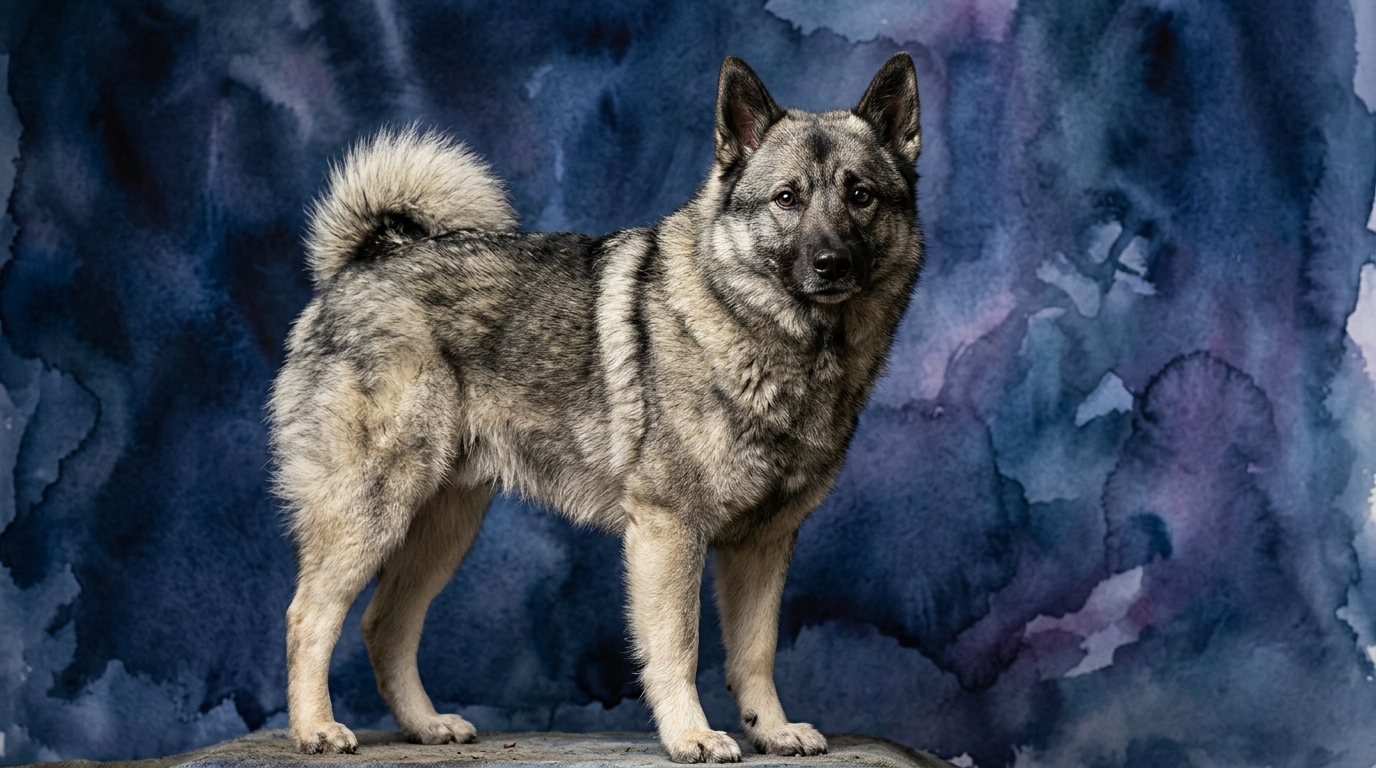
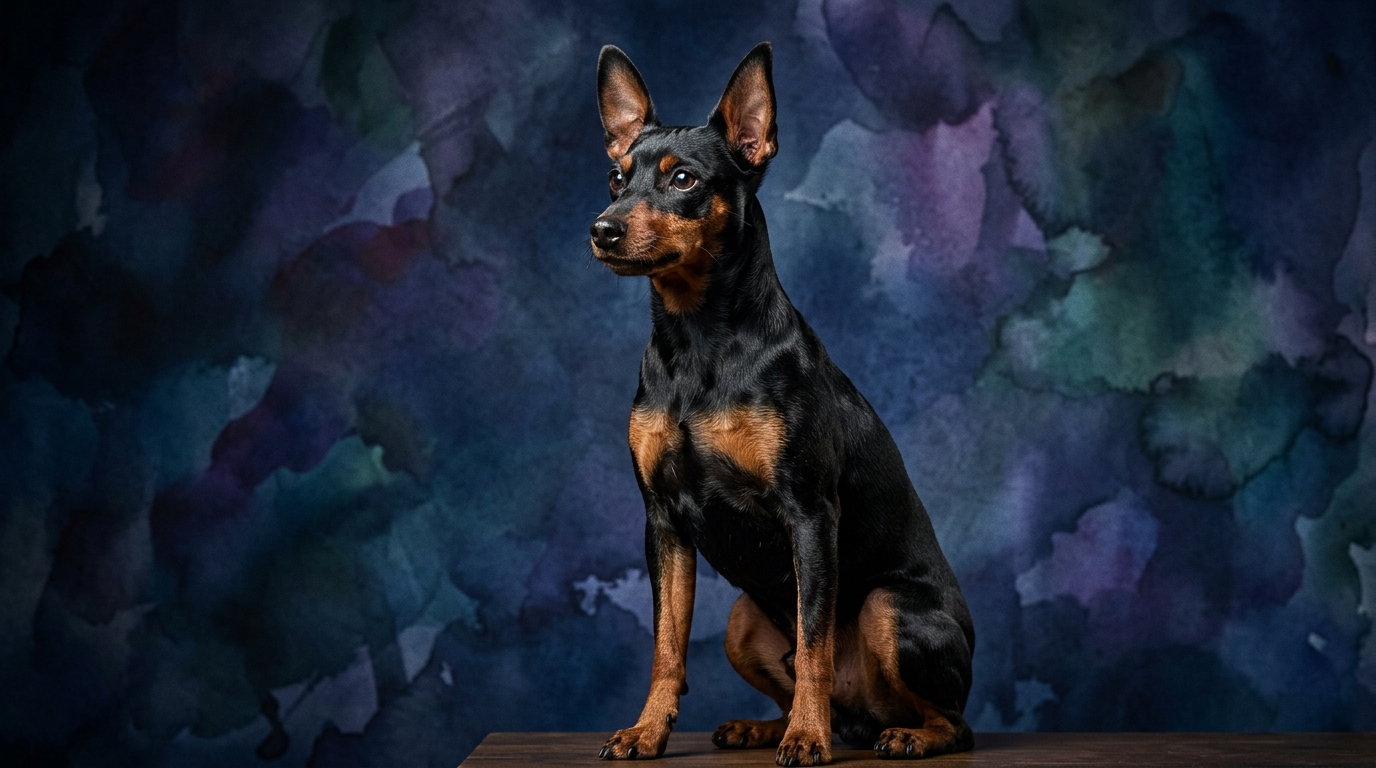
Side-by-Side IQ Profile: Elkhound vs. Min Pin
The Norwegian Elkhound, a robust Hound breed Coren-ranked at #36, exhibits a cognitive profile tailored for independent work in challenging environments. Their Problem Solving ability is rated at a strong 4/5, reflecting their historical role in tracking and holding game, which requires strategic thinking and adaptability in varied terrain. Training Speed also registers at 4/5, suggesting a quick grasp of new commands, though their independent nature means compliance isn't always immediate. Social Intelligence sits at 3/5; while capable of forming bonds, their focus often remains on task rather than constant human interaction or complex social cues. Their Instinctive Drive is a balanced 3/5, channeling their ancient hunting instincts into purposeful actions rather than overwhelming impulsivity. Finally, Memory is a notable 4/5, enabling them to retain complex navigational routes and learned behaviors over extended periods.
The Miniature Pinscher, a lively Toy breed without a specific Coren ranking, presents a cognitive makeup geared more towards alertness and companion engagement. Their Problem Solving skills are rated at 3/5, indicating an ability to navigate typical household challenges and figure out simple puzzles, though perhaps without the Elkhound's depth for complex, multi-step tasks. Training Speed is also 3/5; they can learn commands effectively, but their spirited personality and short attention span can sometimes require more patient, consistent reinforcement. Social Intelligence matches the Elkhound at 3/5, showing an capacity for bonding and understanding family dynamics, often expressed through their watchful and sometimes demanding presence. Their Instinctive Drive is also 3/5, manifesting as a strong prey drive towards small critters and an inherent watchdog tendency, rather than a broad hunting application. Memory is rated at 3/5, allowing them to recall routines and basic commands, but perhaps not the intricate details an Elkhound might retain.
Where the Norwegian Elkhound Wins Cognitively
The Norwegian Elkhound clearly outshines the Miniature Pinscher in areas demanding sustained, independent mental effort. Their 4/5 rating in Problem Solving reflects a capacity for complex, multi-stage tasks, a direct inheritance from centuries of tracking large game like moose. This isn't just about figuring out how to open a treat puzzle; it's about navigating a vast, varied landscape, making decisions about scent trails, and enduring challenging conditions while maintaining focus on a goal.
This cognitive strength translates into a dog that can excel in advanced obedience, tracking, or even search and rescue, where independent thought and sustained concentration are paramount. Furthermore, their 4/5 Memory score means they can recall intricate sequences, remember specific locations, and build upon past experiences with greater detail than their Miniature Pinscher counterpart. This superior recall aids in mastering intricate routines and makes them adept at retaining extensive repertoires of commands and tasks, even after long breaks. The Elkhound's cognitive architecture is built for purpose and persistence, allowing them to process and act upon information with a level of depth and endurance that the Min Pin, with its different breed purpose, doesn't require.
Where the Miniature Pinscher Wins Cognitively
While the Norwegian Elkhound excels in independent problem-solving and memory, the Miniature Pinscher’s cognitive strengths lie in areas aligned with their "King of Toys" persona: quick situational awareness and an intense focus on their immediate environment and human companions. Although their Problem Solving and Memory scores are lower at 3/5, the context of their breed purpose means these skills are applied differently. The Min Pin's intelligence is often expressed through their acute observational skills, allowing them to quickly detect changes in their surroundings or the moods of their family members.
They might not be solving complex tracking puzzles, but they are masters at understanding human routines and exploiting loopholes, such as figuring out the exact moment a door is ajar or which family member is most likely to yield to their demands. Their social intelligence, while rated 3/5 like the Elkhound, often manifests as a more direct, sometimes demanding, engagement with their human environment, using their understanding of social cues to garner attention or express their preferences. This breed often displays a sharp, "street-smart" type of cognition, quickly processing social dynamics and environmental shifts to their advantage, making them exceptionally alert and responsive to immediate interactions, even if not for deep, sustained intellectual tasks.
Which is Easier to Train and Why
When comparing ease of training, the Norwegian Elkhound generally presents a more straightforward path, primarily due to their higher Training Speed (4/5) and stronger Problem Solving (4/5) and Memory (4/5) scores. Elkhounds typically grasp new commands and concepts with relative speed, and their ability to retain information over time means less remedial training is often required. While they possess an independent streak characteristic of hound breeds, once motivated, they apply their cognitive prowess to learning. Their training response is often a deliberate, thoughtful application of learned behaviors.
Conversely, the Miniature Pinscher, with a 3/5 in Training Speed and Memory, can be more challenging due to their spirited, sometimes headstrong nature and shorter attention spans. Min Pins learn, but their focus can be fleeting, requiring more consistent, engaging, and often shorter training sessions to maintain their interest. Their high alertness and instinctive drive (3/5) mean they are easily distracted by environmental stimuli, whether it’s a rustling leaf or a squirrel in the yard, demanding a trainer who can capture and hold their attention effectively. Therefore, while both breeds are trainable, the Elkhound's cognitive strengths make the process generally smoother and quicker for those seeking a dog that picks up skills efficiently and remembers them reliably.
Which Suits Active Owners vs. Relaxed Owners
The Norwegian Elkhound is undoubtedly better suited for active owners. Their heritage as a hardy hunting dog means they possess significant stamina and a need for regular, engaging physical and mental activity. Their 3/5 Instinctive Drive translates into a desire for purpose, often fulfilled through activities like hiking, jogging, or participating in dog sports such as agility, obedience, or tracking. An Elkhound thrives when given a "job," and their cognitive strengths in problem-solving and memory are best utilized when challenged consistently. A relaxed owner who cannot provide daily outlets for their energy and mental stimulation might find an Elkhound becoming restless or engaging in undesirable behaviors born of boredom.
In contrast, the Miniature Pinscher, while energetic and spirited, can adapt to a slightly more relaxed owner, provided their needs for short bursts of activity and mental engagement are met. Their energy is often expressed in intense, short play sessions rather than sustained endurance. While they appreciate walks and playtime, a Min Pin’s "activity" can often involve patrolling the house, supervising their human companions, and engaging in energetic bursts of indoor play. A relaxed owner who can offer consistent, albeit shorter, periods of interaction, training, and play will find the Miniature Pinscher a rewarding companion, as their cognitive needs are more about consistent engagement than extensive outdoor endurance.
The Verdict
Opt for the Norwegian Elkhound if you are an active individual or family seeking a mentally robust companion for outdoor adventures, advanced training, or dog sports, valuing their independent problem-solving and strong memory.
Select the Miniature Pinscher if you desire a lively, alert, and compact companion who thrives on consistent human interaction, enjoys short bursts of activity, and can be a vigilant, spirited presence in the home.
🧠 Find Your Pet's IQ Score
Our Pet IQ Lab assessment covers 25+ tests across 5 cognitive dimensions — personalized to your breed.
Take the Full IQ Test →Frequently Asked Questions
Are Norwegian Elkhounds good family dogs despite their hunting background?
Yes, Norwegian Elkhounds can be excellent family dogs. While they possess a strong hunting drive, they are also loyal and affectionate with their families, often forming deep bonds. Early socialization and consistent training are key to integrating them successfully into a family environment, especially with children and other pets.
Do Miniature Pinschers really act like "miniature Dobermans" in personality?
Miniature Pinschers are often described as having the confidence and assertive personality of a Doberman, despite not being directly related. They exhibit fearlessness, a strong sense of self-importance, and a vigilant nature, often acting as diligent watchdogs for their size. This "big dog in a small body" demeanor is a hallmark of their breed.
How do the instinctive drives of these two breeds differ in daily life?
The Elkhound's instinctive drive (3/5) typically manifests as a desire to track scents and follow trails, making them prone to wandering if not securely contained or leashed. The Miniature Pinscher's instinctive drive (3/5) is more often expressed as a strong prey drive towards small, fast-moving objects and a vigilant watchdog tendency, leading them to bark at perceived intruders or novel sounds.