Side-by-Side IQ Profile: Elkhound vs. Lundehund
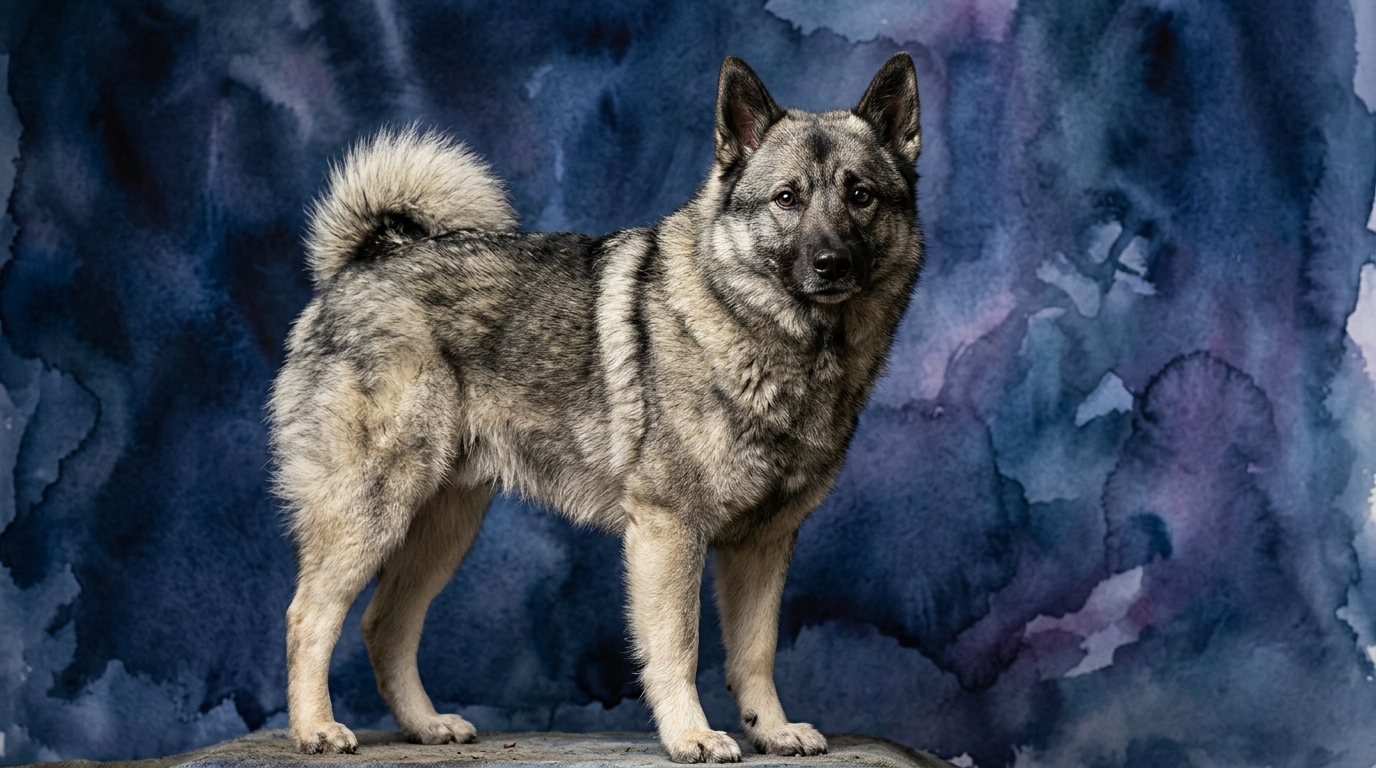
The Cosmic Pet Pet IQ Lab evaluates canine intelligence across five crucial dimensions, offering a nuanced perspective on each breed's cognitive strengths. For the Norwegian Elkhound, a robust working dog with a Coren rank of #36, its profile indicates a mentally agile companion. Its Problem Solving is rated 4/5, suggesting a strong capacity for independent thought and navigating complex situations. Training Speed also scores 4/5, pointing to a rapid grasp of new commands and routines. Social Intelligence is 3/5, indicating a solid understanding of human cues and interactions. Its Instinctive Drive stands at 3/5, reflecting its deep-seated hunting heritage, while Memory achieves a 4/5, underscoring its ability to retain learned behaviors and experiences over time.
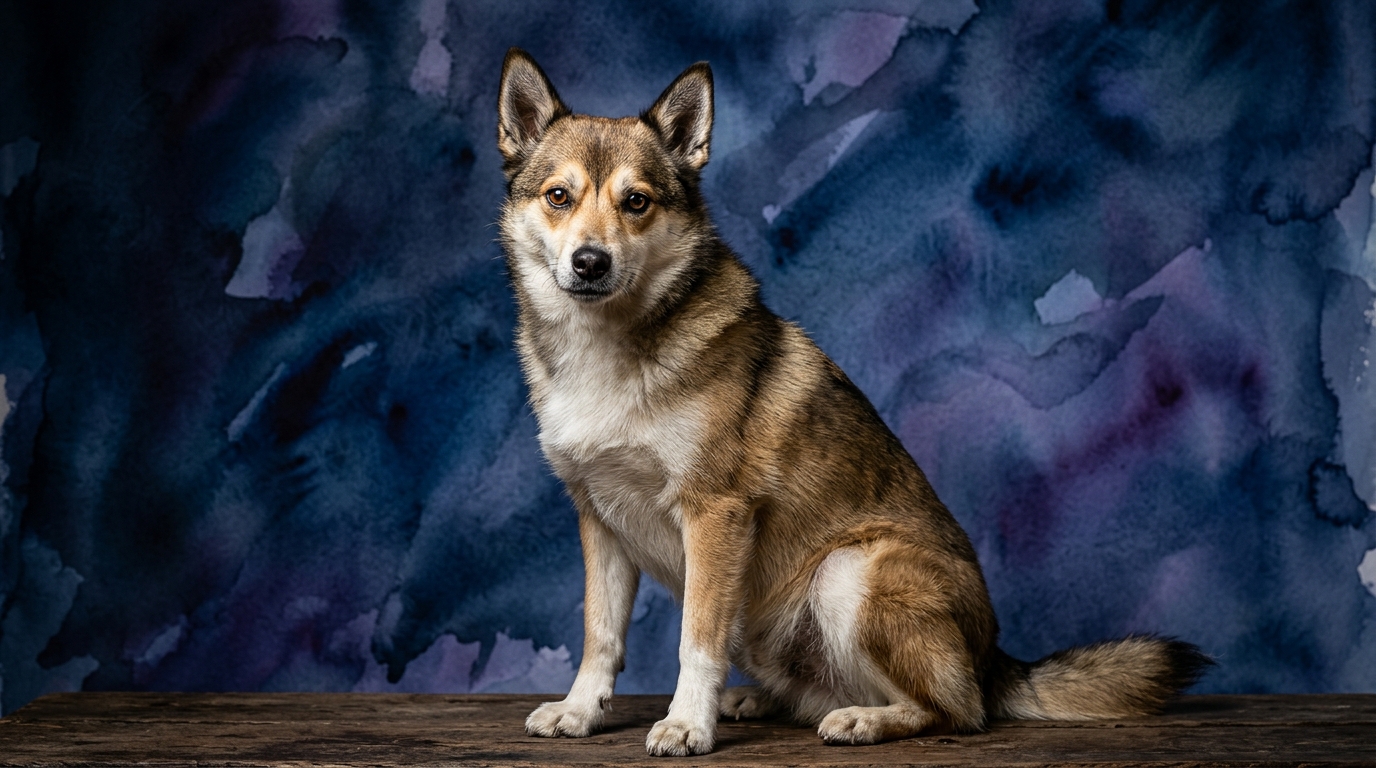
In contrast, the Norwegian Lundehund, a unique Non-Sporting breed not listed on Coren's ranking, presents a profile marked by a different kind of specialized intellect. Its Problem Solving is 3/5, demonstrating a competent, albeit perhaps less generalized, capacity for figuring things out. Training Speed is also 3/5, suggesting it learns at a steady pace. Like the Elkhound, its Social Intelligence is 3/5, showing an adequate ability to read and respond to human social signals. Instinctive Drive is likewise 3/5, reflecting its ancient role as a puffin hunter, and its Memory is 3/5, indicating a reliable, though not exceptional, recall of information. These scores collectively paint a picture of a clever, self-reliant breed with a highly specialized historical purpose.
Where the Norwegian Elkhound Excels Cognitively
The Norwegian Elkhound's cognitive profile reveals several areas where it demonstrates a pronounced advantage. Its 4/5 score in Problem Solving signifies a breed that doesn't just react but actively strategizes. This manifests in its historical role tracking large game, where it needed to independently assess terrain, wind patterns, and the movements of its quarry. In a modern home, this translates to a dog capable of figuring out puzzle toys with less guidance or devising methods to access desired items.
Furthermore, the Elkhound's 4/5 in Training Speed and 4/5 in Memory work in concert, making it a particularly receptive student. It quickly comprehends new commands and retains that knowledge over extended periods. This means an Elkhound can master a wider repertoire of behaviors in less time and reliably perform them even after a break from training. For owners interested in canine sports like obedience, agility, or scent work, the Elkhound's cognitive architecture provides a strong foundation for advanced learning and consistent performance. Its ability to connect cause and effect, coupled with robust recall, allows for a more complex and fluid training progression.
Where the Norwegian Lundehund Shows Unique Strengths
While the Norwegian Lundehund's general IQ scores might appear slightly lower than the Elkhound's in some dimensions, its cognitive strengths lie in its highly specialized adaptations and an inherent self-reliance. Its 3/5 in Problem Solving, combined with its extraordinary physical flexibility and extra toes, points to a breed whose intelligence was honed for a very specific, challenging task: navigating tight, vertical puffin burrows. This requires a unique type of spatial reasoning and adaptability, a 'niche' problem-solving skill set that general tests might not fully capture. Its historical independence meant making life-or-death decisions without human direction, fostering a resilient and self-sufficient mindset.
The Lundehund’s 3/5 in Social Intelligence, equal to the Elkhound's, indicates a capable understanding of human interaction, but often filtered through a lens of independence. This isn't a lack of social capacity, but rather a preference for autonomy, a cognitive trait that values self-direction. Its moderate Instinctive Drive (3/5) is focused and precise, less about broad tracking and more about meticulous exploration and retrieval in confined spaces. This specialized drive, coupled with a steady 3/5 Memory, means it remembers the intricacies of its environment and its own unique hunting techniques, making it a remarkably effective and persistent, if highly particular, worker.
Which is Easier to Train and Why
Based on The Cosmic Pet Pet IQ Lab scores, the Norwegian Elkhound generally presents as the more straightforward breed to train. Its 4/5 Training Speed indicates a quicker uptake of new commands and routines. This rapid learning curve, coupled with its 4/5 Memory, means that once an Elkhound learns something, it tends to stick. These dogs often respond well to positive reinforcement and clear, consistent instruction, eager to engage with their human partners in learning exercises. Their problem-solving abilities also contribute, as they can often anticipate what is expected of them and work through new challenges with less frustration.
The Norwegian Lundehund, with a Training Speed of 3/5, requires a more patient and nuanced approach. While capable of learning, it often processes information at a steadier pace and can exhibit a streak of independence that demands creative motivational strategies. Its historical role as a solitary hunter meant it wasn't bred for strict obedience to human command but rather for self-directed action. This can translate into selective hearing or a need for high-value rewards to maintain focus during training sessions. Owners should be prepared for a dog that learns reliably but might take longer to generalize commands and may periodically choose to prioritize its own interests over immediate compliance. Consistency is paramount, and making training feel like a collaborative game rather than a strict directive is often most effective for a Lundehund.
Which Suits Active Owners vs. Relaxed Owners
For active owners seeking a canine partner for adventures and structured mental engagement, the Norwegian Elkhound is often an excellent match. Its background as a powerful hunting dog means it possesses significant stamina and requires regular, vigorous exercise. Beyond physical activity, its 4/5 Problem Solving and 4/5 Training Speed mean it thrives on mental challenges—think advanced obedience, agility courses, scent work, or even canicross. An Elkhound that isn't sufficiently stimulated physically and mentally can become bored, potentially leading to undesirable behaviors. Owners who enjoy long hikes, running, or dog sports will find the Elkhound's cognitive and physical energy levels align well with their lifestyle, providing a rewarding partnership built on shared activity.
The Norwegian Lundehund, while certainly not a couch potato, might appeal more to owners who appreciate a dog with periods of independent activity rather than constant human-led engagement. Its unique physical needs due to its flexible joints and extra toes mean that while it enjoys exploration, the intensity and duration of exercise might differ from a high-drive Elkhound. Owners should focus on varied, enriching environments where the Lundehund can use its specialized agility and keen senses to investigate. While it needs daily walks and playtime, its 3/5 Instinctive Drive is more about focused exploration than sustained, high-energy pursuits. Relaxed owners, or those with specific interests in unique breed traits, who can provide consistent, engaging mental enrichment through puzzle toys and supervised outdoor exploration, will find the Lundehund's self-reliant nature a good fit, provided they understand its specific exercise and social needs.
The Verdict
Choose the Norwegian Elkhound if you seek a highly trainable, mentally agile companion eager to engage in structured activities and demanding physical exercise. Its robust problem-solving and memory ensure a quick study and a reliable partner for various canine sports.
Opt for the Norwegian Lundehund if you appreciate a unique, self-reliant breed with specialized intelligence, and you are prepared for a patient, creative training approach. Its independent spirit and moderate exercise needs suit owners who value exploration and unique companionship.
🧠 Find Your Pet's IQ Score
Our Pet IQ Lab assessment covers 25+ tests across 5 cognitive dimensions — personalized to your breed.
Take the Full IQ Test →Frequently Asked Questions
Are Norwegian Elkhounds good family dogs?
Yes, Norwegian Elkhounds can be excellent family dogs. Their 3/5 Social Intelligence suggests they understand human cues well, and with proper socialization and training, they are typically loyal and protective companions for all family members. Their energetic nature means they thrive in active households.
Do Norwegian Lundehunds have any unique health concerns?
Yes, Norwegian Lundehunds are known for a specific gastrointestinal condition called Lundehund Syndrome (Intestinal Lymphangiectasia), which requires careful dietary management. Their unique skeletal structure, including extra toes and flexible joints, also means they might have specific needs related to mobility and joint health.
Which breed is better for first-time dog owners?
The Norwegian Elkhound, with its 4/5 Training Speed and more generalized problem-solving, is generally more forgiving for first-time dog owners who are committed to consistent training and exercise. The Lundehund's independent nature and specific health considerations might present a steeper learning curve for novices.