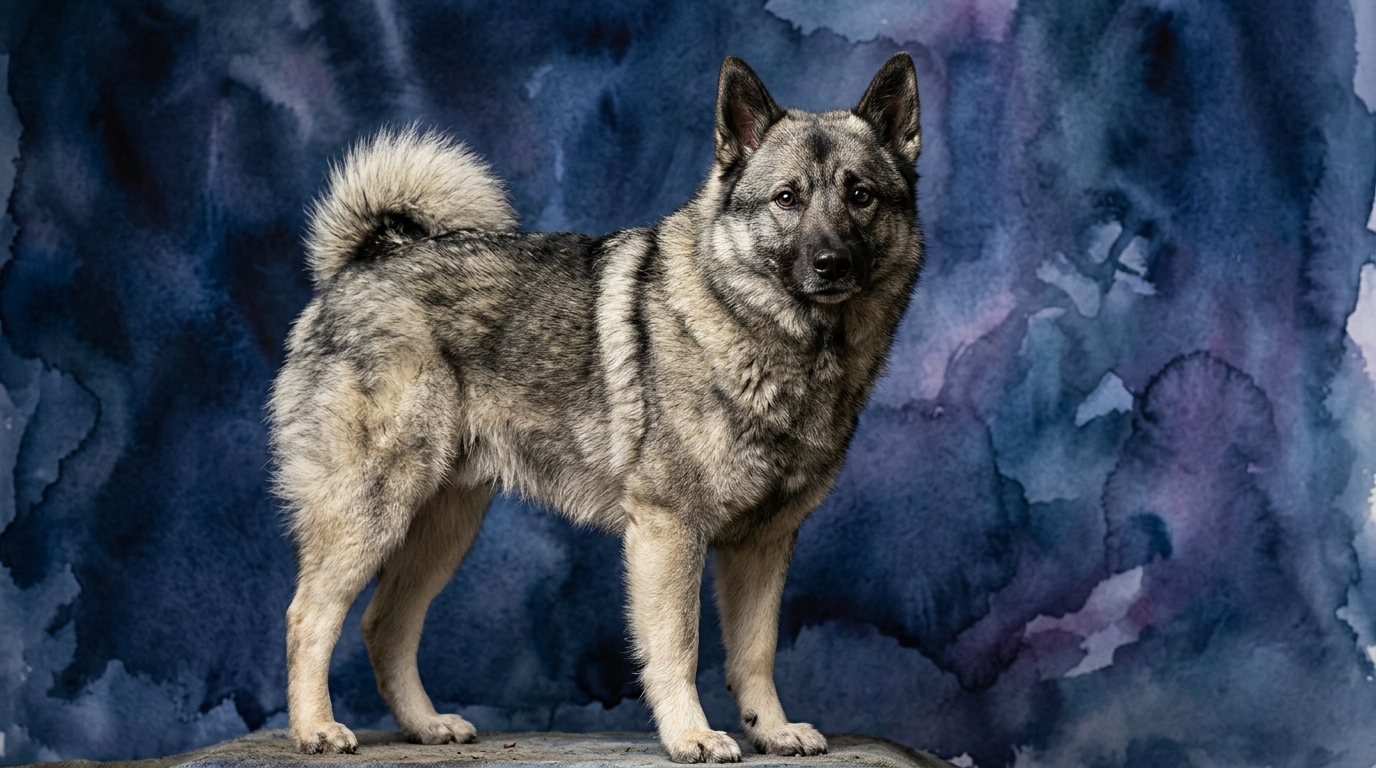
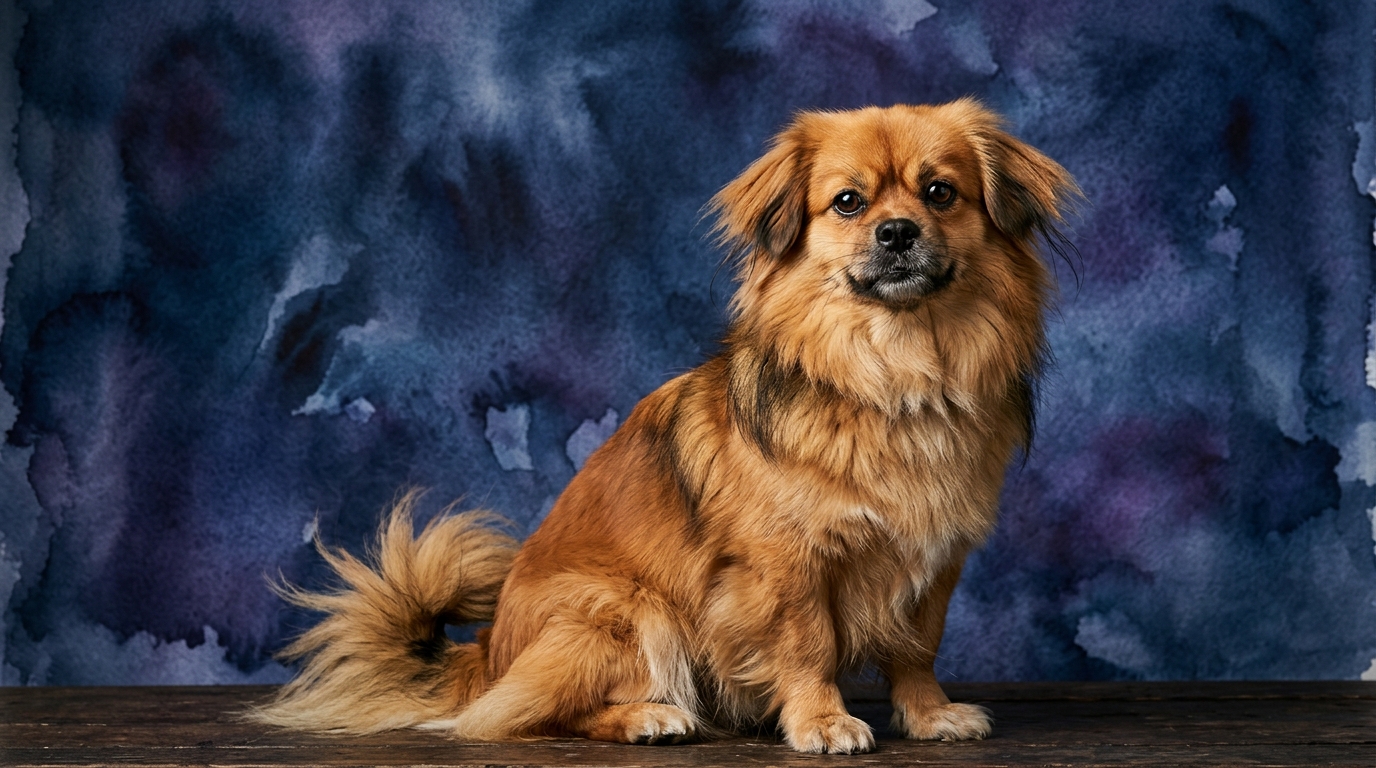
Side-by-Side IQ Profile: Elkhound vs. Tibbie
The Cosmic Pet Pet IQ Lab employs a five-dimensional framework to assess canine intelligence, offering a granular view beyond general classifications. Here’s how the Norwegian Elkhound and Tibetan Spaniel measure up:
Norwegian Elkhound (Hound, Coren Rank #36): Problem Solving 4/5 – Exhibits strong independent thought and capacity for figuring out complex situations, a trait from their hunting heritage. Training Speed 4/5 – Quickly grasps new commands and routines, though their independent nature means consistency is paramount. Social Intelligence 3/5 – Forms deep bonds but can be reserved, often preferring their primary family over extensive interactions with strangers or other dogs. Instinctive Drive 3/5 – Possesses a moderate prey drive and strong territorial sense, geared towards vigilance and tracking. Memory 4/5 – Recalls learned behaviors, routes, and past experiences with considerable accuracy, aiding in training retention and navigation.
Tibetan Spaniel (Non-Sporting, Not Coren-Ranked): Problem Solving 3/5 – Approaches challenges with moderate ingenuity, often relying on observation and trial-and-error to navigate their environment. Training Speed 3/5 – Learns at a steady pace, generally requiring clear, patient instruction and positive reinforcement for new commands. Social Intelligence 3/5 – Known for a watchful nature, observing before engaging; affectionate with family but discerning with newcomers. Instinctive Drive 3/5 – Legacy as “little lions” guarding monasteries means moderate alert barking and keen awareness of surroundings, less about prey drive. Memory 3/5 – Demonstrates reasonable retention of information and routines, benefiting from consistent reinforcement for learned behaviors.
Where the Norwegian Elkhound Wins Cognitively
The Norwegian Elkhound generally shows an edge in cognitive areas demanding independent thought and rapid skill acquisition. Their 4/5 Problem Solving indicates a dog capable of assessing situations and devising solutions, a trait honed by generations of tracking and holding large game; an Elkhound might more readily figure out how to open a child-proof gate or navigate a complex scent trail independently. Their 4/5 Training Speed also suggests quicker understanding of new commands, often requiring fewer repetitions. This extends to complex tasks, making them suitable for advanced obedience or utility work where a rapid grasp of sequences is beneficial. Furthermore, their 4/5 Memory means they retain learned skills and environmental layouts over longer periods, requiring less frequent refreshers for established routines. This robust recall is invaluable for consistent behavior and navigating familiar territories.
Where the Tibetan Spaniel Wins Cognitively
While the Tibetan Spaniel doesn't outscore the Elkhound in individual cognitive metrics, their overall profile reflects a different kind of operational intelligence, particularly in areas of subtle observation and nuanced social awareness within their preferred circle. Their 3/5 Social Intelligence, though matching the Elkhound's, manifests as acute awareness of family moods and routines, positioning them as watchful companions sensitive to household shifts. They excel in domestic situational awareness, often being the first to notice a visitor or an unusual sound. Their moderate Instinctive Drive (3/5) is less about physical prowess and more about innate vigilance, a legacy of their monastery guardian role, making them excellent, albeit vocal, watchdogs content to observe and alert. Their 3/5 Problem Solving allows them to adapt cleverly to household rules, often finding the most comfortable spot or the best way to solicit attention through charming, persistent methods.
Which is Easier to Train and Why
Based on their respective IQ profiles, the Norwegian Elkhound is generally easier to train, especially for acquiring new commands quickly and performing complex sequences. Their 4/5 Training Speed means they grasp concepts with fewer repetitions than the Tibetan Spaniel (3/5), and their 4/5 Memory ensures retention. However, their independent problem-solving nature (4/5) can sometimes be a double-edged sword; an Elkhound might understand a command but choose not to execute it if they perceive a more “efficient” or self-serving alternative, for example, if a strong scent overrides a recall command.
The Tibetan Spaniel, with 3/5 Training Speed and Memory, requires a more patient, consistent approach. They learn steadily, benefiting significantly from short, positive reinforcement-based sessions. Their social intelligence, focused on family, means they respond well to training that strengthens their bond, often performing best when training feels like a cooperative game. Tibbies can be sensitive to harsh methods, potentially becoming withdrawn. Their “little lion” personality means they can be charmingly stubborn; they might understand what you want but decide it's not worth their effort without sufficient motivation. Engaging, rewarding training focusing on their desire for companionship and attention is key.
Which Suits Active Owners vs. Relaxed Owners
The Norwegian Elkhound is undoubtedly better suited for active owners. Their heritage as hardy hunting dogs means they possess significant stamina and require consistent physical and mental engagement. An owner who enjoys hiking, jogging, or participating in dog sports like agility or obedience trials would find a compatible partner in an Elkhound. Their 4/5 Problem Solving and 4/5 Memory thrive on challenges, so structured training, puzzle toys, and varied environments are crucial to prevent boredom-induced behaviors. Without sufficient outlets for their energy and mental acuity, an Elkhound can become restless and invent their own, potentially destructive, forms of entertainment.
Conversely, the Tibetan Spaniel is an excellent match for more relaxed owners. While they enjoy daily walks and playtime, their exercise requirements are moderate compared to the Elkhound. A Tibbie is often content with shorter, regular strolls and indoor play sessions, making them adaptable to apartment living or homes with less sprawling outdoor space. Their strong social intelligence and preference for being close to their people mean they are happiest when involved in family activities, even if those activities involve lounging on the couch. Their moderate instinctive drive means they are less likely to constantly seek out high-intensity activities, preferring instead to be a vigilant, affectionate companion. They do, however, benefit from consistent, gentle mental stimulation to keep their problem-solving skills sharp and prevent complacency.
The Verdict
Choose a Norwegian Elkhound if you are an active individual or family seeking a mentally agile, independently thinking companion for outdoor adventures and engaging training, prepared to meet their consistent needs for physical and mental stimulation.
Opt for a Tibetan Spaniel if you desire a charming, watchful, and affectionate companion who thrives on close family interaction and requires moderate exercise, fitting seamlessly into a more relaxed household rhythm.
🧠 Find Your Pet's IQ Score
Our Pet IQ Lab assessment covers 25+ tests across 5 cognitive dimensions — personalized to your breed.
Take the Full IQ Test →Frequently Asked Questions
Is a Norwegian Elkhound difficult to train due to its independence?
While Elkhounds learn quickly (Training Speed 4/5), their strong independent streak (Problem Solving 4/5) means they might sometimes prioritize their own judgment over a command. Consistent, positive reinforcement training from an early age is vital to channel their intelligence effectively and foster cooperation.
Do Tibetan Spaniels bark a lot, given their 'watchdog' history?
Yes, Tibetan Spaniels do have a tendency towards alert barking due to their historical role as monastery guardians and their 3/5 Instinctive Drive. They are quick to notify their owners of perceived changes in their environment, making them good watchdogs but sometimes prone to excessive vocalization without proper training.
How do these breeds perform with children or other pets?
Both breeds can do well with children and other pets, though their social approaches differ. Norwegian Elkhounds (Social Intelligence 3/5) are generally tolerant but might prefer older, respectful children and can be selective with other dogs. Tibetan Spaniels (Social Intelligence 3/5) are affectionate with their family and often do well with gentle children and other calm pets, but their small size makes supervision important.