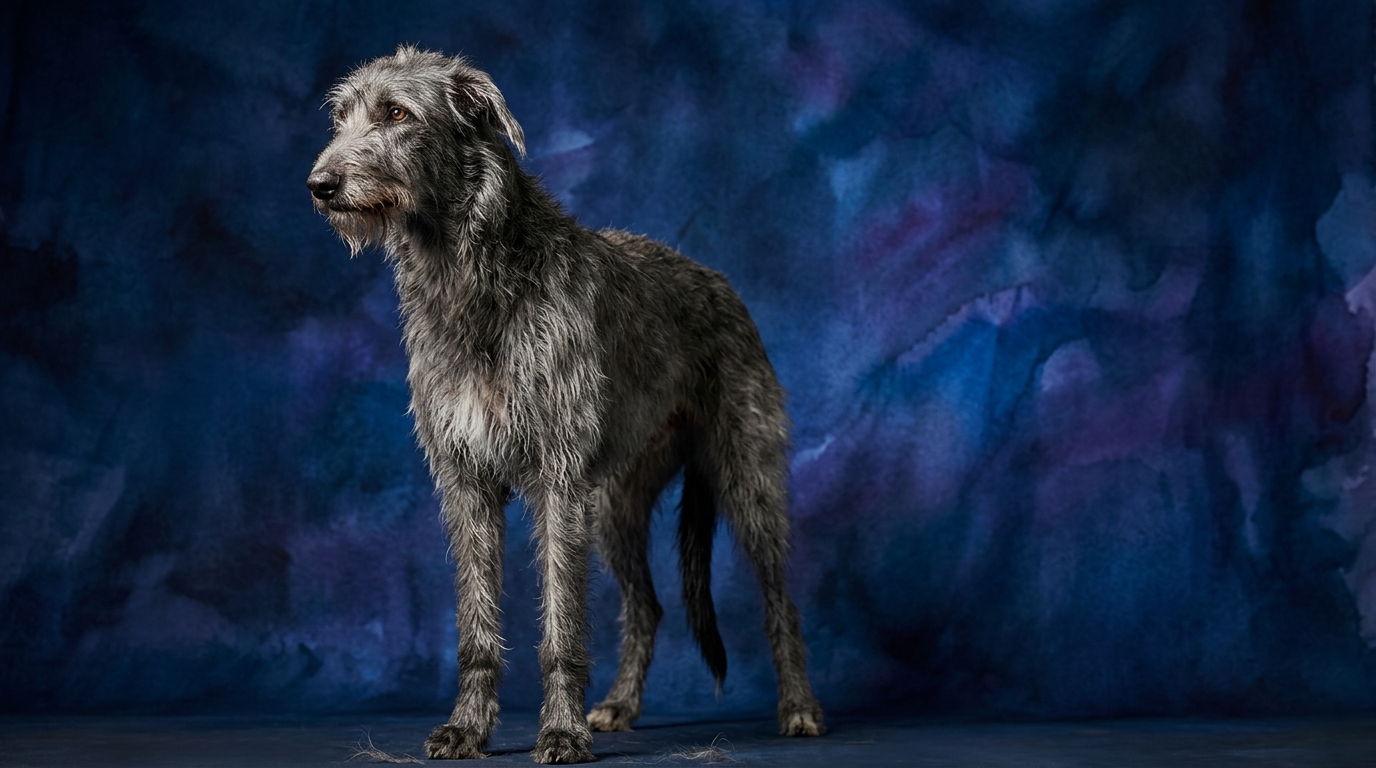
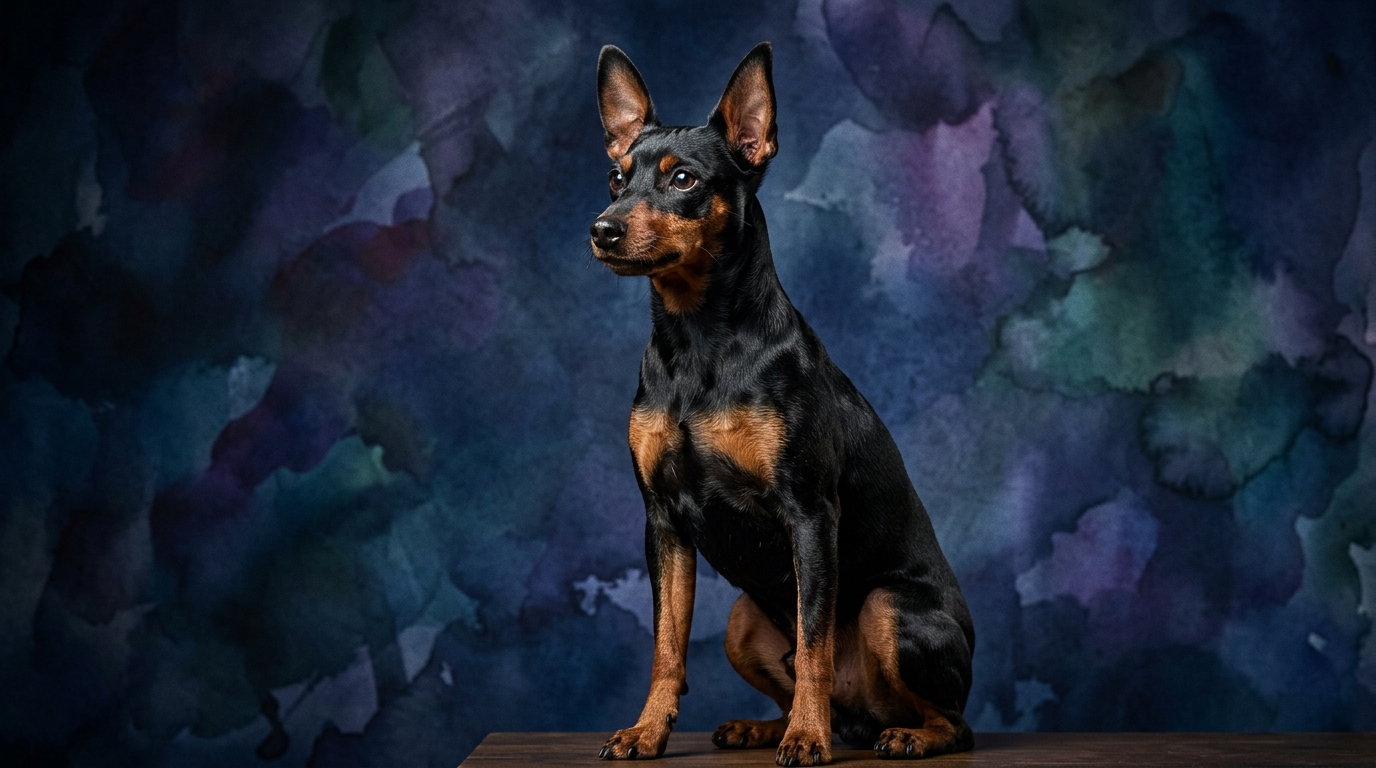
A Side-by-Side Look at Their Cognitive Profiles
The Cosmic Pet Pet IQ Lab assesses canine intelligence across five key dimensions, each rated on a 1-5 scale. Both the Scottish Deerhound and the Miniature Pinscher achieve a consistent 3/5 rating in every category, suggesting a fundamental cognitive capacity that, while similar in score, expresses itself through very different lenses shaped by their breed histories and physical attributes.
**Problem Solving (3/5):** For the Scottish Deerhound, a 3/5 in problem-solving often translates to practical applications in vast outdoor environments. Their intelligence shines when navigating complex terrain during a chase, strategically finding the most efficient path, or locating a comfortable, sheltered spot to rest. Their solutions are frequently physical and related to their sighthound instincts, such as figuring out how to bypass an obstacle to maintain sight of a moving target. They are less inclined to solve abstract puzzles, preferring challenges with tangible, immediate outcomes related to their natural drives.
The Miniature Pinscher’s 3/5 problem-solving ability, conversely, is typically applied to their domestic world. This might involve cleverly manipulating a latch to access a forbidden area, strategizing how to get a favorite toy from under furniture, or devising tactics to gain an owner's undivided attention. Their solutions are often ingenious and focused on resource acquisition or comfort within a human household, demonstrating a sharp wit for navigating their immediate environment and social dynamics.
**Training Speed (3/5):** A 3/5 training speed for the Scottish Deerhound indicates a capacity to learn, but often at a pace that requires patience and understanding of their independent hound nature. They can internalize commands and routines, but their sighthound instincts mean they may not always prioritize human directives over a compelling scent or visual stimulus. Consistency and positive reinforcement are crucial, and while they may not pick up new tricks with lightning speed, learned behaviors tend to be deeply ingrained once established.
For the Miniature Pinscher, a 3/5 training speed often manifests as a quick initial grasp of commands, especially when highly motivated by treats or play. However, their independent, sometimes stubborn disposition means that initial speed can be offset by a tendency to selectively obey or "forget" commands if they deem the reward insufficient or the task uninteresting. They require engaging, varied training sessions to maintain focus, and their assertiveness can sometimes be mistaken for a lack of understanding rather than a willful choice.
**Social Intelligence (3/5):** The Scottish Deerhound's 3/5 social intelligence often presents as a reserved yet deeply observant nature. They are attuned to the moods and dynamics within their human family, forming profound, quiet bonds. They might not be overtly demonstrative, but they keenly sense tension, joy, or distress and react with subtle shifts in their demeanor, perhaps offering a comforting presence without demanding interaction. Their understanding of social cues is more about quiet perception than active engagement.
The Miniature Pinscher, with the same 3/5 score, typically exhibits a more overt and demanding form of social intelligence. They are highly skilled at reading human cues to solicit attention, food, or play, often employing a wide repertoire of vocalizations and body language. They are sensitive to changes in routine or owner mood, which can manifest as anxiety or a heightened need for interaction. Their social acumen is geared towards active participation and often, gentle manipulation within their pack structure.
**Instinctive Drive (3/5):** The Scottish Deerhound’s 3/5 instinctive drive is overwhelmingly dominated by their sighthound heritage. This translates to an inherent, powerful drive to chase anything that moves, whether it's a squirrel, a leaf, or another animal. This instinct is deeply woven into their being, influencing their focus outdoors and requiring careful management to ensure their safety and adherence to commands. Their world is often defined by what they can see and pursue.
For the Miniature Pinscher, a 3/5 instinctive drive embodies the "King of Toys" persona. They possess robust territorial instincts, a vigilant alarm bark, and a persistent drive to patrol and 'manage' their home environment. While smaller in scale, their prey drive for small critters is potent, and they exhibit a strong, assertive personality that stems from their historical role as vermin hunters and guardians. Their drive is often directed at asserting their presence and protecting their perceived domain.
**Memory (3/5):** A 3/5 memory for the Scottish Deerhound is typically strong in spatial recall. They excel at remembering routes, familiar landscapes, and preferred resting spots. They also retain past experiences, both positive and negative, which influences their behavior in similar future situations, such as remembering a particularly rewarding chase or an uncomfortable vet visit. Their memory is practical and often tied to their experiences in the world.
The Miniature Pinscher's 3/5 memory is often exceptional for routines, the location of treats or toys, and the specific habits of their human companions. They effectively recall training cues when consistently applied and can also vividly remember perceived slights or negative interactions, which can influence their trust and willingness to cooperate. Their memory is highly oriented toward the social and logistical aspects of their daily lives.
Where the Scottish Deerhound Wins Cognitively
Despite identical scores, the Scottish Deerhound shows particular cognitive strengths in areas related to their ancestral purpose and physical attributes. Their capacity for sustained, independent focus on a distant visual target, even amidst distractions, is a hallmark of their breed. This isn't just a physical act; it requires a cognitive filter to prioritize visual input and maintain a mental map of their objective. Their memory for vast outdoor spaces and complex terrains also sets them apart, allowing them to navigate and recall locations with remarkable efficiency. This spatial intelligence, combined with a quiet observational aptitude, means they can absorb their surroundings and react thoughtfully, rather than impulsively, to environmental cues.
Where the Miniature Pinscher Wins Cognitively
The Miniature Pinscher, on the other hand, demonstrates distinct cognitive advantages in the domestic sphere. Their ingenuity in manipulating their immediate environment and human companions for desired outcomes is notable; they are masters of resourcefulness within a home setting. This extends to their social communication: their ability to quickly gauge human moods and intentions, then respond with tailored vocalizations or actions to elicit a specific reaction, showcases a highly developed social acumen focused on interaction and influence. Their quick reaction time to novel stimuli, coupled with their assertive nature, allows them to act decisively within their perceived territory, whether it's barking at a delivery person or chasing a dust bunny.
Which is Easier to Train and Why
Determining which breed is 'easier' to train is less about raw intelligence and more about behavioral traits and owner expectations. The Scottish Deerhound, while capable of learning, requires an owner who understands and respects their independent sighthound nature. They are not typically driven by an overwhelming desire to please and can be easily distracted by their powerful prey drive, making recall and off-leash obedience challenging. Training them demands immense patience, calm consistency, and positive reinforcement, focusing on building a trusting partnership rather than strict compliance. Progress can feel slow, but once a behavior is learned, it is often deeply understood.
The Miniature Pinscher presents a different set of training challenges. While they can pick up commands quickly due to their alertness, their inherent stubbornness, strong will, and tendency towards territoriality can make consistent obedience a hurdle. They thrive on engaging, varied training that prevents boredom, and they may 'test' boundaries if rules aren't consistently and fairly enforced. Socialization from a young age is crucial to manage their assertive nature and ensure they are well-adjusted. Their 'ease' of training often depends on an owner's ability to be firm, fair, and creative, making training feel like a game rather than a chore.
Which Suits Active Owners vs. Relaxed Owners
The Scottish Deerhound is a breed that genuinely embodies a 'noble couch potato' persona, but with significant caveats. They thrive with owners who appreciate their calm, dignified presence indoors and are content with long periods of quiet companionship. However, this tranquility must be balanced with substantial bursts of high-intensity exercise. They need regular opportunities to run at full gallop in a secure, expansive area to satisfy their sighthound instincts. Therefore, they suit active owners who can provide these essential outlets, perhaps daily runs or access to large, fenced properties, but who also enjoy a relaxed, undemanding companion for the rest of the day.
The Miniature Pinscher, despite its small size, is a remarkably energetic and curious dog. They are not content to simply lounge; they require consistent mental and physical stimulation to prevent boredom and potential destructive behaviors. They are ideal for active owners who enjoy interactive play, brisk daily walks, and consistent engagement through training or enrichment activities. They thrive on being involved in family life and are often described as 'busy' dogs who are always on the go. While they enjoy cuddling, they are more about active participation than passive relaxation, making them less suitable for genuinely relaxed or sedentary lifestyles.
The Verdict: When to Choose Each Breed
The Verdict
Choose the Scottish Deerhound if you seek a calm, dignified companion who forms deep, quiet bonds, and you can provide ample space for their instinctual, high-speed runs balanced with peaceful indoor living.
Opt for the Miniature Pinscher if you desire a spirited, assertive, and highly engaged companion who thrives on consistent interaction, playful mental stimulation, and a bustling household where they can actively participate.
🧠 Find Your Pet's IQ Score
Our Pet IQ Lab assessment covers 25+ tests across 5 cognitive dimensions — personalized to your breed.
Take the Full IQ Test →Frequently Asked Questions
Are Scottish Deerhounds and Miniature Pinschers good with children?
Scottish Deerhounds are generally gentle and tolerant with children, especially if raised with them, though their large size requires supervision with very young kids. Miniature Pinschers can be good with older, respectful children but may be less tolerant of rough play due to their assertive nature and smaller size, requiring careful introductions and management.
Do Scottish Deerhounds and Miniature Pinschers require a lot of grooming?
Scottish Deerhounds have a shaggy, wiry coat that requires weekly brushing to prevent mats and occasional hand-stripping to maintain coat health. Miniature Pinschers have a short, smooth coat that is relatively low maintenance, needing only weekly brushing to remove loose hair and occasional baths.
What are the typical temperaments of these breeds?
Scottish Deerhounds are known for their gentle, friendly, and dignified temperament, often described as 'gentle giants' who are sensitive and loyal. Miniature Pinschers are characterized by their bold, confident, and assertive nature, often described as 'King of Toys' due to their spirited, independent, and sometimes mischievous personality.