Side-by-Side Cognitive Profile
The Cosmic Pet Pet IQ Lab assesses canine intelligence across five critical dimensions, providing a framework to understand how different breeds approach the world. For both the Scottish Deerhound and the Norwegian Lundehund, a consistent score of 3/5 across the board suggests a balanced cognitive aptitude, yet their historical roles dictate how these capabilities are uniquely expressed.
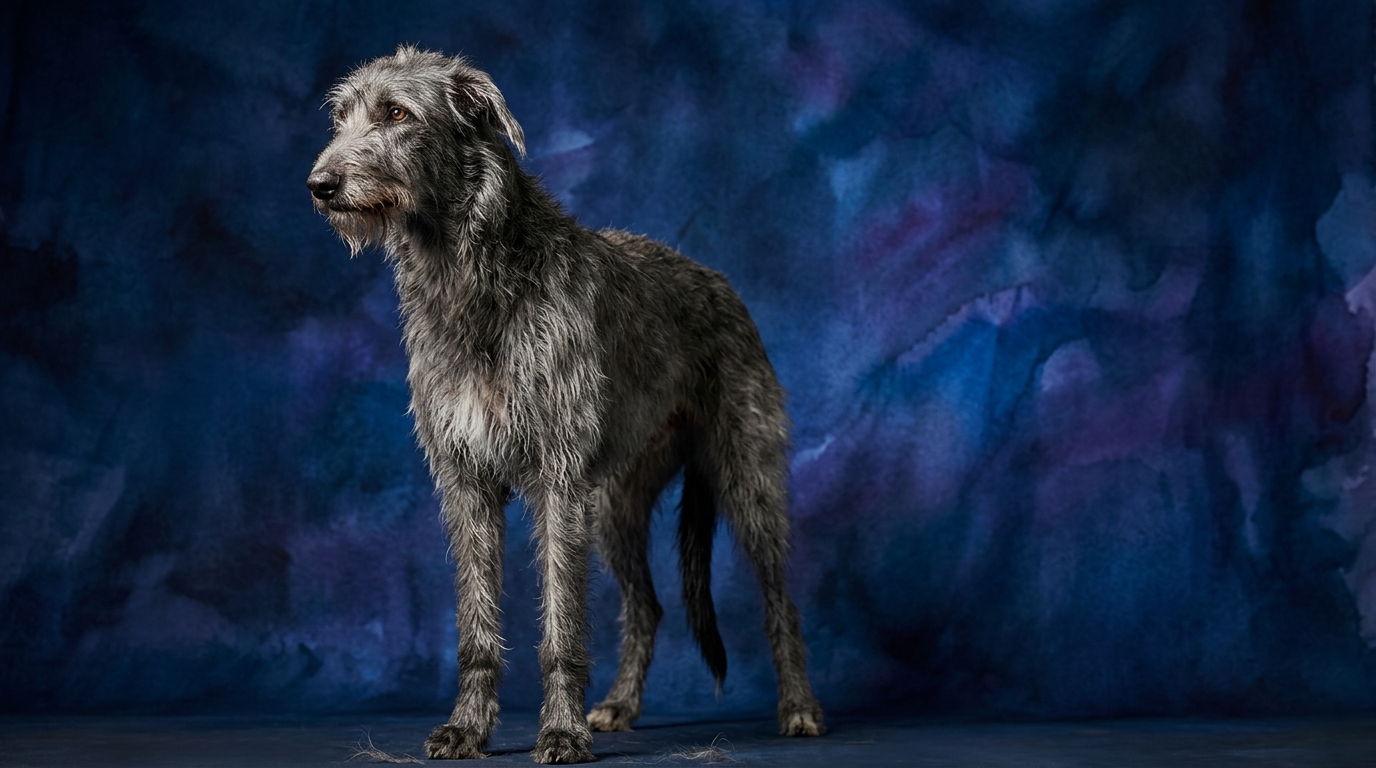
For the **Scottish Deerhound**, their Problem Solving (3/5) reflects an ancestral need for independent decision-making during hunts, where they assessed terrain and prey movements without constant human direction, focusing on practical, real-time solutions rather than abstract puzzles. Their Training Speed (3/5) indicates they are capable learners, but their sighthound independence means they might prioritize an interesting scent or distant movement over a human command, requiring patient and consistent positive reinforcement. Social Intelligence (3/5) in a Deerhound often manifests as a dignified reserve with strangers, coupled with deep, quiet affection and sensitivity towards their immediate family, observing before engaging. Their Instinctive Drive (3/5) is powerfully geared towards the chase and pursuit of quarry, a defining characteristic of their sighthound heritage that shapes much of their natural behavior. Finally, their Memory (3/5) allows them to recall routines, commands, and familiar individuals, although strong environmental stimuli related to their prey drive can occasionally override immediate recall of specific training cues.
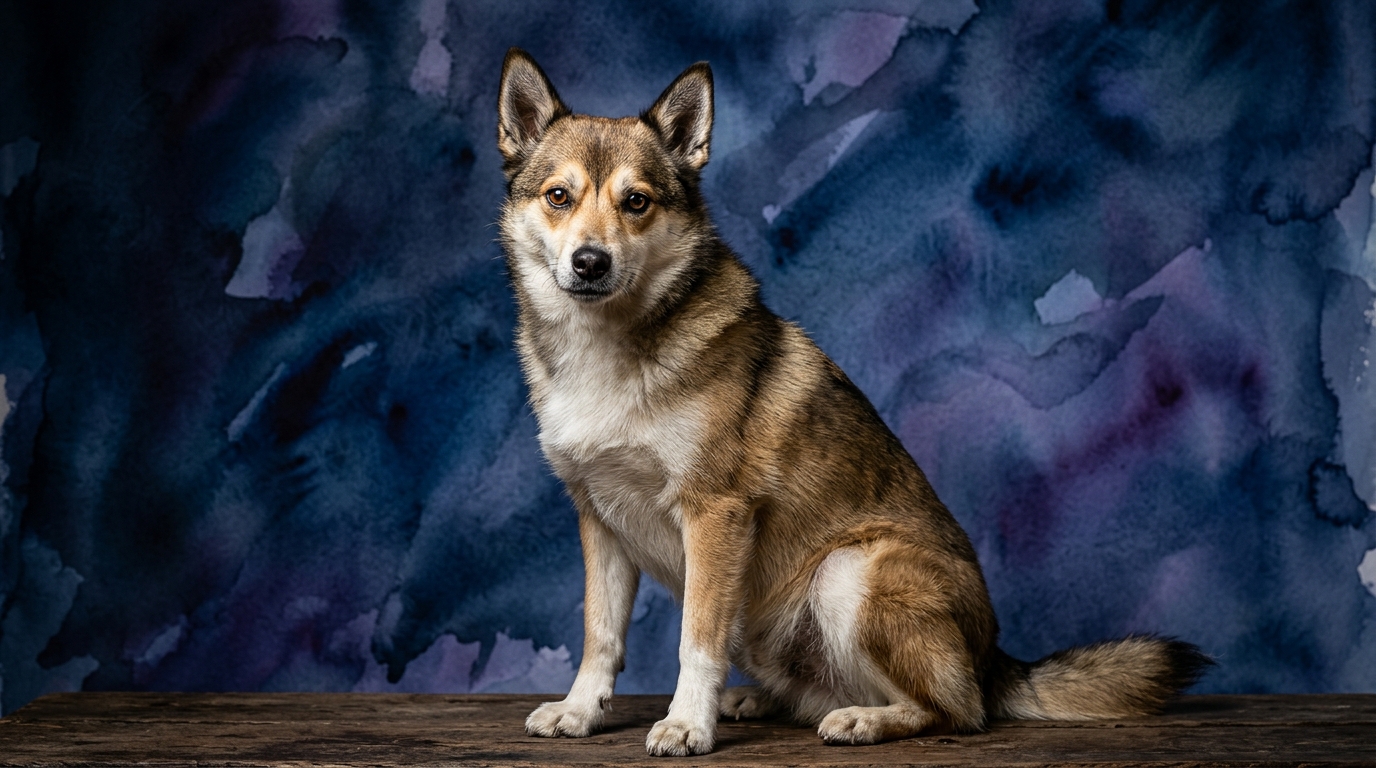
The **Norwegian Lundehund's** Problem Solving (3/5) is uniquely tied to their historical task of hunting puffins in challenging coastal environments, involving intricate spatial reasoning to navigate precarious cliffs and squeeze into tight crevices. Their Training Speed (3/5) is influenced by an independent and often persistent nature, a trait essential for autonomous work, meaning they learn best through engaging, curiosity-driven methods rather than rigid drills. Social Intelligence (3/5) in Lundehunds typically involves forming strong, devoted bonds with their family, while often displaying wariness or cautiousness with unfamiliar people, a characteristic likely stemming from their isolated working conditions. Their Instinctive Drive (3/5) is highly specialized, compelling them to explore, climb, dig, and retrieve from confined spaces, reflecting their unique puffin-hunting role and a persistent curiosity for investigation. Their Memory (3/5) is particularly adept at recalling complex spatial routes and the precise locations of objects within a varied landscape, a vital skill for remembering puffin nesting sites and navigating their challenging environment.
Where the Scottish Deerhound Wins Cognitively
The Scottish Deerhound's cognitive strengths often manifest in their calm, watchful demeanor and their ability to maintain a sustained, intense focus on distant, moving objects, a critical aspect of their sighthound heritage. While both breeds score 3/5 in problem-solving, the Deerhound excels at processing visual information rapidly over long distances, making split-second judgments about pursuit trajectories. Their instinctive drive, while rated 3/5, is specifically tuned for the chase, translating into an acute awareness of subtle movements in their environment that would be missed by many other breeds. This focused visual processing and instant reaction to perceived prey allows them to execute complex hunting strategies independently, relying on their own judgment rather than continuous human input. Furthermore, their social intelligence, also 3/5, allows them to be exceptionally gentle and sensitive companions, often demonstrating a quiet understanding of their family's moods and routines without needing explicit cues, fostering a harmonious home environment once their physical needs are met.
Where the Norwegian Lundehund Wins Cognitively
The Norwegian Lundehund's cognitive advantages are deeply rooted in their unique physical adaptations and their historical role, allowing them to excel in specific types of environmental problem-solving and navigation. Their 3/5 problem-solving score is particularly evident in their capacity for intricate spatial reasoning and physical dexterity, enabling them to contort their bodies, climb, and maneuver through extremely tight and complex spaces that other dogs simply cannot access. This involves not just physical ability but a cognitive understanding of their own body in relation to their environment, a form of kinesthetic intelligence. Their instinctive drive (3/5) is uniquely channeled into persistent exploration and the systematic investigation of small areas, demonstrating an unwavering determination to find hidden objects or pathways. This translates into a relentless curiosity and a drive to engage with environmental puzzles, often involving digging or climbing. Their memory (3/5) is particularly strong for recalling complex routes and the locations of specific objects within a varied landscape, which was vital for remembering puffin nesting sites even after many months.
Which is Easier to Train and Why
While both breeds score 3/5 for training speed, the Scottish Deerhound might be perceived as marginally 'easier' to train for general household manners and basic obedience, primarily due to their generally more laid-back temperament once their exercise needs are robustly met. Deerhounds, despite their independent streak, tend to be eager to please their beloved family members and respond well to gentle, consistent, positive reinforcement, particularly if training is kept engaging and not overly repetitive. Their independence often manifests as a selective hearing when a compelling visual stimulus, like a squirrel or distant movement, is present, rather than a general disinterest in cooperation. This means their training challenges are often situational. In contrast, the Norwegian Lundehund's independence is often coupled with a strong-willed, persistent nature, a legacy of needing to work autonomously in challenging conditions. Their training requires immense patience and creativity, as they can quickly become bored with traditional methods and may prefer to 'solve' things their own way, often involving climbing or digging. Their instinctive drive for exploration, combined with their unique physical attributes, can also present specific training challenges, as they might prioritize investigating a high shelf or squeezing into a tight space over a 'sit' command, requiring handlers to be exceptionally adept at managing their environment and channeling their natural drives into acceptable behaviors.
Suiting Active vs. Relaxed Owners
The choice between these two breeds depends significantly on the *type* of activity an owner enjoys and their lifestyle. The Scottish Deerhound, while possessing a powerful instinctive drive for chasing, is often described as a 'gentle giant' indoors, requiring intense bursts of exercise followed by long periods of rest. They are well-suited for owners who enjoy daily long walks, secure off-leash running in a spacious, fenced area, or perhaps lure coursing, but who also appreciate a calm, dignified companion lounging on the sofa for much of the day. Their activity needs are high-intensity but episodic, making them a good fit for owners who can provide dedicated, vigorous exercise time but otherwise prefer a relaxed home environment with a quiet companion. Conversely, the Norwegian Lundehund is better suited for active owners who relish consistent engagement, mental stimulation, and varied outdoor adventures. Their instinctive drive for exploration, climbing, and problem-solving means they thrive on activities like agility, hiking on varied and challenging terrain, puzzle toys, and consistent training that challenges their unique cognitive abilities. They are not content with just a quick walk; they need opportunities to use their bodies and minds, making them ideal for owners who enjoy a more 'hands-on' and continuously stimulating relationship with their canine companion, potentially even engaging in dog sports that utilize their unique physical attributes like canine parkour or scent work.
The Verdict
Choose the Scottish Deerhound if you appreciate a calm, dignified companion that needs intense, episodic exercise but is otherwise content to be a relaxed housemate, and you value a quiet, sensitive bond.
Opt for the Norwegian Lundehund if you are an active, creative owner who thrives on consistent mental and physical engagement, enjoys solving puzzles with your dog, and can provide opportunities for climbing and exploration.
🧠 Find Your Pet's IQ Score
Our Pet IQ Lab assessment covers 25+ tests across 5 cognitive dimensions — personalized to your breed.
Take the Full IQ Test →Frequently Asked Questions
Do Scottish Deerhounds require a lot of space for their intelligence to thrive?
While Deerhounds are large, their cognitive needs are met more by opportunities for bursts of speed and visual tracking than by constant vast open spaces. A secure yard for running and regular outdoor excursions for sniffing and observing are important for their mental well-being, complementing their calm indoor demeanor and allowing their inherent sighthound instincts to be expressed.
How does the Norwegian Lundehund's unique physical flexibility relate to its problem-solving abilities?
The Lundehund's extraordinary flexibility, including extra toes and the ability to turn its head backward, is directly integrated into its problem-solving. This physical aptitude allows them to access and navigate complex, confined spaces, which requires a high degree of spatial reasoning and body awareness to effectively retrieve objects or explore challenging environments, demonstrating a unique physical intelligence.
Are either of these breeds good for first-time dog owners, considering their IQ profiles?
Both breeds, with their 3/5 scores in training speed and independent streaks, are generally better suited for experienced dog owners who understand canine behavior and are committed to consistent, positive reinforcement training. Their unique historical roles have instilled specific drives that require patient management and understanding, making them less ideal for someone entirely new to dog ownership.